

Moving from Poland to the UAE (2026): Complete Guide

The Poland-to-UAE corridor is one of Europe’s fastest-growing relocation routes, carrying professionals, families and entrepreneurs from Warsaw, Kraków, Wrocław and the Tricity toward Dubai, Abu Dhabi and Sharjah. A move like this has two distinct halves that must line up: the Polish export side, where you clear goods out of the EU customs territory through the National Revenue Administration, deregister your residence and settle your tax position; and the UAE import side, where your residence visa, customs declaration and health rules decide whether your shipment lands duty-free or gets held. This guide walks through both halves in order, flags where "transit times" are freight-industry estimates rather than official figures, and closes with the reverse route back to Poland. It is written for a resident of Poland — Polish, EU or third-country national — planning a permanent or long-term move to the Emirates.
Key takeaways
- Your UAE customs treatment is decided by your residence visa: used household goods are cleared against a passport/Emirates ID copy, a residency visa copy and a goods list (Dubai Customs).
- Poland’s customs authority is the Krajowa Administracja Skarbowa (KAS); export declarations are lodged electronically through the AES (Automatic Export System) on the PUESC portal (PUESC).
- The UAE applies 5% customs duty on the CIF value of dutiable goods, but genuine used personal effects are cleared without duty (u.ae).
- Leaving Poland means you should file wymeldowanie (deregistration of residence) — free, and available online — under the Act on Population Registration (gov.pl).
- Carrying €10,000 or more out of the EU must be declared to Polish customs at the external border (Your Europe); on the UAE side the threshold is AED 60,000 (Dubai Customs).
- Pets need a MOCCAE import permit obtained online before travel (MOCCAE) plus a Polish official veterinary export certificate and microchip/rabies compliance (GIW).
- Poland ships from Gdańsk (Baltic Hub), Gdynia, Szczecin and Świnoujście, the country’s main seaports (Trade.gov.pl).
1. Your UAE visa status decides everything
Before touching a single box, understand this: the UAE grants duty-free entry to used personal effects on the strength of your residence status, not your nationality. Dubai Customs lists the documents for personal-effects clearance as a passport or Emirates ID copy, a residency visa copy, and a list of the imported goods (Dubai Customs). In practice this means the smoothest sequence is to secure your UAE entry permit and residence visa first, then time your shipment so it arrives after you do and after your Emirates ID application is underway.
Customs officers inspect on arrival. Items designated for personal consumption are cleared duty-free, but if inspectors judge goods to be brand new and in commercial quantities, a 5% customs duty is levied instead (Dubai Customs). So keep your shipment demonstrably "lived-in": unbox electronics, avoid multiples of the same new item, and describe everything honestly on the packing list. Sending goods before your visa is issued is the classic mistake — without a residency visa copy the used-effects relief is hard to apply, and storage clocks start ticking at the port.
2. The Poland export side
The authority. Poland’s customs and tax functions are run by the Krajowa Administracja Skarbowa (KAS) — the National Revenue Administration. All export formalities pass through the PUESC platform (Platform of Electronic Fiscal and Customs Services), where declarations for taking goods out of the EU customs territory are filed using the AES (Automatic Export System) (PUESC).
The export declaration. Because the UAE is outside the EU, your household shipment is a formal export from the Union customs territory. A customs declaration for the export procedure is lodged electronically into AES; the system issues a Movement Reference Number (MRN) and an Export Accompanying Document (EAD) that travels with the goods to the exit point. Most private movers do not file AES themselves — a licensed customs agent (often your mover’s broker) lodges it on your behalf, which is why an accurate, valued packing list matters so much. Personal-effects removals are low-value non-commercial exports, but the declaration is still required to prove the goods left the EU. PUESC does not publish a special value or weight threshold that exempts household removals from AES export formalities, so treat the declaration as mandatory (PUESC).
Deregistration (wymeldowanie). If you are leaving your Polish permanent address, you should file wymeldowanie z pobytu stałego. Under the Act of 24 September 2010 on Population Registration, deregistration should happen at the latest on the day you move out; it is done at the urząd gminy or online (using a trusted profile or e-ID — since 1 January 2026 the online route runs through the e-Doręczenia electronic-delivery service), and the service is free with immediate confirmation online (gov.pl). Your PESEL number stays valid for life — deregistering does not cancel it.
Tax-residency exit. Leaving physically is not the same as ceasing to be a Polish tax resident. Under the Ministry of Finance’s official tax-residency guidance, an individual with a place of residence in Poland has unlimited tax liability (worldwide income), while someone whose residence is outside Poland has limited tax liability (Polish-source income only). Residency turns on the centre of vital interests and the 183-days-in-a-tax-year test, and it is assessed on the totality of facts — it is not merely declarative (Ministry of Finance). Because the UAE levies no personal income tax, cleanly documenting the date your centre of vital interests moved abroad is what prevents a double-residency dispute later. Keep evidence: your UAE visa, tenancy contract, employment record and the wymeldowanie confirmation.
3. Ports and transit times
Poland’s cargo leaves through four state seaports: Gdańsk, home to Baltic Hub (the former DCT Gdańsk) and the leading container terminal on the Baltic, plus Gdynia, Szczecin and Świnoujście (Trade.gov.pl). For a UAE move, Gdańsk/Baltic Hub is the usual sea-freight origin because it has the deep-water capacity and the direct deep-sea connections to feed containers toward the Gulf; inland households are typically trucked to the Tricity for loading. Air freight moves through Warsaw Chopin and other Polish cargo airports.
Transit times below are freight-industry estimates, not official figures. Actual timings depend on carrier schedules, transhipment hubs, weather and customs, and no government authority guarantees them.
- Sea (FCL/LCL), Gdańsk → Jebel Ali (Dubai): commonly quoted at roughly 5–8 weeks door-to-port, since most sailings tranship through a Mediterranean or Northern-European hub rather than sailing direct.
- Air freight, Poland → Dubai: typically 5–12 days door-to-door once packed — faster, but at a multiple of the sea cost.
Jebel Ali is the standard UAE discharge point for sea containers; Dubai and Abu Dhabi airports handle air shipments. Build a buffer into your plans — a "6-week" ocean quote can slip, and your household should ideally arrive after your visa and Emirates ID process are moving.
4. The UAE import side
On arrival, your shipment is cleared through UAE Customs (Dubai Customs at Jebel Ali for most sea freight). The core process for a mover is the personal-effects / used household-goods clearance, presented with a passport or Emirates ID copy, a residency visa copy, and a detailed list of the imported goods (Dubai Customs). A customs import declaration is filed (in practice by your appointed UAE clearing agent), the container is inspected, and genuine used effects are released without duty.
The general UAE customs rules confirm the framework: the standard customs duty is 5% of the value plus cost, insurance and freight (CIF), rising to 50% on alcohol and 100% on cigarettes, and personal luggage, clothing and used personal items pass duty-free; new gifts and perfumes are duty-free only up to AED 3,000 and in non-commercial quantities (u.ae). Restricted items — weapons, alcohol, medicines, live animals — need prior approval from the relevant authority, and prohibited items include narcotics, counterfeit goods, pirated media and gambling machines (u.ae). Alcohol and pork products in a household shipment are the most common cause of holds, so declare them and, where possible, leave them out.
5. Pets
Poland side (export). Poland’s veterinary authority is the Główny Inspektorat Weterynarii (General Veterinary Inspectorate, GIW). Dogs and cats must carry an individual identification (microchip) and a valid anti-rabies vaccination, documented via the EU pet passport or an official health certificate (GIW). For a third-country destination like the UAE, the export health certificate is verified and endorsed by an official veterinarian (the county/powiatowy vet) before departure.
UAE side (import). Entry is governed by the Ministry of Climate Change and Environment (MOCCAE). You must obtain an import permit online before travel via the MOCCAE service "Import of pets (cats/dogs)" (MOCCAE). Pets need an ISO-standard microchip, a rabies vaccination, and — for animals coming from higher-risk countries — a rabies antibody titre test; the microchip number must match every document. Cats and dogs generally travel as manifested cargo, not in the cabin, and certain dog breeds are banned. Apply early: MOCCAE permits are time-limited, so line the permit up with your confirmed flight and your vet’s certificate timeline.
6. Vehicles, money and things people forget
Vehicles. Importing a car into the UAE is a separate customs process: Dubai Customs values the vehicle and assesses 5% duty on the appraised value, requiring the original invoice, packing list, bill of lading and ID for a shipped car (Dubai Customs). On the Polish end you must deregister the vehicle before permanent export. Many movers find it cheaper to sell in Poland and buy in the UAE.
Money. Two thresholds apply in opposite directions. Leaving the EU, you must declare €10,000 or more in cash or equivalent (including bearer instruments and investment-grade gold) to Polish customs at the external border (Your Europe). Entering the UAE, you must declare cash and valuables above AED 60,000 to the Federal Authority for Identity, Citizenship, Customs & Ports Security (Dubai Customs).
Commonly forgotten: keeping your EU pet passport valid, leaving alcohol and pork out of the container, timing the shipment behind your visa, retaining the AES MRN/EAD as proof of export, and getting an apostille on Polish diplomas, marriage and birth certificates before you leave — attestation is far harder to arrange from abroad.
How Flyto handles your Poland to the UAE move
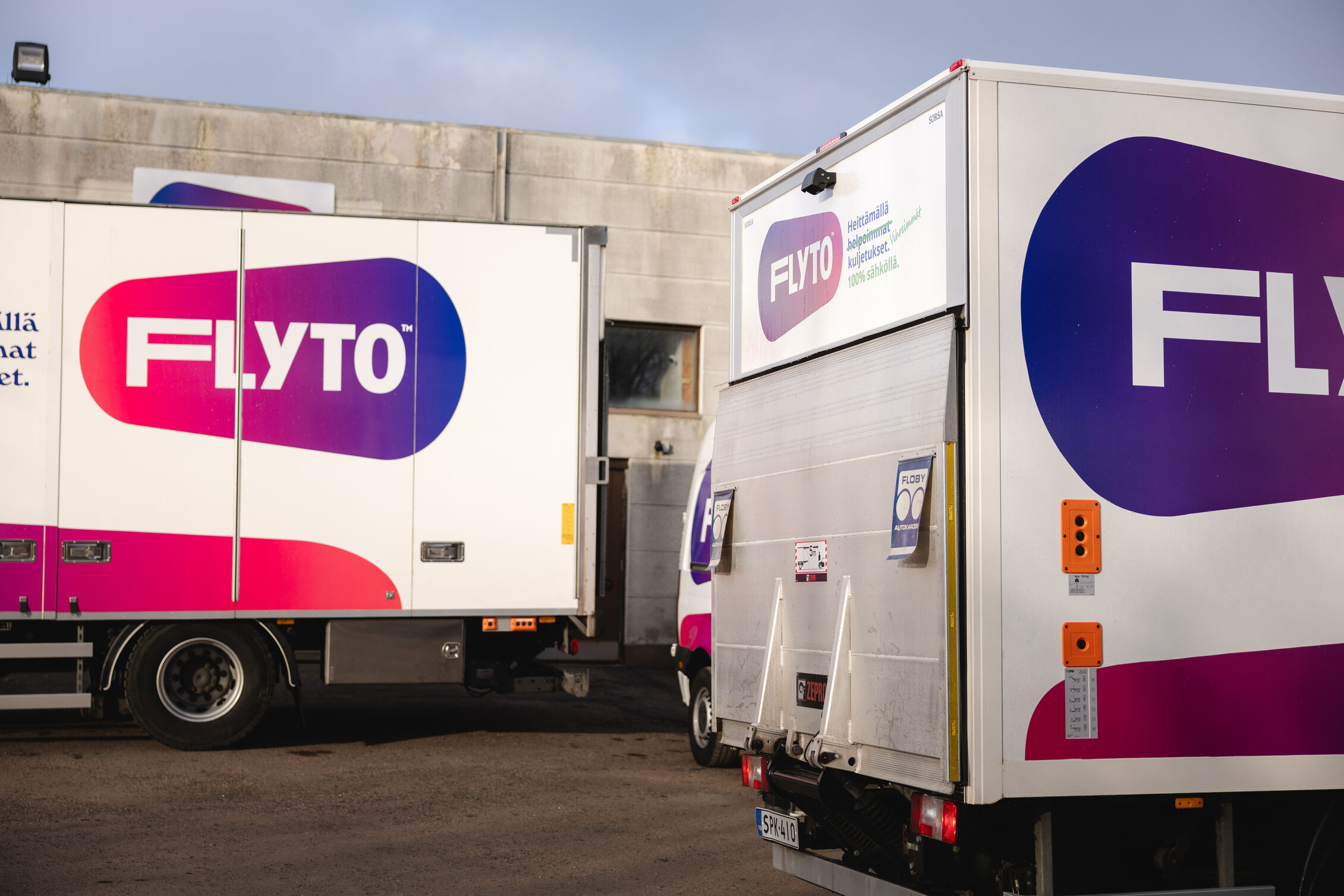
Flyto runs strong in-house European operations — our own offices, warehouses, crews and vehicles across Northern, Central and Southern Europe handle your packing, loading and export paperwork on the Polish side directly. For the long-haul leg and the UAE arrival we combine that with a carefully chosen partner and subcontractor network and trusted local partners in the Emirates for customs clearance and final delivery. We coordinate the whole chain end to end, rather than claiming to do every mile ourselves.
Frequently asked questions
Do I need my UAE residence visa before shipping?
It is strongly advisable. Duty-free clearance of used effects relies on a residency visa copy alongside your passport/Emirates ID and goods list, so shipping before the visa is issued risks duty and storage charges (Dubai Customs).
Will I pay customs duty on my furniture?
Genuine used household goods for personal use are cleared without duty; the UAE’s 5% duty applies to dutiable/new commercial-quantity goods (u.ae).
Is deregistering from my Polish address mandatory?
If you leave your permanent address, wymeldowanie should be filed by the day you move out under the Act on Population Registration. It is free and available online, and it does not cancel your PESEL (gov.pl).
How long does the sea shipment take?
Freight operators typically estimate roughly 5–8 weeks from Gdańsk toward Jebel Ali, but this is an industry estimate, not an official figure — schedules and transhipment vary.
Can I bring my dog or cat?
Yes, with a MOCCAE import permit obtained online before travel, plus microchip, rabies vaccination and (for higher-risk origins) a titre test; Poland’s GIW endorses the export health certificate (MOCCAE, GIW).
What about moving back to Poland later?
The reverse route flips the roles. You export from UAE Customs and import into the EU through KAS: returning residents may claim EU relief from import duty and VAT on personal property, but you must file an EU import declaration and re-register your residence in Poland — the customs formalities run through KAS/PUESC (PUESC), and the AED 60,000 UAE cash-declaration rule applies on the way out (Dubai Customs).
Sources
- PUESC — Export of goods / AES (Krajowa Administracja Skarbowa)
- gov.pl — Wymelduj się z pobytu stałego (deregistration)
- Ministry of Finance — Tax-residency explanation (29 April 2021)
- Your Europe (EU) — Carrying cash into/out of the EU
- Trade.gov.pl — Polish seaports (Gdańsk, Gdynia, Szczecin, Świnoujście)
- Główny Inspektorat Weterynarii — Travelling with pets
- Dubai Customs — Personal Effects Clearance Procedure
- u.ae — Clearing customs and paying customs duty
- MOCCAE — Import of pets (cats/dogs)
- Dubai Customs — Declaring Money Procedure