

Moving to Delhi from Abroad (2026): Complete Relocation Guide

Delhi is India’s national capital and the political heart of the country — the seat of Parliament, the central ministries and almost every foreign embassy — wrapped inside a sprawling metropolitan region, the National Capital Region (NCR), that has become one of India’s biggest corporate and technology hubs through the satellite cities of Gurugram (Gurgaon) and Noida. That combination is exactly why so many international arrivals land here: diplomats and development-agency staff, multinational executives posted to NCR head offices, consultants, returning NRIs and OCI cardholders. Delhi is also a genuinely demanding place to live in two specific ways that this guide does not gloss over — its winter air pollution and its extreme summer heat — and, unlike Mumbai or Chennai, it is landlocked, roughly a thousand kilometres or more from the nearest sea port, which changes how your household shipment reaches you. This guide is written for people relocating to Delhi and the wider NCR from abroad in 2026. It covers the immigration route that actually lets you live and work here, how to get your belongings through Indian customs when there is no local port, and the honest realities of daily life. Every official figure below is sourced; where a number is a market estimate rather than a published rule, it is labelled as one.
Key takeaways
- To work in Delhi you need an Employment Visa, which is employer-sponsored and generally requires a gross salary above US$25,000 a year (roughly ₹16.25 lakh, with narrow exceptions); the online e-Visa is not valid for employment (MHA Work Visa FAQ; Bureau of Immigration – list of visas).
- If your visa or stay exceeds 180 days, you must register with the FRRO (Foreigners Regional Registration Officer) for Delhi within 14 days of arrival, done online through the e-FRRO portal (BOI registration requirements; e-FRRO portal).
- Delhi is landlocked: sea freight arrives at Nhava Sheva (JNPT) near Mumbai or Mundra in Gujarat, then travels roughly 1,000–1,400 km inland to Delhi — and can be customs-cleared at the Inland Container Depot (ICD) Tughlakabad, India’s largest dry port, run by CONCOR (Container Corporation of India; JNPA).
- Your used household goods may qualify for duty relief under India’s Transfer of Residence (ToR) concession in the Baggage Rules, 2026 — slabs of ₹1.5 lakh (up to 1 year abroad), ₹3 lakh (1–2 years) or ₹7.5 lakh (2+ years) — not an automatic exemption (CBIC Baggage Rules 2026).
- Delhi’s winter air pollution (roughly late October to January) regularly reaches the “very poor” and “severe” bands of the national Air Quality Index, triggering emergency curbs under the Graded Response Action Plan (GRAP) — plan for it honestly (CPCB – National AQI; Commission for Air Quality Management).
- To rent, open a bank account, get a phone or be paid, you will need a PAN (tax ID) and, for NRIs, NRE/NRO accounts governed by FEMA (Income Tax Department; RBI NRI accounts FAQ).
1. Which visa actually lets you live and work in Delhi
The single most important thing to understand before you book flights or a shipment is that your visa category, issued by India’s Bureau of Immigration under the Ministry of Home Affairs, decides both your right to be in India and how customs treats your belongings. Nationality alone does not.
Employment Visa (“E” visa). This is the route for salaried work in Delhi or the NCR. It is employer-sponsored — a company registered in India must hold the role for you — and it is intended for skilled or qualified professionals, not for jobs the local labour market can readily fill. The Ministry of Home Affairs sets a floor of a gross annual salary above US$25,000 (approximately ₹16.25 lakh once perquisites such as rent-free accommodation are counted). A short list of roles is exempt from the salary floor, including ethnic cooks, non-English language teachers, translators and certain embassy staff (MHA Work Visa FAQ). Employment Visas are typically issued for one year or the contract term and are extendable in India through the FRRO.
The e-Visa is not a work visa. India’s convenient online e-Visa (business, tourist and medical sub-types) is issued through the official portal, but it explicitly cannot be used to take up employment. Using it to start a job is a compliance problem, not a shortcut (indianvisaonline.gov.in; BOI – visa-on-arrival / e-Visa).
Business Visa (“B” visa). For those setting up an entity, attending meetings, exploring investments or providing technical support without drawing an Indian salary, the Business Visa is the correct category — but it does not authorise employment on an Indian payroll (BOI – list of visas).
Bringing your family. A spouse and dependent children accompanying an Employment or Business Visa holder are issued an Entry (“X”) Visa for the same validity, which lets them live in Delhi but not work. Dependants over 180 days must complete their own FRRO registration alongside the primary applicant, and school-age children will need transfer certificates and prior school records for admission — Delhi’s international, embassy and IB schools (many clustered in South Delhi, Chanakyapuri and Gurugram) fill early, so start applications before you arrive (BOI – list of visas).
Diplomatic and official postings. Because Delhi is the seat of government and the diplomatic capital, a large share of international arrivals come on Diplomatic (“D”) or Official visas tied to embassies, high commissions, the UN and other missions. These carry their own protocol, are handled through the Ministry of External Affairs rather than the ordinary visa stream, and usually come with dedicated relocation and customs handling — if this is your route, your mission’s administrative office is the authority, not this guide.
OCI — the option for people of Indian origin. If you were born in India, held an Indian passport, or have Indian-origin parents or grandparents (and are not of Pakistani or Bangladeshi origin), the Overseas Citizen of India card is usually the better long-term answer than any visa. OCI holders get lifelong, multiple-entry rights to live, work and study in India without ever registering with the FRRO, and they are treated favourably by customs. It is not dual citizenship — OCIs cannot vote or hold public office — but for day-to-day life in Delhi it removes almost all the immigration friction (BOI – about the OCI card).
2. FRRO registration — staying legal after you arrive
Landing in Delhi on the right visa is only half the job. Any foreign national whose visa or intended stay is longer than 180 days must register with the jurisdictional Foreigners Regional Registration Officer (FRRO) — the FRRO serving the National Capital Territory of Delhi — within 14 days of arrival. Registration is done online through the e-FRRO portal; you upload your passport, visa, photographs, proof of a Delhi address and, for employment cases, your employer’s details and appointment letter. Visa extensions, exit permits and change-of-address updates also go through the same office and portal (BOI – registration requirements; e-FRRO).
Two practical points. First, registration is tied to a residential address, so you need somewhere to live — even temporarily — before you can complete it, which is why serviced apartments are common in the first fortnight. Second, missing the 14-day window is the most frequent avoidable compliance slip newcomers make; treat it as a hard deadline from the day you land, not from the day your shipment or family arrives. Note that if you live in Gurugram or Noida rather than the NCT of Delhi itself, you fall under the FRRO for Haryana or Uttar Pradesh respectively — the NCR is one metropolitan area but several administrative jurisdictions. OCI cardholders are exempt from FRRO registration entirely.
3. Shipping your belongings to landlocked Delhi
Here is where a move to Delhi differs most from a move to a coastal Indian city. Delhi has no sea port. Your container will arrive by ocean at one of India’s western gateway ports — most commonly Jawaharlal Nehru Port (JNPT / Nhava Sheva) near Mumbai, India’s largest container port, or Mundra Port in Gujarat, the country’s largest commercial port by volume — and then travel a long way overland to reach you (JNPA; Mundra Port). As a planning estimate (not an official figure), Delhi sits roughly 1,400 km by road from Nhava Sheva and around 1,000 km from Mundra; that inland leg is a real part of your timeline and cost, not an afterthought.
The inland container depot changes everything. The single most useful fact about shipping to Delhi is that you do not have to clear customs at a distant seaport and then arrange separate haulage. India operates a network of Inland Container Depots (ICDs) — effectively “dry ports” deep inland — and your sealed container can be moved under customs bond directly from the seaport to Delhi, then cleared locally. The main one serving Delhi is ICD Tughlakabad (TKD) in the south of the city, India’s largest dry port, operated by the Container Corporation of India (CONCOR); a second, ICD Patparganj, serves the east (CONCOR). In practice this means your Transfer-of-Residence clearance and inspection happen in Delhi, close to your new home, rather than at Nhava Sheva — simpler for you, and usually where a specialist mover will route the shipment. Rail-borne container movement on the dedicated freight corridor between the western ports and Delhi has also made this inland leg faster and more predictable than a decade ago.
Choosing a container size. The three normal options are a 20ft container (roughly a one- to two-bedroom home), a 40ft container (a larger family home with a car’s worth of goods), or LCL — “less than container load” — where your goods share a container with others and you pay by volume. LCL suits smaller moves but adds consolidation and de-consolidation time at both ends, which matters more on a long inland route. As a planning estimate (not an official figure), door-to-door sea transit from Northern Europe to Delhi typically runs about six to nine weeks — the ocean leg to a western port, then inland movement and customs clearance at the ICD; Gulf and Southeast Asian origins are faster. Because a Delhi shipment carries that extra overland stage, build in more buffer than you would for a port city.
Transfer of Residence — the concession that decides your duty bill. India does not simply wave used household goods through duty-free. Instead, returning residents and qualifying transferees can claim the Transfer of Residence (ToR) concession under the Baggage Rules, 2026, administered by the Central Board of Indirect Taxes and Customs (CBIC). The concession applies to used personal and household articles and is structured in slabs according to how long you lived abroad: up to ₹1.5 lakh of relief for stays up to one year, ₹3 lakh for one to two years, and ₹7.5 lakh for two years or more (CBIC Baggage Rules 2026 notification). Goods above the applicable slab, and items outside the used-personal-effects definition, attract customs duty. Declarations for arriving passengers can be pre-filled through the CBIC ATITHI app before you land (atithi.cbic.gov.in). Because eligibility hinges on your visa/residency category and the length of your stay abroad, confirm your ToR position before you ship — it is the difference between a clean clearance at the Delhi ICD and an unexpected duty demand.
Insure the shipment, and plan the last mile in the city. Marine transit insurance covering the full replacement value of your goods is worth the modest premium — make a detailed, valued inventory at packing, because it is both your insurance basis and what customs assesses against. Plan the whole chain backwards from a realistic clearance date: export packing and origin formalities, the ocean leg to a western port, the bonded inland move to the Delhi ICD, then customs clearance (which needs your passport, visa/OCI, the ToR paperwork and a detailed packing list) before final delivery. Delivery into a South Delhi bungalow colony, a DLF high-rise in Gurugram or a Noida gated society each has its own access quirks — narrow lanes and parking permissions in the old colonies, service-lift bookings and society approvals in the towers — so confirm the address logistics before the truck arrives.
Money and vehicles. Two things people forget. Carrying foreign-currency notes worth more than US$5,000, or total foreign exchange (notes plus travellers’ cheques) over US$10,000, into India requires a Currency Declaration Form (CDF) at customs on arrival (RBI Currency Declaration Form). And importing a car is rarely worth it: used vehicles must generally be under three years old, right-hand drive, imported through a designated customs port and attract heavy duty (DGFT vehicle import notification). Given Delhi’s additional rules on older vehicles (see Section 6), for most movers selling the car at origin and buying locally is the sensible call.
4. Money, PAN and NRE/NRO banking
You cannot function in Delhi’s financial system without a PAN — a Permanent Account Number, the ten-character tax ID issued by the Income Tax Department. You need it to be paid a salary, to rent above modest thresholds, to open most bank accounts, to buy or sell property, and for larger financial transactions. Foreign nationals and NRIs can apply for a PAN online; start it early, because landlords and employers will ask for it (Income Tax Department e-filing portal).
Banking for people arriving from abroad is governed by the Foreign Exchange Management Act (FEMA) and the Reserve Bank of India. If you are a Non-Resident Indian or OCI, you will typically hold two account types: an NRE (Non-Resident External) rupee account, funded from your foreign earnings and freely repatriable, and an NRO (Non-Resident Ordinary) account for income earned in India such as rent or local salary, which has repatriation limits. Foreign nationals resident in India on a valid long-term visa can generally open a resident savings account once they have their local address and documents. Understanding which account your money should sit in matters for both tax and the ability to move funds home later (RBI – NRI accounts FAQ).
5. Where to live: Delhi and the NCR
“Delhi” for a newcomer usually means the wider National Capital Region, and where you should live depends heavily on where you work. Central Delhi and the leafy south are the traditional homes of diplomats and old-Delhi professionals; the corporate NCR cities of Gurugram and Noida are where most multinational offices and their expat staff actually sit. Rent figures are deliberately omitted below because they move fast and vary hugely by property, but the relative positioning is stable.
- South Delhi (Vasant Vihar, Defence Colony, Greater Kailash). The classic expatriate belt — low-rise bungalow colonies, tree-lined streets, established markets and easy access to embassies and international schools. Vasant Vihar in particular has long been a favourite of diplomats and senior expatriates; Defence Colony and Greater Kailash (GK I & II) are prestigious, central and well-serviced.
- Chanakyapuri. The purpose-built diplomatic enclave, home to most embassies and high commissions, official residences and some of the greenest, most secure and most exclusive addresses in the city — the natural base for diplomatic and mission staff.
- Gurugram (Gurgaon). The corporate powerhouse of the NCR, in Haryana just southwest of Delhi — glass towers, DLF Cyber City, global company head offices, modern high-rise condominiums and international schools. The most common landing point for multinational executives, at the cost of notoriously variable infrastructure and monsoon waterlogging.
- Noida (and Greater Noida). The planned city across the Yamuna in Uttar Pradesh — wide roads, IT and corporate campuses, newer gated societies and generally more space for the money than Gurugram or South Delhi, well connected by the Metro.
- Central and Lutyens’ Delhi. The historic government core — grand avenues and bungalows — is largely official housing and rarely on the open rental market, but the surrounding central neighbourhoods appeal to those who want to be close to the institutional heart of the capital.
How renting works. Delhi’s lettings market runs on norms that surprise newcomers. Most tenancies are arranged through a broker, whose fee is customarily around one month’s rent (a market convention, not a regulated figure). Security deposits are typically a few months’ rent — generally more moderate than Mumbai’s, though higher for premium properties — and are the biggest upfront cash outlay when you sign (a market convention, not a fixed rule). Leases are usually for 11 months (a legal convention that avoids certain registration requirements) and renewed. Because these upfront sums are substantial and good properties move fast, having your PAN, employment documentation and funds ready before you house-hunt is what actually secures the home.
6. The honest realities: air, heat, transport, healthcare
Air pollution is Delhi’s defining challenge, and you should plan for it. For much of the year Delhi’s air is manageable, but from roughly late October to January the city suffers a severe pollution season. India’s National Air Quality Index runs in bands — 0–50 “good”, up through “poor” (201–300), “very poor” (301–400) and “severe” (401–500) — and in the worst winter weeks Delhi repeatedly hits the “very poor” and “severe” ranges (CPCB – National Air Quality Index). The causes are a documented mix: crop-stubble burning in neighbouring Punjab and Haryana, vehicle and industrial emissions, construction dust and a winter temperature inversion that traps it all over the flat Indo-Gangetic plain. When readings spike, the Graded Response Action Plan (GRAP), administered by the statutory Commission for Air Quality Management, triggers escalating restrictions — curbs on construction, certain vehicles and, at the top stage, schools moving online (Commission for Air Quality Management). This is not a reason not to move to Delhi — millions live full lives here — but you should come prepared: good air purifiers for the home, N95 masks for the worst days, and, for families with young children, the elderly or anyone with respiratory conditions, a frank conversation with a doctor about the winter months.
Extreme summer heat. The other climate reality is the pre-monsoon summer. From April into June, Delhi is one of the hottest major cities in the world; the summer of 2024 was the capital’s hottest May and June on record, with outer-Delhi weather stations reporting maximums near 49–50 °C (a widely reported 52.9 °C reading was rejected by the India Meteorological Department as a faulty sensor). Water and power demand peak and heatwave alerts are common (India Meteorological Department). Reliable air-conditioning, and a home with backup power, are essentials rather than luxuries. The monsoon (roughly July to September) brings relief and some flooding, and the short winter (December–January) is genuinely cold and foggy.
Getting around. Delhi’s great modern success story is the Delhi Metro, run by DMRC — one of the largest and busiest metro networks in the world, spanning close to 400 km across the capital and deep into Gurugram, Noida and beyond, and still expanding under Phase IV (Delhi Metro Rail Corporation). It is clean, air-conditioned, cheap and genuinely useful, and many international residents build their lives around a Metro-connected address. Above ground, traffic is heavy, ride-hailing and autos are ubiquitous, and — relevant to shipping a car — Delhi enforces strict limits on older vehicles (broadly, diesel cars over 10 years and petrol cars over 15 years are barred from the roads), another reason importing an older car rarely makes sense.
Healthcare. Delhi and the NCR have some of India’s best hospitals, and most international residents rely on the private healthcare sector, which offers high-quality care at internationally competitive prices. Arrange comprehensive private health insurance (often provided or topped up by employers) before or immediately on arrival, and identify a nearby private hospital as soon as you have an address.
Language and the upside. Hindi and English are both official working languages, and English is widely spoken across professional and daily life, government and business — newcomers manage comfortably in English. For all its climate challenges, Delhi is a great capital city: extraordinary history and food, a large and welcoming international community, excellent schools, and, through the NCR, one of the strongest job markets in the region. People who plan the immigration, shipping and housing groundwork well — and take the air and heat seriously — tend to settle in fast.
How Flyto handles your move to Delhi
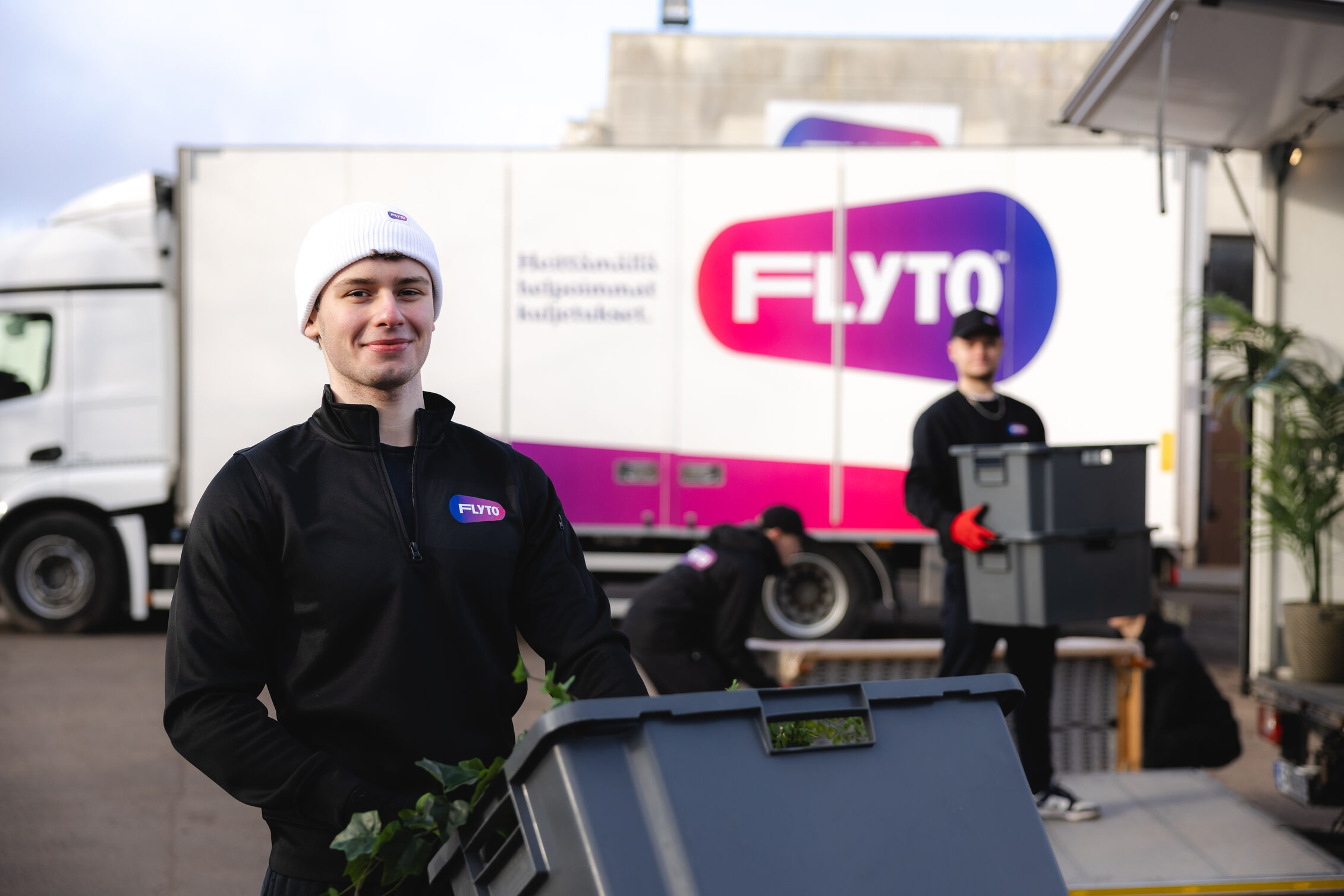
Flyto Relocation coordinates international moves to Delhi and the NCR end to end — export packing and customs at origin, sea freight to Nhava Sheva or Mundra, the bonded inland move to the Delhi Inland Container Depot, Transfer-of-Residence customs clearance in the city, and final delivery to your address in South Delhi, Gurugram or Noida. We work alongside your immigration and tax advisers so your shipment category matches your visa status before anything leaves origin.
Frequently asked questions
Can I move to Delhi on an e-Visa and find a job once I’m there?
No. The e-Visa cannot be used for employment. To work you need an employer-sponsored Employment Visa arranged before you arrive (BOI list of visas).
Do I really have to register with the FRRO?
Yes, if your visa or stay exceeds 180 days — within 14 days of arrival, through the e-FRRO portal. OCI cardholders are exempt (BOI registration requirements).
Delhi has no port — where does my shipment arrive?
Sea freight lands at a western port, usually Nhava Sheva (JNPT) near Mumbai or Mundra in Gujarat, then moves inland about 1,000–1,400 km and is typically customs-cleared at the Inland Container Depot at Tughlakabad in Delhi (CONCOR; JNPA).
Will my used furniture come in duty-free?
Not automatically. Used personal and household goods may qualify for relief under the Transfer of Residence concession in the Baggage Rules 2026, up to a slab set by how long you lived abroad; anything above that attracts duty (CBIC Baggage Rules 2026).
How bad is the air pollution, really?
For much of the year it is manageable, but from late October to January it regularly reaches the “very poor” and “severe” AQI bands and triggers emergency curbs under GRAP. Plan for air purifiers and masks in winter (CPCB National AQI; CAQM).
Should I ship my car?
Usually not. Used-car imports must be under three years old, right-hand drive and carry heavy duty, and Delhi additionally bans older diesel and petrol vehicles from its roads — buying locally is normally simpler and cheaper (DGFT notification).
What do I need to rent and get paid?
A PAN tax ID and, for NRIs, NRE/NRO accounts under FEMA; landlords expect a broker fee (about one month’s rent) and a deposit of a few months’ rent (Income Tax Department; RBI NRI accounts).
Planning your move: compare Delhi with our guides to moving to Mumbai from abroad and Bangalore from abroad, browse all our India moving guides and relocation services to and from India, or read a country-specific route such as moving from the UK to India.
Sources
- Bureau of Immigration, MHA – List of visas, Registration requirements (FRRO), About the OCI card, e-Visa / visa on arrival
- Ministry of Home Affairs – Work Visa FAQ (salary threshold, exceptions); Indian Visa Online – e-Visa portal (portal timed out on automated check – official Government of India domain); e-FRRO – registration portal
- CBIC – Baggage Rules 2026 / Transfer of Residence notification; ATITHI customs declaration
- Ports & inland logistics – JNPA (Nhava Sheva / JNPT); Mundra Port; CONCOR (ICD Tughlakabad / Patparganj). Port–Delhi road distances (~1,000–1,400 km) are planning estimates.
- Air quality – CPCB National Air Quality Index; Commission for Air Quality Management (GRAP)
- Climate – India Meteorological Department (2024 record-heat figures per widely reported IMD data)
- Transport – Delhi Metro Rail Corporation (DMRC)
- RBI – Currency Declaration Form, NRI accounts FAQ (FEMA); DGFT – Vehicle import notification
- Income Tax Department – PAN / e-filing portal
Hiring an international mover? See our full International removals to India service — Flyto’s own European hubs, vetted local partners and one English-speaking coordinator, door to door.