

Moving from Denmark to India (2026): Complete Guide

Relocating from Denmark to India means closing out your affairs with Danish authorities on the export side and clearing customs and immigration on the Indian import side — two separate rulebooks that connect at one key point: your documented time spent abroad, and the Indian visa/residency status that reflects it, decide which Indian customs concession you can use. This guide is written for a Denmark-based mover — Danish resident, expat, or returning Indian national — shipping household goods, a pet, or a vehicle to India, and closes with a short note on the reverse move (India → Denmark).
Key takeaways
- Whether you qualify for duty-free "Transfer of Residence" (TR) customs treatment in India depends on continuous residence abroad — generally at least 2 years immediately before the move — which your Indian visa category (Employment/E-visa, OCI, or X-visa) and FRRO/OCI paperwork help document (CBIC, Transfer of Residence Rules at a Glance; Department of Revenue, Transfer of Residence).
- You must report your move abroad to your Danish municipality (CPR/folkeregister) no later than 5 days after departure, and no earlier than 4 weeks before (cpr.dk, Flytning til udlandet).
- Full Danish tax liability normally ends when you no longer have a residence available to you in Denmark, or when you can document a firm intention to settle permanently abroad (Skattestyrelsen, C.F.1.2.3).
- A formal EU export declaration is mandatory once your shipment’s value exceeds €1,000 or its weight exceeds 1,000 kg — true for almost any household move (European Commission, Taxation and Customs Union — Exportation).
- India’s Baggage Rules allow duty-free import of used personal and household effects for people transferring residence, subject to conditions and item-specific annexures (DOR, Baggage Rules; CBIC, Baggage Rules 2016).
- Dogs and cats need an Advance No Objection Certificate (NOC) from India’s AQCS, filed at least 7 days before travel, plus microchip, rabies vaccination and a health certificate (AQCS, Import SOP for Dogs; DGFT, Pet Import FAQ).
- Personal vehicle imports to India are, in practice, restricted to right-hand-drive cars, with an age cap of roughly 3 years for used vehicles — left-hand-drive Danish cars are not normally imported for private use.
- Carrying more than USD 5,000 in foreign currency notes (or USD 10,000 total foreign exchange) into India requires a Currency Declaration Form (CDF) (RBI, Currency Declaration Form).
1. Visa status first: it decides your customs treatment
Before touching customs paperwork, settle your Indian entry status, because it is the gate that everything else passes through. Foreign nationals working in India generally need an Employment (E) visa, sponsored by an India-registered employer, with FRRO/FRO registration required within 14 days of arrival for visas valid beyond 180 days. A minimum annual salary threshold applies, with lower thresholds or exemptions for categories such as ethnic cooks at foreign missions, non-English language instructors, performing artists and sports coaches, plus honorary (unpaid or low-stipend) work with registered NGOs (Consulate General of India, San Francisco, Employment Visa). Persons of Indian origin (including many returning to settle) may instead qualify for an Overseas Citizen of India (OCI) card, a lifelong multiple-entry status that removes the FRRO registration requirement (OCI Services FAQ). FRRO/FRO registration itself is administered under the Bureau of Immigration, with the process and timelines set out by India’s Ministry of External Affairs (MEA, Visa-related services provided by FRROs/FROs). Your documented time spent abroad — evidenced through this visa/OCI paperwork — is exactly what Indian customs checks under the "Transfer of Residence" (TR) concession described in Section 4, so get the visa/OCI process moving well before your shipment departs Denmark.
2. The Denmark export side
Customs authority. Denmark’s customs authority is Toldstyrelsen, part of the Danish tax administration (Skatteforvaltningen). Because India is outside the EU customs union, your shipment out of Denmark is a genuine export, not just an internal EU transfer, and Toldstyrelsen’s business-facing export guidance sets out the general clearance process for shipments leaving the EU for a non-EU country (Toldstyrelsen, Guide til at eksportere til ikke-EU-lande). Toldstyrelsen’s separate guidance on moving goods only covers the reverse direction — bringing belongings into Denmark — and is referenced in the closing section below (Toldstyrelsen, If you move to Denmark).
Export declaration. Once your consignment’s value exceeds €1,000 or its weight exceeds 1,000 kg — true for nearly any household move — a full electronic export declaration is required rather than a simplified oral one (European Commission, Exportation). In practice, your moving company or its customs broker files this through Denmark’s export system (DMS Eksport) on your behalf; you supply an inventory/packing list and proof of the move (employment contract, lease, visa).
Deregistration (folkeregister/CPR). Before or immediately after leaving, you must report your departure to your Danish municipality’s Citizen Service (Borgerservice), which updates the CPR (Det Centrale Personregister). Report no earlier than 4 weeks before departure and no later than 5 days after; moves abroad lasting more than 6 months must be registered as a formal "udrejse" (cpr.dk, Flytning til udlandet). This deregistration is the trigger event municipal services, banks and, indirectly, tax status use to treat you as having left Denmark.
Tax exit. Your full Danish tax liability generally ceases once you no longer have a residence at your disposal in Denmark, or once you can document an intention to settle permanently abroad; if a residence is retained (e.g., rented out irrevocably for at least 3 years under the "3-year rule"), liability can end earlier under specific conditions (Skattestyrelsen, C.F.1.2.3 — Hvornår ophører skattepligten ved fraflytning). Selling or genuinely vacating your home, and notifying Skattestyrelsen of your departure date, are the practical steps that start the clock.
3. Ports and transit (industry estimates, not official figures)
Real Danish seaports handling international freight include the Port of Aarhus (Denmark’s largest container port), Copenhagen Malmö Port (CMP), and Port of Esbjerg, with Fredericia as a secondary container hub. For air freight, Copenhagen Airport (Kastrup) is the main international gateway.
The following are freight-industry estimates only, not official government figures, and vary by carrier, season and routing:
- Sea freight (FCL/LCL) from Aarhus or Copenhagen to Indian ports such as Nhava Sheva (JNPT) or Chennai: typically 5–7 weeks transit, plus days for origin/destination customs clearance.
- Air freight from Copenhagen to Delhi/Mumbai/Bangalore: typically 1–2 weeks door-to-door including customs, for smaller or time-sensitive shipments.
Always request a firm transit estimate from your chosen carrier or moving company rather than relying on general industry averages.
4. The India import side
India’s customs entry point for relocating individuals is the Baggage Rules framework administered by the Central Board of Indirect Taxes and Customs (CBIC) under the Department of Revenue (DOR, Baggage Rules; CBIC, Baggage Rules 2016). Under Rule 6, a person transferring residence to India — with the largest duty-free allowance reserved for those with a minimum stay of 2 years abroad immediately preceding arrival — can clear used personal and household articles duty-free up to an aggregate value of ₹5 lakh, subject to item lists in Annexures I–III (Annexure I items, such as firearms, excess alcohol, gold/silver other than ornaments, and flat-panel TVs, are never duty-free; Annexure II and III items get duty-free treatment only under TR, with lower graduated value limits — ₹60,000 to ₹2 lakh — for shorter stays of 3 months to 2 years) (CBIC, Transfer of Residence Rules at a Glance; DOR, Transfer of Residence).
Practically, your goods travel as unaccompanied baggage: they must be dispatched within about one month of your own arrival in India (or a period the customs officer allows), and clearance is done at the Indian port/airport of entry by filing the required baggage declaration, passport/visa copies, packing list, and — where applicable — Bill of Entry, plus proof of your transfer-of-residence status (employment contract, FRRO registration, or OCI card). Items outside the personal-effects concession, or unaccompanied baggage without TR eligibility, attract standard customs duty.
5. Pets
Leaving Denmark. For pets travelling to a non-EU country like India, Fødevarestyrelsen (the Danish Veterinary and Food Administration) does not apply one fixed Danish export standard — it stresses starting preparations well ahead (some destinations require up to 12 months’ notice) and following the destination country’s own import requirements, which typically include microchip ID, rabies vaccination and an official health certificate; it is the owner’s responsibility to confirm exactly what the destination country requires (Fødevarestyrelsen, Rejse med selskabsdyr til tredjelande). For India, those destination-country requirements are the AQCS rules below.
Entering India. Every dog or cat entering India needs an Advance No Objection Certificate (NOC) from the Animal Quarantine and Certification Service (AQCS), filed at least 7 days before travel via the ATITHI 2.0 portal, under one of three pathways: Transfer of Residence, Re-import, or Short Stay (the latter needing a DGFT import license) (AQCS, Standard Operating Procedure — Import of Pet Dogs; DGFT, FAQ on Import of Pets). Required documentation includes a microchip, current rabies vaccination and an official health certificate; pets arriving as baggage are generally subject to quarantine/examination on arrival, and cats face an additional feline-specific health check. India’s Baggage Rules cap duty-free pet import at two animals (dogs and cats only) per person transferring residence after at least 2 years of continuous stay abroad (CBIC, Baggage Rules 2016).
6. Vehicles, money, and things people forget
Vehicles. In practice, India only allows personal import of right-hand-drive cars — Danish (left-hand-drive) vehicles are not normally imported for private use, and used-vehicle imports face an age cap of roughly 3 years from manufacture, plus roadworthiness and speedometer (km/h) requirements. Even where TR conditions (2 years’ continuous stay abroad) are met, a used car brings normal customs duty, IGST and cess rather than a duty-free concession — the Baggage Rules’ duty-free treatment does not extend to motor vehicles (CBIC, Transfer of Residence Rules at a Glance).
Money. Bringing foreign currency into India above USD 5,000 in notes, or USD 10,000 in total foreign exchange (notes, traveller’s cheques, drafts combined), requires filing a Currency Declaration Form (CDF) with Indian customs on arrival (RBI, Currency Declaration Form). Indian rupee notes carried across the border by residents are capped at ₹25,000; non-residents may not carry INR notes at all.
Easy to forget: an export declaration filed through Denmark’s export system for the Danish side (arranged via your mover/broker, using your company’s or the mover’s EORI number); keeping your Danish tax deregistration paperwork for future re-entry; confirming FRRO registration timing in India (within 14 days of arrival for most long-stay visas); and separating any Annexure-I restricted items (jewellery above limits, certain electronics, alcohol) out of your general household shipment, since these never qualify for the duty-free TR concession.
Reverse direction: India → Denmark
Moving back the other way, the logic mirrors this guide: you need at least 12 consecutive months’ residence outside the EU to import personal belongings into Denmark duty- and VAT-free as "flyttegods," with goods brought in no earlier than 6 months before and no later than 12 months after the move date (Toldstyrelsen, If you move to Denmark). Vehicles brought in as moving goods are generally expected to have been owned and used abroad for a meaningful period (commonly cited as at least 6 months) before import; confirm current conditions with Toldstyrelsen or Motorstyrelsen before shipping a car. On the Indian side, you would deregister any residency status with the FRRO/Bureau of Immigration and settle Indian tax residency separately.
How Flyto handles your Denmark to India move
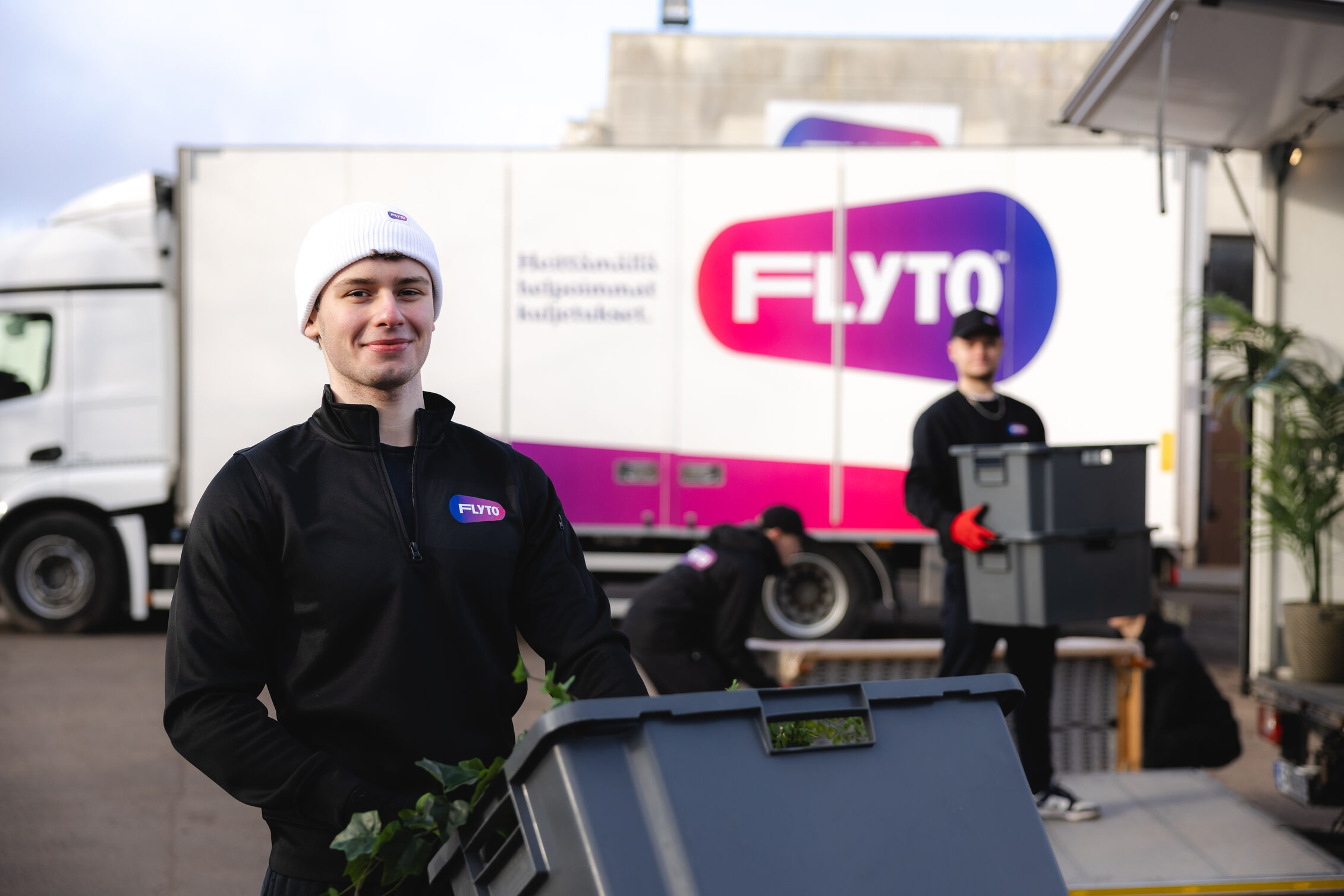
Flyto runs its own offices, warehouses, vehicles and moving teams across Northern, Central and Southern Europe, so the Danish collection, packing and export-customs handling on this route is done in-house. For the ocean or air leg to India and final-mile delivery, we work through a carefully vetted network of partner carriers and customs brokers, plus trusted local partners on the ground in India who handle Indian customs clearance, FRRO-related documentation checks and last-mile delivery.
Frequently asked questions
Do I need to deregister from Denmark before I ship my belongings?
No — deregistration (CPR) and the export shipment are separate processes, but you should report your departure to your municipality within the 5-day window regardless of when your goods physically leave (cpr.dk).
Can I bring my sofa and TV to India duty-free?
Used personal and household effects generally qualify duty-free under the Transfer of Residence provisions if you meet the stay-abroad conditions; specific electronics and other Annexure II/III items have their own value limits, and the top ₹5-lakh allowance requires a minimum 2-year continuous stay abroad (CBIC, Baggage Rules 2016).
Can I ship my Danish car to India?
Only if it is right-hand drive and meets India’s roadworthiness and age requirements — most Danish (left-hand-drive) personal cars are not imported for private use, and even eligible used cars are not duty-free.
How far ahead do I need to arrange my pet’s paperwork?
File the AQCS Advance NOC at least 7 days before travel, but start rabies vaccination, microchipping and health certification well earlier since some steps have their own waiting periods (AQCS).
Do I still owe Danish tax after I leave?
Full tax liability typically ends once you have no residence available in Denmark or can prove intent to settle permanently abroad — confirm your specific case with Skattestyrelsen before departure (Skattestyrelsen, C.F.1.2.3).
Is there a limit on cash I can bring into India?
There’s no absolute limit, but foreign currency notes over USD 5,000 (or USD 10,000 total foreign exchange) must be declared on a Currency Declaration Form on arrival (RBI CDF).
Sources
- Toldstyrelsen — Guide til at eksportere til ikke-EU-lande
- Toldstyrelsen — If you move to Denmark
- cpr.dk — Flytning til udlandet
- Skattestyrelsen (info.skat.dk) — C.F.1.2.3 Hvornår ophører skattepligten ved fraflytning
- European Commission, Taxation and Customs Union — Exportation
- Ministry of External Affairs, India — Visa-related services provided by FRROs/FROs
- OCI Services — Online OCI FAQ
- Consulate General of India, San Francisco — Employment Visa
- Department of Revenue, India — Baggage Rules
- Department of Revenue, India — Transfer of Residence
- CBIC — Baggage Rules, 2016 (full text)
- CBIC — Transfer of Residence Rules at a Glance
- Fødevarestyrelsen — Rejse med selskabsdyr til tredjelande
- AQCS India — Standard Operating Procedure for Import of Pet Dogs
- DGFT — FAQ on Import of Pets
- Reserve Bank of India — Currency Declaration Form (CDF)