

Moving from Switzerland to India (2026): Complete Guide

Switzerland to India is a two-authority move: your household goods must clear the Swiss export side with the Federal Office for Customs and Border Security (FOCBS/BAZG), and separately clear the Indian import side with Indian Customs (CBIC) and, if you have pets, the Animal Quarantine and Certification Service (AQCS). This guide is for Swiss residents — Swiss nationals, permit holders, or foreign professionals based in Switzerland — relocating to India for work, marriage, retirement, or as a returning Indian national/OCI holder. It covers what actually happens at departure in Switzerland, what happens on arrival in India, and what changes if you ever move back.
Key takeaways
- Whether your shipment clears Indian customs duty-free depends on your visa/OCI status and how long you lived abroad — the "Transfer of Residence" (ToR) concession requires a minimum two years’ continuous stay abroad among other conditions (CBIC, Transfer of Residence Rules at a Glance).
- India replaced the 2016 Baggage Rules with the Customs Baggage (Declaration and Processing) Regulations, 2026, effective 2 February 2026, moving to electronic declaration via ICEGATE or the Atithi app (PIB, Government of India).
- Exporting household goods from Switzerland is simple: FOCBS only requires an inventory list showing your Swiss and new foreign address at the exit customs office — no full customs declaration for personal effects (BAZG, Relocation: Export from Switzerland).
- You must formally deregister (déclaration de départ/Abmeldung) with your Swiss commune before leaving; Geneva, for example, requires notice two weeks before departure and a paid departure certificate on request (Canton of Geneva, Announcing my departure).
- Switzerland does not require you to declare cash on exit, but FOCBS can question amounts of CHF 10,000 or more (BAZG, Cash, foreign currency, securities); India requires a Currency Declaration Form for foreign cash over US$5,000 or total forex over US$10,000 on arrival (RBI, Currency Declaration Form).
- Pets need a microchip and rabies vaccination on both ends; India’s AQCS caps baggage-rule pet import at two dogs/cats per owner with an advance No Objection Certificate (AQCS, Import of Pet under Baggage Rule), while re-entering Switzerland with a pet from India requires an FSVO/BLV rabies antibody titer test because India is a rabies-risk country (BLV, Dogs, cats and ferrets).
- A Swiss car is not a simple import: it may only enter as a used passenger vehicle under Transfer of Residence at full customs duty (no baggage-rule relief applies to motor vehicles), and general used-vehicle imports are additionally restricted by DGFT to Mumbai port with age limits (CBIC ToR guidance; DGFT, Foreign Trade Policy Chapter 2).
1. Your immigration status decides your customs treatment
Before anything is packed, work out which entry category you fall into, because it determines what Indian customs will let through duty-free:
- OCI cardholder or long-term visa holder settling permanently, or an Indian citizen returning after living abroad, can claim the ToR concession — but only after a minimum two years’ continuous stay abroad immediately before arrival, with total visits to India in that period not exceeding six months, and the concession not used in the preceding three years (CBIC ToR).
- Foreign professionals on an employment/business visa without ToR eligibility are treated as ordinary passengers, subject to the general free baggage allowance only (PIB, Baggage Rules 2026).
- OCI registration itself is a separate process from customs clearance, run through the online OCI portal with its own eligibility rules on Indian-origin descent and documentation — getting an OCI card does not by itself grant, and its absence does not by itself deny, the ToR customs concession (OCI Services, FAQs).
- Anyone without a long-stay visa or OCI card typically travels on an e-Visa through the official portal, which carries no customs concession of its own (Indian Visa Online, e-Visa).
In short: your visa/OCI category plus your time-abroad record — not your nationality — decide whether your shipment is cleared as duty-free "personal effects" or as a dutiable commercial-style import.
2. The Switzerland side: deregistration, export declaration, tax exit
Customs authority. Switzerland’s customs authority is the Federal Office for Customs and Border Security (FOCBS), known domestically as BAZG/OFDF/UDSC. For a household relocation, FOCBS’s own guidance states it is sufficient to present an inventory list showing your Swiss address and your new foreign address at the exporting customs office — a full written or electronic export declaration is not required for ordinary personal effects, though a private vehicle must be declared for export with its Swiss registration document (BAZG, Relocation: Export from Switzerland). Commercial goods otherwise fall under Switzerland’s electronic export system — e-dec Export has now been superseded by the newer Passar platform — under which merchandise leaving Switzerland must be declared to customs electronically (BAZG, Exportation from Switzerland).
Deregistration (Abmeldung/déclaration de départ). Notify your commune before leaving permanently — practice varies by canton. Geneva’s OCPM, for example, wants the departure announcement filed (free) at least two weeks before departure, and will issue a paid certificate of departure (CHF 25 per person) from one month before departure onward for banks, insurers and Indian paperwork (Canton of Geneva).
Swiss citizens abroad. Swiss nationals must register with the Swiss representation covering their new residence — the Embassy in New Delhi or Consulate General in Mumbai — within 90 days of their notice of departure (Swiss Representations in India).
Tax residency exit. Unlimited Swiss tax liability ends only when your tax domicile is genuinely abandoned — deregistering is necessary but not sufficient on its own. If you keep property, a business, or a permanent establishment in the canton after leaving, Zurich’s tax office applies "unity of the tax period": you remain assessed for the full calendar year of departure (income apportioned internationally, property value pro-rated), rather than a simple part-year cutoff, per the cantonal guidance on cross-border changes of tax liability (Kanton Zürich, Steuerbuch zStB 49-3).
Cash. Switzerland places no limit on cash carried across its border and does not require a declaration, though FOCBS may question you and log amounts of CHF 10,000 or more, especially if money-laundering is suspected (BAZG, Cash, foreign currency, securities).
3. Ports and transit: the physical route
Switzerland is landlocked, so nothing leaves by sea directly. Household shipments to India normally move by one of two real routes:
- Sea freight: trucked from your home to a consolidation warehouse, then either barged down the Rhine from the Basel Rhine Ports (Kleinhüningen, Birsfelden, Auhafen Muttenz — operated jointly by the cantons of Basel-Stadt and Basel-Landschaft as "Port of Switzerland," the country’s only ports and its hub on the Rotterdam–Basel–Genoa freight corridor) to a North Sea container port such as Rotterdam or Antwerp, or trucked/rail-hauled south through the Gotthard corridor to Genoa on the Mediterranean (Port of Switzerland); from there, container vessels sail to Indian gateway ports, chiefly Jawaharlal Nehru Port (Nhava Sheva) near Mumbai or Chennai.
- Air freight: trucked to Zurich or Geneva airport, then flown, typically with a transshipment hub, into Delhi, Mumbai, or Bengaluru.
Industry-estimate transit times only, not official government figures: sea freight Basel-area to Nhava Sheva/Chennai commonly runs roughly 5–7 weeks door-to-port once you add trucking, transshipment and Indian customs clearance; air freight is typically 3–10 days total including both ends’ customs processing. Actual times depend on carrier schedules, consolidation, and how fast your ToR/customs paperwork clears in India.
4. The India side: the customs process and forms
Under the Customs Baggage (Declaration and Processing) Regulations, 2026 (effective 2 February 2026), arriving passengers file an electronic Customs Baggage Declaration (CBD) — via ICEGATE or the Atithi app — and are routed to a Green Channel (nothing to declare) or Red Channel (goods to declare, including ToR shipments) (PIB, Government of India). The general duty-free allowance is ₹75,000 for residents, Indian-origin tourists and eligible visa-holding foreigners, and ₹25,000 for foreign tourists, plus one new laptop per adult and weight-based jewellery allowances (40g women, 20g others).
For unaccompanied baggage — your sea/air shipment arriving separately — Customs additionally applies Transfer of Residence: if you qualify (Section 1), personal and household effects clear largely duty-free up to a value ceiling scaling with time abroad, while a defined list of larger appliances instead attracts a concessional 15% Basic Customs Duty + 10% Social Welfare Surcharge rather than full duty (CBIC ToR). Firearms, gold/silver bullion, alcohol above two litres, and more than 100 cigarettes sit outside this concession regardless of ToR status.
5. Pets: both ends have their own authority
Leaving Switzerland (export side). The Swiss Federal Food Safety and Veterinary Office (FSVO/BLV) sets the rules for pets travelling out of Switzerland: an ISO 11784/11785 microchip inserted before rabies vaccination, then a valid rabies vaccination, and a veterinary health certificate for the destination (BLV, Travelling with dogs, cats and ferrets).
Arriving in India (import side). India’s Animal Quarantine and Certification Service (AQCS), under the Department of Animal Husbandry, issues the import clearance. Under the baggage rule, up to two dogs/cats per owner enter without a separate DGFT licence, provided the owner qualifies for Transfer of Residence (2+ years abroad), the pet is over three months old, has a rabies vaccination given 1–12 months before travel, and a health certificate confirms it is disease-free; submit an Advance NOC application before travel, usually issued within a few working days (AQCS; DGFT, pet import FAQ). More than two pets, or unmet baggage-rule conditions, means a full DGFT licence instead.
Reverse direction (India → Switzerland). Bringing a pet back from India is stricter than leaving Switzerland was: BLV classifies India as a rabies-risk country, so besides microchip and vaccination you need a rabies antibody titer test from an approved laboratory, and animals under seven months old cannot enter at all from such countries — plan for long lead times (BLV, Travelling with dogs, cats and ferrets).
6. Vehicles, money, and what people forget
Vehicles. A used car can be imported under Transfer of Residence, but Customs Tariff Heading 9803 (the baggage heading) excludes motor vehicles — so it pays the normal rate of customs duty, IGST and cess, no baggage-rule discount, and you must prove at least one year’s prior ownership/use abroad (CBIC ToR). Separately, the Foreign Trade Policy caps used-vehicle imports generally: no more than three years old, minimum five years’ remaining roadworthiness, conformity with the Motor Vehicles Act 1988, and clearance only through the customs port at Mumbai (DGFT, FTP Chapter 2). India drives on the left; shipping a left-hand-drive Swiss car rarely pencils out once duty and compliance costs are added — most people sell in Switzerland and buy locally.
Money. No exit declaration is needed in Switzerland (though CHF 10,000+ can draw questions), but on landing in India you must file a Currency Declaration Form if you carry foreign currency notes over US$5,000, or total foreign exchange (cash, traveller’s cheques, drafts) over US$10,000 (RBI, Currency Declaration Form).
Easy to forget:
- The ToR shipping-time window: unaccompanied baggage must be shipped/despatched or arrive within the time limits set by the concession notification, and the concession cannot be reused within three years — plan your sailing date around your own arrival date, not the other way around.
- Firearms: one firearm may be imported under ToR subject to strict lifetime-retention conditions — nearly never worth the paperwork (CBIC ToR).
- Your Swiss departure certificate: banks, insurers, and sometimes Indian landlords or FRRO registration will ask for proof you actually left Switzerland — request it from your commune before you go, not after.
How Flyto handles your Switzerland to India move
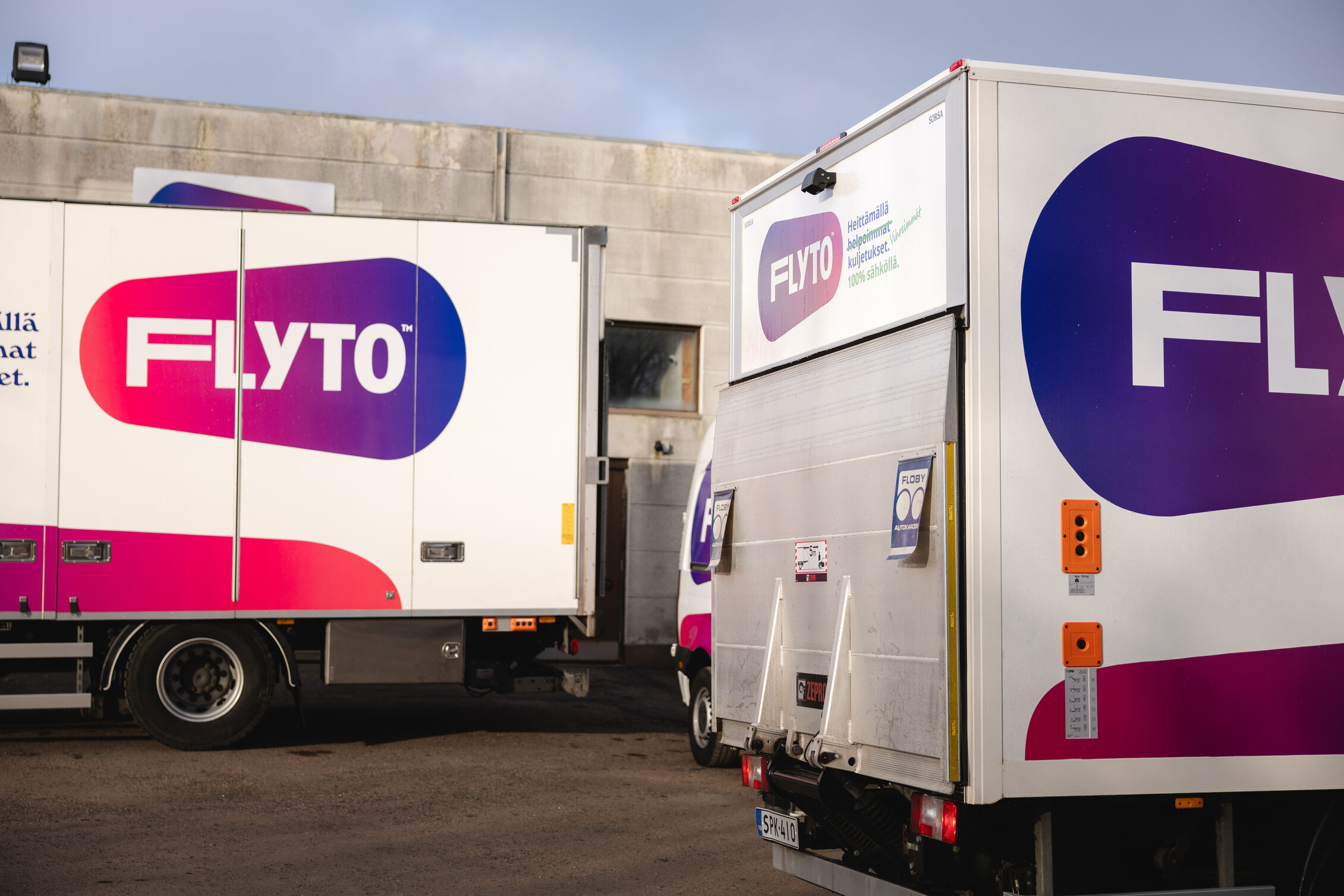
Flyto runs its own offices, warehouses, crews and vehicles across Northern, Central and Southern Europe, so the Swiss collection, export documentation and consolidation for your shipment are handled in-house end to end. For the ocean or air leg from a European gateway port to India, and for the ToR customs clearance and last-mile delivery inside India, we work through a carefully vetted network of partner agents and trusted local partners on the ground in India — chosen for their track record with Transfer of Residence clearance, not the lowest quote. You get one point of contact throughout, even though multiple specialists are involved behind the scenes.
Frequently asked questions
Do I need to be an OCI cardholder to get duty-free customs treatment in India?
No. Transfer of Residence is available to Indian citizens and OCI/foreign nationals alike, provided you meet the residence-abroad and prior-use conditions — OCI status alone doesn’t grant the concession, and its absence doesn’t bar it (CBIC ToR).
Can I get away without deregistering in Switzerland?
Not cleanly — you’ll leave your tax liability and residence status ambiguous, and lack the departure certificate banks, insurers and Indian authorities may ask for (ge.ch; Kanton Zürich).
How much cash can I bring into India?
Any amount, but you must complete a Currency Declaration Form if you carry over US$5,000 in notes or over US$10,000 in total foreign exchange (RBI CDF).
Can I bring more than two pets?
Not under the simplified baggage rule — two dogs/cats per owner is the cap; beyond that you need a separate DGFT import licence (AQCS).
Is it worth shipping my Swiss car to India?
Usually not. It pays full customs duty (no ToR discount applies to vehicles), must be under three years old and clear only through Mumbai port, and being left-hand-drive works against you in a left-hand-traffic country (CBIC ToR; DGFT FTP Ch. 2).
What visa do I need if I’m not eligible for OCI?
Most short/medium stays run through the official e-Visa portal; longer-term work, business or residence situations require a regular visa through the same Bureau of Immigration channel (Indian Visa Online; Bureau of Immigration).
Sources
- BAZG — Relocation: Export from Switzerland
- BAZG — Exportation from Switzerland (e-dec/Passar)
- BAZG — Cash, foreign currency, securities
- Canton of Geneva — Announcing my departure (OCPM)
- Swiss Representations in India — Registration in the Register of the Swiss Abroad
- Kanton Zürich — Steuerbuch zStB 49-3 (tax assessment on international change of residence)
- BLV/FSVO — Travelling with dogs, cats and ferrets
- Port of Switzerland — Swiss Rhine Ports
- CBIC — Transfer of Residence Rules at a Glance
- PIB, Government of India — Government notifies Baggage Rules, 2026
- DGFT — Import of dog/cats, general information
- AQCS India — Import of Pet under Baggage Rule
- Indian Visa Online — e-Visa (Bureau of Immigration)
- Bureau of Immigration — How to apply for a visa
- OCI Services — FAQs
- RBI — Currency Declaration Form (CDF)
- DGFT — Foreign Trade Policy, Chapter 2 (vehicle import conditions)