

Moving from the Czech Republic to India (2026): Complete Guide

Moving from the Czech Republic to India means leaving a landlocked EU member state through its customs, residency and tax systems on one end, and clearing a very different, visa-linked customs regime on the other. This guide is written for a Czech-based resident — Czech citizen, EU national, or third-country national living in the Czech Republic — relocating to India for work, family, or an OCI/long-term visa. It covers what the Czech authorities require before you leave, how Indian customs treats your shipment depending on your immigration status, realistic freight routing and timing, and a short note on moving back the other way.
Key takeaways
- Your Indian visa/immigration status — not your nationality — determines your customs treatment. India’s Baggage Rules, 2026 apply different duty-free "Transfer of Residence" value slabs to Indian residents, OCIs/NRIs and foreigners on a non-tourist visa versus foreign tourists. (PIB, Government of India)
- The Czech Customs Administration (Celní správa České republiky) handles the export declaration for anything leaving the EU by freight — filed electronically through the EU’s Automated Export System (AES). (celnisprava.gov.cz)
- There is no formal "deregistration" for Czech citizens leaving the country, but a change-of-address notice for your permanent residence record (trvalý pobyt) should be filed with your local registration office (ohlašovna) or via the citizen portal. (portal.gov.cz)
- Czech tax residency doesn’t end automatically on the day you fly out — the Finanční správa applies a permanent-home/183-day test, and you can request an official confirmation of your residency status. (Finanční správa)
- Carrying €10,000 or more in cash out of the EU must be declared at the point you exit. (European Commission – Your Europe)
- India’s Baggage Rules, 2026 (in force since 2 February 2026) replaced the Baggage Rules, 2016, set a general duty-free allowance of ₹75,000 for residents/OCIs/NRIs/non-tourist-visa holders (₹25,000 for foreign tourists), and retained Transfer of Residence value slabs tied to time spent abroad. (PIB notification)
- Pets need a Czech state-vet export health certificate going out and an AQCS Advance NOC via India’s ATITHI 2.0 portal coming in. (SVS ČR; AQCS)
- Bringing your own car to India is heavily restricted — right-hand drive, no older than 3 years, Mumbai-only customs port for used vehicles — which is why most relocating families leave the car behind. (DGFT Notification No. 4(RE-2001)/1997-2002)
1. Your visa status decides your customs treatment, not what’s in the boxes
India’s Baggage Rules, 2026, notified by the Central Board of Indirect Taxes and Customs (CBIC) on 1 February 2026 and effective from 2 February 2026, superseded the Baggage Rules, 2016 and are now the operative legal framework for anyone bringing personal and household goods into India (PIB press release; CBIC notification text). The rules set a general duty-free allowance of ₹75,000 for returning residents, OCIs/NRIs and foreigners on a non-tourist visa, against a lower ₹25,000 allowance for foreign tourists, and separately retain "Transfer of Residence" (TR) provisions giving a larger duty-free household-goods slab to people who have lived abroad for an extended period and did not spend excessive time back in India during that period. A foreign national on a non-tourist visa (employment, business, dependent) is assessed under its own schedule rather than the tourist one. This is why the very first planning step is confirming which visa category you (and any accompanying family) will hold on arrival — through the Bureau of Immigration, under India’s Ministry of Home Affairs, which lists all visa types and OCI provisions (boi.gov.in). Everything downstream — how much of your shipment clears duty-free, what documentation customs will ask for, and whether your pet or car qualifies for concessional treatment — flows from that status, not from the contents of your container.
2. The Czech Republic side: customs, deregistration, tax exit
Customs authority. The Celní správa České republiky (Czech Customs Administration), part of the Ministry of Finance, is responsible for all export formalities. For a household-goods shipment leaving the EU, this means an electronic export declaration — since 1 July 2009 export declarations can only be filed electronically, via the EU’s Automated Export System (AES, implemented in the Czech Republic as the e-Vývoz system) — either by a customs agent/freight forwarder acting for you, or self-filed through the Customs Administration’s own e-customs portal, after which an Export Accompanying Document (EAD) is issued and travels with the consignment (celnisprava.gov.cz — export procedures). Most international movers handle this filing on your behalf as part of the move.
Leaving the population register. Czech law does not require citizens to formally "deregister" before emigrating the way some countries do. What you should do is file a change-of-permanent-residence notification (Přihlašovací lístek k trvalému pobytu) at your local ohlašovna, or through the government’s central citizen portal, so your official address record is accurate and any future correspondence, elections notices, or insurance matters aren’t sent to an address you’ve left (portal.gov.cz).
Tax residency. Under the Czech Income Tax Act, tax residency is determined by two tests: whether you maintain a permanent home in the Czech Republic, or whether you habitually stay there (broadly, 183+ days in the calendar year, with each part-day counting). You do not stop being a Czech tax resident automatically the day you leave — it’s assessed against these tests for the year, and you can apply to your local tax office (finanční úřad) for an official confirmation of your residency status once conditions change, which is useful for claiming non-resident treatment or avoiding double taxation (Finanční správa).
Cash. If you or your shipment carry €10,000 or more in cash (or equivalent, including certain bearer instruments) out of the EU, you must declare it to customs at the point of exit using the EU cash declaration form — this is an EU-wide rule, not Czech-specific (European Commission).
3. Ports and transit: real routing, industry estimates
The Czech Republic is landlocked and has no seaport of its own, so household-goods shipments moving by sea are trucked or railed to a North Sea container port before loading. Hamburg and Bremerhaven, Germany’s two largest container ports, are the standard gateways used for Czech-origin sea freight to India; a Mediterranean routing via Koper (Slovenia) is sometimes used as an alternative. On the Indian side, the dominant gateway is Nhava Sheva / Jawaharlal Nehru Port (JNPT) near Mumbai, India’s largest container port, with Chennai and Mumbai’s older docks also handling cargo. For air freight, Václav Havel Airport Prague (PRG) is the country’s main international cargo gateway, served by eight scheduled cargo carriers plus a wider set of charter operators, typically transshipping via a European or Gulf hub to Indian gateway airports such as Delhi or Mumbai (Prague Airport company facts).
These are freight-industry estimates, not official government transit figures: ocean transit alone from Hamburg to Nhava Sheva commonly runs roughly 3–5 weeks depending on carrier and transshipment, before adding pre-carriage from the Czech Republic, export/import customs clearance, and final delivery — door-to-door sea moves typically land in the 6–10 week range. Air freight is far faster door-to-door, typically days rather than weeks, but at substantially higher cost per kilogram, and is usually reserved for a smaller "essentials" shipment rather than a full household move.
4. The India import side: the actual process
Physical clearance of your goods is governed by the Customs Act, 1962, as implemented through the Baggage Rules, 2026 and the accompanying Customs Baggage (Declaration and Processing) Regulations, 2026, both notified by CBIC on 1 February 2026 (PIB). The new framework pushes declarations online: passengers carrying dutiable, restricted, or unaccompanied baggage are expected to file an electronic declaration in advance through the CBIC’s ATITHI portal, while passengers with nothing to declare continue to use the Green Channel. If you qualify for Transfer of Residence treatment — broadly, having lived abroad for an extended period and not having spent excessive time in India during that period — your bona fide used household and personal effects can clear within a duty-free value slab tied to how long you were abroad; anything above that slab, or goods that don’t qualify as "used personal effects," is assessed to duty in the normal way. Unaccompanied baggage (the container that arrives separately from you by sea) is cleared against a Bill of Entry filed by your customs broker or moving agent once the vessel arrives, referencing the same TR eligibility.
5. Pets: rules on both ends
Leaving the Czech Republic. A pet dog or cat travelling to a non-EU country needs the exporting owner to establish, in advance, exactly what India’s competent authority requires — either an EU pet passport, an official veterinary health certificate, or both. The certificate itself is issued by an official veterinarian of the regional Krajská veterinární správa (State Veterinary Administration, SVS ČR), typically after a private-vet clinical exam confirming microchip identification and rabies vaccination (SVS ČR).
Arriving in India. Every pet dog or cat entering India needs an Advance No Objection Certificate (NOC) from the Animal Quarantine and Certification Service (AQCS), applied for through the ATITHI 2.0 portal at least 7 working days before travel, under a pathway such as Transfer of Residence, re-import, or short-stay (DGFT licence). Dogs and cats need a microchip, a current rabies vaccination, and an official veterinary health certificate. Pets are physically examined on arrival; only if a pet fails that clinical check or shows signs of illness is it taken to the quarantine station, where dogs and cats are held for 15 days, with an additional species-specific check for cats (AQCS; AQCS dog import guidance).
Moving back to the EU later. The reverse trip has its own EU-side entry requirements — microchip, rabies vaccination valid from 21 days after the primary vaccination protocol, and an EU Animal Health Certificate issued by an official vet in India no more than 10 days before arrival, with a rabies antibody titre test potentially required depending on India’s status under EU rules (European Commission).
6. Vehicles, money, and things people forget
Vehicles. Bringing your own car to India is one of the most restrictive parts of any move. Under DGFT’s long-standing import policy for used vehicles, a used car must not be older than three years from its date of manufacture, must have right-hand drive and speedometer/headlamp specifications suited to Indian "keep-left" traffic, must be tested by an approved agency before shipment and again on arrival, and — critically — used-vehicle imports are permitted only through the customs port at Mumbai (DGFT Notification No. 4(RE-2001)/1997-2002). Given the age limit, testing burden, and single port of entry, the overwhelming majority of relocating households sell or leave their Czech-registered car behind rather than ship it.
Money. On the Czech/EU side, declare cash of €10,000 or more when you leave (europa.eu). On arrival in India, the Reserve Bank of India’s rules require foreign exchange to be declared to Customs on a Currency Declaration Form (CDF) if the aggregate value of currency notes, bank notes or traveller’s cheques exceeds US$10,000, or if foreign currency notes alone exceed US$5,000 (RBI — foreign exchange facilities FAQ).
Things people forget. Confirming your Indian visa category before packing (it changes your duty-free allowance); getting the Czech Export Accompanying Document sorted with your mover well before the container is sealed; requesting your Czech tax-residency confirmation if you’ll need to prove non-residence for a following tax year; and starting the AQCS Advance NOC application for pets a good two weeks ahead of any flight, since it requires supporting documents most owners don’t have ready (proof of time spent abroad, visa/relocation evidence) until the last minute.
How Flyto handles your Czech Republic to India move
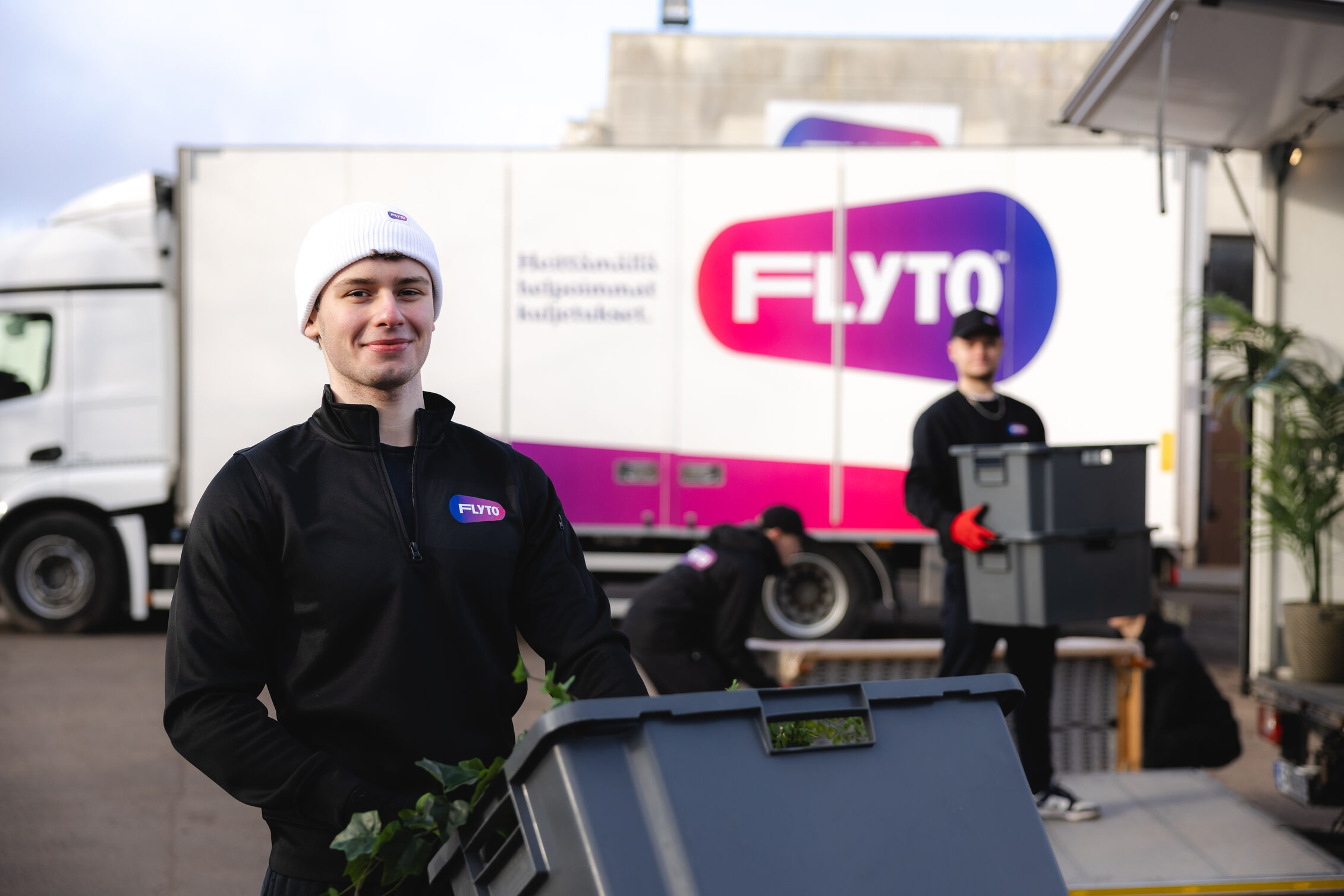
Flyto runs its own offices, warehouses, crews and vehicles across Northern, Central and Southern Europe, so the Czech-side collection, export documentation and consolidation on your move is handled directly by our in-house teams rather than handed off blind. For the ocean or air leg into India and the final-mile delivery, we work through a carefully chosen network of subcontracted carriers, plus trusted local partners on the ground in India who handle customs clearance, AQCS coordination for pets, and delivery — so you get direct accountability on the European end and experienced local execution on the Indian end.
Frequently asked questions
Do I need to formally deregister in the Czech Republic before moving to India?
There’s no mandatory emigration deregistration for citizens, but you should file a change-of-permanent-residence notice with your local registration office or via the citizen portal so your official address is current (portal.gov.cz).
Will my household goods clear duty-free in India?
Only if you qualify under the Transfer of Residence provisions of the Baggage Rules, 2026, which depend on your visa category and time spent abroad versus time spent in India — check your eligibility against the current rules before you ship (PIB).
Can I ship my car from the Czech Republic to India?
Technically yes, but only if it’s no older than three years, right-hand drive, tested by an approved agency, and imported through Mumbai — conditions that make it impractical for most left-hand-drive Czech-registered cars (DGFT).
How long does sea freight from the Czech Republic to India actually take?
There’s no single official figure since the Czech Republic has no seaport itself; industry routing via Hamburg or Bremerhaven to Nhava Sheva runs roughly 3–5 weeks at sea, with total door-to-door timing (including pre-carriage and customs) more often 6–10 weeks — treat any quote you receive as an estimate, not a guarantee.
What do I need to bring my dog or cat to India?
On the Czech side, a state-vet-issued export health certificate (or EU pet passport, per India’s requirements); on the Indian side, an AQCS Advance NOC applied for at least 7 working days ahead via the ATITHI 2.0 portal, plus microchip and rabies vaccination records (SVS ČR; AQCS).
Do I still owe Czech tax after I move?
Possibly, for the year of departure — Czech tax residency is based on a permanent-home/183-day test, not a fixed exit date, so get a residency confirmation from your local tax office if your status is unclear (Finanční správa).
Sources
- Czech Customs Administration (Celní správa ČR) — homepage
- Czech Customs Administration — export procedures (vývoz)
- Czech government citizen portal — notification of change of permanent residence
- Finanční správa (Czech Financial Administration) — tax residency
- European Commission / Your Europe — carrying cash into or out of the EU
- Státní veterinární správa (Czech State Veterinary Administration) — travelling with pets to third countries
- European Commission — bringing a pet into the EU from a non-EU country
- Press Information Bureau, Government of India — Baggage Rules, 2026 notification
- CBIC — Baggage Rules, 2026 official notification text
- AQCS (Department of Animal Husbandry & Dairying, Govt. of India) — import/export of pets
- AQCS — Standard Operating Procedure for import of pet dogs into India
- Bureau of Immigration, Ministry of Home Affairs — list of visas
- DGFT — Notification No. 4(RE-2001)/1997-2002, import policy for second-hand vehicles
- Reserve Bank of India — foreign exchange facilities FAQ (Currency Declaration Form thresholds)
- Václav Havel Airport Prague — company facts (cargo operations)