

Moving to San Francisco from Abroad (2026): Complete Relocation Guide

San Francisco is the gravitational centre of the global technology industry, and that single fact shapes almost everything about moving there from abroad. It is the reason the city has the most competitive US work-visa route (the H-1B), the highest rents in the country, salaries to match, and a population where nearly a third of residents were born overseas. It is also a small, hilly, earthquake-prone peninsula of about 830,000 people (U.S. Census Bureau QuickFacts) where a studio can cost more than a family house elsewhere in the US. This guide covers the real mechanics of relocating to San Francisco and the wider Bay Area in 2026 — visas, sea freight, customs, taxes, healthcare, housing and daily life — with official sources throughout, and an honest tech-industry lens because that is what actually drives most moves here.
Freshness note: verified in 2026 against USCIS, the U.S. Department of State Visa Bulletin, U.S. Customs and Border Protection, the California DMV, the California Franchise Tax Board, Covered California, USGS, the Port of Oakland and U.S. Census/BLS data. Immigration fees and rules in particular are changing fast right now — confirm every figure with the linked authority before you rely on it.
Key takeaways
- Immigration is the hard part, not the shipping. Most people move to San Francisco for a tech job, and the main work visa — the H-1B — is capped at 85,000 a year and awarded by lottery. For FY 2026, USCIS received about 336,000 unique registrations and selected roughly 118,660 — about a 35% chance (USCIS).
- A new $100,000 H-1B fee applies to many new petitions. A September 2025 presidential proclamation added a $100,000 supplemental fee to certain new H-1B petitions filed on or after 21 September 2025 (USCIS). This materially changes who employers will sponsor — check your exact situation.
- Your household goods arrive through the Port of Oakland, the Bay Area’s container gateway, which handled about 2.26 million TEU in 2024 (Port of Oakland). Used personal effects generally enter duty-free via CBP Form 3299 (U.S. Customs and Border Protection).
- San Francisco is the most expensive rental market in the US. Private trackers put a one-bedroom around $3,750–$4,400+ a month in mid-2026, rising fast on tight vacancy (SF Standard).
- California has the highest top-rate state income tax in the US — up to 13.3% — on top of federal tax, and residents are taxed on worldwide income (California Franchise Tax Board).
- There is no state health scheme. Coverage is employer-based or bought privately through Covered California, the state’s ACA marketplace. Do not arrive uninsured.
- You have 10 days to get a California licence once you become a resident, and California does not simply swap a foreign licence (California DMV).
- Earthquakes are a real planning factor. The USGS puts the chance of a magnitude 6.7+ quake somewhere in the Bay Area before 2043 at about 72% (USGS).
1. Visas and immigration: the San Francisco tech reality
For most international arrivals, San Francisco is a work-visa story before it is a moving story. You cannot simply relocate and start job-hunting on arrival — you need status that authorises both entry and employment. The Visa Waiver Program / ESTA is not a moving route: it permits short visits of up to 90 days for tourism or business meetings, not living or working (U.S. Department of State). Below are the categories that actually move people to the Bay Area.
H-1B — the specialty-occupation workhorse. This is the default route for software engineers, data scientists and other degree-level tech roles. It is employer-sponsored, capped at 65,000 regular visas plus 20,000 reserved for holders of a US master’s degree or higher, for a total of 85,000 a year (USCIS). Because demand far exceeds supply, selection runs as a lottery. For fiscal year 2026, USCIS received roughly 336,000 unique beneficiary registrations and selected about 118,660 — a selection rate near 35% under the beneficiary-centric process (USCIS). Registration opens in early March; if selected, the employer files a full petition. Two crucial 2026 developments: first, a presidential proclamation of 19 September 2025 introduced a $100,000 supplemental fee on certain new H-1B petitions filed on or after 21 September 2025, aimed principally at beneficiaries outside the US without a valid H-1B visa (USCIS). This is reshaping which candidates employers are willing to sponsor. Confirm whether your petition is affected — the exemptions and national-interest carve-outs are narrow.
L-1 — intra-company transfer. If you already work for a company with a US office, the L-1 lets it transfer you: L-1A for executives and managers, L-1B for employees with specialised knowledge. You generally need to have worked for the company abroad for at least one continuous year in the preceding three, and the L-1 is not subject to the H-1B lottery — a major advantage for people joining a multinational with a Bay Area presence (USCIS).
O-1 — extraordinary ability. For founders, senior researchers and standout engineers, the O-1 covers individuals with extraordinary ability or achievement demonstrated by sustained national or international acclaim. It has no annual cap and no lottery, which makes it increasingly popular in the startup world, though the evidentiary bar (awards, publications, press, high remuneration, judging others’ work) is genuinely high (USCIS).
E-2 — treaty investor. Nationals of countries with a US treaty of commerce (many European and other partners qualify) can enter to develop and direct a business in which they have invested a substantial amount. It is a common route for entrepreneurs and can be renewed indefinitely, but it does not itself lead to a green card (U.S. Department of State).
EB green cards and priority dates. Permanent residence through employment runs mainly through EB-1 (extraordinary ability, outstanding researchers, multinational managers), EB-2 (advanced degree / national interest waiver) and EB-3 (skilled workers) (USCIS). The catch is the priority date system: annual per-category and per-country limits mean applicants born in high-demand countries wait years. The monthly Visa Bulletin publishes the cut-off dates that determine when you can file or receive your green card, and in 2026 the State Department has repeatedly warned of retrogression for India and China in EB-2 and EB-3 as annual limits are hit. If you were born in India or China — heavily represented in Bay Area tech — assume a multi-year wait and plan your nonimmigrant status accordingly.
Immigration law is fact-specific and moving quickly this year; use a licensed US immigration attorney for your own case. For a European-focused primer, see our US visas for Europeans guide.
2. Shipping your household goods to the Bay Area
Sea freight through the Port of Oakland. The Bay Area’s container gateway is the Port of Oakland, one of the ten busiest US container ports, which handled about 2.26 million TEU in 2024 and finished 2025 at a similar level (Port of Oakland). Most international household shipments to San Francisco, the Peninsula and the East Bay clear through Oakland’s marine terminals before the final road leg to your door. From Europe, plan a realistic door-to-door transit of roughly 6–10 weeks for a full container; from Asia across the Pacific, transits are often shorter port-to-port but consolidation and US customs clearance still push door-to-door timelines to 7–12 weeks. These are planning ranges, not guarantees — congestion, sailing schedules and customs holds all move them.
Container sizes and LCL. A 20ft container suits roughly a one-to-two-bedroom home; a 40ft a larger family house. If you are shipping less — common for a first move into a small SF apartment — LCL (less-than-container-load) shares space in a consolidated box and is priced by volume, which is usually the sensible choice for studio and one-bedroom moves. Given SF rents and apartment sizes, many arrivals deliberately ship less and buy locally. Our sea vs air freight guide compares the trade-offs in detail.
Customs is federal and duty-free for used effects. This is the same everywhere in the US: San Francisco and California set no import rules of their own. Your shipment clears through U.S. Customs and Border Protection under federal law. Household goods and personal effects you have owned and used abroad can generally enter duty-free, but you must file CBP Form 3299 (Declaration for Free Entry of Unaccompanied Articles) with a detailed inventory (CBP Form 3299; CBP guidance on used household goods).
USDA and restricted items. The US strictly controls plants, seeds, soil, many foods and certain wood and plant-based items under USDA APHIS agricultural rules, and CBP enforces prohibited-and-restricted-item limits on alcohol, firearms and more at the border (U.S. Customs and Border Protection). Declare everything; undeclared agricultural items draw fines and destroy the goodwill of an inspection. The full customs walkthrough is in our complete USA relocation guide, with the wider picture on the USA hub.
The SF delivery reality. Much of San Francisco is steep, dense and Victorian: narrow one-way streets, strict street-cleaning and permit-parking rules, walk-up flats without lifts, and hills that defeat large trucks. A container often cannot park outside your door, so a professional mover will shuttle your goods in a smaller vehicle and may need a city parking permit for the truck. Build this into your timing and budget.
3. Housing: the most expensive rental market in the US
San Francisco consistently ranks as the priciest place to rent in the country. In mid-2026, private trackers reported a median one-bedroom around $3,750–$4,400 a month, with rents climbing sharply as the AI hiring boom tightened supply to roughly a 2% vacancy rate (SF Standard; Zillow market trends). Treat these as indicative private-tracker asking prices, not official statistics — they move month to month and vary widely by source and neighbourhood.
The credit-history barrier. The single biggest surprise for newcomers is that US landlords run a credit check, and you arrive with no US credit history at all. Expect to compensate with a larger deposit (often first and last month plus a security deposit), proof of income or an employment offer letter, several months’ bank statements, and sometimes a guarantor or an upfront lump sum. Building a US credit file takes months, so a secured credit card in your first weeks is worth setting up early. The same credit gap affects phone contracts, car finance and utilities.
Buying is a long game. San Francisco has one of the highest median home prices in the US, and mortgages are hard to obtain without US credit and income history, so almost all new arrivals rent first. Renting also buys you time to learn the microclimates and neighbourhoods before committing.
4. Neighbourhoods and where internationals land
“The Bay Area” is far bigger than the 7-by-7-mile city of San Francisco, and where you live usually follows where you work. A quick, honest orientation (all lifestyle guidance rather than official data):
- Mission — historically Latino, now one of the most sought-after districts: sunny microclimate, food, nightlife, and steep rents to match. Popular with younger tech workers.
- SOMA (South of Market) — the downtown tech core, close to many company offices and the Caltrain terminus. Newer high-rise apartments; quieter at weekends.
- Marina and Cow Hollow — polished, waterfront, popular with a slightly older professional crowd; expensive and prone to fog.
- Sunset and Richmond — more residential, more space for the money, larger flats and a strong Asian community — but the foggiest, coolest parts of the city.
- Oakland and the East Bay (Berkeley, Alameda) — more space and generally lower rents than the city, sunnier weather, connected by BART. A very common choice for families and anyone priced out of SF proper.
- The Peninsula and South Bay (San Mateo, Palo Alto, Mountain View, San Jose) — this is where much of “Silicon Valley” actually sits. If your employer is Google, Apple, Meta, Nvidia or a Peninsula startup, living down here can beat a long reverse commute from the city.
For a state-wide view including Los Angeles, see our moving to California guide; if you are comparing US cities, our moving to New York City guide is a useful contrast.
5. California income tax — plan before you land
California levies the highest top-rate state income tax in the country, and its residency rules trap the unwary. Once you are a California resident, the state taxes your worldwide income — not just California earnings — with progressive brackets running from 1% up to a top marginal rate of 13.3% (which includes a 1% Mental Health Services surcharge on very high incomes) (California Franchise Tax Board). That is on top of US federal income tax, which is separate and administered by the IRS.
Your arrival year matters: you are typically a part-year resident, filing Form 540NR and paying California tax on income earned after you established residency plus any California-source income. The FTB’s Publication 1100, Taxation of Nonresidents and Individuals Who Change Residency, is the authoritative reference (FTB Publication 1100). If you hold stock options or RSUs — common in tech compensation — get professional advice before your move date, because timing can have a large tax effect.
6. Healthcare: there is no state scheme
Coming from a country with universal healthcare, this is the adjustment that catches people hardest: the US has no state health service, and California does not run one either. Coverage is either employer-sponsored (most tech jobs include health insurance, though you still pay deductibles and co-pays) or bought privately. If you are not covered through work, you buy a plan on the state’s ACA marketplace, Covered California, where subsidies depend on income. An uninsured hospital visit can run to five figures, so arrange coverage to start the day you arrive — do not rely on travel insurance beyond the first days.
7. SSN, banking and building credit
If you are work-authorised, apply for a Social Security Number (SSN) as soon as you arrive; it is required to be paid, to file taxes and to build credit (Social Security Administration). Some banks will open an account for a newcomer with a passport and proof of address before the SSN arrives, but most credit products need it. As covered above, the credit-history barrier is real and pervasive — start a secured credit card early and keep utilisation low. Our settling into the USA guide walks through the SSN, banking and tax-setup sequence step by step.
8. Driving, BART and getting around the hills
San Francisco is unusually transit-friendly by US standards. BART (Bay Area Rapid Transit) links the city with Oakland, Berkeley, the airport and much of the East Bay and Peninsula, alongside Muni buses and the historic cable cars and streetcars (BART); Caltrain runs down the Peninsula to Silicon Valley. Many city residents live car-free, which given parking scarcity and the hills is often the sensible choice.
If you do drive, note the timeline: new California residents must obtain a licence within 10 days of establishing residency, and California does not simply exchange a foreign licence — you will generally take a vision test and the California written knowledge test, and drivers from many countries also take a behind-the-wheel test (California DMV — New to California). Book the DMV appointment early; wait times are long.
9. Earthquakes, microclimates and the physical city
Earthquakes are a genuine planning factor, not a novelty. The USGS estimates about a 72% chance of a magnitude 6.7 or larger earthquake somewhere in the Bay Area before 2043, with the Hayward–Rodgers Creek fault system the single likeliest source (USGS). California enforces some of the world’s strictest seismic building codes, but you should still keep an emergency kit, secure heavy furniture, and understand that standard rental and home insurance usually excludes earthquake damage — separate earthquake cover is a specific product worth pricing.
Microclimates are real. San Francisco’s weather changes block by block: the western Sunset and Richmond can sit under cold summer fog while the Mission is sunny and 10–15°F warmer the same afternoon. Summers are cool and foggy, not hot; the warmest months are often September and October. Choose a neighbourhood partly on climate, and pack layers rather than a summer wardrobe.
How Flyto handles your move to San Francisco
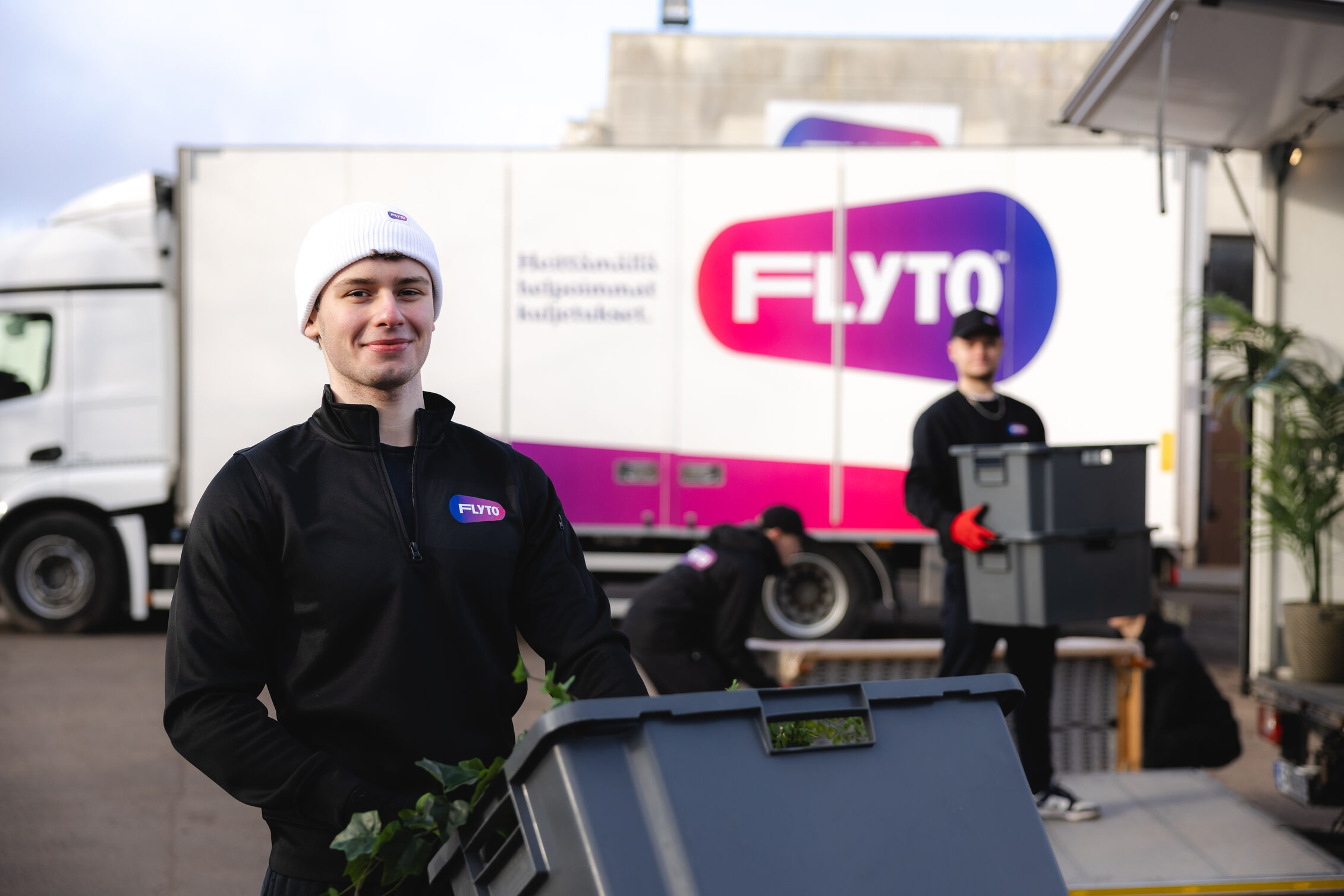
For an intercontinental move to San Francisco, Flyto operates on a door-to-door PLATINUM basis — overseas relocations are Platinum only. That means we manage the whole chain: professional export packing at origin, sea or air freight into the Port of Oakland (or SFO for air), US customs clearance and CBP Form 3299 handling, and the awkward final leg into a San Francisco walk-up or a Peninsula home — including the parking permits, shuttle vehicles and hill access the city demands. You get one coordinator and one accountable price instead of juggling a foreign packer, an ocean carrier, a customs broker and a local crew yourself. We cannot arrange your visa — that is your employer and your immigration attorney — but we time the physical move around it. Ask us for a Platinum quote with realistic transit windows for your origin country, browse the full USA guides library, or see our relocation services. Moving from the UK is one of our most common Bay Area routes — see moving from the UK to the USA.
Frequently asked questions
Can I move to San Francisco to look for a tech job?
Not on a visa-waiver/ESTA entry, which is for short visits only and does not permit work or residence (U.S. Department of State). You need employment-authorising status — usually an employer-sponsored H-1B or L-1, or an O-1 — before you relocate.
What are my real chances in the H-1B lottery?
For FY 2026, USCIS selected roughly 118,660 of about 336,000 unique registrants — near a 35% chance in a single year (USCIS). Many people register across multiple years or use L-1/O-1 routes instead.
Does the new $100,000 H-1B fee apply to me?
It depends on your exact situation. The September 2025 proclamation targets certain new petitions filed on or after 21 September 2025, with narrow exemptions (USCIS). Confirm with your employer and an immigration attorney — guidance is still evolving.
Which port will my container arrive at?
The Port of Oakland is the Bay Area’s container gateway; air cargo comes through San Francisco International (SFO). Customs clears federally through CBP regardless of city.
Do my household goods get taxed?
Used personal effects you have owned and used abroad generally enter duty-free on CBP Form 3299, provided you file a proper inventory and declare restricted items (CBP).
Why do landlords keep asking for a credit score I don’t have?
US renting is credit-driven and you arrive with no US file. Offer a larger deposit, an offer letter, bank statements and possibly a guarantor, and start building credit with a secured card immediately.
Do I really pay 13.3% California tax?
Only the top marginal bracket reaches 13.3%, on very high incomes; most people pay less, but California taxes residents’ worldwide income at rates well above most other states (FTB). Plan equity compensation carefully.
How worried should I be about earthquakes?
Prepared, not fearful. A 72% chance of a major Bay Area quake before 2043 is real (USGS); modern buildings are engineered for it, but keep a kit and price separate earthquake insurance.
Can I live in San Francisco without a car?
Yes — BART, Muni and Caltrain make car-free living practical in the city and inner East Bay, and parking is scarce and expensive (BART).
Sources
- USCIS — H-1B Specialty Occupations
- USCIS — FY 2026 H-1B Registration Selection Completed
- USCIS — Presidential Proclamation ($100,000 H-1B fee)
- USCIS — L-1A Intracompany Transferee
- USCIS — O-1 Extraordinary Ability
- USCIS — Employment-Based (EB) Permanent Workers
- U.S. Department of State — Visa Bulletin (priority dates)
- U.S. Department of State — E-2 Treaty Investor Visa
- U.S. Department of State — US Visas / ESTA scope
- U.S. Customs and Border Protection — CBP Form 3299 (PDF)
- CBP — Moving used household goods into the US
- CBP — Prohibited and Restricted Items
- Port of Oakland — container volumes
- California DMV — New to California
- California Franchise Tax Board
- FTB Publication 1100 — Nonresidents / change of residency
- Covered California — ACA marketplace
- Social Security Administration — Social Security Number
- Bay Area Rapid Transit (BART)
- U.S. Geological Survey — Bay Area earthquake probability
- U.S. Census Bureau — QuickFacts, San Francisco
- U.S. Bureau of Labor Statistics — San Francisco area CPI
Freshness note: fees, tax rates and housing figures were current at the time of writing (2026) and change regularly — always confirm the latest numbers with the linked official sources, and use a licensed US immigration attorney for visa decisions.
Quality report
Verdict: publication-ready. Every headline figure was sourced to an official authority and re-verified in 2026.
Verification method: Official source URLs were re-checked with a browser user-agent request. Returned HTTP 200 (live, confirmed): USCIS H-1B / L-1A / O-1 / permanent-workers / proclamation pages, California DMV New-to-California, FTB, Covered California, BART, USGS earthquake FAQ, Port of Oakland, CBP Form 3299 PDF, CBP Article-1392 and CBP prohibited-and-restricted-items. A small number of official pages returned HTTP 403 to the automated request but are valid, well-known live pages — the State Department Visa Bulletin and E-2 pages, ssa.gov/ssnumber and census.gov QuickFacts; their figures were independently confirmed via web search of official reporting.
Key figures confirmed: H-1B cap 85,000 (65k + 20k US-master’s); FY 2026 selection ~118,660 of ~336,000 unique registrants (~35%); $100,000 H-1B supplemental fee, proclamation 19 Sep 2025, effective 21 Sep 2025; Port of Oakland ~2.26M TEU (2024); California top marginal income tax 13.3%; California 10-day new-resident licence rule with no straight foreign-licence exchange; ~72% Bay Area M6.7+ probability before 2043 (Hayward–Rodgers Creek likeliest); SF median household income ~$141,000 and population ~830,000 (2020–2024 ACS).
Figures explicitly framed as estimates: rent levels ($3,750–$4,400+ one-bedroom) are indicative private-tracker asking prices, labelled as such; freight transit windows are planning ranges, not guarantees; neighbourhood notes are lifestyle guidance, not data.
Style: FLYTO GUIDE STYLE preserved — Platinum-only overseas framing, pillar and USA-hub cross-links, sibling-city and route internal links, official inline sourcing, and a clear disclaimer to use a licensed immigration attorney for visa decisions given fast-moving 2026 rules.
Hiring an international mover? See our full International removals to the USA service — Flyto’s own European hubs, vetted local partners and one English-speaking coordinator, door to door.