

Moving from Austria to the USA (2026): Complete Guide

The Austria-to-USA corridor is a two-country move, and getting it wrong on either side costs weeks. On the Austrian end you clear an EU export procedure, deregister your residence, and close out your tax residency. On the American end your shipment meets U.S. Customs and Border Protection (CBP), and what happens there depends almost entirely on the visa you hold when you arrive. This guide covers both halves in full, plus a short note on the reverse direction (USA to Austria), and links every rule to an official government source. It is written for a resident of Austria — an Austrian citizen, an EU national, or a third-country national living in Austria — shipping a household to the United States.
Key takeaways
- Your U.S. visa/immigration status decides your customs treatment. The CBP Form 3299 separates returning residents, first-time immigrants, and nonresidents on long-term visas — each is treated differently.
- Household effects used abroad for at least one year can generally enter the U.S. duty-free on CBP Form 3299; accompanying goods fall under personal exemptions (typically $800 for residents, $100 for nonresidents) per CBP customs duty information.
- Austria’s single customs authority is the Zollamt Österreich under the Federal Ministry of Finance (BMF); household exports leave the EU under a customs export declaration.
- You must deregister your residence (Abmeldung) within three days of giving it up, recorded in the Central Residence Register — failure is fined up to €726 (oesterreich.gv.at).
- Dogs from Austria need only the CDC Dog Import Form, a microchip, and a minimum age of 6 months, because Austria is a dog-rabies-free/low-risk country (CDC).
- Carrying over $10,000 in or out of the U.S. must be declared to CBP and reported on FinCEN Form 105.
- Importing a vehicle requires EPA Form 3520-1 and DOT Form HS-7; non-U.S.-market cars under 25 years old face strict EPA/DOT conformity rules.
1. Your U.S. immigration status determines the customs treatment
Before you price a single crate, settle your U.S. status — it is the variable that governs everything at the border. CBP’s Declaration for Free Entry of Unaccompanied Articles (Form 3299) sorts importers into distinct categories, and you tick the box that applies to you:
- Emigrants / new immigrants (arriving on an immigrant visa or a green card) may import personal and household effects that were in their possession and used abroad, generally free of duty.
- Nonresidents on long-term visas (for example work or study visas such as L-1, H-1B, or F-1) can also bring household effects that were used abroad, provided they are not for sale or for another person.
- Returning U.S. residents bringing goods back are covered under the returning-resident exemptions of 19 CFR Part 148.
The common thread across categories under CBP’s rules is that household effects must be for your own use, not intended for sale, and — for duty-free treatment — used abroad for at least one year. Goods that travel with you fall under a personal exemption instead (commonly $800 for residents, $100 for nonresidents). Get your visa category confirmed first; the paperwork, the exemptions, and the questions the CBP officer asks all flow from it.
2. The Austria export side: customs, deregistration, and tax exit
The customs authority. Since 1 January 2021 Austria has had a single, nationwide customs authority — the Zollamt Österreich — operating under the Federal Ministry of Finance (Bundesministerium für Finanzen, BMF). Because the USA is outside the EU customs territory, your household shipment leaves under a formal customs export procedure, lodged electronically through the EU export system that Austrian customs operates. Your removal company or freight forwarder normally files this declaration as your direct or indirect representative.
Thresholds. Under EU customs rules, an oral customs declaration for export is permitted for goods of a non-commercial nature, and for commercial goods not exceeding EUR 1,000 in value or 1,000 kg in net mass. A full household removal almost always exceeds these limits and is handled as a standard electronic export declaration with an itemised packing list — do not assume your movers can wave the shipment through orally.
Deregistration (Abmeldung). Anyone who leaves Austria and gives up their residence must deregister within three days, and the deregistration is recorded in the Central Residence Register (Zentrales Melderegister). You do this at the registration authority (Meldebehörde/Meldeservice) where you were registered; when you deregister you also state your new address, or at minimum the destination country if the exact address is unknown (oesterreich.gv.at). Skipping it is not a formality: failure to deregister is punishable by a fine of up to €726, and up to €2,180 for a repeat offence. Austrians moving abroad can find the emigration-specific guidance on the government’s de-registering when moving abroad page.
Tax residency exit. Your Austrian unlimited tax liability (unbeschränkte Steuerpflicht) is tied to having a residence (Wohnsitz) or habitual abode in Austria. When you give these up and move the centre of your life abroad, you move to limited tax liability, meaning Austria then taxes only Austrian-source income (USP.gv.at). Deregistering your residence is strong evidence of this change but does not by itself end tax residency — the facts of where you actually live govern. If you hold significant shareholdings, business assets, or Austrian property, ask your Finanzamt or a tax adviser about exit-taxation and final-return obligations before you leave; the treatment is fact-specific and worth confirming in writing.
3. Ports and transit: how your shipment actually travels
Austria is landlocked, so there is no Austrian seaport. Ocean containers move overland by rail or truck to a European gateway and sail from there. In practice two corridors dominate: the Northern Range ports — Hamburg and Bremerhaven (Germany), Rotterdam (Netherlands), and Antwerp (Belgium) — and the North Adriatic ports of Koper (Slovenia) and Trieste (Italy), which are geographically closer to eastern Austria. Air freight consolidates at Vienna International Airport (VIE), the country’s principal air-cargo hub, with Graz, Linz, and Salzburg as secondary gateways.
Transit times below are freight-industry estimates, not official government figures, and they vary with carrier schedules, sailings, and U.S. port congestion:
- Sea freight (FCL/LCL): roughly 4–8 weeks door-to-door, depending on the gateway port, the U.S. coast of arrival, and inland delivery.
- Air freight: roughly 1–2 weeks door-to-door once collected and cleared.
Treat any quoted date as a planning estimate and build in a buffer, especially around U.S. customs examination, which can add days.
4. The U.S. import side: the form and the process
Your unaccompanied household shipment clears U.S. Customs and Border Protection on the CBP Form 3299, Declaration for Free Entry of Unaccompanied Articles. This is the core document; on it you declare who you are (returning resident, immigrant, or nonresident), that the goods were used abroad, and that they are not for sale. It must be accompanied by a detailed, itemised inventory — typically prepared by your movers — plus a copy of your passport and visa.
Anything you carry with you is declared separately on CBP Form 6059B, the customs declaration every traveller completes on arrival, and is covered by your personal exemption rather than Form 3299. Duty-free treatment of household effects hinges on the "used abroad" condition set out in CBP’s guidance and codified in 19 CFR Part 148. Note that alcohol, tobacco, firearms, certain foods, and agricultural items are restricted or dutiable and can trigger other agencies’ rules — keep them off the household inventory unless you have checked them specifically.
5. Pets: the rules at both ends
Leaving Austria for the USA (dogs). The U.S. Centers for Disease Control and Prevention (CDC) overhauled dog importation effective 1 August 2024. Austria is not on the CDC’s high-risk list for dog rabies, so it counts as a dog-rabies-free/low-risk country, which keeps requirements light. A dog entering from Austria needs to: be at least 6 months old, have a microchip readable by a universal scanner, appear healthy on arrival, and travel with a completed CDC Dog Import Form receipt (valid for six months from issue). For dogs that have been only in low-risk/free countries in the prior six months, that form is the only CDC document required. Cats are not subject to a CDC dog-import form, though airline and U.S. state rules still apply — verify with your carrier.
The reverse direction (USA to Austria). Bringing a dog or cat back into Austria/the EU is stricter. The animal needs an ISO-compliant 15-digit microchip, a rabies vaccination given at least 21 days before travel (after microchipping), and an EU animal health certificate completed by a USDA-accredited vet and endorsed by USDA APHIS, arriving within 10 days of endorsement (USDA APHIS: US to Austria). A rabies titer test is not required for pets travelling from the United States. Entry must be via a designated traveller entry point, and Austria’s competent authority for third-country animal imports is the BAVG.
6. Vehicles, money, and the things people forget
Vehicles. A car is one of the hardest items to move. Every imported vehicle needs EPA Form 3520-1 (emissions) and DOT Form HS-7 (safety) at entry. A vehicle at least 25 years old is exempt from EPA and DOT conformity standards, making classic imports straightforward. A newer car that was not originally manufactured for the U.S. market must be brought into compliance — through an EPA-registered Independent Commercial Importer and a DOT Registered Importer — which is expensive and slow, and non-compliant vehicles can be refused or seized. Confirm your specific model against the EPA import guidance before shipping it.
Money. There is no limit on how much cash you may carry, but if you transport more than $10,000 (in currency or monetary instruments) into or out of the U.S., you must declare it to CBP on your arrival form and file FinCEN Form 105. Non-declaration risks seizure of the entire sum.
Commonly forgotten. Cancel or transfer Austrian utilities, health insurance (e-card/ÖGK), and GIS/ORF obligations; keep proof of your one-year "used abroad" ownership for high-value items in case CBP asks; and do not pack prohibited or restricted goods (certain foods, plants, and agricultural products) into the household inventory.
How Flyto handles your Austria to the USA move
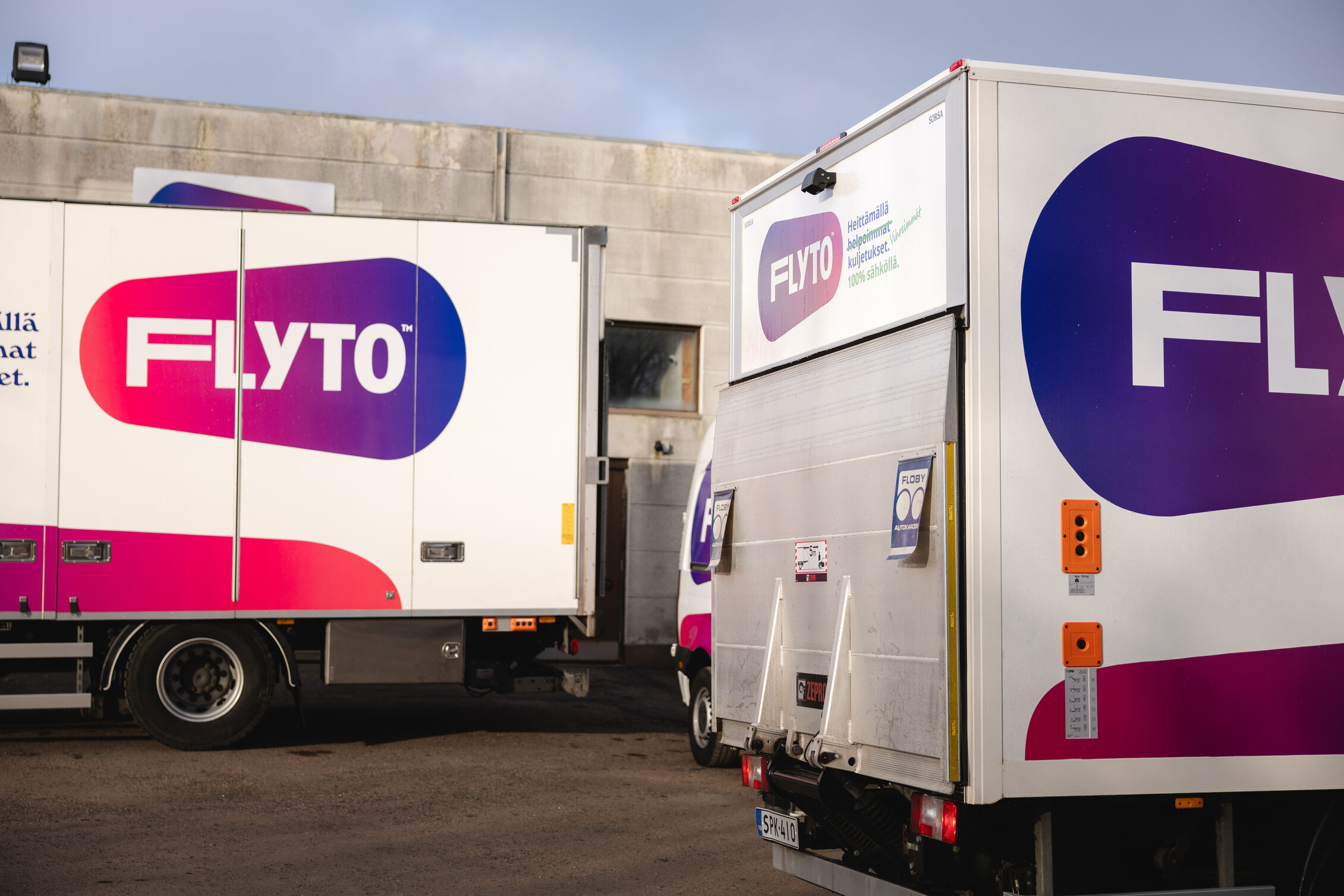
Flyto runs strong in-house European operations — our own offices, warehouses, teams, and vehicles across Northern, Central, and Southern Europe — so the Austrian collection, export documentation, and gateway handling stay under our direct control. For the ocean or air leg and U.S. delivery we combine a carefully chosen partner and subcontractor network with trusted local partners in the United States. We coordinate the whole corridor end to end without pretending to own every truck on both continents.
Frequently asked questions
Can I import my household goods duty-free into the USA?
Generally yes, if the items were owned and used abroad for at least one year, are for your own use, and are not for sale — declared on CBP Form 3299. Goods you carry with you fall under a separate personal exemption (CBP).
Do I have to deregister in Austria before I leave?
Yes. You must deregister your residence within three days of giving it up; it is recorded in the Central Residence Register and failure is fined up to €726 (oesterreich.gv.at).
How long does shipping from Austria to the USA take?
As a freight-industry estimate, roughly 4–8 weeks by sea and 1–2 weeks by air, door to door. These are not official figures and vary with routing and U.S. port clearance.
What do I need to bring my dog to the USA from Austria?
Because Austria is a dog-rabies-free/low-risk country, your dog needs a microchip, a minimum age of 6 months, to appear healthy, and a completed CDC Dog Import Form receipt.
Can I ship my Austrian car to the USA?
Only if it meets U.S. rules. You file EPA Form 3520-1 and DOT HS-7; cars 25+ years old are exempt from conformity standards, while newer non-U.S.-market cars need costly EPA/DOT compliance work.
How much cash can I bring?
Any amount, but sums over $10,000 must be declared to CBP and reported on FinCEN Form 105, or you risk seizure.
Sources
- BMF — Zollamt Österreich / customs contact
- BMF — Transferring your normal place of residence from a non-EU country (reverse direction)
- oesterreich.gv.at — De-registration of a residence
- oesterreich.gv.at — De-registering from Austria (moving abroad)
- USP.gv.at — Income tax liability / tax residency
- European Commission — Exportation (customs export procedure, oral declaration threshold)
- CBP Form 3299 — Declaration for Free Entry of Unaccompanied Articles
- CBP — Customs Duty Information
- CBP — What to Expect When You Return (Form 6059B)
- eCFR — 19 CFR Part 148, Personal Declarations and Exemptions
- CBP — Money and Other Monetary Instruments / FinCEN Form 105
- FinCEN Form 105 (PDF)
- CBP — Importing a Motor Vehicle (EPA 3520-1, DOT HS-7)
- EPA — Publications and forms for importing vehicles and engines
- NHTSA — HS-7 Declaration form
- CDC — Bringing a dog into the U.S.
- CDC — Entry requirements for dogs from rabies-free/low-risk countries
- CDC — Dog Import Form and instructions
- USDA APHIS — Pet travel from the U.S. to Austria (reverse direction)
- BAVG — Import of dogs, cats and ferrets from third countries to Austria (reverse direction)