

Moving from the Netherlands to the USA: The Complete 2026 Guide

Relocating from the Netherlands to the United States means threading two customs regimes at once: the Dutch (and EU) export side handled by the Nederlandse Douane, and the US import side governed by US Customs and Border Protection (CBP). This guide walks a Dutch resident through the export declaration for your verhuisboedel, realistic sailing routes out of Rotterdam, moving pets under the 2024 CDC rules, and the duty-free import of your household goods on arrival. Rules change, so treat every figure as a starting point and confirm with the linked authority before you ship.
Key takeaways
- Moving to a non-EU country, you must file an export declaration (uitvoeraangifte) with the Dutch Douane and submit an inventory list of everything you take (Douane Nederland).
- Used household effects that have been in your possession and use abroad for more than one year generally enter the USA free of duty, provided they are not for resale (CBP).
- Unaccompanied goods require CBP Form 3299, the Declaration for Free Entry of Unaccompanied Articles (CBP Form 3299 PDF).
- Since 1 August 2024, every dog entering the US needs a CDC Dog Import Form receipt; from a low-risk country like the Netherlands that receipt plus a microchip and a minimum age of six months is normally sufficient (CDC).
- Carrying more than US$10,000 in cash or monetary instruments in either direction must be reported on FinCEN Form 105 (CBP).
- You cannot ship everything: weapons, protected species, narcotics and cultural goods are restricted or prohibited on export from the Netherlands (Douane Nederland).
- A valid US visa or immigration status is a prerequisite; household-goods clearance does not grant the right to live in the US (US State Department).
1. Before you book: visa and eligibility
Your furniture cannot cross a border your body is not cleared to cross. Confirm your immigrant or non-immigrant status (green card, L-1, E-2, O-1, etc.) with the US State Department and USCIS before committing to a shipping date. CBP will ask for your visa or passport when clearing your goods, and your eligibility for duty-free entry as a person "emigrating" to the US depends on it. Diplomatic, student and work categories each have nuances, so verify yours early.
2. The Dutch export side: Douane and your verhuisboedel
Because the United States is outside the EU, your move triggers a formal export declaration with the Dutch Douane. The authority states plainly: "u moet voor uw verhuisgoederen uitvoeraangifte doen bij de Douane" — you must submit an export declaration for your household goods — and "u een inventarislijst inleveren van de spullen die u meeneemt" — you must provide an inventory list of the goods you take (Douane Nederland).
In practice your international mover files this electronically on your behalf. What you need to prepare:
- A detailed inventory (packing list) in English, ideally with estimated values, for both Dutch export and US import.
- An EORI number if you are declaring commercially; for a private verhuisboedel your forwarder typically handles the declaration under their own registration.
- Proof of residence change — a US visa, employment contract or lease helps demonstrate that this is a genuine relocation, not a commercial export.
The Netherlands does not levy export duty on personal household goods, and there is no Dutch VAT on used personal effects you already own and are simply relocating. The Douane’s role here is documentary control, not taxation.
Cars and motorcycles
Vehicles are treated separately, and one common myth needs correcting. The Dutch VAT-refund scheme for private individuals leaving the EU ("export door particulier die buiten de EU woont") applies only to newly purchased goods: you must take them out of the EU by the end of the third month following the month of purchase, the invoice value must exceed EUR 50, and you need a Douane-stamped invoice as export proof (Belastingdienst). A car you have already owned and used for years does not qualify, so do not budget for a VAT refund on your existing vehicle. Separately, importing a European-spec car into the US is complex: it must meet EPA emissions and DOT/NHTSA safety standards, and most vehicles under 25 years old cannot be permanently imported unless already US-conforming. Confirm with CBP’s vehicle guidance before shipping any car.
What you cannot ship
The Douane restricts or prohibits "huisdieren, wapens en munitie, beschermde dieren en planten, verdovende middelen of cultuurgoederen" — pets (which follow separate rules), weapons and ammunition, protected animals and plants, narcotics, and cultural goods (Douane Nederland). Firearms in particular require separate US import authorisation via the ATF and cannot simply be packed in a container.
3. Ports, airports and realistic transit times
The Netherlands is one of Europe’s easiest origins for a US move because it hosts the continent’s largest seaport.
- Rotterdam is Europe’s largest port and the natural gateway for a full-container-load (FCL) or shared-container (LCL) move. Expect roughly 10–18 days’ sailing to US East Coast ports such as New York/Newark, Norfolk or Savannah, and 4–6 weeks to West Coast ports such as Los Angeles or Oakland (which sail via the Panama Canal). Add one to two weeks each side for packing, export clearance, US customs release and final delivery.
- Amsterdam Schiphol handles air freight for smaller or urgent shipments — typically a few days in transit, at a much higher cost per cubic metre. Air suits a "starter" shipment while your sea container follows.
Door-to-door, a sea move from the Netherlands to a US home realistically runs six to ten weeks. Build a buffer: US port congestion and a customs examination can add time without warning.
4. Moving your pets: the 2024 CDC rules
Dogs are the headline change. Since 1 August 2024, every dog entering the United States must arrive with a CDC Dog Import Form receipt, obtainable online and valid for six months of multiple entries (CDC).
The good news for Dutch residents: the Netherlands is treated as a dog-rabies-free or low-risk country — the CDC publishes only the high-risk list, and the Netherlands is not on it (CDC low-risk guidance). A dog that has been only in low-risk countries for the previous six months needs to:
- appear healthy on arrival,
- have an ISO-compatible microchip (ISO 11784/11785),
- be at least six months old, and
- travel with the CDC Dog Import Form receipt (fillable the day of travel).
No US rabies certificate is required from a low-risk country, though your dog should still be up to date for its own protection. Cats face no CDC dog-rule paperwork but must appear healthy; check USDA APHIS and your airline for carrier requirements. On the Dutch export side, the NVWA is the competent authority that issues and endorses veterinary export health certificates when a destination country requires one — for a US-bound dog or cat no such federal certificate is generally required, but confirm your airline’s paperwork and the Douane’s pet export rules before you fly. Always reconfirm the current airport list and form details directly with the CDC before booking — pet rules have moved fast since 2024.
5. Money, and what to leave behind
You may carry any amount of currency, but more than US$10,000 in cash or monetary instruments — per family or travelling group, not per person — must be declared to CBP on FinCEN Form 105, filed online or on paper (CBP; FinCEN Form 105). Failure to declare can mean immediate seizure of the funds and criminal exposure under the Bank Secrecy Act.
Do not pack food, plants, seeds, soil or agricultural items without checking USDA APHIS rules — these are among the most common causes of a container being held or penalised. Alcohol and tobacco in a household shipment are dutiable and regulated; keep quantities modest and declare them.
6. The US import side: duty-free entry of your household goods
This is where the Dutch export process meets CBP. The core rule is favourable: household effects used abroad for more than one year may enter the US free of duty and tax, provided they are for your personal use and not intended for resale (CBP).
Key points to get right:
- Unaccompanied shipments (your sea or air container arriving separately from you) require CBP Form 3299, the Declaration for Free Entry of Unaccompanied Articles (Form 3299). Accompanied goods travelling with you need only a manifest presented to the CBP officer.
- The 10-year rule: to claim duty-free entry you generally should not wait longer than 10 years after your last arrival in the US from the country where the goods were used. This clock is chiefly relevant to people who have lived in the US before; if you are a first-time immigrant with no prior US residence it will not usually bite, but confirm your own situation with CBP. Beyond the 10 years, duty-free entry is only possible with a documented explanation of unavoidable circumstances.
- Household vs personal effects: furniture, dishes, linens, libraries and artwork qualify as duty-free household effects; new items, or goods bought within the last year, may be dutiable. Provide honest values on your inventory.
- First port of arrival: your shipment must clear CBP at its first US port of arrival unless your forwarder has arranged an in-bond move to a more convenient inland port.
Your US-based destination agent or customs broker files the 3299 and clears the container. Have your passport, visa, packing list and the vessel’s arrival details ready. For the full US import framework and links, see our USA relocation hub and the main moving-to-the-USA pillar guide.
How Flyto handles your Netherlands to USA move
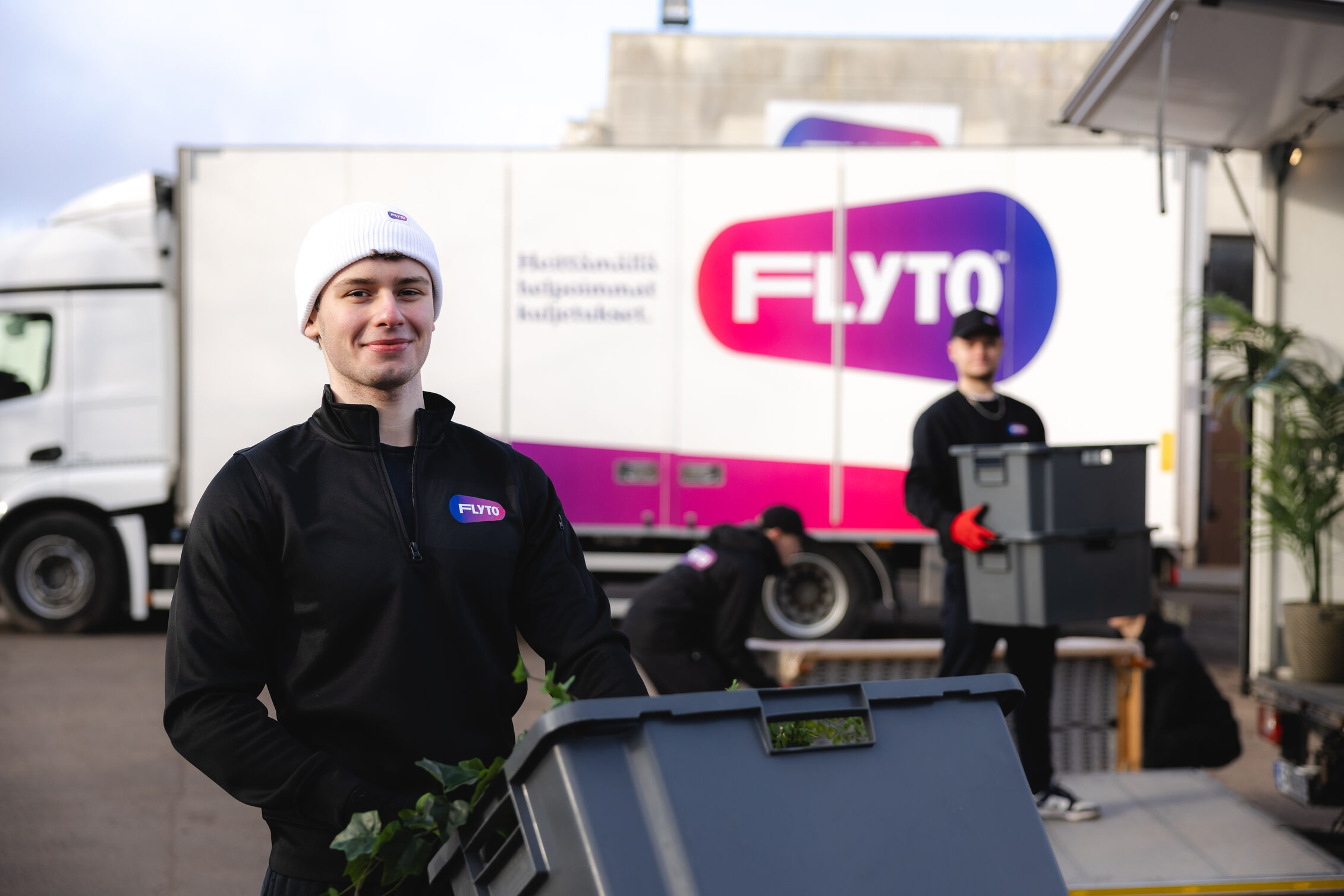
Flyto runs your Netherlands-to-USA relocation as a single door-to-door Platinum service — our only tier for intercontinental moves, because an ocean corridor leaves no room for gaps. One project manager owns the whole chain: professional packing at your Dutch address, the Douane export declaration and inventory, container loading (FCL or shared LCL) out of Rotterdam or air freight via Schiphol, the ocean or air leg, and US customs clearance through your destination port with CBP Form 3299 prepared on your behalf. We coordinate pet relocation under the current CDC and APHIS rules, arrange marine transit insurance, and manage final-mile delivery, unpacking and debris removal at your new US home. You get one point of contact, one plan, and one accountable team from the first box in Amsterdam to the last in America.
Frequently asked questions
Do I have to pay Dutch tax to export my furniture?
No. The Netherlands does not charge export duty on a genuine private verhuisboedel, and there is no Dutch VAT on used personal effects you already own. You must, however, file an export declaration and inventory with the Douane (Douane Nederland).
Will I pay US duty on my household goods?
Generally not, if the items have been in your use abroad for more than a year and are not for resale. New items or goods owned under a year can be dutiable (CBP).
Which US form do I need for my shipping container?
CBP Form 3299 for unaccompanied goods. Accompanied goods need only a manifest at the port of entry (Form 3299).
How long does shipping from Rotterdam to the US take?
Roughly 10–18 days’ sailing to the US East Coast and 4–6 weeks to the West Coast, with door-to-door timelines of about six to ten weeks once packing and clearance are included.
Can I bring my dog from the Netherlands?
Yes. As a low-risk country, the Netherlands requires only the CDC Dog Import Form receipt, an ISO microchip, a healthy appearance and a minimum age of six months (CDC).
How much cash can I bring?
Any amount, but over US$10,000 (per family/group) must be reported on FinCEN Form 105 in either direction (CBP).
Can I ship my car?
Possibly, but EU-spec vehicles must meet US EPA and DOT standards, and most under 25 years old cannot be permanently imported unless already conforming. Do not expect a Dutch VAT refund on a car you already own — that scheme only covers goods bought shortly before you leave the EU. Check CBP vehicle rules first.
Sources
- Douane Nederland — Spullen verhuizen vanuit Nederland
- Belastingdienst — Export door particulier die buiten de EU woont (private-export VAT refund conditions)
- CBP — Importing used household goods and personal effects (Article 1392)
- CBP Form 3299 — Declaration for Free Entry of Unaccompanied Articles (PDF)
- CBP — Importing a motor vehicle
- CDC — Dog importation FAQs
- CDC — Entry requirements for dogs from rabies-free or low-risk countries
- CBP — Money and other monetary instruments
- FinCEN Form 105 (CMIR)
- Dutch Customs — Pets (import/export restrictions)
- US State Department — US visas