

Moving from Sweden to Malaysia (2026): Complete Guide

Relocating from Sweden to Malaysia is a two-sided customs and administration process: on the Swedish side you deregister from the Swedish population register, close out your tax residency, and file an export customs declaration for anything leaving the EU customs area; on the Malaysian side, the Royal Malaysian Customs Department (RMCD/Jabatan Kastam Diraja Malaysia) and the Immigration Department of Malaysia decide what you can bring in duty-free and under what visa status. This guide is for Sweden-based individuals and families — Swedish citizens, returning Malaysians, or foreign nationals resident in Sweden — moving household goods, pets, and sometimes a vehicle to Malaysia, and it also covers the reverse move back to Sweden.
Key takeaways
- You must notify Skatteverket (Swedish Tax Agency) that you are moving abroad, normally via the e-service or form SKV 7665, when you plan to live outside Sweden for one year or more — this triggers your deregistration ("avregistrering") from the population register (Skatteverket).
- Keeping strong ties to Sweden (a home, close family, major economic interests) can leave you with "väsentlig anknytning" (essential connection) and continued Swedish tax liability even after you move — Skatteverket weighs this case by case (Skatteverket).
- Moving household goods from Sweden to Malaysia is an export from the EU, declared to Tullverket (Swedish Customs), since Malaysia is outside the EU customs and VAT area (Tullverket).
- Malaysia allows returning residents and approved foreign residents to import used personal effects and household goods duty-free if the goods have been demonstrably owned and used before the move; the shipment is cleared through Malaysian Customs (commonly via what the industry refers to as a "K1" import declaration) and should normally be handled by a licensed forwarding or customs agent — confirm the exact current procedure with RMCD or your appointed agent before shipping (Royal Malaysian Customs Department).
- Cash or bearer negotiable instruments worth USD 10,000 or more must be declared to Malaysian Customs on arrival or departure using Customs Form No. 22; separately, ringgit banknotes above RM 1,000 may not be carried in or out of Malaysia without prior written approval from Bank Negara Malaysia (Bank Negara Malaysia — currency declaration; Bank Negara Malaysia — exchange control on currency notes).
- Dogs and cats need a Malaysian import permit issued by the Department of Veterinary Services (DVS), obtained before departure from Sweden, plus rabies vaccination and quarantine on arrival — always confirm the current fee, minimum quarantine period, and any breed-specific conditions directly with DVS or the Malaysian Quarantine and Inspection Services (MAQIS), as these can change (DVS Malaysia — import procedure).
- On the Swedish side, exporting a dog outside the EU has no single fixed EU rulebook — Jordbruksverket (Swedish Board of Agriculture) advises contacting the destination country’s veterinary authority directly for the exact requirements, since these are set by Malaysia, not the EU (Jordbruksverket).
- A long-term Malaysian visa status — Employment Pass, dependent pass, or a Malaysia My Second Home (MM2H) residence pass, administered by the Immigration Department of Malaysia — normally has to be secured or in progress before Customs will treat your shipment as a bona fide "change of residence" import (Immigration Department of Malaysia — MM2H).
1. Your Malaysian immigration status determines your customs treatment
Malaysian Customs’ duty-free "personal effects" concession is tied to proof that you are genuinely establishing residence — not just importing goods. In practice this means Customs wants to see evidence of your immigration status alongside your inventory and import declaration. The main long-stay routes are:
- Employment Pass (EP) — for individuals with a Malaysian job offer, sponsored by the employer and endorsed by the Immigration Department.
- Dependent Pass — for accompanying spouses/children of an EP holder.
- Malaysia My Second Home (MM2H) — a renewable long-term residence pass administered by the Immigration Department of Malaysia, requiring applicants to meet fixed-deposit and income conditions (the current published guidance cites fixed-deposit requirements in the range of roughly RM 100,000–150,000 depending on the applicant’s age, alongside offshore-income tests) (Immigration Department of Malaysia). MM2H’s financial thresholds and category structure have been revised more than once in recent years, so verify the current requirements directly on the official Immigration Department portal before relying on any figure, including the ones above.
Whichever route applies, get the approval-in-principle or pass reference number before your shipment arrives — customs agents will typically ask for it when filing the import declaration. Without residency status, goods are more likely to be treated as a normal dutiable commercial import rather than a duty-free household-goods move.
2. The Sweden export/departure side
Population register and tax exit. If you intend to live outside Sweden for a year or longer, you must notify Skatteverket, either through its e-service or with form SKV 7665; from your move date you cease to be folkbokförd (registered as resident) in Sweden, though you keep your Swedish citizenship and personnummer (Skatteverket). Deregistration is not automatically the end of Swedish tax liability: Skatteverket separately examines whether you retain "väsentlig anknytning" (essential connection) to Sweden — factors include a retained home usable year-round, close family remaining in Sweden, or business and economic interests left behind — which can keep you liable to Swedish tax even after leaving; the tax agency weighs all circumstances together, and even a single strong factor can be decisive (Skatteverket). Once you are genuinely non-resident for tax purposes, remaining Swedish-source income (e.g., a pension) may instead fall under SINK, a flat-rate special income tax for non-residents, rather than ordinary progressive tax — ask Skatteverket for the current SINK rate and application process, since rates can change (Skatteverket).
Customs export declaration. Because Malaysia sits outside the EU customs and VAT territory, moving your household goods out of Sweden is an export in customs terms, and Tullverket (Swedish Customs) requires an export declaration for the shipment; this is normally filed electronically by your moving company or freight forwarder acting as your customs representative (Tullverket). There is no Swedish VAT or duty to pay on goods you already own and are simply taking with you. Tullverket mirrors this framework for the reverse (import-to-Sweden) direction: goods you bring back into Sweden after living outside the EU can qualify for duty and VAT relief ("flyttsakstullfrihet"), broadly conditioned on having been resident outside the EU for a qualifying period and having owned/used the goods before the move — confirm the current exact periods with Tullverket if you plan to move back (Tullverket).
3. Ports and transit — Sweden to Malaysia
Sea freight from Sweden to Malaysia normally departs via the Port of Gothenburg, described by the port authority itself as the largest port in Scandinavia (Port of Gothenburg), or occasionally via Stockholm-area terminals for onward transshipment through a European hub (e.g., Rotterdam or Hamburg) before the long-haul leg to Port Klang or Penang. Air freight and accompanied baggage typically route through Stockholm Arlanda Airport to Kuala Lumpur International Airport (KLIA), often with a transfer hub in the Gulf or Southeast Asia.
These transit times are freight-industry estimates, not official government figures — actual timing depends on carrier schedules, transshipment, and customs clearance on both ends:
- Sea freight (FCL/LCL), Gothenburg → Port Klang/Penang: roughly 5–8 weeks door-to-door including transshipment.
- Air freight, Stockholm → Kuala Lumpur: roughly 1–2 weeks including consolidation and clearance.
4. The Malaysia import side
Household goods and personal effects are cleared by Royal Malaysian Customs (RMCD) as part of your import declaration, which for a household-goods shipment should be filed through a licensed customs or forwarding agent together with a full inventory (packing list) of the shipment. Returning Malaysians and approved foreign residents can generally bring in used household and personal items duty-free provided the goods are demonstrably not new — RMCD looks for proof that items were purchased or used for a period before import (evidenced by receipts or an inventory), and if the customs officer is not satisfied, ordinary import duty can apply. Keep original purchase receipts for higher-value items (electronics, furniture) as backup evidence, and confirm the exact current documentation requirements with RMCD or your agent before shipping, since procedures can be updated.
Cash and bearer negotiable instruments equivalent to USD 10,000 or more must be declared to Customs on arrival or departure using Customs Form No. 22 (Bank Negara Malaysia). Separately, Bank Negara Malaysia restricts anyone — resident or not — from carrying more than RM 1,000 in ringgit banknotes into or out of Malaysia without its prior written approval; larger ringgit or foreign-currency movements require that approval in advance (Bank Negara Malaysia). Non-declaration or false declaration of reportable cash carries penalties under Malaysian law, so declare rather than risk it.
Also check the Customs (Prohibition of Import) Order 2023, which RMCD administers, before shipping anything unusual (certain foodstuffs, plants, chemicals, publications, and communications equipment can be restricted or require an import licence) (RMCD — Prohibition of Import and Export).
5. Pets
Leaving Sweden: the EU pet-travel rulebook does not govern exports to non-EU countries, so Jordbruksverket advises contacting Malaysia’s veterinary authority directly for the exact export requirements — typically a valid health certificate, rabies vaccination, and an official veterinary certificate issued shortly before departure (Jordbruksverket).
Entering Malaysia: dogs and cats require an import permit from the Department of Veterinary Services (DVS), applied for and obtained before the animal leaves Sweden, along with a veterinary health certificate and rabies vaccination. On arrival, animals are subject to quarantine, and some breeds or animal categories face additional restrictions or require special approval. Exact minimum ages, quarantine duration, fees, and any breed-specific rules are set by DVS/the Malaysian Quarantine and Inspection Services (MAQIS) and are updated from time to time, so confirm current details directly with them well before booking travel (DVS Malaysia — import procedure).
6. Vehicles, money, and things people forget
Vehicles. Permanently importing a personal vehicle into Malaysia generally requires an Approved Permit (AP) issued by the Ministry of Investment, Trade and Industry (MITI), and the vehicle typically needs to clear a special inspection at PUSPAKOM before it can be registered with the Road Transport Department (JPJ). This permanent-import route is separate from the ICP permit system (application form JPJK9), which exists only for temporarily bringing a foreign-registered vehicle into Malaysia — valid for 90 days, extendable to a maximum of 180 days in one year, and not a route to permanent registration (JPJ — ICP permit procedure). Given the cost and complexity of permanent import, most relocators sell their car in Sweden and buy locally in Malaysia instead of shipping it.
Money. Plan your bank transfers and currency declarations around the Bank Negara thresholds above — arriving with an undeclared large cash sum, or carrying ringgit notes over RM 1,000 without approval, is a common and costly mistake.
Easy-to-miss items. Malaysian visa approval timelines and pet quarantine periods mean immigration status and pets should be planned months, not weeks, ahead. Keep your Skatteverket deregistration confirmation and Swedish moving inventory — Malaysian Customs, banks, and property agents may all ask for proof of your prior address and the date you left Sweden.
How Flyto handles your Sweden to Malaysia move
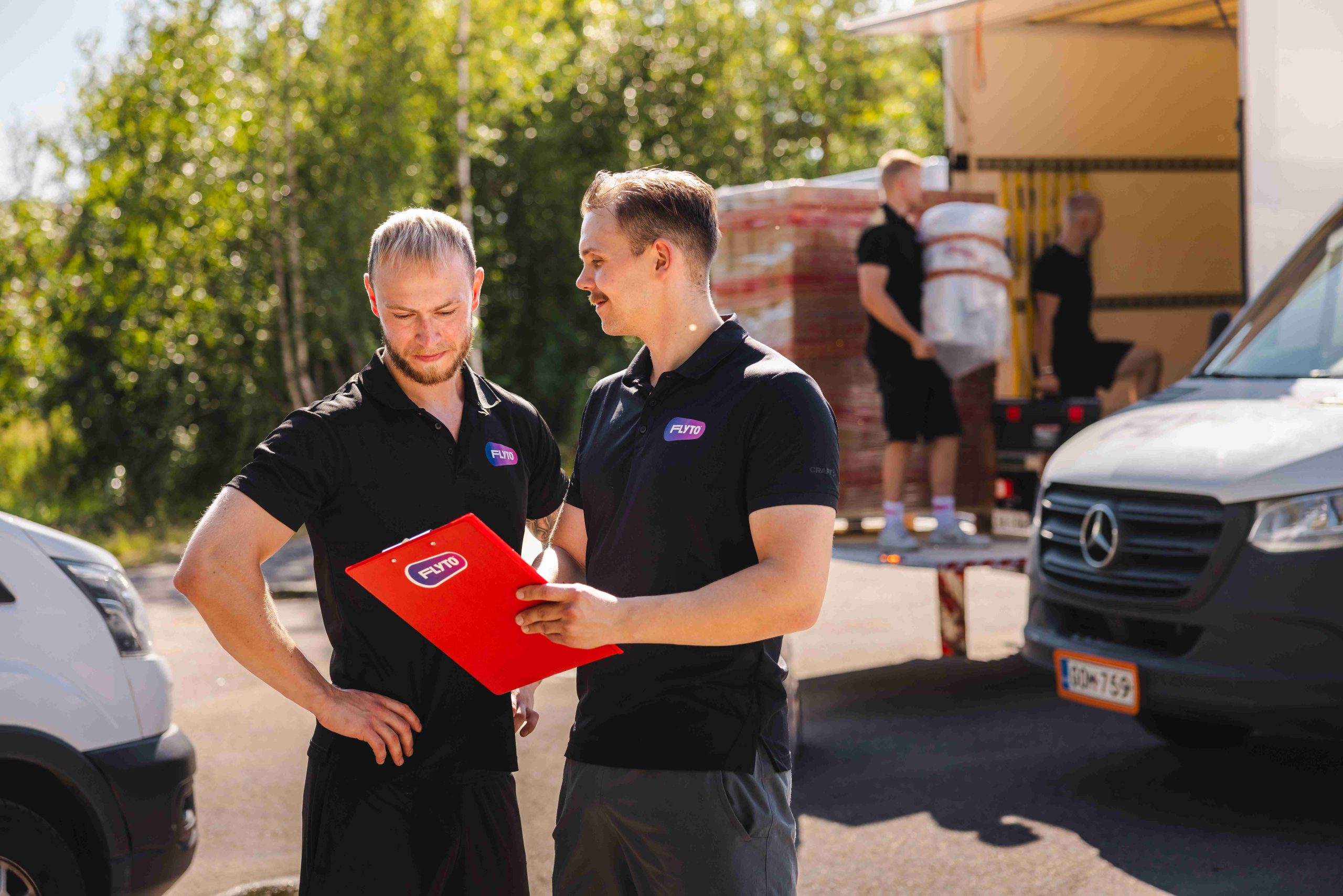
Flyto runs its own offices, warehouses, vehicles, and moving teams across Northern, Central, and Southern Europe, so the Swedish collection, export documentation, and European consolidation of your shipment stay largely in-house and under our direct quality control. For the ocean or air leg to Malaysia and the final-mile delivery, we work with a carefully chosen network of freight partners and subcontractors, plus trusted local partners in Malaysia who handle customs clearance and last-mile delivery on the ground — giving you one accountable point of contact from your Swedish doorstep to your new home in Malaysia.
Frequently asked questions
Do I need to deregister from Sweden before I can import goods duty-free into Malaysia?
The two processes are separate but related: Skatteverket deregistration establishes that you’ve left Sweden (Skatteverket), while Malaysian Customs separately assesses whether your goods qualify as a genuine change-of-residence import based on your Malaysian visa status and the age/use of your items.
How long before I move should I notify Skatteverket?
Notify Skatteverket via the e-service or form SKV 7665 as soon as you know you’ll be living abroad for a year or more; there is no fixed advance-notice deadline stated, but doing it before departure avoids gaps in your registered address (Skatteverket).
Will I still owe Swedish tax after I move to Malaysia?
Possibly, if Skatteverket determines you retain "väsentlig anknytning" to Sweden (home, close family, or major economic ties left behind); otherwise Swedish-source income may fall under the flat-rate SINK regime instead of ordinary tax (Skatteverket).
Can I bring my dog or cat directly from Sweden to Malaysia without quarantine?
No — Malaysia requires a DVS import permit obtained before departure and quarantine on arrival, with exact duration and conditions set by DVS/MAQIS depending on the animal and its documentation (DVS Malaysia).
Is it worth shipping my car to Malaysia?
Usually not, unless it’s a high-value or sentimental vehicle: the Approved Permit process, PUSPAKOM inspection, and import duties typically make permanent import costlier and slower than buying locally (JPJ).
What happens if I move back from Malaysia to Sweden later?
Returning goods can qualify for Swedish duty and VAT relief ("flyttsakstullfrihet") if you meet Tullverket’s conditions on prior residence abroad and prior use of the goods — confirm the current qualifying periods with Tullverket before you move (Tullverket).
Sources
- Skatteverket — Jag ska flytta utomlands. Ska jag ändra min folkbokföring?
- Skatteverket — Har du flyttat från Sverige?
- Tullverket — Flytta från Sverige till ett land utanför EU
- Tullverket — Flytta till Sverige från ett land utanför EU
- Immigration Department of Malaysia — Malaysia My Second Home (MM2H)
- Royal Malaysian Customs Department — Prohibition of Import and Export
- Royal Malaysian Customs Department — Cash & Bearer Negotiable Instrument (CBNI) Declaration
- Bank Negara Malaysia — New Currency Declaration Requirement at All Entry and Exit Points of Malaysia
- Bank Negara Malaysia — Implementation of Exchange Control Measure on the Import & Export of Currency Notes by Travellers
- Department of Veterinary Services Malaysia — Procedure to Import Dogs and Cats into Malaysia
- Jordbruksverket — Föra ut hundar från Sverige
- Road Transport Department of Malaysia (JPJ) — Procedure for Applying for ICP Permit for Foreign Vehicles
- Port of Gothenburg — About the Port