

Moving from Luxembourg to Malaysia (2026): Complete Guide

Relocating from Luxembourg to Malaysia means bridging two very different systems: a landlocked EU member state with no seaport of its own, and a Southeast Asian nation where import duty relief hinges largely on the immigration pass you hold. This corridor is used by employees transferred by their Luxembourg-based employer, MM2H (Malaysia My Second Home) participants, and dependents of Employment Pass holders. Two halves must both be done right: the Luxembourg side (commune deregistration, tax-authority notification, EU export declaration) and the Malaysia side (immigration status, K1 customs declaration, MAQIS pet quarantine if applicable). This guide covers both, plus a short note on the return move.
Key takeaways
- Luxembourg has no seaport — it is landlocked, so household goods shipped by sea to Malaysia are trucked to a container port in Belgium or the Netherlands first; air freight typically routes via Luxembourg Findel Airport or a nearby EU hub (see Section 3).
- You must file a declaration of departure with your Luxembourg commune, at the latest the day before you leave, either in person or via MyGuichet.lu (Guichet.lu).
- Losing Luxembourg tax residency is determined by where your "center of vital interests" is based, not just your address — confirmed by the Administration des contributions directes (ACD).
- Exporting goods from Luxembourg to a non-EU country such as Malaysia goes through the eDouane system run by the Administration des douanes et accises (ADA); a value under €3,000 lets you clear at the departure customs office instead of your registered office.
- In Malaysia, personal effects are typically declared to the Royal Malaysian Customs Department (JKDM) on the standard goods-import declaration (commonly referred to as Form K1); household goods generally need to have been owned and used by the importer before qualifying for duty exemption — confirm current conditions with JKDM or your agent.
- Cash or bearer negotiable instruments worth USD 10,000 or more — and this now includes Malaysian ringgit itself — must be declared on Customs Form No. 7 when entering or leaving Malaysia; carrying ringgit above that same USD 10,000-equivalent threshold additionally requires prior written approval from Bank Negara Malaysia (BNM) (JKDM cash declaration guidance; BNM).
- Pets need an import permit from the Malaysian Quarantine and Inspection Services (MAQIS) arranged before departure, with quarantine space booked at least 14 days ahead — and several dog breeds, including Akita, American Bulldog, Dogo Argentino and Pit Bull Terrier, are banned outright.
- Bringing a car to Malaysia is rarely worth it: temporary import of a foreign-registered vehicle needs an International Circulation Permit from JPJ, the Road Transport Department, while permanent import requires an Approved Permit and attracts steep duty on non-national cars.
1. Why your immigration status in Malaysia decides your customs treatment
Before anything is packed, work out which Malaysian pass you’ll hold, because it shapes whether you qualify for duty relief on used household goods at all. The Immigration Department of Malaysia issues the relevant passes:
- Employment Pass — tied to a Malaysian employer and skilled role; this is the standard route for a corporate transfer and the pass most commonly used to support a "change of residence" claim with customs.
- Dependent Pass — issued to spouses/children of Employment Pass holders.
- Malaysia My Second Home (MM2H) — a renewable five-year multiple-entry Social Visit Pass, not a work permit. Participants must maintain a fixed deposit with a Malaysian bank (RM100,000 for those aged 50 and above, RM150,000 for those younger) or meet an offshore-income alternative, and generally cannot work in Malaysia (Immigration Department, MM2H programme).
Keep the approval letter, passport pass sticker, and (for Employment Pass) the employment contract — Customs will ask for these as evidence when you lodge your import declaration.
2. The Luxembourg export side: deregistering and clearing goods out
Deregister at your commune. Anyone leaving Luxembourg to settle abroad must file a déclaration de départ with their last commune, at the latest the day before departure, in person or via MyGuichet.lu‘s "Declaration of change of usual place of residence" (Guichet.lu). A third-country residence permit must be returned to the General Department of Immigration if you’re leaving for over six months (same source); the Ministry of Foreign and European Affairs also recommends registering with a Luxembourg consular mission once in Malaysia.
Notify the tax administration. Luxembourg tax residency depends on your domicile fiscal or habitual residence; once your "center of vital interests" shifts abroad, you become a non-resident taxpayer for Luxembourg-source income, per the Administration des contributions directes (ACD). Notify the ACD of your change of address and, if applicable, file your final resident-year tax return — ask the ACD or a Luxembourg tax adviser how the change affects your specific filing category, since the rules for couples and mixed-year departures are detailed enough to warrant individual confirmation.
Customs export declaration. Within the EU/EEA there is no customs declaration for a private household move — free movement of goods applies. Once your shipment leaves EU customs territory for Malaysia, though, it is a formal export. Businesses (and the movers/forwarders acting for you) declare it electronically through the eDouane Import/Export system run by the Administration des douanes et accises (ADA), based at Rue de Bitbourg 22, L-1273 Luxembourg. The system issues an Export Accompanying Document (EAD) that travels with the goods to the EU exit point, and export formalities can be handled at the port/airport of actual departure — rather than at a Luxembourg customs office — when the shipment value is under €3,000, or where there are legitimate economic reasons (same source). An EORI number is required for the declarant.
3. Ports and transit: freight-industry estimates, not official figures
Luxembourg is landlocked and has no seaport of its own. In practice, an international mover collects your goods in Luxembourg and trucks them to a deep-sea container terminal — typically Antwerp (Belgium) or Rotterdam (Netherlands), the closest major hubs — for onward ocean freight, or consolidates air cargo through Luxembourg Findel Airport, home to the Cargolux freight hub, or another EU gateway airport. These are standard freight-industry routing choices, not something Luxembourg customs mandates.
The following transit times are Flyto/industry planning estimates only — not figures published by any customs or port authority — and vary with carrier, season, and consolidation schedule:
- Sea freight, Antwerp/Rotterdam → Port Klang or Penang, Malaysia: roughly 5–7 weeks door-to-port, plus Malaysian customs clearance.
- Air freight, Luxembourg/Brussels/Frankfurt → Kuala Lumpur International Airport (KLIA): roughly 5–10 days including consolidation and clearance.
Build in extra time for the Malaysian import-clearance step described below before your shipment is released.
4. The Malaysia import side: declaring goods and duty relief
Imported household goods and personal effects are declared to the Royal Malaysian Customs Department (Jabatan Kastam Diraja Malaysia, JKDM) on Malaysia’s standard goods-import declaration, commonly referred to as Form K1. Your appointed customs agent or mover lodges this electronically before the shipment can be released, with an itemised inventory and values, alongside your passport, immigration pass/employment documents, and (for expatriates) proof of the employer-sponsored move.
Duty and tax relief on used personal effects is available to people genuinely transferring their residence to Malaysia, subject to conditions set by JKDM — items generally need to have already been owned and used by the importer before the move, and the shipment should arrive within a reasonable window of relocation. Because exemptions are assessed case by case, confirm current specifics with JKDM or your customs agent before shipping. New goods, goods still in original packaging, and commercial-quantity items are not covered and are dutiable normally.
Cash and financial instruments. Cash or bearer negotiable instruments worth USD 10,000 or more (or the equivalent in any single currency or combination of currencies) must be declared on Customs Form No. 7 when entering or leaving Malaysia, available from customs.gov.my or at the customs counter (JKDM, Cash & Bearer Negotiable Instrument Declaration guidance). Malaysian ringgit is treated the same way: importing or exporting MYR above the same USD 10,000-equivalent threshold additionally requires prior written approval from Bank Negara Malaysia, applied for through BNM’s Foreign Exchange Policy online portal — approval takes a few working days, so apply well before travel — and Customs Form No. 7 must still be completed even once approval is granted. Failing to declare is an offence under the Anti-Money Laundering, Anti-Terrorism Financing and Proceeds of Unlawful Activities Act 2001, punishable by a fine of up to RM3 million and/or up to 5 years’ imprisonment; moving ringgit above the threshold without BNM approval carries separate, steeper penalties under the Financial Services Act 2013 (same JKDM source). Route large sums through your bank rather than carrying cash.
5. Pets: MAQIS on arrival, an EU health certificate on departure
Dogs and cats entering Malaysia need an import permit from the Malaysian Quarantine and Inspection Services (MAQIS), applied for before the animal leaves Luxembourg — quarantine space must be booked at least 14 days ahead of the import date (MAQIS, Importation of Pets). Core requirements: minimum age 3 months at import; an ISO 11784/11785-compliant microchip; a vaccination record book or pet passport documenting vaccination history and current health, issued within 7 days of export; and a quarantine period on arrival whose length varies by exporting country (same source). Banned dog breeds include the Akita, American Bulldog, Dogo Argentino, Fila Brasileiro, Japanese Tosa, Neapolitan Mastiff and Pit Bull Terrier (and variants); several others — Bull Mastiff, Bull Terrier, Doberman, German Shepherd/Alsatian, Perro de Presa Canario and Rottweiler — require director-level MAQIS approval before you can even apply (same source; see also the Department of Veterinary Services Malaysia’s dog/cat import procedure).
On the Luxembourg side, since Malaysia is outside the EU, your pet will need an official veterinary health certificate for export to a non-EU (third) country rather than the standard intra-EU pet passport — arrange this with an accredited Luxembourg veterinarian in the weeks before travel, timed to MAQIS’s own permit and vaccination windows.
6. Vehicles, money, and things people forget
Vehicles. Bringing your own car is rarely economical and is not a simple personal-effects shipment. A foreign-registered vehicle circulating in Malaysia temporarily needs an International Circulation Permit (ICP) from JPJ — form JPJK9, issued free of charge, initially valid 90 days, extendable once for a further 90 days with State JPJ Director approval, capped at 180 days per year — and the vehicle must also clear Malaysian Customs at the port of entry. Permanent import is a separate, tightly controlled process requiring an Approved Permit; given Malaysia’s protection of its domestic car industry, most relocating households sell in Luxembourg and buy new in Malaysia instead.
Money. See the cash and ringgit declaration rules in Section 4 — route large transfers through your bank rather than carrying cash, and declare anything you do carry.
What people forget:
- Commune deregistration is a legal filing, separate from cancelling utilities/lease — do it even for a "temporary" move, since it affects your tax and social-security status.
- Notify the ACD directly about your change of address; don’t assume commune deregistration alone updates your tax file.
- On an Employment Pass, duty relief is generally easier to secure when the pass is issued before the shipment arrives — get it approved before your goods leave Luxembourg where possible.
- Malaysia’s banned/restricted dog breed list can derail a pet move late in the process — check it before booking any shipment.
- Original-packaging or unused goods (electronics bought "for the move") don’t qualify for the personal-effects exemption — use them or budget for duty.
7. Moving back: Malaysia to Luxembourg
If you later return from Malaysia to Luxembourg, the roles reverse. Malaysia becomes the third (non-EU) country of departure, and your household goods can be imported into Luxembourg duty- and VAT-free under "transfer of normal residence" relief if: you had your normal place of residence in Malaysia for at least the preceding 12 consecutive months; the goods (other than vehicles) were in your possession for at least 6 months before ceasing residence abroad, and for non-consumables, in your own use during that time; and you declare the import to Luxembourg customs within 12 months of your change of residence (declarations can even be pre-lodged up to 6 months in advance, backed by a formal commitment and a security deposit) (Guichet.lu, declaring personal property to customs when moving from a third country to Luxembourg). You’ll need a dated, signed inventory with estimated values, proof of your Malaysian residence, and proof of your new Luxembourg address; alcohol, tobacco, and most utility/mixed-use vehicles are excluded from the relief (same source). You will also re-register at your new Luxembourg commune and re-establish Luxembourg tax residency with the ACD.
How Flyto handles your Luxembourg to Malaysia move
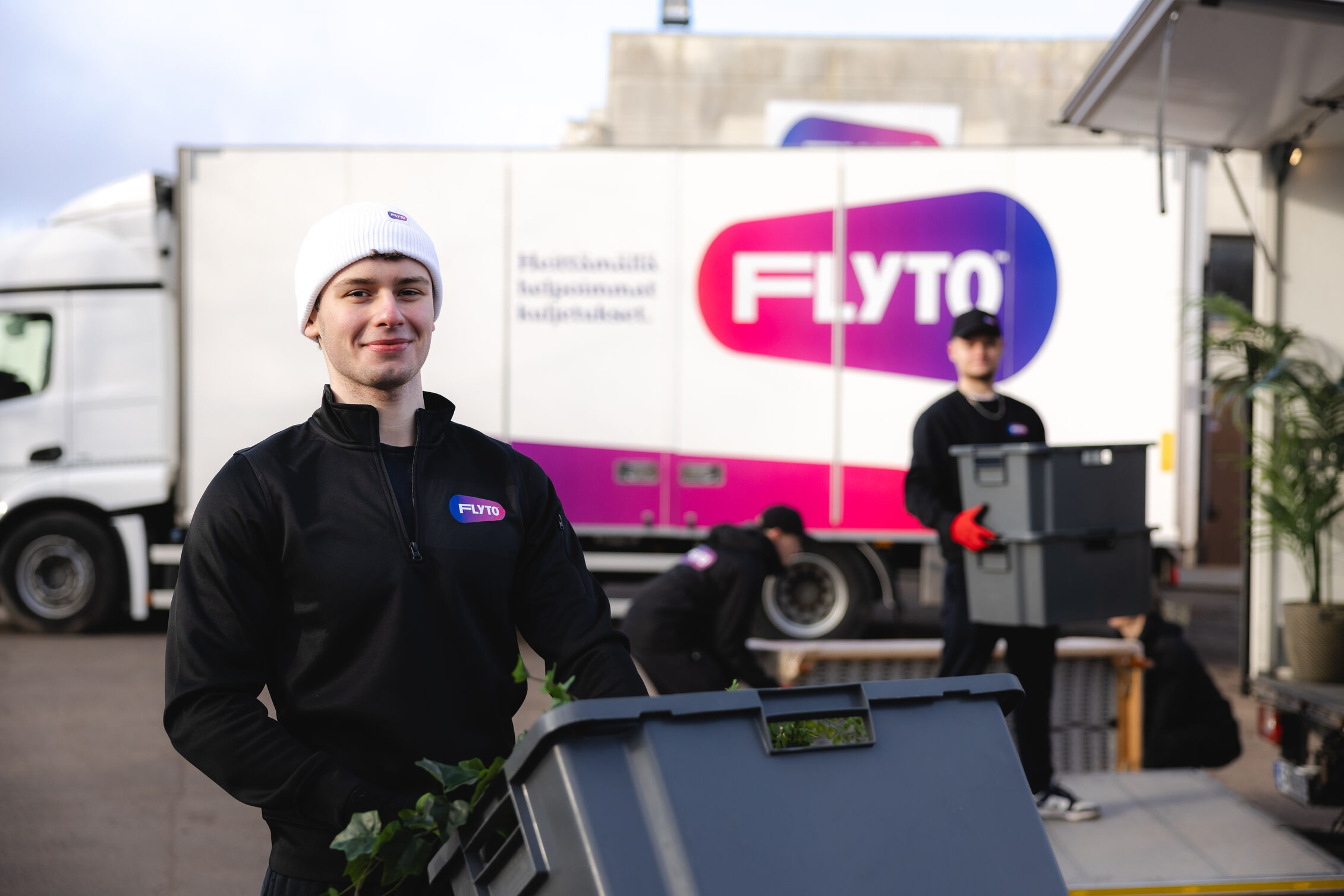
Flyto runs its own offices, warehouses, crews and vehicles across Northern, Central and Southern Europe, so the Luxembourg collection, EU export paperwork, and routing to Antwerp, Rotterdam or Findel Airport is handled by our in-house team rather than handed off blind. For the ocean or air leg to Malaysia and for customs clearance on arrival, we work through a carefully vetted network of partner carriers and forwarders, and on the ground in Malaysia we coordinate with trusted local partners who handle destination customs clearance, delivery and, where needed, MAQIS pet-import logistics.
Frequently asked questions
Does Luxembourg charge export duty on my household goods? No. Moving goods out of the EU customs territory as part of a genuine change of residence isn’t subject to Luxembourg export duty; it is an export declaration requirement (via eDouane through the ADA), not a tax event.
Do I need to deregister in Luxembourg even if I keep an apartment there? The commune declaration of departure applies when you establish your residence abroad; if you’re genuinely relocating your habitual residence to Malaysia, file it, and separately confirm your tax position with the ACD, since tax residency turns on your actual center of vital interests, not just an address on paper.
Can MM2H participants get the same customs relief as Employment Pass holders for household goods? MM2H is a Social Visit Pass, not an employment-based residence permit (Immigration Department Malaysia); Malaysian Customs assesses personal-effects relief case by case, so confirm your specific eligibility with JKDM or your customs agent before shipping.
Is my dog breed banned from entering Malaysia? Several breeds are banned outright (e.g. Akita, Pit Bull Terrier, Dogo Argentino, Japanese Tosa) and others require special MAQIS director approval (e.g. Rottweiler, German Shepherd, Doberman) — check the current MAQIS pet-import page before you commit to bringing a pet.
How much cash can I carry into Malaysia without declaring it? Any amount of foreign currency is allowed but must be declared on Customs Form No. 7 once it (or its equivalent) reaches USD 10,000; the same threshold applies to Malaysian ringgit itself, and moving ringgit above it additionally requires prior written approval from Bank Negara Malaysia.
Should I ship my car to Malaysia? Generally no — permanent import needs an Approved Permit and Malaysian import duty on non-national vehicles is steep, so most relocating households sell in Luxembourg and buy locally; if you only need the car in Malaysia briefly, JPJ’s International Circulation Permit route (max 180 days/year) is the temporary option, not a permanent import.
Sources
- Guichet.lu — Declaring a move to a new commune of residence (departure declaration)
- Guichet.lu — Luxembourg Export Declaration (ADA / eDouane)
- Guichet.lu — Declaring personal property to customs when moving from a third country to Luxembourg
- Administration des contributions directes (ACD) — Résident / non-résident
- Immigration Department of Malaysia — Departments profile / introduction
- Immigration Department of Malaysia — Malaysia My Second Home (MM2H)
- Royal Malaysian Customs Department (JKDM) — official portal
- Royal Malaysian Customs Department — Cash & Bearer Negotiable Instrument (CBNI) Declaration guidance
- Bank Negara Malaysia — New currency declaration requirement at all entry and exit points of Malaysia
- Bank Negara Malaysia — Foreign Exchange Policy online application portal
- MAQIS (Malaysian Quarantine and Inspection Services) — Importation of pets
- Department of Veterinary Services Malaysia — Procedure to import dogs and cats into Malaysia
- JPJ (Road Transport Department Malaysia) — Procedure for applying for ICP permit for foreign vehicles