

Moving from Austria to Malaysia (2026): Complete Guide

Relocating from Austria to Malaysia means closing out an EU customs and residency file in Vienna, Graz, Linz, Salzburg or wherever you currently live, and opening a new one in Kuala Lumpur, Penang or Johor Bahru. This corridor has two entirely separate rule sets — Austrian export/deregistration formalities on one side, Malaysian immigration-linked customs clearance on the other — and the two are connected: your Malaysian visa category decides whether your household goods clear duty-free. This guide is for Austrian residents (EU/EEA nationals or third-country nationals registered in Austria) moving to Malaysia for work, MM2H retirement, or a cross-border transfer, and covers both directions plus a short note on moving back.
Key takeaways
- Austria has no separate "export declaration" for used personal belongings, but any shipment leaving EU customs territory still passes through the standard EU export/ECS procedure administered by Austrian customs offices under the Federal Ministry of Finance (BMF).
- You must deregister your Austrian address (Abmeldung) within 3 days before to 3 days after moving out, updating the Zentrales Melderegister (ZMR) via any Meldeservice, e.g. in Vienna.
- Malaysia’s duty-free treatment for used household goods depends on your visa/pass type and generally requires the goods to have been owned/used abroad and declared on arrival via the standard import customs process (High Commission of Malaysia, Canberra).
- Every Malaysia-bound shipment needs a K1 customs declaration filed with the Royal Malaysian Customs Department (Jabatan Kastam Diraja Malaysia, JKDM), whether or not duty is owed.
- Pets need an Austrian/EU veterinary health certificate plus ISO-compliant microchip and rabies vaccination on the way out (BAVG), and a Malaysian import permit plus quarantine (minimum 7 days) on the way in (Department of Veterinary Services Malaysia).
- Carrying cash or bearer instruments above USD 10,000 (or MYR equivalent) in or out of Malaysia must be declared to customs (Bank Negara Malaysia).
- MM2H (Malaysia My Second Home) is the main long-stay route for non-working residents and is administered by the Immigration Department of Malaysia; it involves a fixed-deposit requirement and other conditions that have changed several times in recent years, so verify the current tier and figures directly with the Department.
- Importing a personal car into Malaysia requires an Approved Permit and is heavily taxed — most relocating households sell in Austria and buy locally instead.
1. Your Malaysian immigration status determines your customs treatment
Malaysia does not have a blanket "moving goods" duty exemption available to anyone who shows up with a container. Whether your used household effects clear free of duty and sales/service tax depends on the pass you hold when the shipment arrives:
- Employment Pass holders (company-sponsored expatriates) can typically bring in used personal effects duty-free within the standard window around their pass approval, provided the goods were genuinely owned and used abroad and are declared correctly.
- MM2H participants fall under the MM2H programme run by the Immigration Department, which sets its own minimum-stay, fixed-deposit and qualifying-property conditions — these have been revised more than once in recent years, so confirm the current tier structure and thresholds directly with the Immigration Department before you rely on them. MM2H approval does not itself replace the normal customs clearance of your belongings — that still runs through the Royal Malaysian Customs Department.
- Dependent pass holders generally follow the principal applicant’s status.
Because the customs officer at the point of entry checks your pass type against the shipment, get your Employment Pass or MM2H approval confirmed before your container or air shipment departs Austria — arriving goods without a valid pass in hand is the single most common cause of delay and unexpected duty bills.
2. The Austria export side: deregistration, customs and tax exit
Deregister your residence (Abmeldung). Registration and deregistration of every residence in Austria is compulsory. When you give up your Austrian home, you must file an Abmeldung with your local Meldeservice (in Vienna, any Magistratisches Bezirksamt) within the window of 3 days before to 3 days after vacating the property, using the Meldezettel form; this updates the nationwide Zentrales Melderegister (ZMR) and is free of charge (Stadt Wien). EU-level guidance on deregistering a residence when leaving one member state is also published via Your Europe.
Notify your tax office. Moving your main residence and centre of vital interests out of Austria ends your unlimited tax liability with the Finanzamt Österreich (Tax Authority Austria), the country’s unified tax authority. Depending on your financial situation (company shareholdings, investment portfolios, business assets), ending Austrian tax residency can trigger exit-taxation rules under Austrian income tax law. Because the treatment differs sharply depending on whether you move within the EU/EEA or to a non-EU country like Malaysia, and on what assets you hold, get case-specific advice from a Steuerberater or the Finanzamt before you leave — this is not a DIY step if you hold significant financial assets.
Customs: no special "export declaration" for used belongings, but the shipment still needs to clear EU export formalities. Austria does not require a household-goods-specific export declaration the way it requires an import declaration (Übersiedlungsgut) for people moving into Austria from outside the EU (that inbound relief uses forms ZBefr 2E / ZBefr 2aE and requires 12 months’ prior residence abroad plus 6 months’ prior use of the goods — see the BMF page on transferring residence from a non-EU country, useful mainly for context and for the reverse move). What does apply outbound is the standard EU export procedure: your goods, once consolidated for shipment, are declared electronically at an Austrian customs office of export and tracked to the customs office of exit via the Export Control System, with the export notice issued once departure is confirmed (BMF – Export procedure), processed through Austria’s electronic customs system, "e-Zoll" (BMF – E-Customs). In practice your moving company or freight forwarder files this on your behalf as part of the shipment. General customs questions can be directed to Austria’s Customs Information Centre (Zentrale Auskunftsstelle Zoll, based at Zollamt Klagenfurt Villach) (BMF customs information leaflet).
3. Ports and transit: what’s realistic (freight-industry estimates, not official figures)
Austria is landlocked, so nothing leaves "from an Austrian port" by sea — cargo is trucked or railed to a seaport first. For household-goods shipments to Malaysia, freight forwarders typically route via:
- North Sea gateway: goods trucked from Austria to Hamburg or Bremerhaven (Germany), then loaded on container vessels to Port Klang or Penang.
- Adriatic gateway: goods trucked to Koper (Slovenia) or Trieste (Italy) — geographically closer to Austria — for onward sailing to Malaysia, often with a transshipment stop (e.g. Singapore or Colombo).
- Air freight: Vienna International Airport (VIE) for smaller/urgent shipments, connecting to Kuala Lumpur International Airport (KLIA).
As rough, non-binding industry estimates only: sea freight from a North Sea or Adriatic port to Port Klang typically runs 6–9 weeks door-to-port depending on transshipment, plus final-mile clearance and delivery in Malaysia; air freight is typically 1–2 weeks including customs clearance on both ends. Actual transit time depends on carrier schedules, transshipment ports, and the season — always confirm with your forwarder’s current sailing schedule, not this guide.
4. The Malaysia import side: K1 declaration and duty-free conditions
Every shipment entering Malaysia, whether it owes duty or not, must be declared to the Royal Malaysian Customs Department (Jabatan Kastam Diraja Malaysia, JKDM) using a Form K1 import declaration, which records the goods, their value, and origin and is used to calculate any duty and Sales and Service Tax (SST) owed. For used personal and household effects, the standard supporting documents are your passport, your Employment Pass/MM2H approval or equivalent, a detailed packing/inventory list, and the K1 itself. Personal effects that have genuinely been owned and used abroad for a qualifying period ahead of the move are the category eligible for duty-free treatment, subject to Customs’ assessment at the point of entry (High Commission of Malaysia, Canberra – Import of household goods into Malaysia). All shipments of used household effects are subject to physical inspection by Customs on arrival, so pack an accurate, itemised inventory and keep receipts or proof of prior ownership for higher-value items (electronics, jewellery, art). Bring goods in within a reasonable window of your pass approval — arriving long after your pass was issued, or before it is issued, weakens your duty-free claim.
5. Pets: Austria export side and Malaysia import side
Leaving Austria/the EU. Austria itself does not impose special conditions on animals leaving the country — no export quarantine is required (BAVG – travel with pets). What you do need is the standard EU pet-travel documentation to satisfy the destination country’s entry rules: an ISO-standard microchip, a valid rabies vaccination (which cannot be given before 12 weeks of age, with immunity recognised from 21 days after completion of the protocol), and an official veterinary health certificate (BAVG – animal import/travel requirements). Austria’s competent authority for these controls is the BAVG (Bundesamt für Verbrauchergesundheit). Because requirements are set by the destination, confirm Malaysia’s current entry conditions — including whether a rabies antibody (serological) test is required — with your vet and Malaysia’s Department of Veterinary Services before booking travel.
Entering Malaysia. Each dog or cat needs an import permit issued in advance by Malaysia’s Department of Veterinary Services (DVS) (Peninsular Malaysia) or the relevant state veterinary department, valid for 30 days from issue; the animal must be at least three months old, ISO 11784/11785 microchipped, and accompanied by an official veterinary health certificate from the exporting country. On arrival, animals are subject to compulsory quarantine of not less than 7 days, and certain "aggressive" breeds face import restrictions (DVS Malaysia – regulations for the importation of dogs and cats; see also High Commission of Malaysia, Canberra – import of cats and dogs). Apply for the Malaysian import permit well ahead of your flight — it is issued before the pet travels, not on arrival.
6. Vehicles, money, and things people forget
Vehicles. Importing a personal car into Malaysia requires an Approved Permit (AP) issued by the Ministry of Investment, Trade and Industry (MITI), and imported vehicles are subject to substantial import duty and excise duty on top of SST. For most relocating households the practical outcome is the same regardless of exact rates: it is rarely worth shipping an Austrian-registered car, and most expatriates sell before leaving and buy locally in Malaysia (left-hand-drive Austrian cars are also the wrong configuration for Malaysia’s right-hand-drive roads). Confirm current AP eligibility and duty rates directly with MITI/JPJ before making any decision.
Cash and money. Declare cash or bearer negotiable instruments to Malaysian customs if you’re carrying more than USD 10,000 (or the equivalent in any currency, including MYR) in or out of the country, using the Cash/Bearer Negotiable Instrument declaration; non-declaration or false declaration carries serious penalties (Bank Negara Malaysia; Royal Malaysian Customs – CBNI declaration pamphlet). Non-resident travellers are also limited in how much Malaysian ringgit cash they may carry in.
Things people forget. Don’t sell any duty-free relocation goods within Malaysia shortly after import — Customs can claw back the exemption if items are disposed of within a defined period. Keep your Austrian Abmeldung confirmation and Meldezettel copies — Malaysian banks, schools and landlords sometimes ask for proof of your prior address history during onboarding. If you have EU/Austrian pension contributions, check continuation/voluntary contribution options before you deregister, since some entitlements are tied to your registered Austrian address. Finally, electronics and appliances built for Austria’s 230V/Type F sockets will need adapters or replacement — Malaysia runs the same 230V standard but uses Type G (UK-style) plugs.
How Flyto handles your Austria to Malaysia move
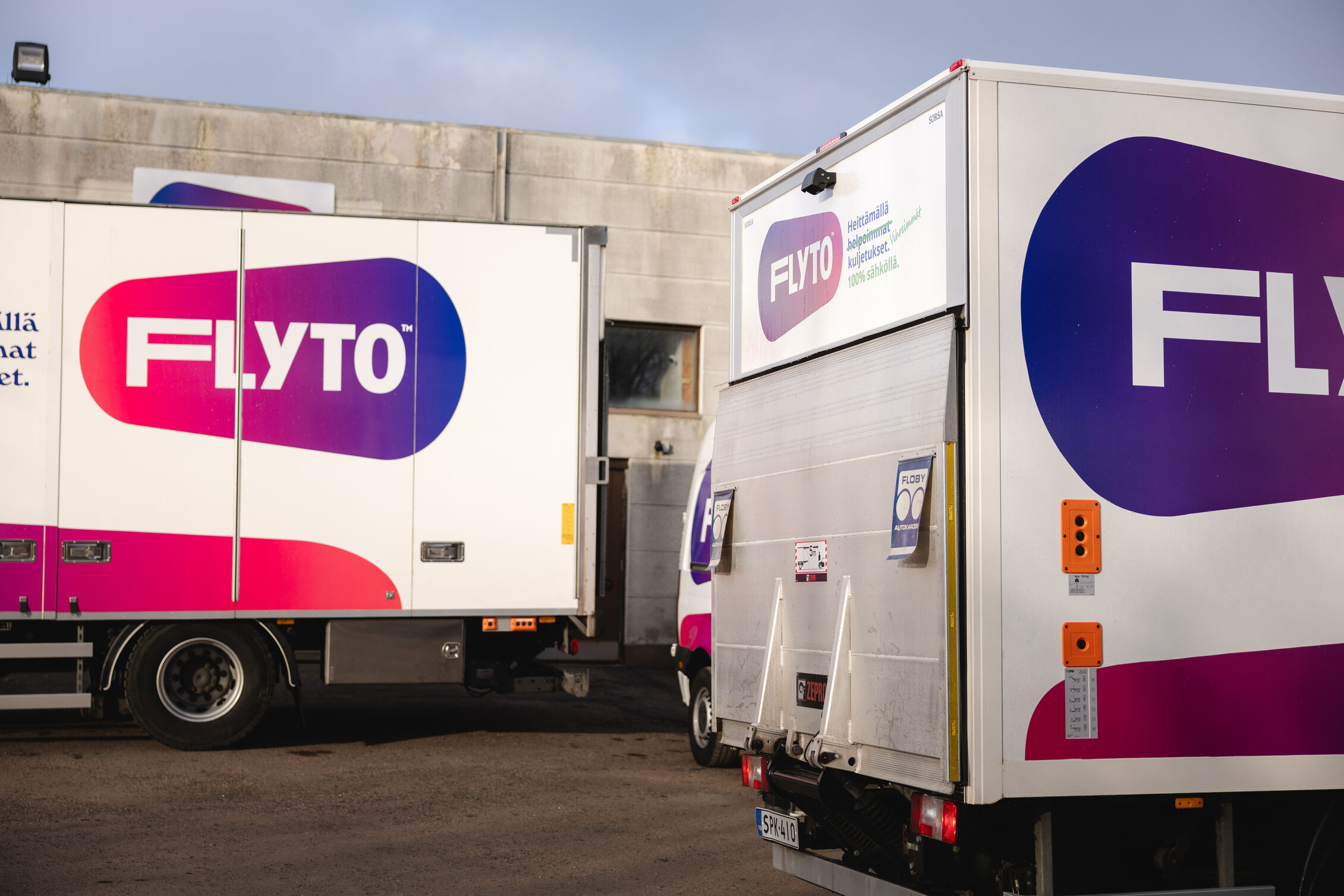
Flyto runs its own offices, warehouses, crews and vehicles across Northern, Central and Southern Europe, so the Austrian collection, packing, and the EU export leg of your move are handled directly by our in-house teams rather than handed off sight-unseen. For the long-haul sea or air freight and the Malaysian side, we work with a carefully selected network of partner carriers and forwarders, plus trusted local partners on the ground in Malaysia who manage K1 clearance, delivery, and final unpacking. That combination — strong in-house European operations paired with vetted specialists where local expertise matters most — is how we keep the Austria–Malaysia corridor reliable end to end.
Frequently asked questions
Do I need to deregister in Austria before I can register anything in Malaysia?
No — the two processes are independent. But you must still complete your Austrian Abmeldung within 3 days before to 3 days after vacating your home, regardless of when your Malaysian pass or MM2H approval comes through (Stadt Wien).
Will my household goods definitely be duty-free in Malaysia?
Not automatically — it depends on your visa/pass status, whether the goods were genuinely owned and used abroad, and Customs’ assessment of your K1 declaration and inventory at the point of entry. Get your pass approved before the shipment arrives.
How long does the whole move typically take?
As a rough freight-industry estimate, sea freight runs roughly 6–9 weeks port-to-port plus clearance, and air freight roughly 1–2 weeks including clearance — always confirm actual transit with your forwarder’s current schedule.
Can I bring my dog or cat without quarantine in Malaysia?
No — Malaysia requires a minimum 7-day quarantine on arrival regardless of your pet’s vaccination history, on top of the advance import permit and health certificate (DVS Malaysia).
Should I ship my car?
Generally no. Malaysia’s Approved Permit system and import/excise duties make it impractical for most relocating individuals, and your Austrian left-hand-drive car is the wrong configuration for Malaysian roads. Selling in Austria and buying locally is the common route.
What about moving back from Malaysia to Austria later?
The relief runs in reverse: after at least 12 months of normal residence in Malaysia (outside the EU), you can bring used personal property into Austria largely duty- and tax-free via forms ZBefr 2E or ZBefr 2aE, provided the goods were used at your Malaysian residence for at least 6 months and are imported within 12 months of re-establishing your Austrian residence — plus you’ll need to re-register (Anmeldung) your new Austrian address with the ZMR (BMF – transferring residence from a non-EU country).
Sources
- BMF – Transferring your normal place of residence from a non-EU country
- BMF – Export procedure
- BMF – E-Customs
- BMF – Customs information leaflet (Zoll-Info, PDF)
- BMF – Taxation overview / Finanzamt Österreich
- Stadt Wien – Deregistering a residence (Abmeldung)
- oesterreich.gv.at – Zentrales Melderegister (ZMR)
- Your Europe (European Commission) – Deregistering residence
- BAVG – Import of living animals (dogs, cats, ferrets)
- BAVG – Entry and re-entry of pets
- Immigration Department of Malaysia – Malaysia My Second Home (MM2H)
- High Commission of Malaysia, Canberra – Import of household goods into Malaysia
- High Commission of Malaysia, Canberra – Import of animal (cats and dogs) to Malaysia
- Department of Veterinary Services Malaysia – Regulations for the importation of dogs and cats (PDF)
- Bank Negara Malaysia – New currency declaration requirement at entry/exit points
- Royal Malaysian Customs Department – Cash & Bearer Negotiable Instrument declaration (PDF)