

Moving to Nairobi from Abroad (2026): Complete Relocation Guide

Nairobi is the gateway to East Africa — the region’s undisputed business, diplomatic and technology hub, and for most people arriving from abroad the single most practical place on the continent to land a job, run a company or take up an international posting. It hosts the United Nations Office at Nairobi (UNON) at Gigiri, one of only four major UN headquarters worldwide and the only one in the global south, alongside a dense cluster of embassies, NGOs, pan-African corporate offices and the tech scene that has earned the city its “Silicon Savannah” nickname. It is also refreshingly liveable: English is an official language, the climate is mild year-round thanks to an altitude near 1,800 metres, and mobile money makes daily life unusually frictionless. This guide is written for people relocating to Nairobi from abroad in 2026 — foreign professionals, investors, diplomats and returning Kenyans — and it covers the two things that trip newcomers up most: the permit route that actually lets you live and work here, and getting your household goods through Kenyan customs after a long sea voyage. Every official figure below is sourced; where a number is a market estimate rather than a published rule, it is labelled as one.
Key takeaways
- An eTA (Electronic Travel Authorisation) — which replaced Kenya’s visa system on 1 January 2024 and costs USD 30 — lets you enter Kenya, but it does not authorise employment; to work you need a permit or pass issued by the Directorate of Immigration Services (etakenya.go.ke; DIS – passes and work permits).
- The main employment route is a Class D permit: processing fee Kshs 20,000 (non-refundable) and an issuance fee of Kshs 500,000 per year (free for East African Community nationals) (DIS – Class D (Employment)).
- Investors and business owners use a Class G permit, which requires documentary proof of at least USD 100,000 to be invested; issuance is Kshs 250,000 per year (DIS – Class G).
- A Special Pass lets you work short-term for up to 6 months (USD 200 per month) — the usual bridge while a permit is processed (DIS – Special Pass).
- Sea freight arrives at the Port of Mombasa, the largest port in East Africa, then travels roughly 480 km inland to Nairobi by the Standard Gauge Railway (a 592 km line) or by road (Kenya Ports Authority).
- Returning residents can import used personal and household effects duty-free, plus one motor vehicle that is no more than 8 years old, right-hand drive, and owned and used for at least 12 months abroad — under the Fifth Schedule of the EAC Customs Management Act, 2004 (KRA – Guidelines for Returning Residents).
1. Which permit actually lets you live and work in Nairobi
The single most important thing to grasp before you book flights or a shipment is the difference between entering Kenya and being allowed to work there. They are governed by two entirely separate systems, and conflating them is the most common and most expensive mistake newcomers make.
The eTA gets you in — nothing more. On 1 January 2024 Kenya scrapped its old visa regime and replaced it with an Electronic Travel Authorisation. Almost every foreign visitor now applies online at the official portal before travelling, pays USD 30, and receives an approval that is valid for travel within 90 days of issue. It is quick and convenient, but it is fundamentally a screening tool for visitors: it does not permit you to take up employment or run a business. Holders of valid work permits, permanent-residence certificates or special passes are exempt from needing an eTA at all (etakenya.go.ke). Treat the eTA as your boarding pass into the country, and the permit below as your right to build a life there.
Class D (Employment) — the salaried-worker route. This is the permit for most people taking a job in Nairobi. In the Directorate’s own words, it “is issued to a person who is offered specific employment by a specific employer, who is in possession of skills or qualifications that are not available in Kenya and whose engagement in that employment will be of benefit to Kenya” (DIS – Class D). It is employer-sponsored: a Kenyan-registered organisation must offer you the role, demonstrate that it tried and failed to recruit locally, and nominate a Kenyan understudy to be trained in your skills. The fees are substantial — a Kshs 20,000 non-refundable processing fee and, on approval, an issuance fee of Kshs 500,000 per year of validity (nationals of East African Community member states are exempt, or “gratis”). Applications are filed online through the eFNS portal with Form 25, the employer’s cover letter, your academic and professional credentials, a valid Tax Compliance Certificate and the understudy’s details.
Class G (Specific trade, business or consultancy) — the investor route. If you intend to run a business, invest or work as an independent consultant rather than draw a local salary, Class G is the correct category. It “is issued to a person who intends to engage, whether alone or in partnership, in a specific trade, business, consultancy or profession… in Kenya” and requires documentary proof of capital to be invested of at least USD 100,000. The processing fee is Kshs 20,000 and issuance is Kshs 250,000 per year (DIS – Class G). This is the route many founders and self-employed professionals in Nairobi’s startup and consulting scene take.
Special Pass — the short-term bridge. Permits take time to process, and you cannot legally start work on an eTA. The Special Pass fills that gap: it is issued to a foreigner who wishes to enter and remain in Kenya for a period not exceeding six months for a specific short-term engagement, at a fee of USD 200 per month (gratis for EAC nationals) (DIS – Special Pass). Many employers apply for a Special Pass so a new hire can begin work while the Class D permit is finalised. It is a stopgap, not a substitute for a permit — plan the transition, don’t rely on repeated renewals.
Bringing your family. A spouse and dependent children of a permit holder are covered by a Dependant’s Pass, issued for the same validity as the principal’s permit and tied to it (DIS – Dependant’s Pass). A Dependant’s Pass lets your family live in Kenya; it does not by itself grant a spouse the right to work, which requires their own permit or an endorsement. Nairobi’s international and IB schools are excellent but competitive, so begin admissions before you arrive and bring transfer certificates and prior school records.
2. Registration and staying legal after you arrive
Getting the right permit is the foundation, but the paperwork does not stop at immigration. Foreign nationals living in Kenya are required to register and carry a foreign national registration certificate (the document long known informally as the “alien card”), issued through the same eFNS system that handles permits and passes. Registration links your identity to your permit and is what banks, landlords and employers will expect to see alongside your passport. Handle it promptly once your permit is granted rather than leaving it until a landlord or bank asks (DIS – passes and work permits; eFNS portal).
Two practical points. First, almost every application — permit, pass, dependant’s pass and registration — now runs through the online eFNS (Foreign Nationals Services) portal, so gather digital copies of your passport, photographs, credentials, employer documents and a Kenyan address before you start. Second, keep your permit’s expiry date in view: renewals, changes of employer and changes of address all go through the same portal, and letting a permit lapse is far harder to fix than renewing it in good time. Kenya’s eCitizen government-services platform (which sits behind the immigration and tax portals) is the backbone of most official transactions, though it can be intermittently unavailable to overseas connections — a reliable local contact or your relocation coordinator can help bridge that.
3. Shipping your belongings: Mombasa, then inland to Nairobi
Nairobi is landlocked — roughly 480 km from the coast — so unlike a move to a port city your shipment has two legs: an ocean voyage to the coast, and an inland journey up to the capital. Understanding both is the key to realistic timing.
The sea leg: Port of Mombasa. Your container will almost always route to the Port of Mombasa on the Indian Ocean coast — the largest and busiest port in East and Central Africa, the only international seaport in Kenya, and the gateway not just for Kenya but for the wider region (Kenya Ports Authority). It is run by the state-owned Kenya Ports Authority and connects to more than 80 ports worldwide. As a planning estimate (not an official figure), door-to-port sea transit from Northern Europe to Mombasa typically runs about six to eight weeks, plus customs clearance and inland delivery; Gulf and Asian origins are faster. Confirm current transit times with your mover close to booking.
The inland leg: SGR or road. From Mombasa, cargo travels to Nairobi either by the modern Standard Gauge Railway (SGR) — the Mombasa–Nairobi line is 592 km long and its Madaraka Express passenger service covers the route in about four and a half hours — or by road along the busy A109 highway (KPA). Freight increasingly moves by rail to an inland container depot near Nairobi, where it is cleared and then trucked to your home. Build this second leg into your timeline: your goods are not “home” when the ship docks in Mombasa, only when they clear the inland depot and reach your Nairobi address.
Choosing a container size. The three normal options are a 20ft container (roughly a one- to two-bedroom home), a 40ft container (a larger family home, with room for a vehicle’s worth of goods), or LCL — “less than container load” — where your goods share a container with others and you pay by volume. LCL suits smaller moves but adds consolidation and de-consolidation time at both ends, which matters more on a two-leg route like this one.
4. Kenyan customs: the returning-resident relief and restricted items
Kenya does not simply wave household goods through duty-free for everyone. The generous relief is aimed at returning residents — Kenyans and long-term residents changing their residence back to Kenya — and is set out in the Fifth Schedule of the East African Community Customs Management Act, 2004, administered by the Kenya Revenue Authority (KRA).
Used personal and household effects. A returning resident may import, free of duty, “wearing apparel” and “personal and household effects of any kind which were in personal use in the former place of residence” (KRA – Guidelines for Returning Residents). The operative words are used and in personal use: this covers your furniture, clothing, books, kitchenware and the ordinary contents of a home, not new goods bought for resale. The effects should generally be shipped within 90 days of your arrival, a window the Commissioner can extend up to 360 days — so time your shipment to land inside that window.
The motor-vehicle relief. A returning resident is also allowed one motor vehicle (excluding buses and minibuses) duty-free, subject to strict conditions: the vehicle must be no more than eight years old from its date of manufacture, must be right-hand drive, and you must show ownership and personal use of it for at least twelve months before your return. You must import it within the same 90-day window (extendable to 360 days), and you must not have enjoyed a similar exemption within the previous four years (KRA). If you are coming from a left-hand-drive country, there is a special provision to import one replacement right-hand-drive vehicle whose value does not exceed that of the LHD car you owned and disposed of. For most people moving from a LHD market, though, the eight-year age cap and RHD requirement mean it is usually simpler to sell the car at origin and buy locally in Nairobi.
If you are not a returning resident. Foreign nationals arriving on an employment or investor permit who are not Kenyan returning residents do not automatically get the full Fifth Schedule relief; their used household effects may attract assessment and duty depending on circumstances. Because eligibility hinges on your status, confirm your customs position with KRA or your mover before you ship — it is the difference between a clean clearance at Mombasa and an unexpected duty bill.
Restricted and prohibited items, and the KRA PIN. Kenya restricts or prohibits a range of goods — firearms and ammunition, certain drugs, counterfeit goods, some plant and animal products, and used items subject to specific controls — and importing them without the right permits causes seizures and delays (KRA – importing goods). You will also need a KRA PIN (Personal Identification Number), the tax ID issued through the iTax system, for customs clearance and for almost everything else — opening a bank account, signing a lease, importing a vehicle and being paid. Apply for it early through the KRA portal (kra.go.ke). Make a detailed, valued inventory at packing: it is both your marine-insurance basis and what customs assesses against, and transit insurance for the full replacement value of your goods is well worth the modest premium on a two-leg route.
5. Where to live: Nairobi’s neighbourhoods
Nairobi is comparatively affordable for an international capital, and space is one of its real draws — leafy suburbs, gardens and larger homes are the norm for expatriate households in a way they are not in many global cities. Housing decisions tend to revolve around proximity to work (or to schools and the UN/embassy cluster), security arrangements and commute times, since traffic is the city’s single biggest daily frustration. The areas below are the ones international arrivals most often consider; specific rents are omitted because they move quickly and vary enormously by property, but the relative positioning is stable.
- Westlands. A dense, cosmopolitan commercial-and-residential hub just northwest of the centre, packed with offices, malls, restaurants and nightlife, and a favourite with younger professionals who want to be in the thick of it. Well served by apartments and increasingly by the Nairobi Expressway.
- Kilimani. A fast-growing, mixed-use inner suburb of apartment blocks, cafes and co-working spaces, central and convenient, popular with professionals and smaller households who prefer an apartment over a compound.
- Lavington. A quieter, established leafy suburb of houses and gated apartment complexes between Kilimani and the western suburbs — a common choice for families who want space and greenery within a reasonable commute.
- Karen. Nairobi’s classic low-density garden suburb to the southwest — large houses, high walls, horse country and international schools, popular with families and long-term residents who prioritise space and calm over a short commute.
- Gigiri and Runda. The diplomatic heart of the city: Gigiri hosts the UN Office at Nairobi and many embassies, and the adjacent Runda estate is a secure, upmarket enclave favoured by UN staff, diplomats and NGO professionals who want to live close to the campus.
- Lang’ata and Kileleshwa. Two more established residential options — Lang’ata near Karen and the national park to the south, Kileleshwa a green apartment-and-townhouse suburb near Kilimani — both regularly chosen by international families.
How renting works — honestly. Most tenancies are found through agents, who typically charge a commission (a market convention, commonly around one month’s rent), and landlords generally ask for a deposit plus one to three months’ rent up front. Have your KRA PIN, permit and employment documentation ready before you house-hunt. Two features of Nairobi housing that newcomers should understand rather than be alarmed by: gated communities and compounds with perimeter walls, electric fencing and 24-hour guards are the norm, not a sign of danger — they are simply how residential security is organised here, and most listings aimed at international residents come with them. Sensible precautions are part of daily life in Nairobi, but with a well-chosen neighbourhood and standard security most expatriate families settle in comfortably.
6. Money, healthcare and daily life
M-Pesa and mobile money. Kenya pioneered mobile money, and M-Pesa (run by Safaricom) is woven into everyday life to a degree that surprises newcomers: you pay rent, split bills, settle a taxi, buy from a market stall and receive money over your phone. Getting a local SIM and an M-Pesa wallet, which requires your registration document and a KRA PIN, is one of the first things to sort out — it will do more for your day-to-day convenience than almost anything else. A local bank account (again requiring your PIN, permit and registration) follows for salary and larger transactions.
Healthcare. Nairobi has some of the best private hospitals in the region — the reason so much of East Africa travels here for medical care. International residents rely overwhelmingly on the private sector, and comprehensive private health insurance (often provided or topped up by employers) is essential; arrange it before or immediately on arrival and identify a nearby private hospital as soon as you have an address. Check current vaccination and, where relevant, malaria-prophylaxis advice for Kenya before you travel; Nairobi’s altitude makes the city itself lower-risk for malaria than the coast and lowlands, but travel within the country changes that.
Climate and altitude. Nairobi sits at roughly 1,800 metres above sea level (about 1,795 m is the commonly cited figure), which gives it a mild, spring-like climate all year despite being near the equator — warm days, cool evenings, and none of the tropical heat people expect. There are two rainy seasons (the “long rains” around March–May and “short rains” around October–December); plan a house move or delivery around the heaviest weeks if you can, since Nairobi’s traffic and unpaved access roads both worsen in rain. Some new arrivals feel the altitude mildly for the first few days — take it easy at first.
Language and settling in. Kenya’s official languages are English and Kiswahili, and English is the working language of business, government and international life — one of the biggest practical advantages Nairobi has over many relocation destinations. A little Kiswahili is warmly received and helps in markets and with everyday courtesies, but you can arrive and function from day one in English. Between the language, the climate, the space and the size of the international community, Nairobi is one of the more forgiving cities to land in cold — provided the permit, shipping and customs groundwork is done properly.
How Flyto handles your move to Nairobi
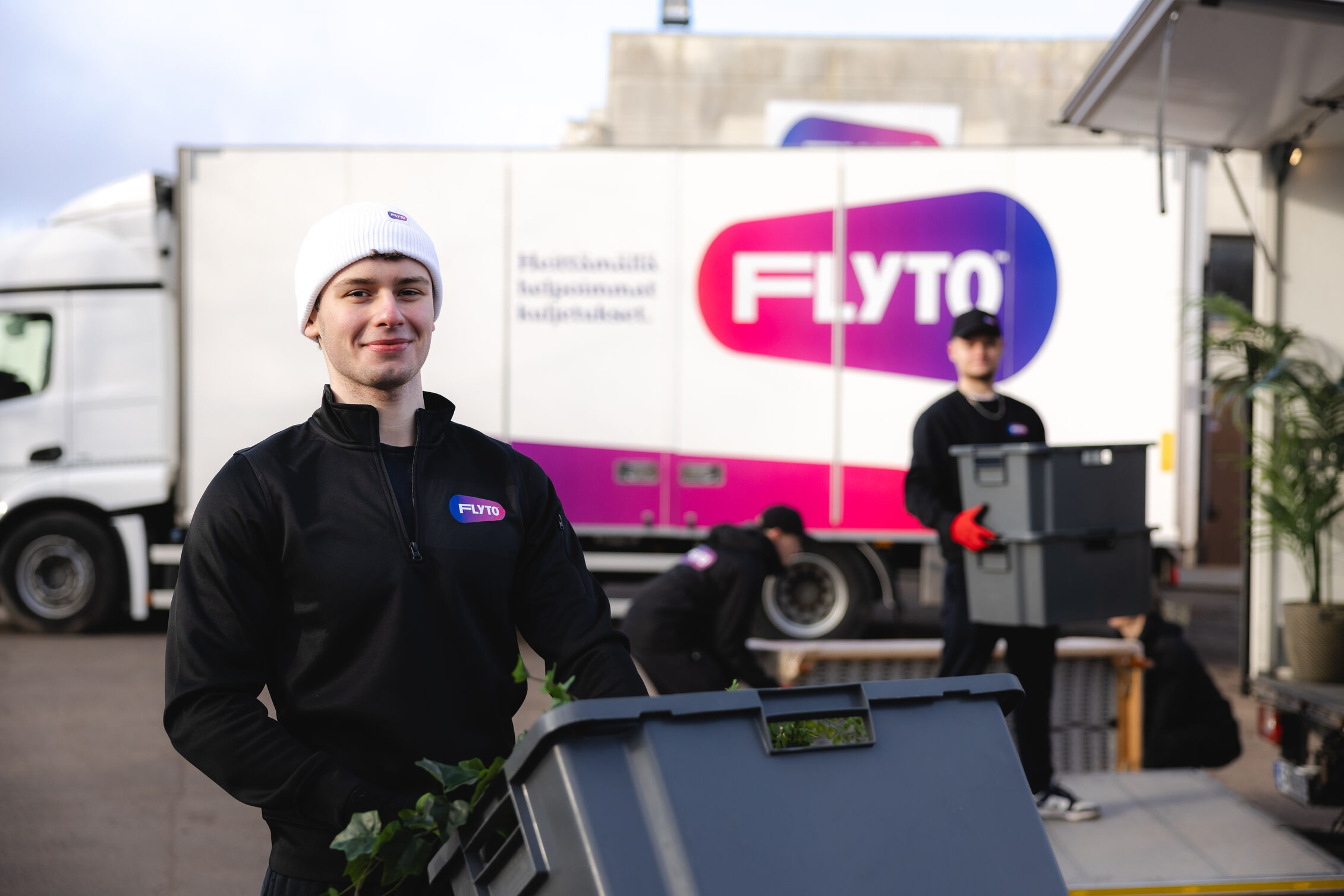
Flyto Relocation coordinates international moves to Nairobi end to end — export packing and customs at origin, sea freight to the Port of Mombasa, Kenyan customs clearance and returning-resident relief paperwork, and the inland leg by rail or road to your Nairobi address. We work alongside your immigration adviser so your shipment’s customs status matches your permit or returning-resident status before anything leaves origin.
Frequently asked questions
Can I move to Nairobi on an eTA and find a job once I’m there?
No. The eTA only authorises entry as a visitor. To work you need a permit (usually Class D employment or Class G business) issued by the Directorate of Immigration Services, and typically a Special Pass to bridge the processing period (DIS – passes and work permits).
How much does a work permit cost?
A Class D employment permit has a Kshs 20,000 non-refundable processing fee and a Kshs 500,000-per-year issuance fee; a Class G business permit is Kshs 250,000 per year and requires proof of at least USD 100,000 to invest. East African Community nationals are exempt from these fees (DIS – Class D; DIS – Class G).
Which port will my shipment arrive at, and how does it reach Nairobi?
The Port of Mombasa — East Africa’s largest port — then inland roughly 480 km to Nairobi by the Standard Gauge Railway or by road (Kenya Ports Authority).
Will my used furniture come in duty-free?
If you qualify as a returning resident, used personal and household effects that were in personal use in your former home are duty-free under the EAC Customs Management Act, provided they are shipped within 90 days of arrival (extendable to 360). Non-returning-residents may face assessment, so confirm your status before shipping (KRA).
Should I ship my car?
Only if it qualifies: for the returning-resident relief the vehicle must be right-hand drive, no more than eight years old, and owned and used by you for at least 12 months abroad, with no similar exemption in the past four years. For most movers from left-hand-drive countries, selling at origin and buying locally is simpler (KRA).
Do I need a KRA PIN?
Yes. The KRA Personal Identification Number is needed for customs clearance, a bank account, a lease, mobile money and being paid. Apply early through the KRA iTax portal (kra.go.ke).
Is Nairobi safe, and what’s with all the walls?
Gated communities, perimeter walls and 24-hour guards are the standard way residential security is organised in Nairobi, not a sign of unusual danger. With a well-chosen neighbourhood and normal precautions, most international families settle in comfortably.
Planning your move: browse all our Kenya moving guides, see our relocation services to and from Kenya, start from the Flyto Kenya hub, or read a country-specific route such as moving from the UK to Kenya.
Sources
- Directorate of Immigration Services – Passes and work permits, Class D (Employment), Class G (Specific trade, business or consultancy), Special Pass, Dependant’s Pass
- eFNS (Foreign Nationals Services) portal – fns.immigration.go.ke
- Electronic Travel Authorisation – etakenya.go.ke (eTA replaced Kenya’s visa system on 1 January 2024; USD 30)
- Kenya Revenue Authority – Guidelines for Returning Residents (Fifth Schedule, EAC Customs Management Act 2004), Importing goods, KRA / iTax (PIN)
- Kenya Ports Authority – Port of Mombasa (largest port in East Africa; Standard Gauge Railway inland connection)