

Moving from the Netherlands to Kenya (2026): Complete Guide

Relocating from the Netherlands to Kenya means closing out two separate administrative systems in the right order: the Dutch export/deregistration process on the way out, and the Kenyan customs and immigration process on the way in. This guide is written for a Dutch resident — whether Dutch national or existing NL resident — moving household goods, pets and sometimes a vehicle from the Netherlands to Kenya, typically on a work permit or as a returning Kenyan resident. It also covers the reverse move, Kenya back to the Netherlands, briefly at the end. Every rule below is drawn directly from the responsible government body — Dutch Customs (Douane), RvIG, the Belastingdienst and NVWA on the Dutch side; the Kenya Revenue Authority (KRA), the Directorate of Immigration Services, the Ministry of Agriculture and Livestock Development (MoALD/DVS), KEBS and NTSA on the Kenyan side.
Key takeaways
- Your Kenyan immigration status decides your duty treatment. A work permit of at least two years, or two years’ proven residence abroad for returning Kenyans, is what unlocks duty-free import of used household goods — not just "moving house" (KRA – Importing Goods; KRA – Guidelines for Returning Residents).
- Dutch Customs (Douane) requires an export declaration for anything leaving the EU customs territory, submitted via the AGS/DMS electronic system or through your mover (Douane – Export: submitting a declaration).
- You must deregister from your Dutch municipality (BRP) within five days before departure if you’ll be abroad 8 of the next 12 months; you’re then moved into the non-resident register (RNI) (RvIG – Emigratie; Nederland Wereldwijd – uitschrijven BRP).
- Your emigration year requires an M-form tax return to the Belastingdienst, closing out Dutch tax residency (Belastingdienst – M-aangifte; Belastingdienst – emigration checklist).
- Unaccompanied household goods must be imported into Kenya within 3 months of the work permit being issued and must have been owned and used for at least one year (KRA – Importing Goods).
- Pets must fly as manifest cargo, not as baggage, and need a Kenyan import permit from the Directorate of Veterinary Services before travel, plus an NVWA-legalised export health certificate from the Dutch side (Kenya MoALD – Dogs and Cats; NVWA – travelling from third countries with your dog or cat).
- A used vehicle can only enter Kenya if it is 8 years old or less from first registration, and from 1 January 2026 imported right-hand-drive vehicles must additionally have been first registered from 2019 onward, with a KEBS pre-shipment Certificate of Conformity (KEBS – Pre-Export Verification of Conformity).
- Cash above USD 10,000 must be declared to Kenyan customs on Form CBK/C.D./1 (Kenya Law – CBK Declaration of Currency Regulations).
1. How your Kenyan immigration status determines the customs treatment
Kenya does not give a general "moving house" duty exemption. The exemption for used personal and household effects under the East African Community Customs Management Act (5th Schedule) is tied to your legal status on arrival:
- Work/employment permit holders (most commonly the Class D employment permit, typically issued for two years and renewable up to four): exempt if the employment contract runs at least two years, the goods were owned and used for at least one year, and they are imported within three months of the work permit being issued (KRA – Importing Goods).
- Returning Kenyan residents: exempt if you have documented evidence of residence outside Kenya for at least two years, and the same one-year ownership/use rule and three-month import window apply (KRA – Guidelines for Returning Residents).
- Goods imported under either exemption cannot be sold, lent or otherwise disposed of while you remain in Kenya under that status.
First-time entrants need an approved eTA (Electronic Travel Authorisation) before travelling to Kenya, applied for at least a few days ahead via the official portal; holders of an already-issued Kenyan work permit or permanent residence are exempt from the eTA requirement (Directorate of Immigration Services – eTA). Once in the country, the actual work permit is applied for online through the eFNS portal — Class D covers most standard employment cases, out of the full Class A–M range — via the Directorate of Immigration Services, and it is that permit, not the shipment itself, that unlocks the customs duty exemption (Directorate of Immigration Services – Permit Information Pack). In short: sort your Kenyan visa/permit status first before your goods arrive.
2. The Netherlands side: export, deregistration and tax exit
Customs authority. Exports from the Netherlands are handled by Douane (Dutch Customs), part of the Belastingdienst. Because goods leaving Dutch/EU customs territory for Kenya (a non-EU, non-EEA country) are treated as a formal export, an export declaration is mandatory — there is no minimum value or weight below which it can be skipped for goods leaving EU customs territory. It is filed electronically through the DMS system (which is replacing the older AGS system), either by you or, in practice, by your moving company or customs broker acting on your behalf (Douane – Export: submitting a declaration). A full, valued inventory of the shipment is required, and Douane publishes specific restrictions on what can travel with household effects — for example on unaccompanied tobacco products, weapons and protected species (Douane – Moving things from a non-EU country).
Deregistration (BRP). You must report your move abroad to the municipality (gemeente) where you’re registered, in writing or via DigiD, no more than five days before your actual departure date. This applies once you’ll be living outside the Netherlands for at least 8 of the next 12 months (the months don’t need to be consecutive). The municipality removes you from the Basisregistratie Personen (BRP) and forwards your details to the Registratie Niet-Ingezetenen (RNI); your BSN remains valid (RvIG – Emigratie; Nederland Wereldwijd – uitschrijven BRP). Deregistration also triggers the end of Dutch health insurance (Zvw/Wlz) obligations and eligibility for toeslagen (benefits), so time this close to your actual departure date, not before.
Tax residency exit. In your year of departure you file an M-form (migratie-aangifte) with the Belastingdienst instead of a normal return, covering the split year of Dutch and non-Dutch residency (Belastingdienst – M-aangifte doen). The Belastingdienst’s own emigration checklist flags updating your address, the possibility of a conserverende aanslag (conserving assessment) on pensions or certain investments, and reviewing your entitlement to allowances and Zvw/Wlz cover going forward (Belastingdienst – emigreren checklist).
3. Ports and realistic transit times (freight-industry estimates, not official figures)
Sea shipments from the Netherlands to Kenya are typically consolidated through the port of Rotterdam, Europe’s largest container port, with feeder or transshipment services to Mombasa, Kenya’s main gateway port. Freight-industry route data (not government figures) put scheduled sea transit in the range of roughly 4–6 weeks port-to-port, with door-to-door for a full household move — including pre-carriage, customs clearance at both ends and inland delivery to Nairobi — typically running closer to 2–3 months in practice. Airfreight via Amsterdam Schiphol to Nairobi Jomo Kenyatta International Airport is far faster, generally under two weeks transit, but is priced by volumetric weight and normally used only for unaccompanied baggage or urgent items, not full household shipments. Treat all of these timings as commercial estimates that vary by season, sailing schedule and customs processing — always confirm current transit windows with your carrier or moving company at time of booking.
4. The Kenya side: import process and forms
Goods travelling with you (accompanied baggage) are declared verbally or via a manifest to the customs officer at the port of entry; no separate form is generally required beyond the standard passenger declaration, and bona fide used personal effects are exempt from duty under the EACCMA 5th Schedule (KRA – Importing Goods).
For a container or air shipment arriving separately (unaccompanied household effects — the normal case for a full move), KRA requires:
- A valid passport (showing your travel/residence history, for returning-resident claims)
- Proof of residency abroad and, for work-permit holders, the permit itself
- A comprehensive, valued packing inventory, signed and numbered
- Bill of Lading or Air Waybill
- Your KRA PIN certificate
- A letter of authority if a clearing agent handles the entry on your behalf
Clearance happens at the port of entry (Mombasa for sea freight, JKIA for air freight), where the exemption is assessed against the ownership/use and time-window conditions described in Section 1. Bringing money into the country is separately regulated: any cash, traveller’s cheques or monetary instruments over USD 10,000 (or equivalent) must be declared to the customs officer on Form CBK/C.D./1 at entry (Kenya Law – CBK Declaration of Currency Regulations).
5. Pets
Exporting from the Netherlands. An official or authorised vet must complete a veterinary health certificate. Where the destination country requires it, this certificate then needs to be legalised by the NVWA (the Dutch food and consumer product safety authority) — contact them at least 14 working days before you need the legalisation, via dpp@nvwa.nl (NVWA – travelling from third countries with your dog or cat; Douane – Pets).
Importing into Kenya. Dogs and cats are regulated by the Directorate of Veterinary Services (DVS) under the Ministry of Agriculture and Livestock Development. You need an import permit issued by DVS (applied for at Kabete, Nairobi) before the animal travels, together with a valid rabies vaccination and a veterinary health certificate; the permit is typically issued for a single consignment and has a limited validity window, so apply close to your actual shipment date (Kenya MoALD – Dogs and Cats). Pets must travel as manifest cargo — not in the cabin or as ordinary checked baggage — and are inspected on arrival. Start the Kenyan import permit application well ahead of your shipment date, since it needs to be in place before the NVWA-legalised certificate is finalised.
6. Vehicles, money and things people forget
- Vehicle age: Kenya limits used vehicle imports to a maximum of 8 years from first registration, under the KEBS Code of Practice (KS 1515:2000). From 1 January 2026, imported right-hand-drive vehicles must additionally have been first registered from 2019 onward. All used vehicles need a Pre-Export Verification of Conformity (PVoC) inspection and Certificate of Conformity, issued by a KEBS-appointed agent in the country of export before shipment (KEBS – Pre-Export Verification of Conformity).
- Registration after arrival: once customs-cleared at the port, the vehicle is registered through NTSA, which also runs the mandatory local roadworthiness inspection (NTSA – Vehicle Services).
- Cash: keep the CBK USD 10,000 declaration threshold in mind for every family member crossing with cash, not just the primary traveller.
- Timing traps: the Dutch BRP deregistration window (max. 5 days before departure) and the Kenyan 3-month import window for household goods often don’t line up neatly with shipping schedules — plan your Rotterdam sailing or Schiphol booking around both deadlines, not just one.
- Work permit sequencing: because the Kenyan customs duty exemption is anchored to your work permit issue date, shipping your container before the permit is approved can cost you the exemption entirely.
Reverse direction: moving from Kenya to the Netherlands
Moving back the other way, the roles reverse: Kenya’s DVS and customs handle your export declaration and any outbound pet/vehicle permits from the Kenyan side, while on arrival in the Netherlands you register with your new Dutch municipality (inschrijving BRP) and, if you have lived outside the EU for at least 12 consecutive months and owned and used your household goods for at least six months, you may qualify for the Dutch non-EU moving-goods duty exemption administered by Douane, applied for through your moving company (Douane – Moving things from a non-EU country). Pets re-entering the EU need an EU-compliant rabies vaccination and, depending on Kenya’s disease status at the time, a titre test arranged well before departure; check current requirements with NVWA before booking travel.
How Flyto handles your move from the Netherlands to Kenya
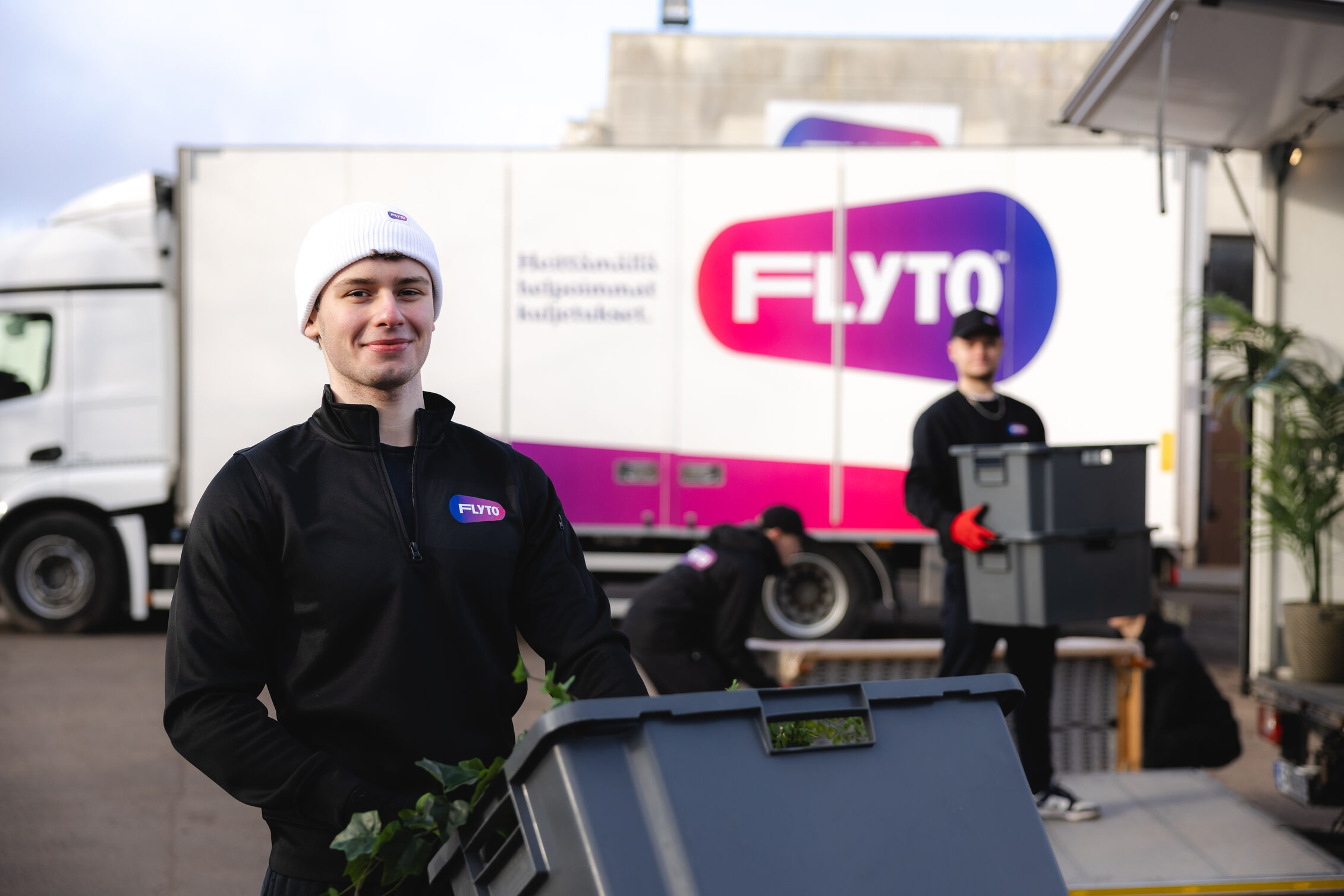
Flyto runs its own offices, warehouses, crews and vehicles across Northern, Central and Southern Europe, so the Dutch collection, packing, customs paperwork and Rotterdam export handling are managed largely in-house by our own teams. For the ocean or air leg to Mombasa or Nairobi and the final Kenyan customs clearance, we work with a carefully selected network of shipping lines and trusted local partners on the ground in Kenya, so you get consistent quality and a single point of contact even though not every mile of the journey is operated directly by Flyto.
Frequently asked questions
Do I need an export declaration for a household move out of the Netherlands?
Yes. Any goods leaving EU customs territory require a formal export declaration filed via Douane’s DMS/AGS system; there’s no value threshold that exempts a household shipment (Douane – Export: submitting a declaration).
When exactly should I deregister from my Dutch municipality?
No more than five days before your actual departure date, once you know you’ll be outside the Netherlands for at least 8 of the following 12 months (RvIG – Emigratie).
Will I pay Kenyan customs duty on my used furniture and electronics?
Not if you meet the exemption conditions: a work permit of two years or more (or documented residence abroad of at least two years if you’re a returning Kenyan), goods owned and used for at least one year, and import within three months of the work permit being issued (KRA – Importing Goods).
Can my dog fly with me in the cabin to Nairobi?
No. Pets must be shipped as manifest cargo into Kenya, with a DVS import permit obtained before travel (Kenya MoALD – Dogs and Cats).
Can I bring my Dutch car to Kenya?
Only if it’s no more than 8 years old from first registration (and, from 2026, right-hand drive registered from 2019 onward), inspected and certified through the KEBS Pre-Export Verification of Conformity programme before shipment (KEBS – Pre-Export Verification of Conformity).
How much cash can I carry into Kenya without declaring it?
Up to USD 10,000 (or equivalent); above that you must complete Form CBK/C.D./1 at the point of entry (Kenya Law – CBK Declaration of Currency Regulations).
Sources
- Douane – Moving things from a non-EU country
- Douane – Export: submitting a declaration
- Douane – Pets
- RvIG – Emigratie
- Nederland Wereldwijd – Hoe schrijf ik me uit als ik naar het buitenland ga (BRP)
- Belastingdienst – Emigreren? Checklist
- Belastingdienst – Aangifte doen over het jaar van emigratie of immigratie (M-aangifte)
- NVWA – Travelling from third countries to the Netherlands with your cat or dog
- Kenya Revenue Authority – Importing Goods (personal effects)
- Kenya Revenue Authority – Guidelines for Returning Residents
- Kenya MoALD – Dogs and Cats (import requirements)
- Directorate of Immigration Services, Kenya – Electronic Travel Authorisation (eTA)
- Directorate of Immigration Services, Kenya – Permit Information Pack
- Kenya Bureau of Standards (KEBS) – Pre-Export Verification of Conformity
- NTSA – Vehicle Services
- Kenya Law – Central Bank of Kenya (Declaration of Currency) Regulations