

Moving from Switzerland to Kenya (2026): Complete Guide

Switzerland to Kenya is a landlocked-Europe-to-East-Africa corridor with no direct sea link from Swiss territory, which shapes almost everything about how the move is organised. On the Swiss side, you deregister from your commune, close out your Swiss tax liability, and get your household goods export-cleared by Swiss customs — either shipped onward from a European seaport or flown out of Zurich or Geneva. On the Kenyan side, the Kenya Revenue Authority (KRA) decides your duty treatment based on your immigration status, and your goods, vehicle and pets each go through their own permit and inspection process before they can enter the country. This guide is written for a Switzerland-based resident (Swiss national or foreign resident) relocating to Kenya for work, retirement, or a returning-resident move, and it also flags what changes if you later move back from Kenya to Switzerland.
Key takeaways
- Swiss customs (the Federal Office for Customs and Border Security, BAZG) only requires an inventory list for household goods leaving Switzerland permanently — there is no Swiss export duty on used personal effects, but private vehicles must be separately registered for export at the customs office (BAZG, Umzug: Ausfuhr aus der Schweiz).
- You must deregister (Abmeldung) with your Swiss commune of residence before leaving if you’re relocating for more than three months, which is the step that starts the process of ending your unlimited Swiss tax liability once a new domicile abroad is established (EDA, Emigrating).
- In Kenya, used household goods and personal effects are duty-exempt only if they were owned and used for at least a year, imported within three months of your work permit being issued, and cleared via the correct customs port form (KRA, Importing goods).
- Vehicles imported into Kenya must be no more than 8 years old from first registration and right-hand drive, plus subject to KEBS pre-shipment inspection (KRA, Motor vehicle importation; KEBS, Pre-Export Verification of Conformity).
- Dogs and cats need an import permit from Kenya’s Directorate of Veterinary Services (obtainable via the Kenya Embassy in Bern for Switzerland-based applicants), a health certificate signed no more than 5 days before departure, and rabies vaccination — pets travel as manifested cargo, not in the cabin (Kenya Embassy Bern, Pet Import License).
- Cash or monetary instruments exceeding KES 500,000 (or the equivalent of USD 5,000 in foreign currency) must be declared to Kenyan customs on arrival or departure, on Form CBK/C.D./1; Swiss customs only asks questions above CHF 10,000 during a spot check, with no mandatory declaration form at that threshold (Central Bank of Kenya, Declaration of Currency Regulations; BAZG, Cash, foreign currency, securities).
- Your Kenyan immigration status (work permit, dependant’s pass, returning-resident status) is what unlocks duty-free treatment for your goods and vehicle — sort the permit first, then plan the shipment.
1. Your Kenyan immigration status drives the customs treatment
Kenyan customs duty relief for movers is tied directly to immigration status, not simply to being a foreigner. Applications for work permits and passes are made online through the Directorate of Immigration Services’ eFNS portal, using a free eCitizen account (Directorate of Immigration Services, Work Permits and Passes; Kenya Foreign Nationals Service portal). Two scenarios matter most:
- Work permit holders: household goods and personal effects are duty-exempt when they have been owned and used for at least one year and are imported within three months of the work permit being issued (KRA, Importing goods).
- Returning Kenyan residents: exempt from tax on personal effects if aged over 18 and having resided outside Kenya for at least two years (KRA, Importing goods).
Get your permit application into the eFNS system as early as possible — the three-month import window for work-permit holders is unforgiving if the permit itself is delayed.
2. The Switzerland export side
Authority: household and vehicle export clearance is handled by the Federal Office for Customs and Border Security (BAZG), the successor to the former Federal Customs Administration (BAZG).
Deregistration first: before you can close out most Swiss administrative matters, you deregister (Abmeldung/annonce de départ) at your commune of residence. This is generally required if you are leaving for more than three months, giving up your Swiss accommodation, and not intending an imminent return; the commune records your departure date, and you can request a deregistration certificate that banks, insurers and future authorities will ask for (EDA, Emigrating). Swiss nationals must additionally register with the Swiss representation (embassy/consulate) covering Kenya within 90 days of deregistering (EDA, Emigrating).
Household goods export: when moving your residence from Switzerland abroad, or bringing household goods and furniture out of Switzerland, you submit an inventory list to the export customs office giving your Swiss and new foreign addresses — no separate customs duty applies to your used household effects on export, and Switzerland does not levy customs duties or charges on exports generally (BAZG, Umzug: Ausfuhr aus der Schweiz).
Vehicles: a private vehicle taken out of Switzerland must also be registered for export at the customs office, using a copy of the Swiss vehicle registration certificate (Fahrzeugausweis) (BAZG, Umzug: Ausfuhr aus der Schweiz). Given Kenya’s 8-year vehicle-age rule (below), selling your Swiss car locally rather than shipping it makes more sense for most people.
Commercial/freight export declaration: for goods moved by a professional carrier, an electronic export customs declaration is required for commercial consignments leaving Switzerland. This is now filed via BAZG’s Passar goods-traffic platform, which has been superseding the older e-dec Export system in the recent changeover (BAZG, e-dec Export / Passar). Small consignments under CHF 5,000 in value and under 5,000 kg may qualify for a simplified declaration (PwC Switzerland, Simplified goods declaration).
Tax residency exit: unlimited Swiss tax liability generally ends once your tax domicile is definitively abandoned — meaning your departure is permanent, a new domicile abroad is actually established, and your Swiss apartment is vacated or the lease terminated. After departure, limited tax liability can continue on Swiss-source income, such as rental income from Swiss property (EDA, Emigrating). Contact your commune’s tax office well before departure to confirm the cut-off date and any final tax return requirements — the exact rules depend on your canton and personal situation, so this is worth getting in writing.
Cash on departure: Switzerland places no fixed declaration threshold on cash leaving the country, but above CHF 10,000, BAZG staff may question you about origin, purpose and beneficial ownership during a spot check, and the encounter is logged in BAZG’s information system (BAZG, Cash, foreign currency, securities).
3. Ports and transit — realistic routing
Switzerland is landlocked, so there is no direct sea export from Swiss soil. Practical routing options are:
- Sea freight: household goods are trucked from Switzerland to a European seaport (commonly Rotterdam, Antwerp, Hamburg, or Genoa, depending on carrier network) and containerised for the onward voyage to the Port of Mombasa, Kenya’s principal container gateway with 22 berths and direct shipping-line links to more than 80 ports worldwide (Kenya Ports Authority, Port of Mombasa).
- Air freight: shipped via Zurich or Geneva airport to Jomo Kenyatta International Airport, Nairobi.
Industry estimate, not an official figure: door-to-port sea transit from a Northern European port to Mombasa typically runs 4–7 weeks, plus onward inland clearance to Nairobi or elsewhere; air freight typically takes 1–2 weeks door to door including customs clearance. Actual transit depends on sailing schedules, transshipment, and customs processing at both ends — always confirm current timings with your freight forwarder rather than relying on these estimates.
4. The Kenya import side
Authority: the Kenya Revenue Authority (KRA) administers customs clearance for all imports, including personal and household effects (KRA, Importing goods).
Legal basis: under the East African Community Customs Management Act 2004 (EACCMA), passengers’ baggage and personal effects are generally duty-exempt, subject to conditions in the Act’s Fifth Schedule (KRA, Importing goods).
Unaccompanied household effects: for goods arriving separately from you (the normal case for a full house move), you complete a Customs Service Port Form, and a non-refundable deposit of 1% of the goods’ value or KSh 30,000 (whichever is higher) is payable pending final assessment (KRA, Importing goods). As above, exemption from duty depends on the one-year ownership/use rule and the three-month import window tied to your work permit, or the two-year-residence-abroad rule for returning Kenyan residents.
Import Declaration Form (IDF): for commercial-value shipments, an IDF must be filed electronically before shipment — typically triggered above a low invoice-value threshold — carrying an import declaration fee of 2% of the customs value; a licensed clearing agent normally processes this through KRA’s system on the importer’s behalf (Import Declaration Form, InfoTrade Kenya).
Practical tip: appoint a Kenya-based clearing agent before your container arrives — clearance is agent-mediated in practice.
5. Pets
Leaving Switzerland: Swiss/EU pet travel rules (EU pet passport, ISO 11784/11785 15-digit microchip, rabies vaccination) govern movement within the EU pet scheme, but Kenya is outside that scheme, so check Kenya’s import requirements directly — Switzerland does not restrict pets leaving for a non-EU country beyond normal health certification from a Swiss vet (FSVO/BLV, Travelling with dogs, cats and ferrets).
Entering Kenya: import of dogs and cats is regulated by Kenya’s Directorate of Veterinary Services (DVS), based in Kabete, which issues the import permit; Switzerland-based applicants can apply for this permit and the related documentation through the Kenya Embassy in Bern. Requirements include a formal application letter with the importer’s name and address, a current veterinary health certificate signed no more than 5 days before departure, a valid rabies vaccination certificate stating vaccine type, manufacturer, batch number and vaccination date, and a fee of CHF 70 payable to the Kenya Mission account (Kenya Embassy Bern, Pet Import License). Pets must travel as manifested cargo, not as cabin or checked baggage. Start the DVS permit process well ahead of your flight — it is tied to specific dispatch dates and is not a same-week process.
6. Vehicles, money, and things people forget
Vehicles: Kenya restricts imported used vehicles to a maximum age of 8 years from first registration and requires right-hand drive (KRA, Motor vehicle importation); industry and trade-press reporting on the 2026 tightening of this rule indicates that only right-hand-drive vehicles first registered from 1 January 2019 onward are being cleared from 1 January 2026 — confirm the current cut-off date with KEBS or your shipping agent before committing to ship a car. Before shipment, vehicles require Pre-Export Verification of Conformity (PVoC) inspection by a KEBS-appointed agent (Bureau Veritas, Cotecna, Intertek, SGS and others) in the country of dispatch, producing a Certificate of Roadworthiness or Conformity that must accompany the vehicle (KEBS, Pre-Export Verification of Conformity). Given the age cap, most Swiss-registered cars will not qualify — factor this in before deciding to ship rather than sell.
Money: on entering or leaving Kenya, currency and monetary instruments exceeding KES 500,000 (or the equivalent of USD 5,000 in foreign currency) must be declared to customs at the point of entry or departure, on Form CBK/C.D./1 (Central Bank of Kenya (Declaration of Currency) Regulations). On the Swiss side there’s no fixed reporting form, but expect questions above CHF 10,000 (BAZG, Cash, foreign currency, securities).
Things people forget: the three-month duty-free clock starts at work-permit issuance, not physical arrival — sequence shipping accordingly. Keep your Swiss deregistration certificate; banks, pension funds (2nd/3rd pillar) and insurers routinely request it before releasing funds abroad.
Reverse direction — Kenya to Switzerland: going back the other way means Kenyan export procedures via KRA/your clearing agent, then Swiss import clearance with BAZG (again an inventory-based process for used household effects, with a minimum ownership/use period abroad; vehicles face separate Swiss type-approval and duty rules) — see BAZG, Umzug: Einfuhr in die Schweiz.
How Flyto handles your Switzerland to Kenya move
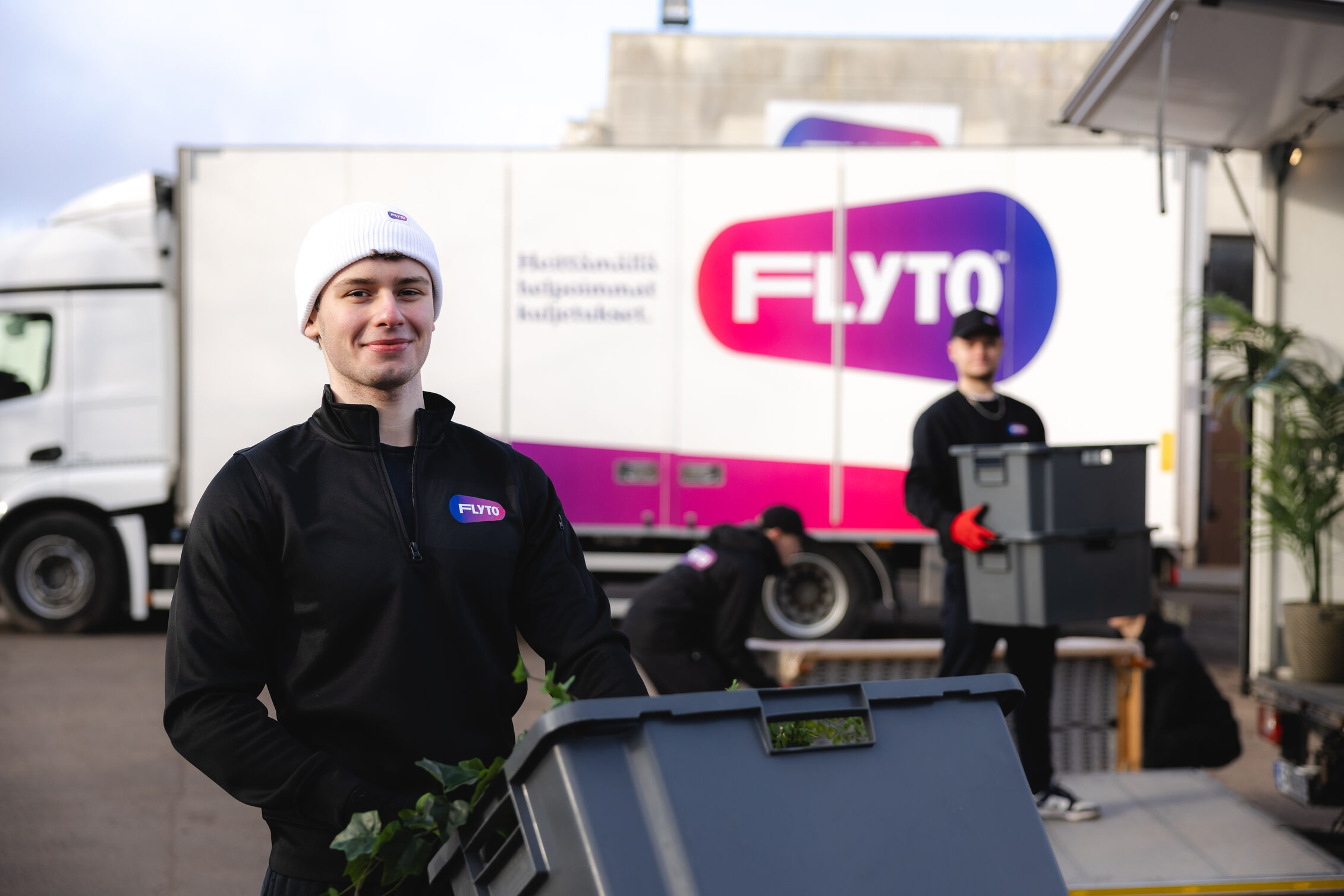
Flyto operates its own offices, warehouses, vehicles and moving teams across Northern, Central and Southern Europe, so the Swiss collection, packing, and export-customs coordination on this route runs through our in-house operations rather than being handed off at the first border. For the ocean or air leg to Mombasa or Nairobi and for the Kenyan import clearance, we work with a carefully chosen network of freight partners and trusted local agents on the ground in Kenya, who handle KRA clearance, PVoC vehicle logistics and last-mile delivery — so you get one point of contact managing both the European and East African sides of the move.
Frequently asked questions
Do I need to deregister in Switzerland before I ship my belongings?
Not strictly before shipping, but you should deregister at your commune once your departure date is set — it starts the process of ending Swiss tax liability and produces the departure certificate other institutions will ask for (EDA, Emigrating).
Will I pay Kenyan customs duty on my used furniture and electronics?
Not if you meet the conditions: goods owned and used for at least one year, imported within three months of your work permit issuance (or you qualify as a returning resident who lived abroad two-plus years) (KRA, Importing goods).
Can I bring my Swiss-registered car to Kenya?
Only if it’s no more than 8 years old from first registration, right-hand drive, and it passes KEBS’s Pre-Export Verification of Conformity inspection before shipment; the 2026 tightening reportedly restricts imports to right-hand-drive vehicles registered from 2019 onward, so confirm the current cut-off with KEBS before shipping (KRA, Motor vehicle importation; KEBS PVoC).
How far in advance should I start the pet import permit?
As early as you can — the DVS import permit (obtainable via the Kenya Embassy in Bern) is tied to a specific dispatch window and requires a health certificate valid for only 5 days before travel, so vaccinations and paperwork need careful sequencing (Kenya Embassy Bern, Pet Import License).
Is there a fixed sea-freight transit time from Switzerland to Mombasa?
There’s no official figure — Switzerland has no seaport, so goods are trucked to a European port first. Freight-industry practice puts total door-to-port transit around 4–7 weeks depending on routing and sailing schedules; confirm current timing with your forwarder.
Do I need to declare cash when I land in Kenya?
Yes, if you’re carrying currency or monetary instruments over KES 500,000 (or the equivalent of USD 5,000 in foreign currency) — declare on arrival using the Central Bank of Kenya’s prescribed form, CBK/C.D./1 (CBK Declaration of Currency Regulations).
Sources
- BAZG — Umzug: Ausfuhr aus der Schweiz (household goods and vehicle export)
- BAZG — Umzug: Einfuhr in die Schweiz (import side, for the reverse move)
- BAZG — e-dec Export / Passar (electronic export declaration)
- BAZG — Cash, foreign currency, securities
- PwC Switzerland — Simplified goods declaration (CHF 5,000 / 5,000 kg threshold)
- EDA (Federal Department of Foreign Affairs) — Emigrating: deregistration, tax exit, registering abroad
- FSVO/BLV — Travelling with dogs, cats and ferrets
- KRA — Importing goods (personal and household effects)
- KRA — Diaspora affairs: Importation
- KRA — Motor vehicle importation procedure
- KEBS — Pre-Export Verification of Conformity
- Directorate of Immigration Services (Kenya) — Work Permits and Passes
- Kenya Foreign Nationals Service (eFNS) portal
- Kenya Embassy Bern, Switzerland — Pet Import License
- Central Bank of Kenya (Declaration of Currency) Regulations — Kenya Law
- Kenya Ports Authority — Port of Mombasa
- InfoTrade Kenya — Import Declaration Form (IDF)