

Moving from Belgium to Kenya (2026): Complete Guide

Relocating from Belgium to Kenya means closing out two very different administrative systems: Belgium’s municipality-based population register and EU customs export rules, and Kenya’s immigration-linked, KRA-run import regime. This guide is written for a Belgian resident — Belgian national or third-country national living in Belgium — moving to Kenya for work, retirement or family reasons. It covers what you must do in Belgium before you leave, what happens to your shipment in transit, what Kenyan customs and immigration require on arrival, and a short note on moving back the other way.
Key takeaways
- Your Kenyan immigration status decides your customs treatment: a Class D work permit or Class K/G residence pass is what lets Kenya Revenue Authority (KRA) treat your household goods as a duty-exempt "change of residence" shipment (immigration.go.ke, KRA).
- Before leaving Belgium you must file a declaration of departure ("aangifte van vertrek" / "déclaration de départ") with your commune, at the latest the day before you leave; the commune issues a Model 8 deregistration certificate (Belgium.be, FPS Home Affairs).
- Your household goods leaving Belgium for a non-EU country need a customs export declaration, normally filed by your mover or customs agent through FPS Finance’s electronic customs platform, PLDA (FPS Finance, PLDA).
- Belgium has no general exit tax, but your departure date (Model 8 date) splits your final tax year into a resident and a non-resident period, each declared separately (FPS Finance).
- In Kenya, unaccompanied personal effects are cleared through KRA on a Customs Services Port Form together with your work/residence permit, KRA PIN and a valued inventory (KRA).
- Used vehicles imported into Kenya may not be older than 8 years from year of manufacture, and from January 2026 KEBS accepts only right-hand-drive vehicles first registered in 2019 or later (KRA, KEBS public notices).
- Pets need a Belgian export health certificate signed by an official FASFC veterinarian, and a Kenyan import permit from the Directorate of Veterinary Services before the animal travels (FASFC, Ministry of Agriculture/DVS).
- Cash above US$5,000 (or KES 500,000) must be declared to Kenyan customs on Form CBK/C.D./1 when entering or leaving (Central Bank of Kenya (Declaration of Currency) Regulations, via Kenya Law).
1. Your Kenyan immigration status determines your customs treatment
Everything on the Kenyan side starts from your immigration status. KRA’s duty exemption for used household goods and personal effects is a "change of residence" relief: it is granted to people who are actually transferring their residence into Kenya, evidenced by a valid Residence Visa or Work Permit (KRA). Foreign employees typically enter on a Class D (employment) permit, applied for online through the eFNS portal before or shortly after arrival; the current issuance fee is KES 500,000 per year plus a KES 20,000 non-refundable processing fee, with East African Community nationals exempted (Directorate of Immigration Services, DIS – permits and passes). Investors, retirees and dependants use other classes (e.g. Class G "specific trade, business or consultancy", Class K "ordinary residents") through the same eFNS system. Without an approved permit or residence pass in hand, KRA has no basis to treat your shipment as a residence-change import rather than an ordinary dutiable import — so sequencing matters: sort your Kenyan permit application before your sea freight lands, since goods must generally be declared within a set window of your arrival.
2. The Belgium export side
Deregistering from your commune. Belgian law requires you to declare your departure abroad to your municipality (gemeente/commune) before you leave — in practice a few days ahead is sensible, and by law no later than the day before departure — under the population registration rules enforced by the FPS Home Affairs (IBZ) National Register (FPS Home Affairs, Belgium.be). Many communes now let you file this "aangifte van vertrek"/"déclaration de départ" online via mijnburgerprofiel.be or monespacecitoyen.be with your eID or itsme; others require an in-person appointment. The commune then issues a certificate of removal — commonly referred to by its official form number, Model 8 — confirming your deregistration date and destination address; keep it, since Kenyan authorities, banks and your Belgian tax file may all ask for it. Leaving Belgium does not remove you from the National Register itself; your national number stays valid for correspondence with Belgian authorities (Belgium.be, FPS Home Affairs).
Customs export declaration. Household goods leaving Belgium for a country outside the EU (Kenya is not in the EU/EEA) require a formal export declaration lodged with Belgian Customs, in practice submitted through PLDA (Paperless Douane en Accijnzen), the electronic platform FPS Finance’s General Administration of Customs and Excise uses for import/export declarations (FPS Finance, PLDA). FPS Finance’s own guidance for people moving out of Belgium confirms you must lodge an export declaration together with a list of the goods being shipped, and flags that separate rules apply to excise goods, vehicles, pets and cultural property (FPS Finance). In practice, an international moving company or licensed customs agent files the PLDA export declaration on your behalf as part of the shipment.
Tax-residency exit. Belgium levies no general exit tax — there is no deemed disposal of shares, investment portfolios or property simply because you emigrate. What does change is your filing obligation: your departure date splits your final calendar year into a Belgian-resident period (worldwide income, ordinary personal income tax) and a non-resident period (Belgian-source income only, taxed under the non-resident income tax/"belasting niet-inwoners"/"impôt des non-résidents"), each requiring a separate tax return within the deadlines FPS Finance sets for departing taxpayers (FPS Finance – Leaving Belgium, FPS Finance – tax return). Belgian residency for tax purposes hinges on where your domicile or "centre of economic interests" is (Article 3 of the income tax code), so keep documentation (rental termination, Model 8 certificate, Kenyan employment contract) showing that centre has genuinely shifted.
3. Ports and transit — Belgium to Kenya
Belgian household shipments to East Africa normally move by sea container through the Port of Antwerp-Bruges, one of Europe’s largest ports and the merged entity formed from the ports of Antwerp and Zeebrugge in 2022 (Port of Antwerp-Bruges). Sea freight is consolidated or shipped as a full container (FCL/LCL) via transhipment hubs to the Kenyan gateway port of Mombasa; air freight, for smaller or time-critical shipments, routes through Brussels Airport to Jomo Kenyatta International Airport (JKIA) in Nairobi.
These transit times are freight-industry planning estimates, not figures published by any port or customs authority — always confirm the current schedule with your carrier or moving company:
- Sea freight, Antwerp-Bruges → Mombasa: roughly 4–7 weeks door-to-port, depending on transhipment routing, plus onward Kenyan customs clearance and inland transport to Nairobi or elsewhere.
- Air freight, Brussels → Nairobi (JKIA): roughly 1–5 days transit, plus Kenyan clearance.
4. The Kenya import side
Unaccompanied household goods and personal effects are cleared by Kenya Revenue Authority (KRA) Customs, submitted with your original passport, your Residence Visa/Work Permit, your KRA PIN certificate, the original bill of lading or air waybill, a comprehensive valued inventory (itemised, boxes numbered, signed by the owner) and an authority letter appointing a licensed customs clearing agent to handle the entry on your behalf, together with a Customs Services Port Form completed at the port of entry (KRA). Duty exemption on used personal and household effects under the East African Community Customs Management Act, 2004 (Fifth Schedule, Part B) is conditional: it requires being over 18, having lived abroad at least two years, importing the goods within three months of arrival, and having owned/used the items for at least a year; effects also may not be sold, lent or disposed of during the exemption period (KRA). Foreign nationals relocating to Kenya on a valid work or residence permit are cleared under the same change-of-residence framework and documentation set. General customs questions are covered on KRA’s customs FAQ page (KRA). Engage a licensed clearing agent in Mombasa or at JKIA — the process is document-heavy and agent-mediated by design.
5. Pets
Leaving Belgium: because Kenya is a non-EU (third) country, your pet needs an official export health certificate rather than an EU pet passport. Belgium’s Federal Agency for the Safety of the Food Chain (FASFC/AFSCA) issues this: a veterinarian draws up the certificate shortly before departure, and it must then be checked and stamped with the personal official stamp of an official FASFC veterinarian at your provincial Local Control Unit (LCE); exact validity windows and vaccination requirements are set per destination country (FASFC).
Entering Kenya: dog and cat imports are regulated by the Directorate of Veterinary Services (DVS), under Kenya’s Ministry of Agriculture, Livestock and Fisheries. DVS requires an import permit obtained in advance — typically valid for a single consignment only, for a limited period — together with the animal’s vaccination record and a veterinary health certificate, to confirm the animal is disease-free and meets Kenya’s entry conditions before the pet is allowed to travel (Ministry of Agriculture/DVS). Apply well before your shipment date and time it against both your own travel and your freight schedule, since the permit is tied to a specific consignment.
6. Vehicles, money and things people forget
Vehicles. Kenya caps used vehicle imports at 8 years old from year of manufacture/first registration, enforced by the Kenya Bureau of Standards (KEBS) together with KRA, with the National Transport and Safety Authority (NTSA) handling roadworthiness inspection before local registration (KRA). KEBS notified importers in November 2025 that, effective 1 January 2026, only right-hand-drive vehicles first registered from 2019 onward will be accepted, tightening the rolling 8-year window (KEBS public notices). A left-hand-drive Belgian-registered car cannot simply be re-registered in Kenya, which drives right-hand-drive — factor this in before shipping a personal vehicle at all.
Money. Kenyan law caps undeclared cash movement at US$5,000 or KES 500,000 (or equivalent); anything above that entering or leaving Kenya must be declared to Customs on Form CBK/C.D./1, with documentation on the source and purpose of larger amounts (Central Bank of Kenya (Declaration of Currency) Regulations, via Kenya Law).
Things people forget. Get your KRA PIN sorted before your shipment arrives — clearance cannot proceed without it. Keep your Belgian Model 8 certificate and your Kenyan work permit together as the two documents everyone from the shipping line to KRA to your Kenyan bank will ask for. Confirm your FASFC pet certificate timing against your actual flight, since it typically has a short validity window. And budget clearing-agent time in Mombasa or at JKIA into your move date — Kenyan import clearance is not a same-day process.
How Flyto handles your Belgium to Kenya move
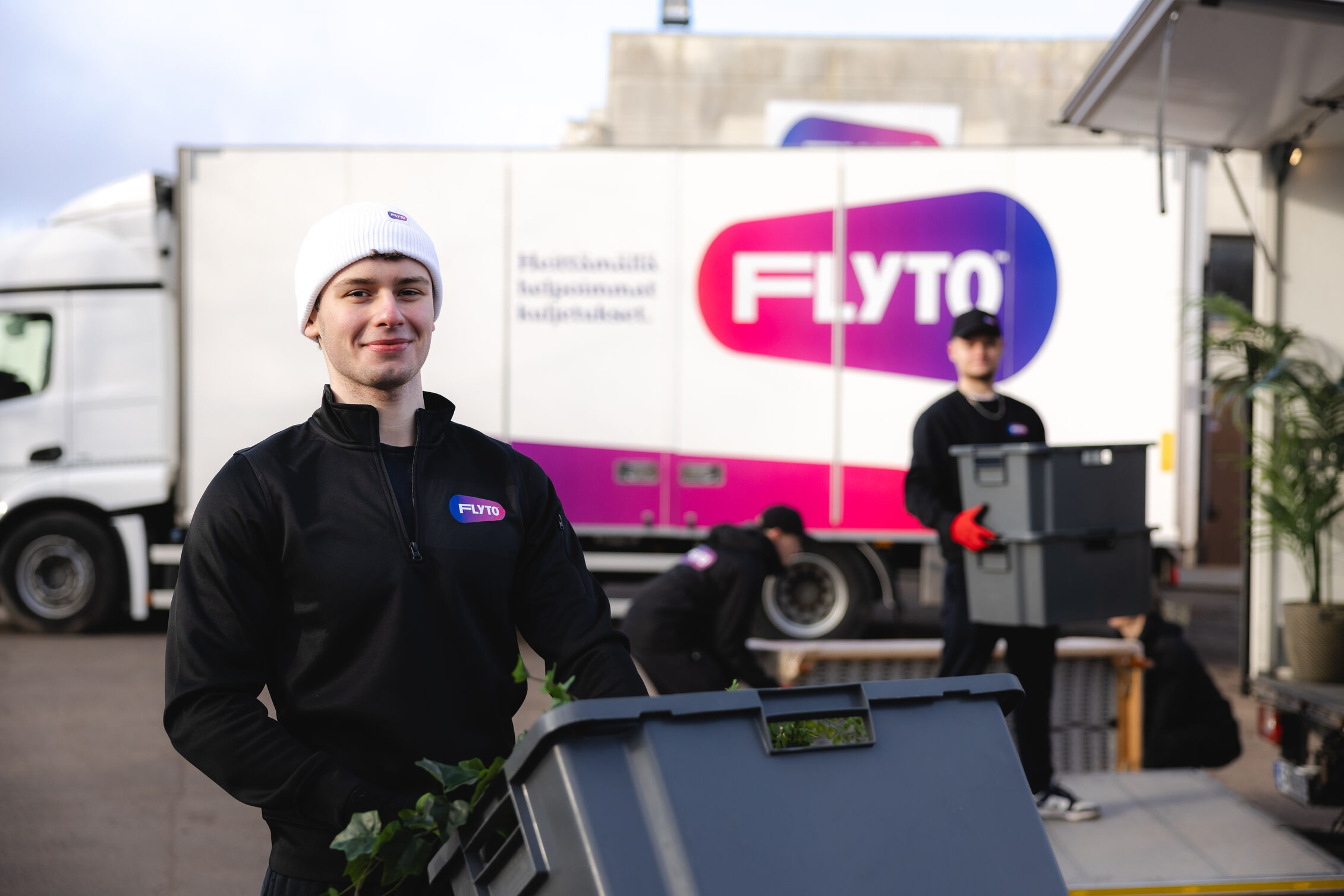
On the Belgian side, Flyto runs the move with our own in-house teams, offices, warehouses and vehicles across Northern, Central and Southern Europe, so packing, the PLDA export declaration and the Antwerp-Bruges port handoff stay under direct control rather than being outsourced blind. For the ocean leg and Kenyan destination services we work through a carefully vetted network of partner carriers and forwarders, plus trusted local partners in Kenya who handle KRA clearance, the customs port form and delivery — giving you one point of contact in Belgium backed by proven partners at the Kenyan end.
Frequently asked questions
Do I need to deregister in Belgium even if I keep a property there?
Yes — the departure declaration to your commune is a legal population-registration obligation tied to where you actually live, independent of property ownership (FPS Home Affairs).
Does Belgium tax my worldwide assets when I leave?
No — Belgium has no general exit tax; you file a final split-year return covering your resident and non-resident periods instead (FPS Finance).
Can I import my household goods into Kenya duty-free without a work permit?
No — KRA’s change-of-residence exemption is tied to holding a valid residence visa or work permit; without one, goods are treated as an ordinary dutiable import (KRA).
Can I ship my Belgian car to Kenya?
Only if it meets Kenya’s 8-year age limit and can be converted or was built right-hand-drive; most Belgian-plated left-hand-drive cars are impractical to import (KRA, KEBS public notices).
How far in advance should I start my pet’s paperwork?
Start as soon as your move date is set — both the Belgian FASFC export certificate and the Kenyan DVS import permit are consignment-specific and time-limited, so they need to be sequenced against your actual travel dates (FASFC, Ministry of Agriculture/DVS).
Moving back from Kenya to Belgium — what changes?
The logic reverses: Kenya’s export side (KRA clearance out, DVS/CBK formalities for pets and cash) mirrors what’s described above, while on arrival in Belgium you re-register with your new commune and, if you genuinely maintained your normal residence outside the EU for at least twelve consecutive months and owned/used the goods for at least six months, may qualify for Belgium’s own duty-free relief for moving from a non-EU country, administered by FPS Finance (FPS Finance).
Sources
- FPS Finance – Moving from Belgium (export customs)
- FPS Finance – Leaving Belgium tax return
- FPS Finance – Leaving Belgium overview
- FPS Finance – Moving from a non-EU country to Belgium
- FPS Finance – PLDA customs system
- FPS Home Affairs (IBZ) – Compulsory deregistration for EU citizens leaving Belgium
- Belgium.be – Declaration of departure abroad
- FASFC – Travelling with your pet from Belgium
- Port of Antwerp-Bruges – Container cargo
- KRA – Importing used household goods and personal effects
- KRA – Customs and border control FAQ
- KRA – Motor vehicle importation
- KEBS – Public notices to motor vehicle importers
- Directorate of Immigration Services – Class D (Employment) permit
- Directorate of Immigration Services – Passes and work permits
- Ministry of Agriculture, Livestock and Fisheries – Directorate of Veterinary Services, Dogs and Cats
- Central Bank of Kenya (Declaration of Currency) Regulations, via Kenya Law