

Moving from Sweden to Hong Kong (2026): Complete Guide

Relocating from Sweden to Hong Kong means leaving the EU customs union and single market entirely and arriving in one of the world’s freest ports. That makes this a genuinely two-sided move: on the Swedish end you must formally export your household goods and untangle yourself from the population register and the tax system; on the Hong Kong end you must satisfy immigration, then clear your shipment through a customs regime that charges duty on almost nothing but still demands a proper declaration. This guide walks through both halves in order — the Sweden departure side and the Hong Kong arrival side — and closes with a short note on moving back. It is written for a resident of Sweden (Swedish citizen, EU national, or third-country resident) taking up work, study, or family life in Hong Kong.
Key takeaways
- Your Hong Kong immigration status comes first: you need an approved visa or entry permit (for employment, the quota-free General Employment Policy) before your shipment can be cleared as the belongings of a bona fide incoming resident.
- Leaving the EU means a real export declaration in Sweden. Household goods are entered under commodity code 9905 00 00 with procedure code 1000 on the Single Administrative Document, per Tullverket.
- If you’ll be abroad a year or more, you must notify the Swedish Tax Agency using the Moving Abroad form SKV 7665b before you leave, per Skatteverket.
- Hong Kong is a free port: duty applies only to liquor, tobacco, hydrocarbon oil, and methyl alcohol, per Hong Kong Customs. Ordinary used household goods enter free of customs duty, and Hong Kong has no VAT or GST.
- An import declaration must still be lodged electronically within 14 days of importation, per Hong Kong Customs.
- Personal effects clear as ordinary cargo, with no duty-free concession on any dutiable goods packed inside them, per Hong Kong Customs.
- Pets need a Special Permit from AFCD obtained in advance; Sweden is a Group II country/place, per AFCD.
- Carrying more than HK$120,000 in cash or bearer instruments must be declared to Customs on arrival, per Hong Kong Customs.
1. Your Hong Kong status decides everything
Before a single box is packed, settle your immigration route, because it governs how your shipment is treated. Hong Kong does not grant customs relief on the strength of a removal alone — customs clearance for personal effects follows the same procedure as general cargo, and clearance is smoothest when you can show you are a genuine incoming resident holding a valid visa or entry permit.
The most common employment route is the General Employment Policy (GEP), which the Immigration Department describes as quota-free and non-sector-specific, open to people with special skills, knowledge, or experience of value and not readily available locally. You need a confirmed Hong Kong sponsor (normally your employer) before applying, and the Department states it normally takes about four weeks to process a complete application. Other routes — study, dependant, or talent-admission schemes — sit on the same Immigration Department visa index. Have the approved visa label or entry permit in hand before your goods sail, so your shipping agent can present it during clearance.
2. The Sweden export side
The authority in charge is Tullverket (Swedish Customs). Because Hong Kong is outside the EU, your move is a formal export, not an intra-EU transfer, and Tullverket requires an export declaration for your personal belongings. You can lodge it yourself at a customs office, or — far more common — hand it to your removal or forwarding company.
The declaration is made on the Single Administrative Document (SAD). Tullverket sets out the specific field entries for emigrants: in Field 33 the commodity code 9905 00 00 (personal property belonging to the emigrant), in Field 37 the procedure code 1000 for a standard export, and in Field 24 the nature-of-transaction code 9. Field 31 must describe your goods — capital items such as vehicles, televisions, computers, and refrigerators listed specifically, with everything else grouped under collective headings like "household goods," "clothing," and "linen." Attach a full packing/inventory list.
Watch for cultural goods: exporting certain older or valuable cultural objects from Sweden and the EU can require an export licence, handled via the Swedish National Heritage Board and flagged in Tullverket’s guidance on moving to a non-EU country. If you own antiques, art, or antique firearms, check before shipping.
Deregistration and tax exit run in parallel and are handled by Skatteverket (the Swedish Tax Agency), not Customs. If you intend to live abroad for a year or more, you must notify Skatteverket before departure using the Moving Abroad notification, form SKV 7665b — and if a shorter stay turns into more than a year, notify as soon as you decide, per Skatteverket’s civil de-registration guidance. Deregistration from the population register is an indicator that you have left, but it does not by itself end your Swedish tax liability. Sweden distinguishes unlimited from limited tax liability, and former residents who keep an "essential connection" (väsentlig anknytning) — a year-round home, family remaining in Sweden, an active business, or long stays — can remain taxable on worldwide income. Once you are a non-resident, Swedish-source employment income may instead fall under SINK, the special income tax for non-residents — a flat rate that was reduced from 25% to 22.5% for 2026 and drops again to 20% from 1 January 2027. Get your exact status confirmed by Skatteverket rather than assuming.
3. Ports & transit times
Sweden’s dominant deep-sea gateway is the Port of Gothenburg, described by the port authority as Scandinavia’s largest and the only Swedish port able to handle the very largest ocean-going container ships, with direct container services to Asia. Most Sweden-to-Hong Kong sea shipments consolidate here. Air freight and accompanied baggage move through Stockholm Arlanda or Gothenburg Landvetter.
The following transit figures are freight-industry estimates, not official government figures, and vary with carrier, sailing schedule, consolidation, and customs handling:
- Sea freight, port to port: roughly 4–7 weeks Gothenburg to Hong Kong, plus packing, consolidation, and clearance at both ends — budget 8–12 weeks door to door for a full container.
- Air freight: typically several days to about two weeks door to door, at far higher cost per kilo.
Treat these as planning ranges only and get firm dates from your carrier.
4. The Hong Kong import side
Hong Kong is a free port. The Customs and Excise Department collects duty on only four categories of goods — liquors, tobacco, hydrocarbon oil, and methyl alcohol — so your used furniture, clothing, books, and appliances arrive free of customs duty, and Hong Kong levies no VAT or GST on top.
"Free port" does not mean "no paperwork." For import cargo declared as personal effects, Customs clearance follows the same procedure as general cargo, and no duty-free concession is given on any dutiable goods inside the shipment — so any wine or spirits packed in your consignment are assessed for duty. Separately, an import declaration must be lodged with the Commissioner of Customs & Excise within 14 days of importation, submitted electronically through one of three government-appointed service providers (Brio, Global e-Trading Services, or Tradelink). Late lodgement carries a penalty charge. In practice your Hong Kong destination agent files this declaration and handles clearance, presenting your passport, visa/entry permit, bill of lading or air waybill, and packing list. Keep a detailed, valued inventory ready.
5. Pets
Both ends regulate live animals, and Hong Kong is the stricter gate. Dogs and cats must not be brought in without a Special Permit obtained in advance from the Agriculture, Fisheries and Conservation Department (AFCD), per the AFCD import rules. The permit is valid for six months and for one consignment only, with a fee of HK$432 for a single animal (plus HK$102 for each additional animal on the same permit) and a stated processing time of at least three working days.
Sweden is classified in Group II. Animals from Group II countries/places can be exempted from quarantine if all permit terms are met in full. Under the Group II terms of import (DC-02), the animal must carry an ISO- or AVID-compatible microchip and travel by the fastest, most direct route as manifested cargo — not as excess or hand-carried baggage. Read the current DC-02 conditions in full before booking, and note that leaving Sweden with a pet is straightforward, but you should confirm the airline’s live-animal rules and any EU export vet paperwork before departure.
6. Vehicles, money, and things people forget
Vehicles. You can export a car from Sweden as personal property (list it specifically in Field 31 of the SAD), but Hong Kong first-registration tax on private cars is steep and the city runs on public transport. Most movers sell the car in Sweden. If you do ship one, budget separately for Hong Kong registration and type approval.
Money. There is no limit on how much you may bring, but you must declare more than HK$120,000 in physical currency or bearer negotiable instruments to a Customs officer on arrival, per the Hong Kong Customs CBNI rules; non-compliance carries a maximum penalty of a HK$500,000 fine and two years’ imprisonment.
Alcohol and tobacco you carry personally. Arriving passengers aged 18+ get a duty-free allowance of just 1 litre of liquor above 30% ABV and 19 cigarettes (or 1 cigar / 25 g of cigars / 25 g of other tobacco) — much tighter than EU norms, so don’t over-pack a wine collection into your suitcase or your air shipment.
Also easy to forget: cancel or redirect Swedish subscriptions, notify Försäkringskassan and your Swedish bank, keep your Swedish e-ID access working from abroad, and retain proof of ownership and use for higher-value goods in case Customs at either end asks.
How Flyto handles your Sweden to Hong Kong move
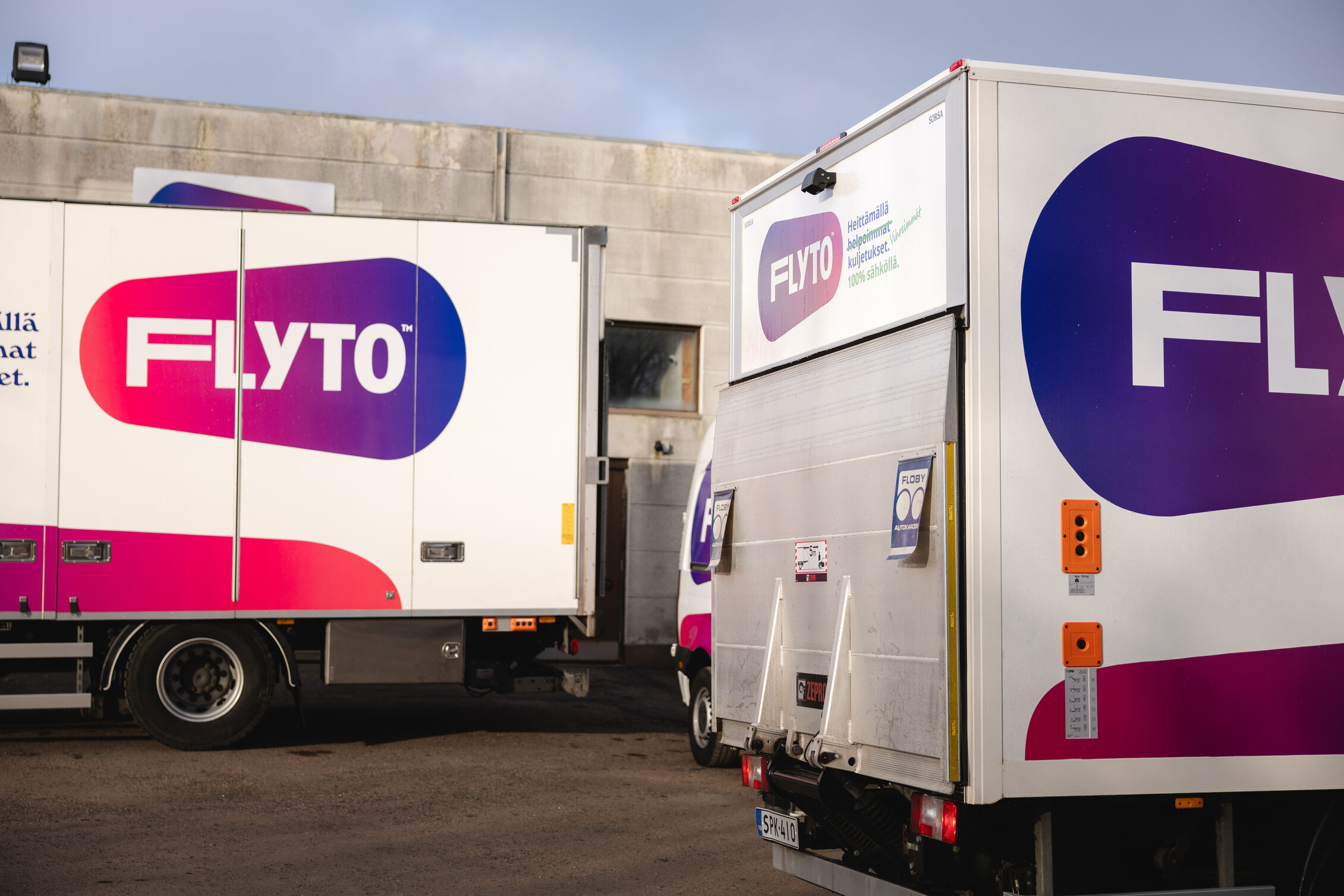
Flyto runs its own offices, warehouses, teams, and vehicles across Northern, Central, and Southern Europe, so the Swedish collection, export documentation, and consolidation are handled in-house to a standard we control directly. For the ocean and air leg we combine a carefully chosen network of vetted freight partners and subcontractors with trusted local partners on the ground in Hong Kong for customs clearance and final delivery. You get one coordinated point of contact end to end, without us pretending to own every link in the chain.
Frequently asked questions
Do I pay import duty on my furniture in Hong Kong?
No. Hong Kong is a free port and charges duty only on liquor, tobacco, hydrocarbon oil, and methyl alcohol, per Hong Kong Customs. Ordinary household goods clear free of duty, and there is no VAT or GST — but an import declaration is still required.
Do I really need to file an export declaration in Sweden?
Yes. Because Hong Kong is outside the EU, Tullverket requires an export declaration for your personal belongings. Your removal company can lodge it for you.
When do I tell Skatteverket I’m leaving?
If you’ll be away a year or more, notify before you go using form SKV 7665b, per Skatteverket. Deregistration doesn’t automatically end your tax liability if you keep an essential connection to Sweden.
Can I bring my dog or cat?
Yes, but you must get an AFCD Special Permit in advance. Sweden is a Group II country, so quarantine can be avoided if you meet all permit terms, including a compliant microchip and manifested-cargo transport.
How long does the shipment take?
As a freight-industry estimate (not an official figure), sea freight from Gothenburg to Hong Kong runs roughly 4–7 weeks port to port, or around 8–12 weeks door to door. Air freight is a matter of days to a couple of weeks. Confirm exact dates with your carrier.
How much cash can I bring?
Any amount, but declare more than HK$120,000 in currency or bearer instruments to Customs on arrival, per Hong Kong Customs.
Reverse direction: Hong Kong → Sweden
Moving back reverses the customs logic. You import into the EU through Sweden, where Tullverket offers duty and VAT relief on personal belongings if you have had your normal residence outside the EU for at least a continuous year and have owned and used the goods for at least six months before the move — but not for alcohol or tobacco. You’ll need proof of ownership/use and proof of moving, and you re-register with Skatteverket on arrival.
Sources
- Tullverket — Moving to and from Sweden
- Tullverket — Moving from Sweden to a country outside the EU
- Tullverket — Moving from Sweden to a non-EU country (cultural goods)
- Tullverket — Duty and VAT relief when moving to Sweden
- Skatteverket — Civil de-registration (form SKV 7665b)
- Skatteverket — SINK special income tax for non-residents
- Port of Gothenburg — official site
- Port of Gothenburg — container services
- Hong Kong Immigration Department — General Employment Policy
- Hong Kong Immigration Department — Visas / Entry Permits
- Hong Kong Customs — Personal Effects
- Hong Kong Customs — Import and Export Declaration
- Hong Kong Customs — Dutiable Commodities
- Hong Kong Customs — Duty-free Concessions
- Hong Kong Customs — Currency and Bearer Negotiable Instruments FAQ
- AFCD — Import of Dogs and Cats
- AFCD — Import of Dogs and Cats from Group II countries/places
- AFCD — Group II terms of import (DC-02)