

Moving from Estonia to Hong Kong (2026): Complete Guide

Relocating from Estonia to Hong Kong means moving your life from a small, digitally run EU member state on the Baltic Sea to one of Asia’s busiest free ports. It is a corridor with two very different halves: on the Estonian side you are handling an EU export — customs formalities, deregistration and a tax-residency exit; on the Hong Kong side you are handling a free-port import where household goods usually enter duty-free but must still be declared correctly. This guide walks through both halves, plus a short note on returning to Estonia, and is written for private individuals and families making the move — professionals on an employment visa, dependants, and returning residents alike.
Key takeaways
- Hong Kong is a free port: only four categories of goods are dutiable — liquor, tobacco, hydrocarbon oil and methyl alcohol — so ordinary used household effects carry no import duty, but there is no duty-free concession on any dutiable items inside your shipment (HK Customs – Dutiable Commodities, HK Customs – Personal Effects).
- Leaving the EU, goods generally need an electronic export declaration through the EU’s Automated Export System, though goods of a commercial nature not exceeding €1,000 in value or 1,000 kg can pass without a formal declaration (EMTA – Declaration of goods, EMTA – Export).
- You must submit a notice of residence within 30 days of moving abroad, giving your new foreign address to your former Estonian local authority or an Estonian foreign mission (Ministry of the Interior).
- If your Estonian tax residency will change, file the application for determination of residency (form R) with the Estonian Tax and Customs Board; residency turns on a 183-day test over 12 consecutive months (EMTA – Tax residency).
- A Hong Kong visa or entry permit must be secured before you arrive to live or work — commonly the General Employment Policy visa or a dependant visa (Immigration Department).
- Bringing a dog or cat requires an AFCD Special Permit obtained in advance; Estonia is not listed in Groups I, II or IIIA, so it falls into Group IIIB, carrying quarantine of not less than 120 days (AFCD – Import of Dogs and Cats, AFCD press release).
- Carrying more than HKD 120,000 in cash or bearer negotiable instruments into Hong Kong triggers a mandatory Red-Channel declaration (HK Customs – CBNI).
1. Your Hong Kong immigration status shapes everything
In most countries, your visa category unlocks a specific customs relief for used household goods. Hong Kong is different: because it is a free port, ordinary personal effects enter duty-free regardless of your visa, and there is no "transfer of residence" relief to apply for (HK Customs – Personal Effects). What your immigration status actually determines is whether you may lawfully be in Hong Kong to receive the shipment, and it underpins related steps such as your pet’s Special Permit, which requires your HKID or passport.
Anyone other than those with the right of abode or right to land must hold a visa or entry permit before coming to Hong Kong to take up employment, study, investment or residence (Immigration Department). Most Estonians arrive under the General Employment Policy (GEP) as professionals (Immigration Department – GEP), or as dependants of an eligible visa holder. Dependants sponsored by a GEP or other employment-visa holder, or by a permanent resident, are generally not prohibited from taking up employment without a separate work permit (Immigration Department – Dependants). Time your sea shipment so it arrives after your visa is confirmed and you can present your identity documents at clearance.
2. The Estonia export side
The authority. Customs in Estonia is run by the Estonian Tax and Customs Board (Maksu- ja Tolliamet, EMTA), which handles both taxes and customs (EMTA).
Export declaration and thresholds. Hong Kong sits outside the EU, so shipping there is a customs export. A formal declaration is not required for goods of a commercial nature whose value does not exceed €1,000 or whose quantity does not exceed 1,000 kg (EMTA – Declaration of goods). In practice, a full container of household effects moved by a freight forwarder is lodged as a formal export declaration through the EU’s Automated Export System (AES), submitted electronically before the goods reach the customs office of exit. Lodging an export declaration requires an EORI number and the commodity codes for the goods; your mover or a customs agent normally files this on your behalf (EMTA – Export).
Deregistration. Estonia runs its population data through the Population Register. When you settle abroad you must submit a notice of residence within 30 days, giving your new foreign address to your former Estonian local authority or, from abroad, to an Estonian foreign mission (Ministry of the Interior; Ministry of Foreign Affairs). Leaving your Estonian address unchanged keeps you on the register as a resident, which has legal effect for voting, taxes and other public duties — so update it deliberately rather than letting it lapse.
Tax-residency exit. A natural person is an Estonian tax resident if their place of residence is in Estonia or they stay at least 183 days over 12 consecutive calendar months (EMTA – Tax residency). If your move will change that status, you must submit an application for determination of residency (form R) to EMTA (EMTA – Determining residency). Doing this cleanly avoids being taxed as a resident on worldwide income after you have genuinely left, and matters for any Estonia–Hong Kong tax questions.
3. Ports & transit times
Estonia’s main cargo gateway is the Port of Tallinn, and specifically Muuga Harbour, about 17 km east of Tallinn — the country’s biggest cargo harbour and an ice-free, deep-water port with a modern container terminal. Containers are handled at Muuga and at Paldiski South Harbour (Port of Tallinn – Muuga; Port of Tallinn – Containers). Most Estonia-to-Hong Kong sea freight is railed or trucked to a large trans-shipment hub (such as a North Sea or Baltic mainport) and consolidated onto a deep-sea service to Hong Kong; there is no direct scheduled deep-sea liner from Muuga to Hong Kong for household goods.
The following transit times are freight-industry estimates, not official figures, and vary with routing, sailings and congestion:
- Sea freight (FCL/LCL): roughly 5–8 weeks door-to-port on typical Northern Europe–Hong Kong routings, plus feeder/inland time from Estonia and clearance at each end.
- Air freight: roughly 5–10 days door-to-door for the transport leg, faster but far more expensive per cubic metre — best for a small essentials shipment.
Treat these as planning ranges only and confirm live schedules with your forwarder.
4. The Hong Kong import side
Hong Kong’s free-port status means most used household goods and personal effects are imported without customs duty. Their clearance follows the same procedure as general cargo, and — importantly — no duty-free concession is granted for any dutiable goods inside the shipment (HK Customs – Personal Effects). Only four categories are dutiable in Hong Kong — liquor, tobacco, hydrocarbon oil and methyl alcohol — and importing those requires a licence and payment of duty (HK Customs – Dutiable Commodities). Keep a detailed inventory/packing list; officers see all documents and may physically inspect the shipment.
The declaration. Separate from customs clearance, Hong Kong law requires an import declaration for imported articles other than exempted ones. Every importer must lodge an accurate import/export declaration electronically within 14 days of importation, through a government-appointed service provider (Brio, Ge-TS or Tradelink); late lodgement attracts a penalty (HK Customs – Import and Export Declaration). Genuine personal-effects removals are typically handled as exempted/personal shipments, and your Hong Kong destination agent will advise whether a declaration is needed for your consignment and file it if so.
5. Pets
Hong Kong is rabies-controlled, so pet import is strict. You must obtain an AFCD Special Permit before your dog or cat enters or transits Hong Kong — arriving without one is not permitted (GovHK – Bringing Pets; AFCD – Import of Dogs and Cats). Applications use Form AF240 (with the accompanying declaration form) and require a copy of your identity document (HKID or passport). AFCD assigns each origin country to a group. Estonia is not listed in Group I, Group II or Group IIIA, so it falls into Group IIIB — the "other countries/places" category not otherwise assigned. Under the arrangements effective 1 December 2024, Group IIIB animals face quarantine of not less than 120 days, and the shortened 30-day route (with a rabies neutralising antibody titre test) applies to Group IIIA, not Group IIIB (AFCD press release). Because groupings and terms change, confirm your pet’s exact requirements directly with AFCD before booking travel.
On the Estonian export side, taking a pet out of the EU to a third country means it should have a valid EU pet passport, microchip and rabies vaccination; check current requirements with Estonian authorities and, critically, meet Hong Kong’s stricter entry conditions, which govern the trip.
6. Vehicles, money and things people forget
Vehicles. Hong Kong drives on the left, registration is tightly controlled, and first registration of a motor vehicle attracts substantial tax — so importing a private car from Estonia is rarely worthwhile. If you do, treat it as a specialised project and get a quote from a Hong Kong agent before shipping.
Money. There is no limit on how much currency you may bring, but if you carry more than HKD 120,000 (or equivalent) in cash or bearer negotiable instruments, you must declare it via the Red Channel on arrival; an e-form with a QR code can be pre-filled before travel, and non-compliance is a criminal offence (HK Customs – CBNI).
Commonly forgotten items. Alcohol and tobacco in your shipment are dutiable with no concession — declare them. Check licence/permit rules for anything controlled (certain foods, plants, medicines, weapons-like items). And finish the Estonian-side housekeeping: the 30-day residence notice, the form R tax filing, and closing or redirecting Estonian utilities, banking and health-insurance registrations.
A note on the reverse direction (Hong Kong → Estonia)
Moving back is an EU import. A person who ceases to be a permanent resident of a third country and transfers residence to Estonia can, under conditions, import personal property free of customs duty, and VAT is generally not imposed on goods that qualify for that customs-duty relief (EMTA – Moving to Estonia). EMTA advises applying to customs well before the goods arrive. Keep proof of your Hong Kong residence and an itemised inventory to support the relief.
How Flyto handles your Estonia to Hong Kong move
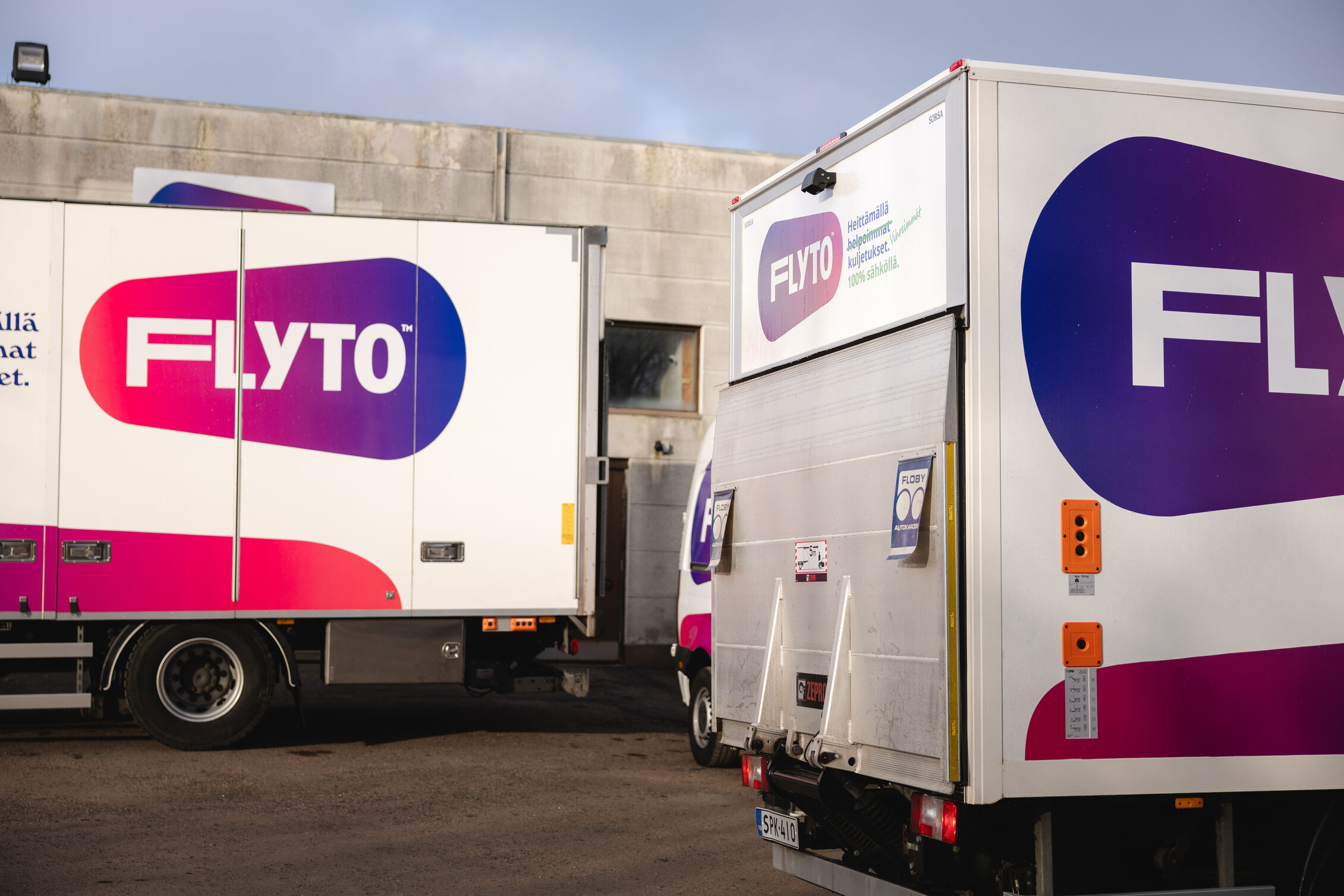
Flyto runs its own offices, warehouses, teams and vehicles across Northern, Central and Southern Europe, so the Estonian collection, packing and export leg is handled directly by our own people — combined with a carefully chosen network of vetted partners and subcontractors for the deep-sea or air legs where a specialist carrier is the right tool. In Hong Kong we work through trusted local partners for destination clearance and delivery. We coordinate the whole corridor end to end; we do not claim to do every mile ourselves, and that honesty is exactly why the handovers stay clean.
Frequently asked questions
Will I pay import duty on my furniture and belongings in Hong Kong?
No. Hong Kong is a free port and only liquor, tobacco, hydrocarbon oil and methyl alcohol are dutiable; ordinary used household goods enter duty-free, though any dutiable items inside get no concession (HK Customs).
Do I need a visa before I ship my things?
You need a valid Hong Kong visa or entry permit to live or work there, and you should have it before your goods arrive so you can be present and present identity documents at clearance (Immigration Department).
How long does an Estonia-to-Hong Kong sea shipment take?
As a freight-industry estimate — not an official figure — expect roughly 5–8 weeks for the sea leg plus inland and clearance time. Confirm live schedules with your forwarder.
What do I have to do with the Estonian authorities before I leave?
Submit a notice of your new foreign residence within 30 days (Ministry of the Interior), and if your tax residency changes, file form R with EMTA (EMTA). A container export is declared via the EU Automated Export System.
Can I bring my dog or cat from Estonia?
Yes, but only with an AFCD Special Permit obtained in advance. Estonia falls into Group IIIB, which carries quarantine of not less than 120 days — verify the latest terms with AFCD before you book (AFCD).
Is there a cash limit on arrival?
There is no limit, but carrying more than HKD 120,000 in cash or bearer negotiable instruments requires a declaration via the Red Channel (HK Customs).
Sources
- Estonian Tax and Customs Board (EMTA)
- EMTA – Declaration of goods (travel)
- EMTA – Export
- EMTA – Tax residency
- EMTA – Determining residency
- EMTA – Moving to Estonia
- Estonian Ministry of the Interior – Submission of a notice of residence
- Estonian Ministry of Foreign Affairs – Registration of residence abroad
- Port of Tallinn – Muuga Harbour
- Port of Tallinn – Containers
- HK Customs – Personal Effects
- HK Customs – Import and Export Declaration
- HK Customs – Dutiable Commodities
- HK Customs – Currency and Bearer Negotiable Instruments
- Hong Kong Immigration Department – Entry guidelines
- Hong Kong Immigration Department – General Employment Policy
- Hong Kong Immigration Department – Dependants
- AFCD – Import of Dogs and Cats
- AFCD – New quarantine arrangements press release
- GovHK – Bringing Pets to Hong Kong