

Moving from Poland to Hong Kong (2026): Complete Guide

The Poland-to-Hong Kong corridor pairs one of the EU’s busiest Baltic freight gateways with the world’s freest cargo port. But a successful move has two halves that people routinely underestimate: the Polish export side — clearing the EU customs territory, closing your registration and settling your tax residency — and the Hong Kong import side, where your immigration status, not a customs tariff, is what really governs your arrival. This guide walks a Poland resident through both, plus a short note on returning. It is written for professionals relocating on a work visa, their accompanying family, and returning Hongkongers who have been living in Poland.
Key takeaways
- Hong Kong is a free port that levies no customs tariff on imports; excise duty applies only to liquor, tobacco, hydrocarbon oil and methyl alcohol (HK Customs & Excise Department).
- Your right to live in Hong Kong depends on an entry visa from the Immigration Department, most commonly the General Employment Policy (GEP) for foreign professionals (Immigration Department).
- On the Polish side, the customs authority is the National Revenue Administration (Krajowa Administracja Skarbowa, KAS) (gov.pl), and export declarations are filed electronically in the AES system via the PUESC portal (PUESC).
- You should report your departure abroad (wymeldowanie) to your gmina; a permanent move deregisters you from both permanent and temporary residence (gov.pl).
- Polish tax residency turns on 183 days or your centre of vital interests, so settle it deliberately (Ministry of Finance).
- Pets from Poland need an AFCD Special Permit in advance (Form AF240), and Poland sits in Group IIIB — the strictest tier, carrying a minimum 120-day quarantine (AFCD).
- Cash of €10,000+ leaving the EU and HK$120,000+ entering Hong Kong must both be declared (European Commission; HK Customs).
1. Your Hong Kong immigration status sets the rules
Unusually, Hong Kong’s customs treatment of your household goods barely depends on your visa — because there is no import tariff to relieve in the first place. What your immigration status governs is whether you can settle at all. Most people moving from Poland arrive under the General Employment Policy (GEP), a quota-free route for professionals with skills "not readily available" locally; it requires a confirmed offer of employment and normally a first degree in the relevant field, with the Immigration Department stating that a complete application "normally takes four weeks" once all documents and the fee are received (Immigration Department).
Your spouse (or same-sex civil partner) and unmarried children under 18 can join you on a dependant visa, and — importantly — a dependant of a GEP holder is not prohibited from taking up employment in Hong Kong, so no separate employment visa is needed to work (Immigration Department). Secure the visa approval-in-principle before your shipment sails: your Hong Kong Identity Card or passport is what the pet permit, the customs clearance broker and your tenancy will all key off.
2. The Poland export side: authority, deregistration and tax exit
Customs authority. All Polish customs matters — cross-border movement of goods, customs formalities and fiscal control — sit with the National Revenue Administration (Krajowa Administracja Skarbowa, KAS), which the government describes as responsible for taxes, customs duties and protecting the customs territory of the EU (gov.pl). Because Hong Kong is outside the EU, your removal is a formal export from the EU customs territory.
Export declaration. Poland files export declarations electronically in the AES (Automatyczny System Eksportu / Automated Export System), submitted through the government PUESC platform; paper filing on the Export SAD is permitted only in emergency fallback situations (PUESC). In practice a removals company or customs agent lodges the AES declaration in your name using a detailed, valued inventory of every box. Keep that inventory bilingual and honest — it is the document Hong Kong’s clearance agent will also lean on.
Deregistration (wymeldowanie). Polish residents carry a meldunek (registered address). When you leave permanently you must report your departure abroad to your gmina (municipal) office — online with a trusted profile (profil zaufany) or in person — and reporting a departure with the intention of permanent residence outside Poland automatically deregisters you from both permanent and temporary residence (gov.pl). The report itself is free; a separate paper certificate of deregistration, if you need one, carries the standard stamp-duty (opłata skarbowa) fee.
Tax-residency exit. Do not assume that leaving ends your Polish tax liability. You are a Polish tax resident — taxed on worldwide income — if you spend more than 183 days in Poland in a fiscal year or your centre of vital interests is in Poland; the two tests are alternatives, so meeting either one keeps you resident (Ministry of Finance). Genuinely relocating your home, family and economic centre to Hong Kong is what shifts residency, subject to any applicable double-taxation treaty. You can request a CFR-1 certificate of fiscal residence from your Urząd Skarbowy to evidence your status, and keep records that document the move date.
3. Ports and realistic transit times
Poland’s Baltic coast gives your shipment two serious deep-sea gateways. Baltic Hub (formerly DCT Gdańsk) in the Port of Gdańsk is the region’s leading deep-water container terminal with direct ocean-vessel calls and capacity for the largest container ships (Port of Gdańsk). The neighbouring Port of Gdynia, with its Baltic Container Terminal and Gdynia Container Terminal, is Poland’s other major box port (Port of Gdynia). A Poland-origin ocean move to Hong Kong usually loads at Gdańsk or Gdynia, sometimes trucking to a hub such as Rotterdam or Hamburg for a direct Asia string.
Transit times below are freight-industry estimates, not official figures, and vary with routing, carrier schedules and season:
- Sea freight (FCL/LCL), Gdańsk/Gdynia to Hong Kong: typically 6-9 weeks door-to-door once collection, export clearance, the ocean leg and Hong Kong clearance are added together.
- Air freight: the shipment itself flies in days, but with packing, booking and clearance a realistic door-to-door window is 1-2 weeks.
Treat these as planning ranges only; your carrier’s confirmed schedule is the authority.
4. The Hong Kong import side
Here the news is good. Hong Kong is a free port and levies no customs tariff on general imports; the only excisable goods are liquor, tobacco, hydrocarbon oil and methyl alcohol (HK Customs). Your used household effects are not dutiable.
That does not mean "no paperwork." Hong Kong runs an import/export declaration regime: anyone importing articles, other than exempted articles, must lodge an accurate declaration within 14 days of importation, with late-lodgement penalties tiered around a HK$20,000 value threshold (HK Customs). Import declarations use Form 1 (non-food) and Form 1A (food), while articles exempted from the declaration charge use Form 1B (imports) or Form 2B (exports/re-exports). Personal-effects shipments clear under the same procedures as general cargo, and any prohibited or licensable items inside them (medicines, certain electronics, weapons) still need their permits (HK Customs). In practice your Hong Kong clearance agent handles the declaration; your job is an accurate inventory and your HKID/passport.
5. Pets: strict at the Hong Kong end
This is the section that surprises Poland movers most. A dog or cat cannot enter Hong Kong without a Special Permit obtained in advance, applied for on Form AF240 to the Agriculture, Fisheries and Conservation Department (AFCD) (AFCD).
Crucially, AFCD groups countries by rabies risk, and Poland is not listed in Group I, Group II or Group IIIA — so it falls into Group IIIB, defined as "other countries/places which are not included in the categories of Group I, Group II and IIIA," the strictest tier (AFCD). Neighbouring EU states such as Germany, France and the Netherlands are in Group II and enjoy a quarantine exemption on full compliance with the permit conditions (AFCD Group II) — but Poland does not, at least until AFCD revises its list. Group IIIB animals must be microchipped, carry the required core vaccinations, and undergo a minimum 120-day quarantine in Hong Kong at the owner’s cost (AFCD Group IIIB). Because these conditions are onerous and the country groupings are reviewed periodically, confirm the current, exact Group IIIB requirements directly with AFCD before you book anything.
On the Polish exit side, taking a pet out of the EU follows standard EU pet-movement rules (microchip, valid rabies vaccination and an EU pet passport or third-country animal health certificate issued by an official veterinarian). Start the Hong Kong permit and quarantine booking months ahead — the 120-day window drives your whole timeline.
6. Vehicles, money and things people forget
Vehicles. Hong Kong drives on the left and imposes a First Registration Tax (FRT) — charged as a progressive percentage of the vehicle’s taxable value — on a vehicle’s first registration, whether locally bought or imported (Transport Department). An importer must file an Import Return (CED336) to Customs within 30 days of importation and at least five working days before delivering the vehicle or offering it for sale (HK Customs). Between the tax, left-hand-traffic suitability and Hong Kong’s superb public transport, shipping a Polish car is rarely worth it.
Money. Leaving the EU with cash of €10,000 or more (or the equivalent in other currencies) requires a customs declaration (European Commission). Arriving in Hong Kong with currency or bearer negotiable instruments over HK$120,000 requires a written declaration under the Cross-boundary Movement of Physical Currency and Bearer Negotiable Instruments Ordinance (Cap. 629) (HK Customs).
Commonly forgotten: liquor and tobacco in your shipment are excisable even as "personal effects"; medicines and some electronics may be licensable; and your Polish inventory values feed both the AES export record and the Hong Kong clearance. Keep proof-of-use and purchase records for higher-value items.
How Flyto handles your Poland to Hong Kong move
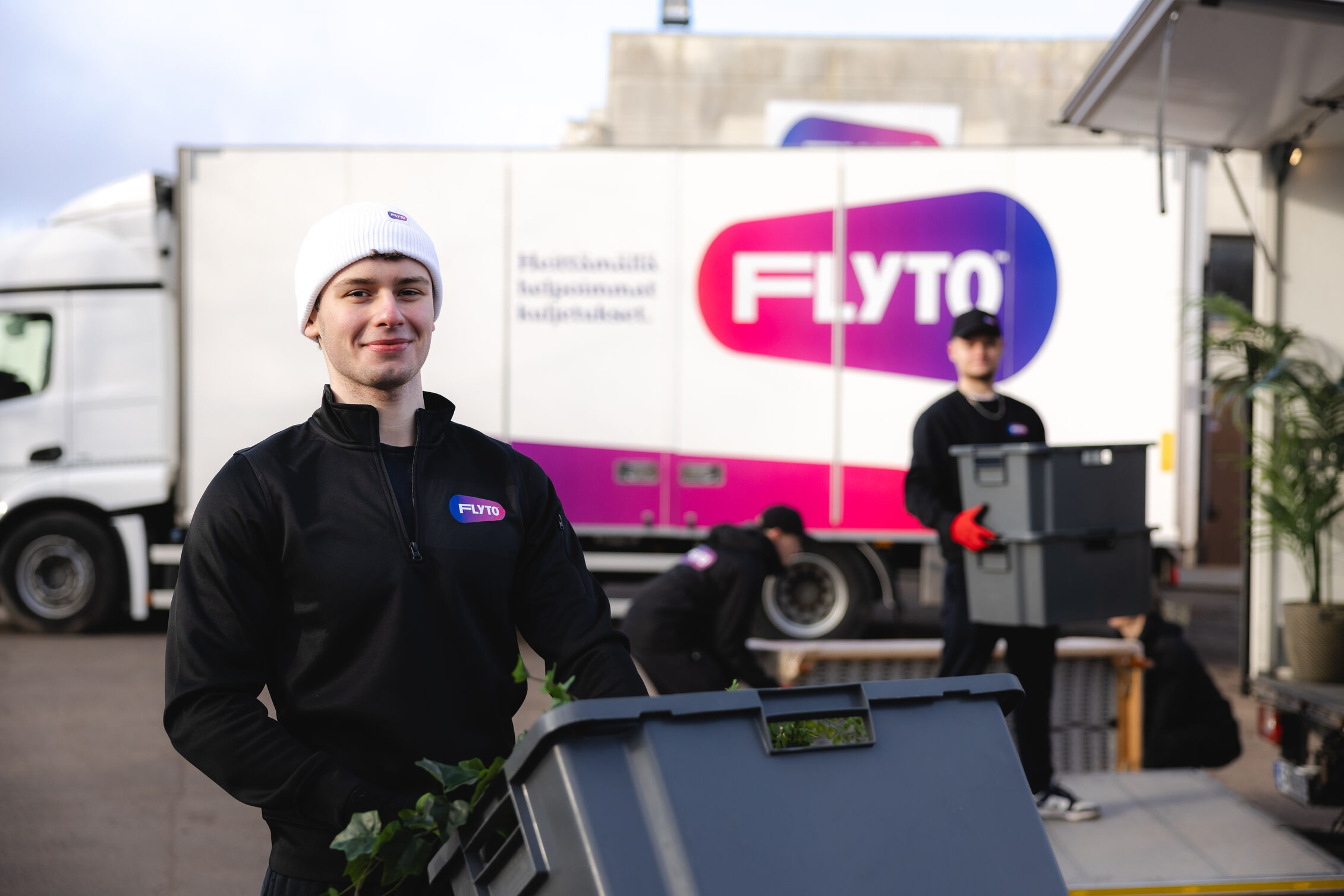
Flyto runs strong in-house European operations — our own offices, warehouses, teams and vehicles across Northern, Central and Southern Europe — so collection, packing, export documentation and origin handling in Poland stay under our direct control. For the ocean or air leg we combine a carefully vetted partner and subcontractor network with trusted local partners in Hong Kong for customs clearance and final delivery. We coordinate the whole corridor end to end without pretending to do every mile ourselves.
Frequently asked questions
Do I pay import duty on my household goods in Hong Kong?
No. Hong Kong is a free port with no customs tariff on general imports; only liquor, tobacco, hydrocarbon oil and methyl alcohol are excisable (HK Customs).
What is the single biggest planning risk?
Pets. Poland is in AFCD Group IIIB, which carries a minimum 120-day quarantine and an advance Special Permit (Form AF240) — plan months ahead (AFCD).
Do I need to deregister in Poland?
Yes. Report your departure abroad to your gmina; a permanent move deregisters you from both permanent and temporary residence (gov.pl).
How long does sea freight take?
As a freight-industry estimate, roughly 6-9 weeks door-to-door from Gdańsk or Gdynia (Port of Gdańsk); confirmed schedules override any estimate.
Who files the Polish export declaration?
It is lodged electronically in the AES system via PUESC, normally by your remover or customs agent on your behalf (PUESC).
What about moving back — Hong Kong to Poland?
The reverse is harder on the Polish side: importing your effects into the EU is duty-free only if you qualify as a person transferring normal residence, having lived outside the EU (in Hong Kong) and used the goods at least six months, under Council Regulation (EC) No 1186/2009 (EUR-Lex; European Commission). The goods generally cannot be sold or lent for 12 months after clearance.
Sources
- National Revenue Administration (KAS)
- PUESC — export declaration (AES)
- gov.pl — report departure abroad (wymeldowanie)
- Ministry of Finance — tax residence
- Port of Gdańsk — Baltic Hub Container Terminal
- Port of Gdynia
- HK Customs — Personal Effects
- HK Customs — Import and Export Declaration
- HK Immigration — General Employment Policy
- HK Immigration — Residence as Dependants
- AFCD — Import of Dogs and Cats
- AFCD — Group II countries/places
- AFCD — Import from Group IIIB countries/places
- European Commission — carrying cash in/out of the EU
- HK Customs — Currency and Bearer Negotiable Instruments
- HK Customs — Motor Vehicles
- Transport Department — Importation and Registration of Motor Vehicles
- EUR-Lex — Council Regulation (EC) No 1186/2009
- European Commission — Duty relief