

Moving from the Czech Republic to Hong Kong (2026): Complete Guide

Relocating from the Czech Republic to Hong Kong means shipping your life out of a landlocked EU member state and into one of the world’s busiest free ports. This guide covers both halves of the corridor: the Czech export and deregistration side, handled by the Customs Administration of the Czech Republic (Celní správa České republiky) and Czech civil authorities, and the Hong Kong import side, handled by the Hong Kong Customs and Excise Department. It is written for anyone leaving Czechia for work, study or family in Hong Kong who wants to move household goods, pets, money and vehicles correctly. A short note on the reverse direction (Hong Kong back to the Czech Republic) is included at the end.
Key takeaways
- Hong Kong is a free port: it levies no customs tariff, VAT or general import tax on personal effects. Excise duty applies only to four dutiable commodities — liquor, tobacco, hydrocarbon oil and methyl alcohol (HK Customs & Excise).
- Anyone importing goods into Hong Kong must lodge an import declaration within 14 days of importation, electronically, under the Import and Export (Registration) Regulations (HK Customs & Excise).
- Leaving the EU customs territory requires an export declaration through the Czech Automated Export System (AES / eVývoz) (Celní správa).
- Czech citizens can formally end their permanent residence (ukončení trvalého pobytu) at the registration office for a CZK 100 fee (Ministry of the Interior).
- Dogs and cats from the Czech Republic (a Group II country) may skip Hong Kong quarantine, but only with an AFCD Special Permit obtained before travel (AFCD).
- Carrying EUR 10,000 or more across the EU border must be declared to Czech customs in writing (Celní správa); arriving in Hong Kong with more than HKD 120,000 must be declared under Cap. 629 (HK Customs & Excise).
- Your right to live and work in Hong Kong is set by the Immigration Department, most commonly via the General Employment Policy — and your immigration status shapes how your shipment is treated.
1. Your Hong Kong status determines everything
Before a single box is packed, confirm your immigration route. Non-permanent residents from the Czech Republic almost always enter under the General Employment Policy (GEP), which the Immigration Department describes as quota-free and non-sector-specific for professionals with skills "of value to and not readily available in the HKSAR." Employment visas are sponsored by a Hong Kong employer against a genuine job offer, and applications normally take around four weeks to process once complete.
Why status matters for customs: Hong Kong is a free port, so unlike most destinations there is no "returning resident" duty relief to qualify for — personal effects enter duty-free regardless. But your visa/entry permit and Hong Kong Identity Card are the identity documents used on the import paperwork and on any pet Special Permit application. Have your visa approved and your Hong Kong address confirmed before the shipment sails, because the import declaration and delivery need a consignee who is legally present.
2. The Czech export side
The authority. Exports out of the EU are cleared by the Customs Administration of the Czech Republic (Celní správa České republiky). Because Hong Kong sits outside the EU customs territory, your household goods are a formal export, not an intra-EU move — goods moving between EU member states face no customs formalities, but a third-country move does (Česká pošta / Celní správa).
The export declaration. The move is lodged electronically in the Automated Export System (AES), known locally as eVývoz, the EU-wide electronic export regime linking declarants, the Czech Customs Administration and the customs office of exit (Celní správa AES/ECS). Since the October 2023 switch to the modernised AES, declarations are filed through commercial customs software or an agent rather than a free public web client. You may file yourself or, far more commonly, use a customs agent who submits the declaration from your detailed inventory (number of packages, contents, destination, personal details). Goods must leave the EU in the same state in which the export declaration was accepted (Celní správa – Vývoz).
Deregistration. Czech citizens permanently leaving may formally end their permanent residence (ukončení trvalého pobytu) in writing at the registration office (ohlašovna) of their permanent address, or through a Czech embassy abroad. The administrative fee is CZK 100 domestically (CZK 600 through an embassy). Ending permanent residence terminates the validity of the citizen ID card (občanský průkaz), which must be surrendered within 15 working days (Ministry of the Interior; gov.cz). This step is optional in law but affects voting rolls, ID validity and data-box delivery.
Tax exit. The Financial Administration of the Czech Republic (Finanční správa) treats you as a Czech tax resident — taxable on worldwide income — if you have a permanent home there or spend at least 183 days in the country in a calendar year. Breaking residency (giving up the permanent home available to you and physically relocating) is what ends worldwide liability; notify your local tax office (finanční úřad) of the change so the following year is assessed correctly. There is no Czech exit tax on individuals.
3. Ports & transit — realistic, but estimates
The Czech Republic is landlocked, so nothing sails directly from Czech soil. Household shipments move overland to a North Sea seaport (usually Hamburg or Bremerhaven) or leave by air. The country’s own Elbe river ports — Mělník, Ústí nad Labem, Děčín and Lovosice — connect by barge and rail to Hamburg (Port of Hamburg hinterland). Air freight departs from Václav Havel Airport Prague (PRG).
The following are freight-industry estimates, not official government figures, and vary with routing, season and carrier:
- Sea freight, Hamburg → Hong Kong: roughly 28–40 days port-to-port, plus 1–2 weeks of Czech collection, packing, export clearance and inland haulage to Hamburg, and Hong Kong clearance and delivery on arrival.
- Air freight, Prague (PRG) → Hong Kong (HKG): roughly 4–9 days door-to-door for a typical consolidated shipment.
Treat any single quoted date as a planning target, not a guarantee.
4. The Hong Kong import side
Because Hong Kong is a free port, the Hong Kong Special Administrative Region levies no customs tariff, no VAT and no general import tax on personal effects; excise duty is charged only on liquor, tobacco, hydrocarbon oil and methyl alcohol (HK Customs & Excise – Personal Effects). Personal effects are cleared using the same procedures as general cargo, and no duty-free concession is given for any dutiable goods packed inside them.
The core legal obligation is the import declaration: under the Import and Export (Registration) Regulations, anyone importing goods (other than exempted articles) must lodge an accurate and complete import declaration with the Commissioner of Customs and Excise within 14 days of importation. Declarations are filed electronically only, through one of three Government-appointed service providers — Brio Electronic Commerce Limited, Global e-Trading Services Limited and Tradelink Electronic Commerce Limited (HK Customs & Excise – Import and Export Declaration). Late lodgement triggers penalties. In practice your Hong Kong destination agent files this for you from the inventory/packing list, using scans of your passport identity page and your Hong Kong visa/ID.
Prohibited and controlled articles (such as certain drugs, weapons and protected-species products) still require the same licences and permits as any other cargo — the free-port status removes tariffs, not import controls.
5. Pets
Czech departure side. The State Veterinary Administration (Státní veterinární správa) handles pets leaving for non-EU countries. The destination country’s rules govern, and the export health documents are confirmed by the official veterinarian of the locally competent Regional Veterinary Administration (Krajská veterinární správa). The RVA charges around CZK 200 per animal (about CZK 500 for several animals) for certification.
Hong Kong arrival side. Dogs and cats must not be brought into Hong Kong unless a Special Permit from the Agriculture, Fisheries and Conservation Department (AFCD) is obtained in advance — apply before booking flights. The Czech Republic is a Group II country, so pets may be exempted from quarantine provided every permit condition is met (AFCD Group II). Apply using forms AF240 and UN110 with a copy of your HKID or passport; the fee is HKD 432 for the first animal and HKD 102 for each additional animal on the same permit for a single shipment. AFCD advises allowing at least three working days for processing, and the permit is valid for one consignment. An official veterinary health certificate in the AFCD-prescribed format completes the file.
6. Vehicles, money and things people forget
Vehicles. A left-hand-drive Czech car is a poor fit for right-hand-drive Hong Kong, and importing a vehicle triggers first registration tax assessed by the authorities on top of the shipping cost — most movers sell before leaving. Note that motor vehicles brought as a transfer of residence are explicitly excluded from any personal-effects duty relief on the Czech side too (Celní správa – transmigration).
Money. Leaving the EU with EUR 10,000 or more in cash or equivalent bearer instruments must be declared in writing to Czech customs (Celní správa). On arrival, anyone carrying more than HKD 120,000 (or equivalent) in currency or bearer negotiable instruments must make a written declaration via the Red Channel under Cap. 629 (HK Customs & Excise; Narcotics Division).
Commonly forgotten: liquor and tobacco packed in the household shipment are not exempt from Hong Kong excise duty even when declared as personal effects; the 14-day import-declaration clock starts at importation, not at delivery; and your Czech data box (datová schránka), health-insurance deregistration and utility contracts all need closing separately from customs.
How Flyto handles your Czech Republic → Hong Kong move
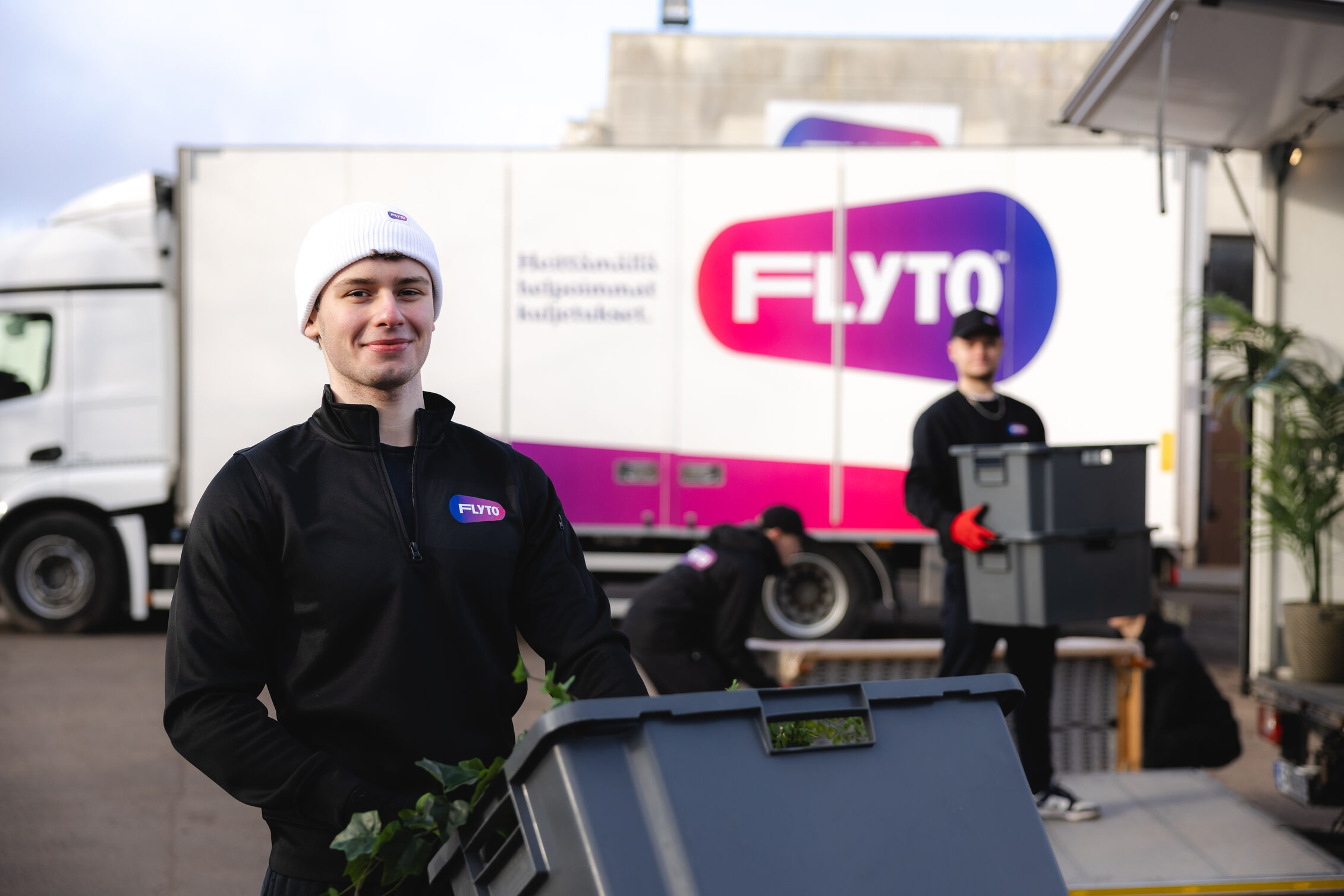
Flyto runs strong in-house European operations — our own offices, warehouses, teams and vehicles across Northern, Central and Southern Europe — so the Czech collection, packing, export declaration and haulage to a North Sea port are managed directly, backed by a carefully chosen partner and subcontractor network where it strengthens the route. In Hong Kong we work through trusted local partners for import clearance, the 14-day declaration and last-mile delivery, so the arrival side is handled by specialists who know the port. You get one coordinated move end to end, without us pretending we do every mile ourselves.
Frequently asked questions
Do I pay import duty on my furniture in Hong Kong?
No. Hong Kong is a free port with no customs tariff, VAT or general import tax on personal effects. Only liquor, tobacco, hydrocarbon oil and methyl alcohol carry excise duty (HK Customs & Excise).
Do I still need to file anything if there’s no duty?
Yes. An import declaration must be lodged electronically within 14 days of importation under the Import and Export (Registration) Regulations, regardless of duty (HK Customs & Excise).
Do I have to cancel my Czech permanent residence?
It is not legally forced, but citizens may formally end permanent residence at the registration office for CZK 100; doing so ends the validity of the ID card, which must be returned within 15 working days (Ministry of the Interior).
Will my dog have to go into quarantine?
Not if handled correctly. The Czech Republic is an AFCD Group II country, so quarantine can be waived — but only with a Special Permit obtained before travel and full compliance with its conditions (AFCD).
How long does the shipment take?
Sea freight via Hamburg is roughly 28–40 days at sea plus collection and clearance either end; air freight from Prague is roughly 4–9 days door-to-door. These are freight-industry estimates, not official figures.
When do I stop being a Czech tax resident?
When you give up your permanent home in Czechia and relocate, and no longer meet the 183-day test. Notify your local finanční úřad; there is no individual exit tax (Finanční správa).
Reverse direction: Hong Kong → the Czech Republic
Coming the other way, roles flip. You export from Hong Kong (lodging the outbound declaration within 14 days) and import into the EU, where the Czech Customs Administration can grant transfer-of-residence duty relief on personal effects — provided you lived outside the EU for at least 12 continuous months, owned and used the goods for at least six months, and declare them within 12 months of establishing your Czech residence; alcohol, tobacco and commercial vehicles are excluded (Celní správa – transmigration). Pets travel under EU import rules via the State Veterinary Administration.
Sources
- Customs Administration of the Czech Republic — Customs
- Celní správa — Transmigration / moving of natural persons
- Celní správa — Import and export of financial funds
- Celní správa — AES/ECS eVývoz
- Celní správa — Vývoz (export regime)
- Česká pošta / Celní správa — Customs clearance
- Ministry of the Interior — Ukončení trvalého pobytu
- gov.cz — Ukončení trvalého pobytu
- Financial Administration of the Czech Republic (Finanční správa)
- State Veterinary Administration — Pets from CZ to third countries
- Port of Hamburg — inland waterways / hinterland
- HK Customs & Excise — Personal Effects
- HK Customs & Excise — Import and Export Declaration
- HK Customs & Excise — Currency and Bearer Negotiable Instruments
- Narcotics Division — Cross-boundary movement of currency (Cap. 629)
- HK Immigration Department — General Employment Policy
- AFCD — Import of Dogs and Cats
- AFCD — Import of Dogs and Cats from Group II