

Moving from Germany to Indonesia (2026): Complete Guide

Relocating from Germany to Indonesia means clearing two separate administrative systems: German deregistration, customs export and tax-residency rules on one side, and Indonesian immigration, customs and quarantine rules on the other. This guide is for German residents — expats, retirees, remote workers and employees on assignment — moving household goods, pets and sometimes a vehicle to Indonesia (Jakarta, Bali, Surabaya or elsewhere).
Key takeaways
- Your Indonesian residence permit (visa or ITAS/KITAS) determines whether your shipment qualifies as duty-free barang pindahan (household relocation goods) under the current customs rule, PMK 25/2025, published by the Directorate General of Customs and Excise (DJBC).
- You must deregister (Abmeldung) your German address with your local Meldebehörde within two weeks of moving out, and no earlier than one week before, per the federal administration portal.
- Freight shipments leaving Germany for a non-EU country generally need an electronic export declaration through ATLAS-Ausfuhr; shipments with a value up to €1,000 and weight up to 1,000 kg can instead use an oral declaration at the exit customs office, per German Customs.
- Giving up German residence generally ends your unlimited German tax liability, but if you hold at least 1% of a company you may trigger exit taxation under §6 of the Foreign Tax Act (AStG) — see the official BMF form for Wegzugsbesteuerung.
- All arrivals in Indonesia must submit an electronic Customs Declaration through the official e-CD system before or on arrival; unaccompanied household goods are cleared separately at the port/airport of entry.
- Carrying cash or payment instruments worth IDR 100,000,000 or more (in rupiah or foreign-currency equivalent) into or out of Indonesia must be declared to customs, per the official Bea Cukai passenger-goods page.
- Dogs and cats need a rabies antibody titer test, microchip and quarantine on arrival in Indonesia — commonly around 14 days, longer if health is in doubt — under Badan Karantina Indonesia (Barantin) procedures.
- Used vehicles are effectively barred from personal import into Indonesia under the Ministry of Trade’s prohibited-imports rules, which are updated periodically — check the current regulation via the Ministry of Trade’s legal regulation database.
1. Your Indonesian immigration status decides your customs treatment
Indonesian customs does not treat "moving your household" as a standalone category — it is a benefit attached to your immigration status. Under PMK 25/2025, duty-free import of barang pindahan is available to Indonesian citizens returning from at least 12 months abroad, and to foreign nationals who are working or studying in Indonesia, generally evidenced by a valid ITAS (Izin Tinggal Terbatas) — the limited stay permit, whose physical card is commonly called KITAS — issued by the Directorate General of Immigration. KITAS categories include work, investor, family-reunification, student and retirement permits, and the type you hold affects which sponsor documents customs will ask for. Tourists and short-stay visa holders do not qualify for the household-goods duty exemption, so securing your KITAS (or at least a confirmed sponsor letter for it) before your shipment departs Germany is the single most important sequencing step in this move. Get the visa category wrong, or ship before the permit is issued, and your container can sit in bonded storage in Jakarta or Surabaya while duty is reassessed at full commercial rates.
2. The Germany export side: deregistering, declaring, and closing out your tax residency
Deregistration (Abmeldung). Under Germany’s Federal Registration Act, anyone moving out of their German home without taking up a new one inside Germany must deregister with the local Meldebehörde (residents’ registration office, part of the Bürgeramt/Einwohnermeldeamt) within two weeks of the move, and may do so up to one week in advance. Many municipalities now allow this online via the Bundesportal using the eID function of a German ID card and a BundID account; otherwise it is done in person or by post. You’ll receive an Abmeldebescheinigung (deregistration confirmation), which you should keep — banks, insurers, the Finanzamt and the broadcasting fee agency (Rundfunkbeitrag) may all ask for it later.
Customs export declaration. German Customs (the Zoll, part of the federal customs administration under the Generalzolldirektion) requires an electronic export declaration through the ATLAS-Ausfuhr system for goods leaving the EU customs territory, which applies EU-wide with no general exemption by shipment type. For a private household move, freight forwarders will normally file this on your behalf. There is one practical simplification: for a consignment with a customs value up to €1,000 and a net weight up to 1,000 kg, an oral declaration (presenting invoices/inventory to the customs official) at the exit customs office is sufficient instead of a full electronic filing — confirmed on the official Zoll page on forms of customs declaration. A full household shipment will usually exceed both thresholds, so expect your mover to lodge a standard ATLAS export declaration referencing your inventory.
Tax residency exit. Your unlimited German tax liability (unbeschränkte Steuerpflicht) generally ends once you give up your German residence (Wohnsitz) and no longer have your habitual abode in Germany (broadly, no more than 183 days per calendar year). Deregistering at the Bürgeramt alone does not settle this for tax purposes — the underlying facts govern, and your last local Finanzamt typically retains initial jurisdiction over your final German return. If you hold at least a 1% stake in a company, moving abroad can trigger Wegzugsbesteuerung (exit taxation) under §6 of the Außensteuergesetz (AStG): Germany treats the move as a deemed sale of your shares at market value. The Federal Ministry of Finance (BMF) publishes an official notification form for this situation, confirming the rule remains actively administered. If this applies to you, get advice from a Steuerberater before you deregister, not after.
3. Ports and transit: Germany to Indonesia
Germany’s two relevant deep-sea container ports are Hamburg, administered by the Hamburg Port Authority, and Bremerhaven, operated by bremenports, one of Europe’s largest single container-terminal complexes. On the Indonesian side, the main gateways are Tanjung Priok (Jakarta), Tanjung Perak (Surabaya) and Belawan (Medan), with Bali-bound shipments typically routed via Tanjung Priok and trucked or fed onward to Benoa.
These transit times are freight-industry estimates, not official government figures, and vary with carrier routing, transshipment ports (usually Singapore, Port Klang or Colombo) and season:
- Sea freight, Hamburg/Bremerhaven → Tanjung Priok: roughly 30–45 days transit, plus several days to weeks for Indonesian customs clearance once the vessel arrives — total door-to-door commonly 8–12 weeks including German pre-departure handling.
- Air freight, Frankfurt → Jakarta (Soekarno-Hatta): roughly 3–7 days transit for cargo, though door-to-door with export/import clearance on both ends typically runs 1–2 weeks.
Because clearance in Indonesia cannot start until your KITAS is confirmed and you are physically present with your passport, it is common — and sensible — to time departure from Germany so the shipment arrives after, not before, your permit and personal arrival are settled.
4. The Indonesia import side: e-CD, barang pindahan and PIBK
Every international arrival must submit Indonesia’s electronic Customs Declaration (e-CD) via the official ecd.beacukai.go.id portal before or upon arrival — this covers what you’re carrying personally, and it’s also where you flag that you have separate unaccompanied baggage or a relocation shipment following you.
Your household shipment itself is cleared as barang pindahan under PMK 25/2025, the Finance Ministry regulation (effective from June 2025) that replaced the older 2008 rule. To qualify for duty-free treatment you generally need to show: you lived abroad for at least 12 months (with limited exceptions), the goods are your own household effects for personal (not commercial) use, the goods are shipped from your last country of domicile — in this case, Germany — and they arrive within 90 days before or after your own arrival in Indonesia. Clearance is filed as a Pemberitahuan Impor Barang Khusus (PIBK) — a special goods-import notification — at the local customs office covering your port of entry, and your passport with its Indonesian entry stamp will be checked; you (or an authorized representative under power of attorney) must be able to demonstrate you are actually present in the country to clear the shipment.
Separately, if you or your movers carry cash or payment instruments worth IDR 100,000,000 or more (rupiah or foreign-currency equivalent) across the border, this must be declared to customs, per the official Bea Cukai passenger-goods page (legal basis: PMK 34/2025 and PMK 203/2017). Very large foreign-currency cash movements can also trigger separate Bank Indonesia reporting rules — confirm current limits with Bank Indonesia or your bank before you travel rather than relying on a fixed figure.
5. Pets: Germany export, Indonesia import
Leaving Germany. Your dog or cat must be identified by an ISO microchip and vaccinated against rabies, then examined by an accredited vet who issues an official veterinary health/export certificate for travel to a non-EU country; this certificate is endorsed by the local Veterinäramt (veterinary office) as the competent authority. Because the certificate is normally valid only for a limited window (commonly around ten days for an EU-format certificate, shorter for some destination-specific forms), time it close to your actual departure and confirm the exact validity and required tests directly with your vet and your local Veterinäramt, checking them against Indonesia’s import requirements below — the Indonesian side, not the German side, sets the binding rules for entry.
Entering Indonesia. Indonesia requires an import permit from the agriculture/quarantine authority before the animal travels, a licensed-vet health certificate, proof of microchip, current inactivated-rabies vaccination, and — because Germany is not classified as rabies-free — a rabies antibody titer test showing at least 0.5 IU/ml. On arrival, pets go through mandatory quarantine (commonly cited around 7–14 days for complete documentation, extendable at owner’s expense if health is in doubt or paperwork is incomplete) at a government quarantine station under Badan Karantina Indonesia (Barantin) procedure, which also requires reporting to the quarantine authority in advance of arrival — confirm the exact current duration and forms directly with Barantin or your pet-relocation agent, since quarantine practice can vary by entry point. Start the permit application well before booking flights — it is the longest lead-time item in the whole move.
6. Vehicles, money, and things people forget
Vehicles. Do not plan to ship your German car to Indonesia. Indonesia’s Ministry of Trade has for years prohibited the import of used motor vehicles for general/personal use, with exceptions limited to narrow categories (such as specific commercial/heavy-vehicle classes and diplomatic consignments); the exact prohibited-goods regulation number is reissued periodically, so check the current rule via the Ministry of Trade’s legal regulation database rather than relying on an older regulation number. Buying locally after arrival, once you hold a KITAS/KITAP for registration purposes, is the realistic route.
Money. Beyond the IDR 100 million cash-declaration threshold above, budget for the fact that Indonesian bank account opening and larger transfers will ask for your KITAS and NPWP (Indonesian tax number) — sort these early rather than trying to move large sums before you have local paperwork.
Commonly forgotten items: confirming your KITAS category and sponsor before the shipment leaves Germany; the 12-month prior-residence and 90-day shipment-timing windows under PMK 25/2025, which can disqualify goods that arrive too early; German exit-tax exposure if you hold significant company shares; and pet quarantine lead time, which routinely runs longer than people expect for a tropical destination with strict rabies control.
How Flyto handles your Germany to Indonesia move
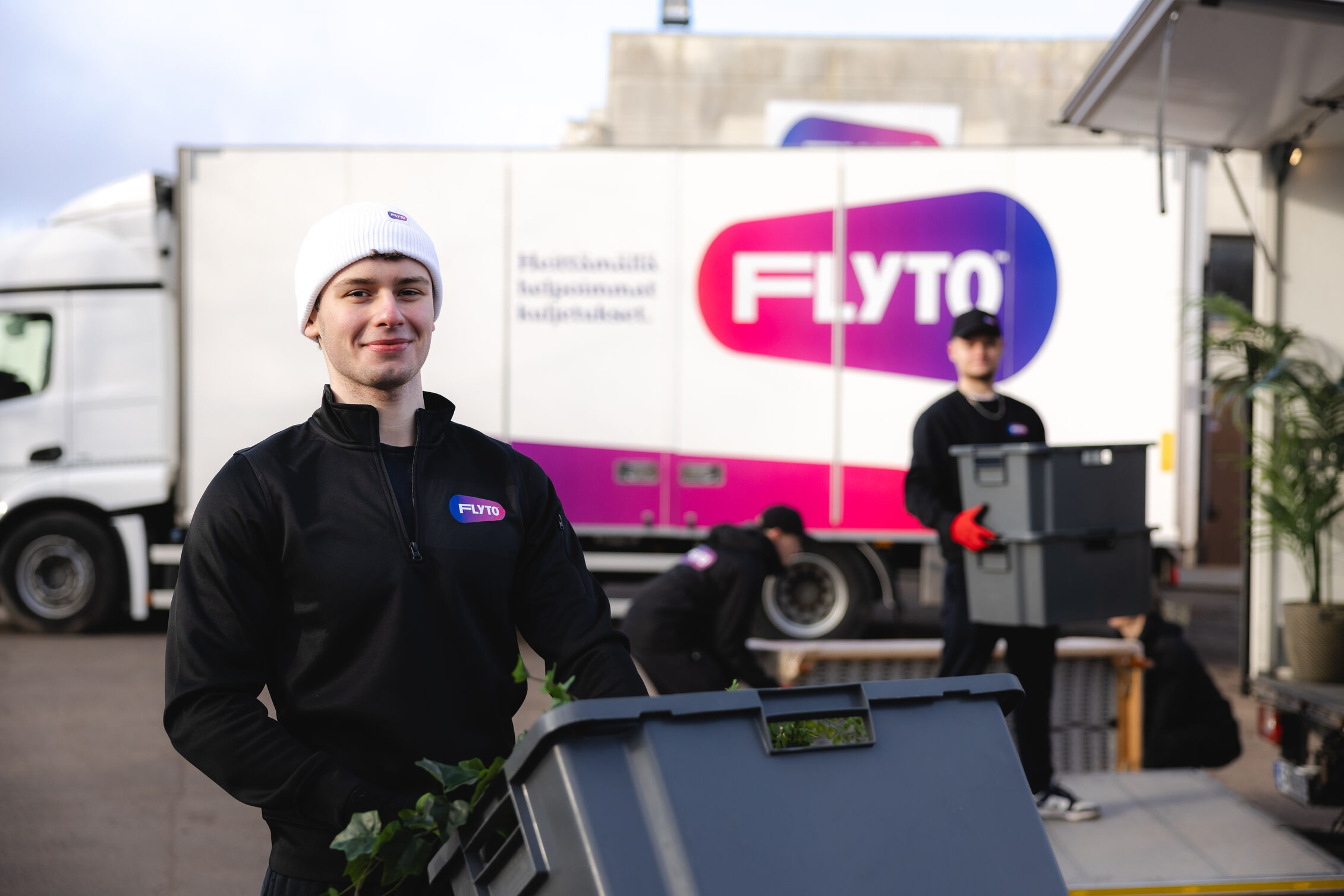
Flyto runs its own offices, warehouses, crews and vehicles across Northern, Central and Southern Europe, so the German collection, export documentation and port handling of your shipment stay in-house rather than being handed off blind. For the ocean and air legs plus destination handling in Indonesia, we work through a carefully vetted network of freight partners and trusted local agents on the ground in Jakarta, Bali and beyond, who manage barang pindahan clearance, quarantine coordination for pets, and last-mile delivery under our oversight.
Frequently asked questions
Do I need my KITAS before I can ship my household goods to Indonesia?
You need it confirmed, or your shipment sponsored under it, before the goods arrive — duty-free barang pindahan treatment under PMK 25/2025 is tied to your immigration status, and goods arriving without a valid basis for the exemption can be reassessed at full commercial duty.
How long can I wait after leaving Germany before importing my belongings to Indonesia?
PMK 25/2025 sets the window at goods arriving within 90 days before or after your own arrival in Indonesia; outside that window the duty-free treatment is at risk.
Do I have to deregister in Germany even if I keep German citizenship?
Yes — deregistration (Abmeldung) is a residence-registration requirement independent of citizenship, required under German federal registration law whenever you give up your only German address without a new German address to move into.
Will I owe German exit tax on my move?
Only if you hold at least 1% of a company (domestic or foreign) — ordinary employees, retirees and most private individuals without significant company shareholdings are not affected by §6 AStG, though your general German tax liability only fully ends once your residence and habitual abode are genuinely given up.
Can I bring my dog or cat without quarantine in Indonesia?
No — quarantine on arrival is standard procedure under Barantin rules regardless of vaccination history, though a complete, verified rabies-titer and documentation package minimizes delays and the risk of extended quarantine.
Can I import my German car?
Realistically no. Indonesia’s used-vehicle import prohibition covers ordinary personal imports; buying a vehicle locally after you have residency-based registration eligibility is the standard path.
Sources
- Zoll — Transferring residence to Germany
- Zoll — ATLAS-Ausfuhr (electronic export procedure)
- Zoll — Formen der Zollanmeldung (€1,000/1,000kg oral declaration threshold)
- Zoll — Provisions on the import of pet animals from non-EU states
- Bundesportal — Wohnsitz abmelden wegen Auswanderung
- Bundesministerium der Finanzen — Vordruck zur Anwendung der Wegzugsbesteuerung (§6 AStG)
- Hamburg Port Authority — Maritime shipping
- bremenports — Bremerhaven
- Direktorat Jenderal Bea dan Cukai — barang pindahan (PMK 25/2025)
- Bea Cukai — e-CD electronic Customs Declaration
- Bea Cukai — Barang Penumpang (cash/currency declaration threshold)
- Kantor Imigrasi (Direktorat Jenderal Imigrasi) — Izin Tinggal Terbatas (ITAS/KITAS)
- JDIH Kementerian Perdagangan — regulation database (barang dilarang impor / prohibited import goods)
- Badan Karantina Indonesia (Barantin) — official portal