

Moving from France to Indonesia (2026): Complete Guide

Relocating from France to Indonesia means clearing two very different administrative systems: France’s export rules and tax/residency exit process, and Indonesia’s import customs, immigration and quarantine regime for pets. This guide is written for a French resident — employee, retiree, or investor — moving household goods, and possibly a car, pet, or savings, from mainland France to Indonesia (Jakarta, Bali, or elsewhere). It covers both halves of the corridor, plus a short note on moving back from Indonesia to France.
Key takeaways
- Your Indonesian immigration status (KITAS/ITAS holder, diplomat, or returning citizen) determines whether your household goods qualify as duty-free "barang pindahan" — see the Directorate General of Immigration and Bea Cukai (DJBC).
- France requires no export customs declaration for personal effects and private vehicles when transferring your main residence outside the EU — only an itemized, dated, signed inventory and proof of the move, per the Direction générale des douanes et droits indirects (DGDDI).
- Household goods must reach Indonesia within 90 days before or after your own arrival to qualify for the import-duty exemption under the barang pindahan regime — Bea Cukai.
- Cars and motorcycles are excluded from Indonesia’s personal-effects duty exemption and are taxed at full import rates if brought in — Bea Cukai.
- Leaving France means notifying the tax authorities of your departure and filing form 2042-NR the year after you leave, reporting only your French-source income for the departure-year period — impots.gouv.fr.
- Registering with the French consulate in Indonesia (registre des Français établis hors de France) is free, valid 5 years, and recommended (compulsory only for specific procedures like census or scholarship requests) — France Diplomatie.
- Dogs and cats entering Indonesia need a rabies antibody titer test, an electronic prior-notice filing, and are inspected and cleared through licensed animal quarantine posts (e.g. Soekarno-Hatta) — Badan Karantina Indonesia.
- Carrying more than Rp 100 million (or foreign-currency equivalent) in cash into or out of Indonesia must be declared to customs — Sekretariat Kabinet RI.
1. Your Indonesian visa status decides your customs treatment
Indonesia’s duty-free household-goods regime ("barang pindahan") is tied directly to your immigration status, not simply to the fact that you are moving. It applies to Indonesian citizens who have lived abroad at least 12 consecutive months, to foreign nationals (WNA) relocating to Indonesia for work or study with an accompanying family, to civil servants, military personnel and diplomats posted abroad, and to families importing the belongings of an Indonesian citizen who died overseas (Bea Cukai). In practice, this means a French national moving to work in Indonesia needs a valid KITAS (Kartu Izin Tinggal Terbatas, limited stay permit), issued after conversion from a limited-stay visa (VITAS) at a local immigration office, before the duty exemption can be claimed at customs (Direktorat Jenderal Imigrasi). Arriving on a tourist visa or short visit permit (ITK) does not qualify you for the household-goods exemption — plan your visa/KITAS approval before your shipment departs France, since the 90-day import window (below) is measured against your own arrival, and a stalled visa can push your goods outside that window.
2. The France export side: customs, deregistration and tax exit
Customs authority. France’s customs and excise administration is the Direction générale des douanes et droits indirects (DGDDI), part of the Ministry for the Economy and Finance. For a transfer of your main residence outside the EU, DGDDI requires no export customs declaration for personal effects, household goods, or private (non-commercial) means of transport. Instead you must present: proof of the change of residence (passport, property deed or lease), an attestation from your landlord or town hall, and a detailed, valued, dated, paginated and signed inventory in duplicate (a third copy if you export through an inland customs office). Goods can leave France in one shipment or several over a one-year period, provided each partial shipment is noted on the inventory (DGDDI). Special export formalities (a DAU — Document Administratif Unique — declaration) apply to weapons and ammunition, precious metals, dual-use technology, protected wildlife species and cultural property, and a duty of up to 10% applies to exported platinum, gold and silver items, with a 6% flat-rate levy on jewelry, art and antiques worth over €5,000 per piece (DGDDI).
Tax residency exit. France taxes you as a resident up to your departure date and, from that date, only on French-source income, subject to the France–Indonesia tax treaty. In the tax return filed the year after you leave, you must declare your new foreign address and complete the supplementary form n°2042-NR, reporting only French-source income earned between your departure date and 31 December of the departure year (impots.gouv.fr — Formulaire n°2042-NR; general guidance at impots.gouv.fr). There is a dedicated checklist for what to close out and declare before leaving at impots.gouv.fr.
Deregistration. France has no single national "leaving" register to check out of at your mairie; instead, expatriates are strongly encouraged (though not legally required, except for specific procedures like census or scholarship applications) to register with the registre des Français établis hors de France at the French consulate covering their new Indonesian address. Registration is free, valid five years, and used for consular services, voting, and school/tax coordination (France Diplomatie).
3. Ports and transit: France to Indonesia
France’s two largest container gateways are Port of Le Havre (part of HAROPA PORT, the merged Seine-axis port authority covering Le Havre, Rouen and Paris, and France’s leading container port) and Port of Marseille-Fos, the largest French seaport by overall tonnage and the main Mediterranean gateway (Ministère chargé de la Mer; HAROPA PORT). On the Indonesian side, the principal entry point for containerized household-goods shipments is Tanjung Priok, Jakarta’s port, which handles more than half of Indonesia’s trans-shipment cargo traffic and is operated by state port company Pelindo (Pelindo — Pelabuhan Tanjung Priok).
As freight-industry estimates only (not official government transit-time figures), a full container (FCL) sea shipment from Le Havre or Marseille to Tanjung Priok typically takes 5–8 weeks port-to-port, depending on transshipment routing (often via Singapore or Colombo), plus 1–2 weeks for local customs clearance and delivery in Indonesia. Air freight for smaller or urgent shipments typically transits in 5–10 days door-to-door. Build in extra time for KITAS approval and Indonesian customs document review, which can add 2–4 weeks beyond the shipping transit itself.
4. The Indonesia import side: customs process
Indonesia’s household-goods import is governed by DJBC (Bea Cukai) regulation on "barang pindahan," most recently updated under PMK 25/2025 (Kementerian Keuangan / DJBC, via Kemlu). The importer (you) files a PIBK (Pemberitahuan Impor Barang Kiriman) electronically through the customs system, attaching a copy of your travel documents, a relocation/KITAS certificate in the prescribed format, and supporting documentation confirming you meet the barang pindahan criteria. Customs performs a physical inspection of the shipment; if the goods are cleared with no prohibited or restricted items, the office issues an SPPB (Surat Persetujuan Pengeluaran Barang), the release order (Bea Cukai). Two hard rules to plan around: goods must arrive no more than 90 days before or after your own arrival in Indonesia, and motor vehicles, motorcycles, watercraft and aircraft are explicitly excluded from the duty exemption and are subject to full import duty and tax if shipped (Bea Cukai). Even within the exemption, VAT (PPN) and income tax (PPh) on imports can still apply per standard Indonesian tax rules.
5. Pets: France export, Indonesia import
Leaving France. France itself does not run a pet "export" regime for outbound travel — requirements are set by the destination country and executed via an EU-mandated ("official") veterinarian. In practice your dog or cat will need an ISO-compliant microchip, a valid rabies vaccination, and an official international veterinary health certificate issued by that mandated veterinarian shortly before departure; the exact additional conditions (rabies antibody titer test, treatments, document lead times) are set by Indonesia as the destination country — see the requirements below and the general pet-travel guidance at agriculture.gouv.fr.
Entering Indonesia. Dogs and cats are classified as rabies-vector animals (HPR — hewan penular rabies) under Indonesian quarantine law. Entry requires a rabies antibody titer test result, an up-to-date vaccination record, a veterinary health certificate from the country of origin, and an electronic prior-notice filing before arrival; animals are inspected and cleared through a licensed animal quarantine post at the port or airport of entry, with possible post-arrival quarantine/observation (Badan Karantina Indonesia). Note that several rabies-free regions (including Bali) apply additional inter-island restrictions on rabies-vector animals even after they clear national entry — check with Badan Karantina Indonesia for your specific destination before booking transport.
6. Vehicles, money, and things people forget
Vehicles. As noted above, Indonesia does not extend the barang pindahan duty exemption to cars or motorcycles — full import duty, luxury tax and VAT apply, which for many vehicles makes importing a personal car from France financially impractical compared to buying locally (Bea Cukai).
Cash and currency. Anyone carrying cash or payment instruments worth Rp 100 million or more (or the equivalent in foreign currency) into or out of Indonesia must declare it to customs, under Peraturan Menteri Keuangan No. 100/PMK.04/2018 (amending PMK No. 157/PMK.04/2017); non-declaration or under-declaration risks an administrative fine of 10% of the (undeclared) amount, capped at Rp 300 million (Kementerian Keuangan / JDIH; explainer at Sekretariat Kabinet RI).
Things people forget. Confirm your KITAS/visa status is approved before your sea freight departs France, since the 90-day arrival window runs from your own entry date, not the shipment’s. Keep your itemized French export inventory — Indonesian customs will want a matching packing list for the PIBK filing. Restricted/prohibited items in Indonesian import law (firearms, certain publications, some plants and foodstuffs) apply regardless of the barang pindahan exemption, so check restrictions before packing. Finally, remember that de-registering from France is largely tax- and consulate-driven, not a single town-hall formality — the impots.gouv.fr and consular steps above are the two that actually matter administratively.
Reverse move: Indonesia to France
Moving back from Indonesia to France mirrors the process: Indonesian customs requires an export declaration for goods leaving the country (through DJBC’s standard export procedures, separate from barang pindahan which is an import concept), while France applies its own duty-free import regime for returning residents transferring their main residence back — you must show more than 12 months’ prior residence abroad and more than 6 months’ prior ownership/use of the goods, administered by DGDDI (France Diplomatie — Déménagement vers la France). Pets moving back into France from Indonesia (a non-EU, non-rabies-free-listed country) generally need a rabies antibody titer test taken at least 3 months before entry, plus a valid international health certificate from an official veterinarian (Ministère de l’Agriculture — FAQ import des animaux de compagnie).
How Flyto handles your France to Indonesia move
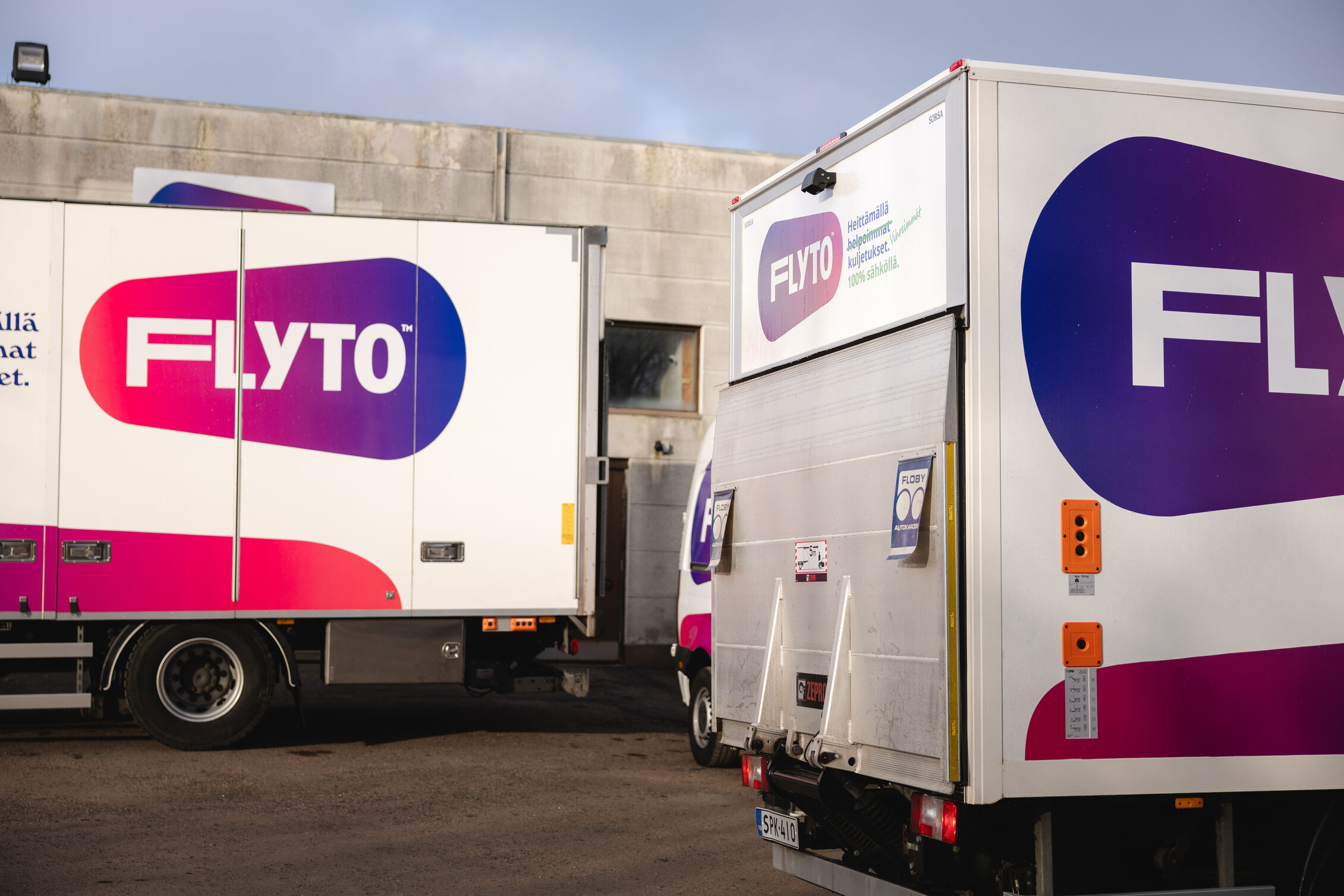
Flyto runs its own offices, warehouses, teams and vehicles across Northern, Central and Southern Europe, so the French collection, export documentation and consolidation for your shipment is handled in-house rather than outsourced blind. For the ocean or air leg to Indonesia and the final-mile delivery, we work through a carefully vetted network of subcontractor carriers and trusted local partners on the ground in Indonesia who handle customs brokerage, barang pindahan filing and last-mile delivery — combining our own European infrastructure with specialist local expertise where it matters most.
Frequently asked questions
Do I need a KITAS before my household goods can clear Indonesian customs duty-free?
Yes in practice — the barang pindahan exemption applies to foreign nationals relocating to Indonesia for work or study with family, which requires a limited stay permit (KITAS); a tourist or visit permit does not qualify (Bea Cukai; Ditjen Imigrasi).
Can I bring my car from France to Indonesia?
You can ship it, but it will not receive the household-goods duty exemption — cars and motorcycles are explicitly excluded and face full Indonesian import duty and tax (Bea Cukai).
Do I need to file anything with French customs before I leave?
No customs declaration is required for personal effects or private vehicles when transferring your main residence outside the EU — only an inventory and proof of the residence change presented at export (DGDDI).
How much cash can I carry into Indonesia without declaring it?
Below Rp 100 million (or foreign-currency equivalent); at or above that, declaration to Indonesian customs is mandatory (Kementerian Keuangan / JDIH).
What’s the biggest timing risk in this move?
Missing the 90-day window between your arrival in Indonesia and your shipment’s arrival — if your KITAS approval is delayed, your goods can land outside the duty-free window (Bea Cukai).
Do I still need to pay French tax after I move to Indonesia?
Only on French-source income earned after your departure date; report this using form n°2042-NR on the tax return filed the following year (impots.gouv.fr — Formulaire n°2042-NR).
Sources
- DGDDI — Transfert de résidence hors de l’Union européenne
- DGDDI — Déménagement hors de l’Union européenne
- impots.gouv.fr — Formulaire n°2042-NR (déclaration des revenus complémentaire)
- impots.gouv.fr — Je pars à l’étranger ou j’arrive en France
- impots.gouv.fr — Je pars vivre à l’étranger, quelles démarches dois-je accomplir ?
- France Diplomatie — S’inscrire au registre des Français établis hors de France
- France Diplomatie — Déménagement vers la France (retour)
- Ministère de l’Agriculture — Animaux de compagnie
- Ministère de l’Agriculture — FAQ modalités d’importation des animaux de compagnie
- Ministère chargé de la Mer — Acteurs, réseau et activités portuaires en France
- HAROPA PORT (Le Havre)
- Pelindo — Pelabuhan Tanjung Priok
- Bea Cukai (DJBC) — Barang Pindahan
- Kementerian Keuangan / DJBC — PMK 25/2025 Impor Barang Pindahan (slide, via Kemlu)
- Direktorat Jenderal Imigrasi — Izin Tinggal Keimigrasian (WNA)
- Badan Karantina Indonesia
- Kementerian Keuangan / JDIH — PMK 100/PMK.04/2018 (pembawaan uang tunai)
- Sekretariat Kabinet RI — Bawa Rp 100 Juta ke Luar Negeri Wajib Lapor