

Moving to Kuwait City from Abroad (2026): Complete Relocation Guide

Kuwait City is the whole country in one place: it is where the government sits, where the banks and oil companies keep their headquarters, and where the great majority of new arrivals actually live and work. Kuwait’s population is roughly two-thirds foreign, so the city is built around expatriate life — but it is also one of the most tightly regulated destinations in the Gulf. Your right to be here, to bring your family, to ship your furniture and even to see a doctor all hang off a single thread: your residency. This guide is written for someone moving to Kuwait City from abroad in 2026. It walks through residency first (because nothing else works without it), then the practical machinery of shipping and customs, and finally the things that decide whether you actually enjoy living here — money, heat, neighbourhoods and daily life. Every figure below is either sourced to an official or reputable authority or clearly labelled as an estimate.
Key takeaways
- Your residency (Iqama) and Civil ID are the gate to everything. Most private-sector expats hold an Article 18 work residence, sponsored by an employer registered with the Public Authority for Manpower — the visa is legally tied to that employer (kafala system).
- After your residence is stamped, you must register for a Civil ID with PACI (the Public Authority for Civil Information), normally within one month; the smart-card fee is KD 5 (reported by immigration advisories; PACI’s own portal was unreachable at the time of writing — verify current fees at paci.gov.kw).
- To sponsor your family (Article 22), the sponsor generally needs a minimum salary of about KD 800/month — raised from KD 550 — per 2024–2025 reforms reported by Gulf News and immigration firms (see Sources).
- Household goods travel by sea to Shuwaikh Port, Kuwait’s main commercial port next to Kuwait City, or to Shuaiba further south (Kuwait Ports Authority). Only a licensed local agent can clear your goods through Kuwaiti customs (trade.gov).
- Kuwait applies the GCC common external tariff of 5% on the CIF value of most dutiable goods; genuinely used personal effects are often cleared without duty in practice, but this is decided case-by-case (trade.gov).
- Alcohol and pork are totally banned imports, alongside pornographic material, gambling machines, narcotics, used medical equipment and cars more than ten years old (trade.gov). Do not pack them — a single prohibited item can hold up an entire container.
- There is no personal income tax in Kuwait — on salaries, wages or other employment income — for nationals and expatriates alike (PwC Tax Summaries, reviewed July 2026).
- Expats must pay a mandatory annual health fee (the MOH/Afya scheme via Dhaman), KD 100 per person per year since December 2025, and it must be current for your residency to be renewed (reported by Gulf News; see Sources).
- Kuwait City has one of the hottest climates on Earth — summer highs routinely 44–50 °C, and the nearby station of Mitribah recorded 53.9 °C in July 2016 (Britannica). Plan your physical move for the cooler months if you can.
Residency: the thread everything hangs on
In Kuwait, you do not “move first and sort paperwork later.” The legal sequence runs the other way. Almost every working expat enters on an Article 18 residence permit — the standard private-sector work residency. It is the most common status held by foreigners in the country, and it exists only because an employer wants to hire you. Your company, acting as your kafeel (sponsor), applies for a work permit through the Public Authority for Manpower (PAM), then processes your residence stamp through the Ministry of Interior (moi.gov.kw). This is the essence of Kuwait’s kafala system: your right to live and work here is bound to that one employer, and changing jobs means transferring the sponsorship, not simply resigning.
The practical consequence for a mover is timing. You cannot meaningfully do the big things — sign a long lease, register a car, open certain bank accounts, sponsor your spouse, or clear a shipping container — until your residence is issued and your Civil ID is in hand. A sensible arrival plan is: land, complete the medical and fingerprinting steps your employer arranges, get the residence stamp, then register with PACI.
The Civil ID is the card you will use every single day — for the pharmacy, the bank, government portals and building access. It is issued by the Public Authority for Civil Information (PACI). After the Ministry of Interior stamps your residence, your data is transferred to PACI and you must register for a first-time Civil ID, generally within one month; late registration attracts a fine. Reported requirements include your passport, the residence stamp, photos, a blood-group certificate, your sponsor’s Civil ID copy and proof of address, with a smart-card fee of KD 5. Kuwait’s official services portal (e.gov.kw) and PACI’s site were unreachable from our network at the time of writing, so treat these figures as current-but-verify: confirm them on paci.gov.kw before you rely on them.
Two 2025 fee changes are worth flagging because they hit your budget directly. First, the Article 18 annual residence fee was set at KD 20 effective 23 December 2025 (reported by immigration advisories — see Sources). Second, the mandatory health fee doubled to KD 100 per person per year, covered below. Both are conditions of renewal, so factor them in for every family member.
Bringing your family
If you are relocating with a spouse or children, they come on a dependent (family) residence — Article 22. This is where the salary threshold bites. Following reforms reported through 2024–2025 by Gulf News and immigration firms such as Fragomen, the sponsor generally needs a minimum monthly salary of around KD 800 to sponsor family members — up from the older KD 550 figure — and the old blanket university-degree requirement has been relaxed where the salary test is met (with some profession-specific and age-specific nuances remaining). Because these rules have moved repeatedly, and because the authoritative source is the Ministry of Interior rather than a news outlet, confirm the exact current threshold and document list for your profession before you commit to a timeline for the family’s move. The order matters: you normally need your own residence and a suitable salary on record first, then you sponsor dependents.
Shipping your household goods to Kuwait City
For a full household, the realistic option from Europe is sea freight. Air freight exists and is fast, but the cost makes it sensible only for a small volume of essentials you need immediately. Your container discharges at Shuwaikh Port, which the Kuwait Ports Authority describes as the country’s main commercial port, sitting in the Shuwaikh industrial area right next to Kuwait City — ideal for a city move because the final road leg is short (kpa.gov.kw). Larger or industrial consignments sometimes route through Shuaiba Port to the south. Which port your goods use is a decision for your freight forwarder based on the sailing and the equipment.
The three volume options are the same as anywhere in the trade:
- 20ft container (FCL) — roughly the contents of a 1–2 bedroom home. You get exclusive use of the box, so it is sealed at origin and only opened for customs, which is the cleanest option for a family with a full flat of furniture.
- 40ft container (FCL) — a 3–4 bedroom house, or a smaller home plus a vehicle. Best value per cubic metre if you genuinely fill it.
- LCL (groupage / shared container) — you pay for the cubic metres you use and share the box with other shipments. Right for a studio, a partial move or a few pallets. It usually takes a little longer end-to-end because it is consolidated and de-consolidated with other cargo.
Transit time from Northern Europe to Kuwait is typically several weeks port-to-port, plus packing, inland haulage at both ends and customs clearance — treat door-to-door as a matter of weeks, not days, and get a firm estimate for your specific origin as part of your quote. The single most important structural fact about Kuwaiti clearance is this: you cannot clear your own shipment. Kuwait’s import regime requires a locally licensed party — a Kuwaiti citizen or a Kuwait-based, registered broker — to handle clearance, and importers of many product categories must be registered with the Ministry of Commerce and Industry (trade.gov). In practice your international mover partners with a licensed Kuwaiti agent who lodges the paperwork against your residency. That is why your Iqama and Civil ID have to be ready when the box lands: the agent clears personal effects for a legal resident, and the manifest must match your identity documents.
Standard documents for a personal-effects clearance include your passport and residence/Civil ID, a detailed packing list / inventory (ideally itemised and valued), the bill of lading, and often a signed authorisation letter to your clearing agent. Pack and label methodically: a clear, honest inventory is your best defence against a slow, invasive inspection.
Customs, duty and the strict prohibited list
Two things about Kuwaiti customs matter more than anything else: the duty rate, and the ban list.
Duty. Kuwait is part of the GCC customs union and applies the common external tariff of 5% on the CIF value (cost, insurance and freight) of most dutiable imported goods — a rate formally adopted on 1 April 2003 (trade.gov). There are notable exceptions — hundreds of basic foodstuffs and medical/pharmaceutical items are exempt — while tobacco is taxed at 100%. For a household mover the key question is whether your used personal effects attract that 5%. The honest answer is that genuinely used household goods are frequently cleared without duty in practice, but Kuwait decides this case-by-case, and brand-new or boxed items can be treated as dutiable. Do not promise yourself a duty-free clearance; ask your licensed agent to confirm the likely treatment of your specific inventory before the container sails. If you are shipping new appliances or high-value electronics still in the box, budget for the possibility of duty on those items.
The ban list — take this seriously. Kuwait is a conservative, Islamic country and its import prohibitions are strict and strictly enforced. Kuwait prohibits the importation of pork, alcoholic beverages, gambling machines, pornographic materials, narcotics, used medical equipment, and automobiles more than ten years old; firearms and explosives require special procedures (trade.gov). The two that catch Western movers off guard are alcohol and pork, both of which are completely banned — there is no personal-allowance exception, no “just a few bottles in the container.” Alcohol is illegal in Kuwait full stop, not merely restricted at the border. A single bottle discovered in your shipment can trigger a full inspection, delays and penalties that ripple across the whole consignment. Before you pack, physically walk through your kitchen, drinks cabinet, garage and pantry and remove anything on the list. The ten-year rule also means an older beloved car generally cannot come — check the exact age calculation before you plan to ship a vehicle.
Money: no income tax, and salaries built for it
The financial headline for anyone moving to Kuwait City is simple and genuinely unusual: there is no personal income tax. Kuwait imposes no PIT on individuals — no tax on salaries, wages or other employment income — and the rule applies equally to Kuwaiti nationals and expatriates (PwC Tax Summaries, last reviewed July 2026). There is no annual personal tax return to file on employment income and no payroll income tax. For most arrivals that means the gross salary in your contract is very close to what actually reaches your account — a stark contrast to the high-tax European countries many people relocate from. (Be aware of the flip side: no domestic tax also means no local tax credits, and your home country may still tax you depending on its own residence rules — take advice on your specific citizenship.)
The currency is the Kuwaiti Dinar (KD), one of the highest-valued currencies in the world, pegged to a basket of currencies. Because a single dinar is worth several euros or dollars, prices can look deceptively “small” on the tag — internalise the exchange rate early so a KD 800 rent or a KD 100 fee lands in your head at its real weight. Combine tax-free income with employer packages that often include housing or a housing allowance and, sometimes, schooling support, and Kuwait can be a strong saver’s posting — but only if you negotiate the package with the cost of city living in mind.
The climate: plan your move around the heat
Kuwait City has, by any measure, one of the most extreme summer climates of any capital on Earth. It is a subtropical desert climate: very mild winters and brutally hot, dry summers. In the long dry season from roughly April to September, daytime temperatures ordinarily reach the mid-40s Celsius and on occasion approach the mid-50s; the weather station at Mitribah, north of the city, recorded 53.9 °C in July 2016 — among the highest temperatures reliably recorded anywhere on the planet (Britannica; Mitribah). Rainfall is scarce — on the order of 25–180 mm a year, falling mostly between October and April — and summer brings dust and occasional sandstorms.
This has two direct consequences for your move. First, time the physical move for the cooler months if you possibly can (roughly November to March). Carrying furniture into a fourth-floor flat in 48 °C is miserable and slow, and heat-sensitive items — candles, certain electronics, vinyl records, some medications — do not enjoy a container baking on a summer dock. Second, life indoors is life in air-conditioning, essentially year-round; factor the electricity and the reality that outdoor daytime life largely pauses in peak summer into your expectations of the city.
Where to live in and around Kuwait City
“Kuwait City” in everyday speech means the whole built-up metropolitan area along the coast, not just the downtown high-rises. The following are the areas expats most often land in. Rents move constantly, so the notes below are about character, not price — get current figures from a local agent.
- Kuwait City proper (the CBD — Sharq, Dasman, Qibla) — the downtown core: banks, ministries, the towers and the waterfront. Convenient for finance and government workers who want a short commute and city energy; quieter residentially in the evenings.
- Salmiya — the classic first stop for expats. Dense, walkable by Kuwaiti standards, packed with shops, restaurants and malls (The Avenues is nearby), and full of apartment buildings. Cosmopolitan and convenient, if busy.
- Hawally — adjacent to Salmiya, very densely populated and popular with a wide mix of expat communities; generally more affordable, with lots of apartments and everyday amenities.
- Salwa — a well-established, quieter residential area to the south-east, favoured by families who want villas and a calmer, greener feel while staying within reach of the coast.
- Jabriya — a settled residential district known for housing, schools and proximity to major hospitals and the university; popular with professional families.
- Mangaf (and neighbouring Fahaheel/Mahboula) — further south towards the Ahmadi oil area. Common with oil-and-gas and industry workers, often more affordable, with a strong seaside-suburb feel — but a longer commute into the city centre.
A word on getting around: Kuwait City is heavily car-dependent. There is no metro, public bus coverage is limited and aimed largely at lower-income commuters, and the summer heat makes walking impractical for much of the year. Almost every expat drives or relies on ride-hailing. Where you live is therefore, in practice, a decision about your commute — choose a neighbourhood close to your workplace or school run, because a “cheap” area an hour away on congested roads is rarely a bargain once the daily drive is counted.
Daily life: language, healthcare, driving and social norms
Language. The official language is Arabic, and you will see it on all government paperwork and signage. In practice, English is very widely used in business, healthcare and the expat economy, and you can function day-to-day in Kuwait City in English. Learning even a little Arabic is warmly received and helps enormously with officials, landlords and neighbours — but it is not a barrier to arriving.
Healthcare. Expats must pay a compulsory annual health fee to access the public system — the MOH/Afya scheme, administered through the government insurer Dhaman. As of December 2025 this fee was doubled to KD 100 per person per year, and it must be paid and current or the residency-renewal system will reject your application automatically (reported by Gulf News and insurance/immigration sources — see Sources). That fee buys subsidised access to government hospitals and primary health centres at expat rates; it does not cover private hospitals or treatment abroad. Many professional packages therefore add private medical insurance on top — worth negotiating, because Kuwait’s private clinics are where many expats prefer to be treated.
Driving. Because the city is car-centric, sorting a licence early matters. Expats need to convert to a Kuwaiti driving licence, and eligibility is tied to your residency, salary and (often) qualifications — another reason your Iqama has to come first. Traffic is heavy and driving styles are assertive; give yourself time to adjust.
Social norms — handled honestly. Kuwait is a conservative, Islamic society, and it is more restrictive than the more liberal Gulf hubs. The clearest examples for newcomers: alcohol is entirely illegal — not sold, not served, not legally possessed — so nightlife revolves around dining, cafes and private gatherings rather than bars. Dress modestly in public, especially in government buildings, malls and traditional areas (this applies to men and women; you do not need to overthink it, but shorts-and-vest beachwear is not street wear). During Ramadan, eating, drinking or smoking in public during daylight hours is prohibited and taken seriously. Public displays of affection, and behaviour that would pass unremarked in Europe, can cause genuine offence or legal trouble. None of this makes Kuwait City an unwelcoming place — expats live full, comfortable lives here — but it rewards people who arrive informed and respectful rather than expecting a Dubai-style expat bubble.
How to sequence your move
Pulling it together, a clean order of operations looks like this:
- 1. Secure the job and the work permit. Everything starts with an employer sponsoring your Article 18 permit through PAM.
- 2. Get your residence stamped and register your Civil ID with PACI (within a month). Pay the residence and mandatory health fees.
- 3. Only now, commit to the big things — sign a lease in the neighbourhood that suits your commute, and start your family’s Article 22 process if your salary qualifies.
- 4. Book your shipping to align with your residency. The container should arrive when your Iqama and Civil ID are ready, because a licensed local agent clears personal effects against your resident status.
- 5. Pack clean. Remove every prohibited item — alcohol and pork above all — and prepare an honest, itemised inventory.
- 6. Move in the cooler season if you can to spare yourself, your movers and your belongings the summer heat.
Planning your move to Kuwait City?
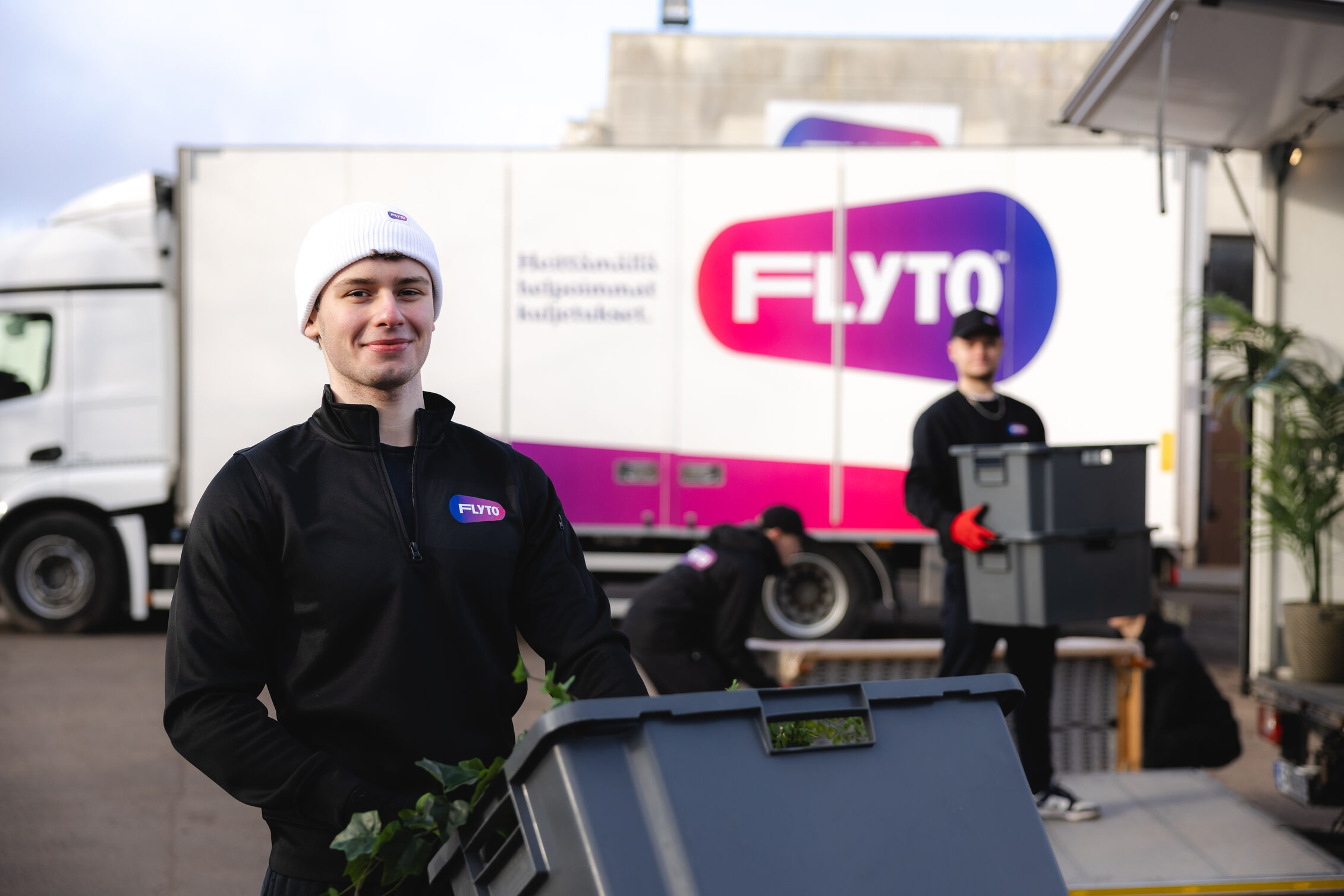
Flyto coordinates international removals to Kuwait end-to-end — sea freight to Shuwaikh, licensed local clearance and settling-in — with one specialist who stays with you from the first quote to the last box. Get an instant price in about a minute, or talk to a specialist.
For country-specific paperwork on the departure side, see our Kuwait moving guides — for example, the detailed Moving from the UK to Kuwait and Moving from Germany to Kuwait route guides — or read more about our relocation services to and from Kuwait.
Frequently asked questions
Can my container clear customs before my residency is issued?
Practically, no. Kuwait clears personal effects for legal residents through a licensed local agent, so plan for your Iqama and Civil ID to be ready when the shipment lands (trade.gov).
Will I pay duty on my household goods?
The GCC 5% tariff on CIF value applies to dutiable goods such as new, boxed items; genuinely used personal effects are often cleared without duty in practice, but Kuwait decides case-by-case — confirm with your clearing agent before shipping (trade.gov).
What’s the single biggest packing mistake?
Packing a prohibited item — alcohol or pork especially, both of which are completely banned — which can hold up your entire container at Kuwaiti customs (trade.gov).
Do I really pay no income tax?
Correct — Kuwait imposes no personal income tax on individuals, nationals or expatriates, on salaries or other employment income (PwC Tax Summaries). Your home country may still tax you under its own rules.
How much salary do I need to bring my family?
The reported minimum for family (Article 22) sponsorship is around KD 800/month, raised from KD 550 — but the rule has changed repeatedly, so confirm the current threshold and documents for your profession with the Ministry of Interior before planning your family’s move (see Sources).
Which port will my goods arrive at?
Usually Shuwaikh Port, Kuwait’s main commercial port next to Kuwait City; larger or industrial cargo may route through Shuaiba (Kuwait Ports Authority).
Can I bring my car?
Only if it is under the age limit — Kuwait bans the import of automobiles more than ten years old — and it must clear through a licensed agent like the rest of your goods (trade.gov).
Sources
- PwC Tax Summaries — Kuwait: Taxes on personal income (no personal income tax; reviewed July 2026)
- International Trade Administration (trade.gov) — Kuwait import tariffs (GCC 5% common external tariff on CIF; tobacco 100%)
- International Trade Administration (trade.gov) — Kuwait prohibited and restricted imports (pork, alcohol, cars >10 years, etc.)
- International Trade Administration (trade.gov) — Kuwait import requirements and documentation (licensed local clearance; import licensing)
- Kuwait Ports Authority — Shuwaikh Port (main commercial port near Kuwait City)
- Kuwait Ministry of Interior (moi.gov.kw) (residence permits / Iqama authority)
- Public Authority for Civil Information — PACI (paci.gov.kw) (Civil ID; portal unreachable at time of writing — verify current fees)
- Kuwait Government Online (e.gov.kw) (official services portal; returned 403 at time of writing)
- Encyclopaedia Britannica — Kuwait: Climate (desert climate; summer 44–54 °C; rainfall 25–180 mm)
- Mitribah (53.9 °C recorded July 2016)
- Fragomen — Kuwait family visa eligibility changes (Article 22 rules; salary/degree reforms)
- Gulf News — Kuwait raises minimum salary for family visas (KD 800 threshold reported)
- Gulf News — Kuwait obligatory health insurance for expats (mandatory MOH/Dhaman health fee; KD 100/person/year from Dec 2025)