

Moving from Austria to Kuwait (2026): Complete Guide

Relocating from Austria to Kuwait is a two-country customs project, not a single shipment. On the departure side you are exporting household goods out of the EU customs territory through Austria’s national customs authority, closing your Austrian residence registration, and ending your Austrian tax residency. On the arrival side you are importing "personal effects" into a Gulf state whose customs clearance depends entirely on your Kuwaiti residency status. This guide covers both halves for anyone leaving Austria for Kuwait — typically professionals moving for work in the oil, engineering, finance or education sectors — plus a short note for people making the reverse move back to Austria. Every rule below links to an official government source.
Key takeaways
- Since 1 January 2021 there is one national customs authority handling your export: Zollamt Österreich (Customs Office Austria), reachable through the Federal Ministry of Finance (BMF).
- Exports from Austria are lodged electronically through the EU’s e-customs systems, and exit from the EU is confirmed via the Export Control System (ECS) (BMF).
- You must de-register your Austrian residence (Abmeldung) within three days before or after moving out — it is free and notifies other authorities of your departure (oesterreich.gv.at).
- Giving up your Austrian domicile and habitual abode ends unlimited (worldwide) income-tax liability; after that only Austrian-source income is taxed (USP).
- Kuwait clears household shipments as personal effects only once you hold Kuwaiti residency (Civil ID / residence visa); clearance runs through the General Administration of Customs (Kuwait International Airport – Customs).
- Kuwait’s main gateway for containerised household goods is Shuwaikh Port, the country’s main commercial port (Kuwait Ports Authority).
- Bringing a dog or cat to Kuwait requires an import permit from the Public Authority for Agriculture Affairs and Fish Resources (PAAAFR), plus a microchip, rabies vaccination and an endorsed veterinary health certificate (USDA APHIS – Pet Travel to Kuwait).
- Carrying EUR 10,000 or more in cash out of the EU must be declared to Austrian customs (BMF).
1. Your Kuwaiti visa status decides the customs treatment
The single most important fact about this move is that Kuwait treats your shipment based on your immigration status, not on what is in the boxes. To clear a household shipment as duty-relieved personal effects, you must already be — or be in the process of becoming — a Kuwaiti resident, which in practice means holding a work/residence visa and the Civil ID issued to residents. A shipment that arrives before your residency is settled can sit in bonded storage accruing charges, because the consignee has no standing to clear personal effects.
The practical sequence is therefore straightforward: secure your Kuwaiti employment and residence visa first, time your goods so they arrive after (not before) your residency is in place, and have your passport with the residence stamp and Civil ID ready for the customs broker. Clearance itself is handled by Kuwait’s General Administration of Customs (Kuwait International Airport – Customs). Plan the shipping timeline around the visa timeline, not the other way around.
2. The Austria export side
The authority. Austria merged its regional customs offices into a single body, Zollamt Österreich, with nationwide competence from 1 January 2021 (BMF). It sits under the Federal Ministry of Finance and runs the electronic e-customs environment for declarations (BMF – E-Customs).
The export declaration. Because Kuwait is outside the EU, your goods leave the EU customs territory under the export procedure. The goods are presented to the customs office of export, the declaration is submitted electronically, and the office of export sends the office of exit the declaration data through the Export Control System (ECS), which returns the exit confirmation (BMF – Export procedure). In practice your moving company or freight forwarder lodges this declaration on your behalf.
Thresholds. For commercial goods, an oral declaration at the customs office of exit is only possible in limited circumstances, and it is never allowed for goods subject to prohibitions, restrictions or other special formalities (European Commission – Exportation). Under the EU’s Union Customs Code (Delegated Regulation (EU) 2015/2446, Art. 137), that oral-declaration option is in any case capped at goods not exceeding EUR 1,000 in value or 1,000 kg in net mass. A full household move normally exceeds this, so an electronic export declaration is the standard route; a detailed, valued inventory is what makes it possible.
De-registration. Anyone giving up accommodation in Austria must file an Abmeldung with the registration authority (the municipal office, or in Vienna the district office) within three days before or up to three days after moving out. It can be done in person, by post, or online with ID Austria, and there is no fee (oesterreich.gv.at). Keep the confirmation — it is your proof of departure for tax and administrative purposes.
Tax exit. Austrian income tax knows two regimes. If you have a domicile or habitual abode in Austria you have unlimited liability on worldwide income — and a stay of six months makes unlimited liability apply retrospectively. If you have neither, you have limited liability, taxed only on Austrian-source income (USP). Genuinely giving up your Austrian home therefore ends unlimited liability. Because departure can trigger exit-taxation on the unrealised gains of certain assets (for example significant shareholdings), confirm your position with Finanzamt Österreich before you leave.
3. Ports and transit
Austria is landlocked, so there is no Austrian seaport. Sea-freight household containers leave the country by road or rail to a coastal port and load there. Two corridors dominate: the North Sea ports (Hamburg, Bremerhaven, Rotterdam, Antwerp) and the North-Adriatic ports (Koper in Slovenia, Trieste in Italy), the latter often shorter for Gulf-bound cargo via the Suez Canal. Inland, Austria’s own logistics hub is the Port of Vienna (Hafen Wien), a trimodal Danube port comprising Freudenau, Albern and the Lobau tank harbour (Hafen Wien), used for consolidation and warehousing rather than ocean loading. Air freight and accompanied baggage move through Vienna International Airport (VIE).
On the Kuwait side, the main gateway for containerised household goods is Shuwaikh Port, described by the operator as Kuwait’s main commercial port for general cargo and containers; Shuaiba is the main industrial port and Doha Port a regional commercial port (Kuwait Ports Authority). Air shipments arrive at Kuwait International Airport.
Transit times (freight-industry estimates, not official figures): door-to-port sea transit from Austria to Kuwait via an Adriatic port commonly runs about 4–7 weeks, and via a North Sea port often 5–8 weeks, before customs clearance. Air freight typically clears in 1–2 weeks. Treat these as planning ranges only — actual sailing schedules, transhipment and Suez routing vary week to week.
4. The Kuwait import side
Once your residency is in place, your customs broker presents the shipment to the General Administration of Customs (Kuwait International Airport – Customs). Used household goods and personal effects imported for your own use in your Kuwaiti home are the standard category, and the paperwork the broker will assemble includes your passport showing the residence visa, your Civil ID, the original bill of lading or air waybill, and a detailed, valued packing list in which every carton is itemised. Kuwaiti customs physically inspects incoming personal-effects shipments, so an honest, itemised inventory speeds clearance and a vague one delays it.
Kuwait enforces strict prohibitions: alcohol, pork and pork products, and material considered offensive to public morals or religion are not permitted, and firearms, medicines and printed/media material can be restricted or require prior approval. Because Kuwait applies these rules seriously — and because a single prohibited item can hold up a whole container — screen your inventory against current customs guidance before you pack, and confirm the current duty treatment and any residency thresholds directly with the General Administration of Customs, as these are set under the GCC Common Customs framework.
5. Pets
Leaving Austria. Austria itself imposes no special export conditions on taking a pet out of the country — there is no export quarantine, and compliance is governed by the destination country’s entry rules; the Austrian authority for animal border matters is the Bundesamt für Verbrauchergesundheit (BAVG) (BAVG). Note that BAVG flags a separate rule for return trips: bringing a dog, cat or ferret back into the EU from most third countries requires a rabies antibody (titre) test, ideally done before departure — relevant if you ever plan to move back with the animal.
Entering Kuwait. Kuwait’s requirements are the binding ones. Importing a dog or cat needs an import permit from the Public Authority for Agriculture Affairs and Fish Resources (PAAAFR), an ISO-standard microchip, a valid rabies vaccination, and a government-endorsed veterinary health certificate issued shortly before travel; Kuwait also applies country-of-origin and breed restrictions and limits on numbers (USDA APHIS – Pet Travel to Kuwait). Requirements and permitted origin countries change, so confirm the current PAAAFR rules before booking the animal’s flight, and start the microchip-then-rabies sequence early because the vaccination timing windows are strict.
6. Vehicles, money and things people forget
Vehicles. A car exported from Austria is handled on the export declaration like any other good, but importing it into Kuwait is the harder half: vehicles are dutiable under the GCC common tariff and must meet Kuwaiti standards and registration rules, so verify eligibility, age limits and duty with the General Administration of Customs before shipping — for many movers, selling the car in Austria is cheaper than importing it.
Money. Leaving the EU with EUR 10,000 or more in cash (including bearer instruments and high-purity gold) must be declared to Austrian customs, and undeclared cash can be seized (BMF – Cash controls). Kuwait applies its own arrival cash-declaration rule under the General Administration of Customs, so declare currency on entry as well.
Things people forget: cancel or transfer Austrian utilities, insurance and the GIS/broadcast and municipal registrations tied to your address; keep your Abmeldung confirmation; obtain apostilled copies of birth, marriage and qualification certificates before you leave (they are needed for Kuwaiti residency and schooling); and settle any final Austrian tax return. Do not ship alcohol, pork or restricted media "by accident" — it is the fastest way to lose a whole container at Shuwaikh.
How Flyto handles your Austria to Kuwait move
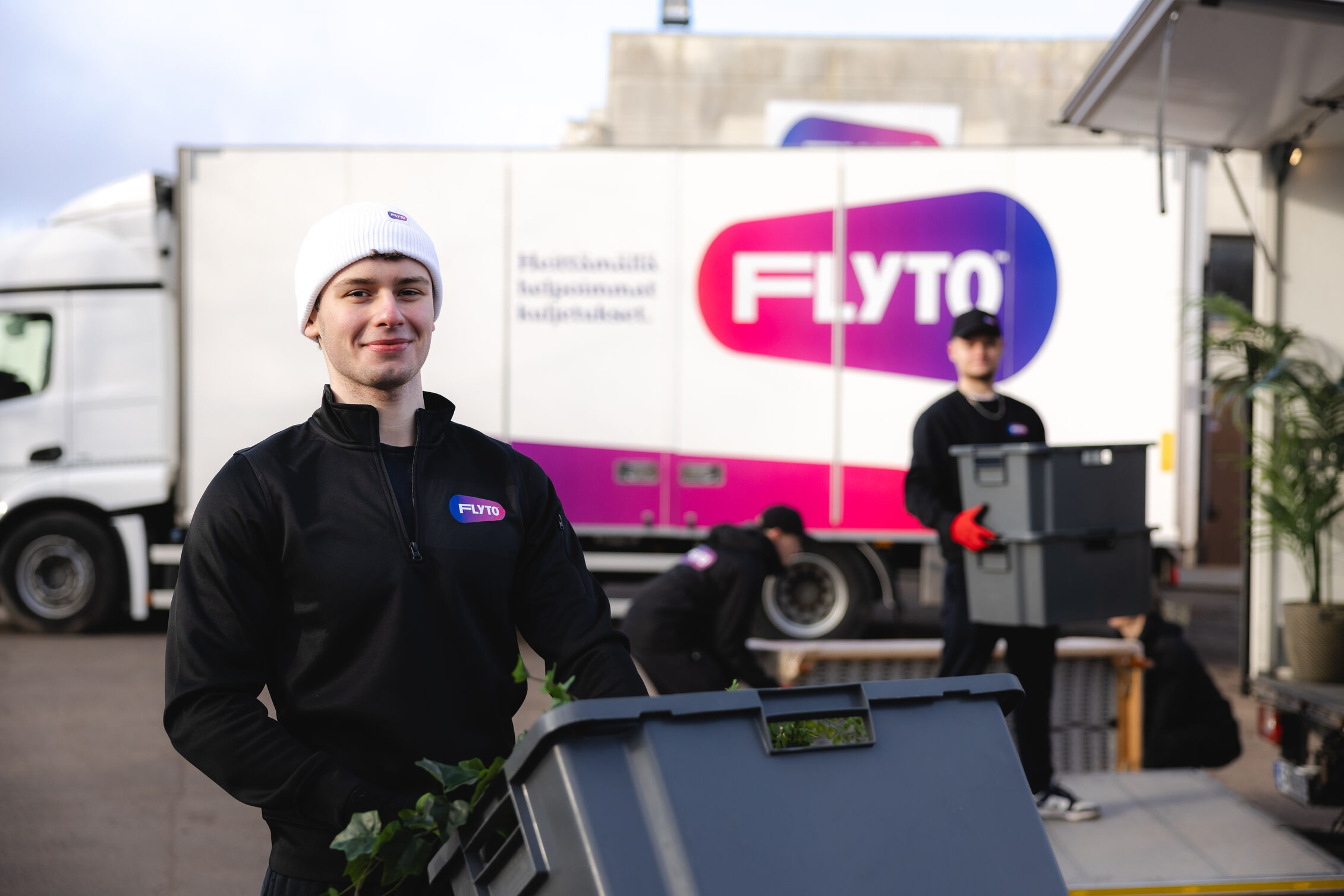
Flyto runs strong in-house operations across Europe — our own offices, warehouses, teams and vehicles in Northern, Central and Southern Europe — which means the Austrian packing, export documentation and inland leg are handled directly by people we manage. For the ocean or air leg and the Kuwait arrival we combine a carefully chosen network of vetted partners and subcontractors with trusted local agents in Kuwait for customs clearance and final delivery. We coordinate the whole corridor end to end without pretending to own every mile of it.
Frequently asked questions
Should my goods arrive before or after I get my Kuwaiti residency?
After. Kuwait clears household goods as personal effects on the basis of your residency and Civil ID, so a shipment landing before your residency is settled risks bonded-storage charges (Kuwait International Airport – Customs).
Do I have to de-register in Austria if I’m moving abroad?
Yes. The Abmeldung is filed with your municipal registration authority within three days before or after moving out, it is free, and it can be done online with ID Austria (oesterreich.gv.at).
Who actually files the Austrian export declaration?
Your mover or freight forwarder lodges it electronically through Austria’s e-customs environment, and exit from the EU is confirmed via the ECS (BMF – Export procedure).
Can I bring alcohol from my Austrian home?
No. Alcohol is prohibited in Kuwait; do not include it in your shipment. Screen your inventory against the General Administration of Customs rules before packing (Kuwait International Airport – Customs).
What do I need to bring my dog?
A PAAAFR import permit, an ISO microchip, a valid rabies vaccination and an endorsed veterinary health certificate, subject to breed and origin restrictions (USDA APHIS – Pet Travel to Kuwait). Austria itself sets no export conditions (BAVG).
What about moving back from Kuwait to Austria?
Returning removal goods can enter Austria free of import duty and VAT under the relocation-goods relief, provided you transfer your normal place of residence (at least 185 days per year) and import the goods within twelve months, declared to Zollamt Österreich (BMF – Definitions of relocation goods). A returning pet needs the rabies titre test noted above (BAVG).
Sources
- BMF – Customs contact / Zollamt Österreich
- BMF – Export procedure (ECS)
- BMF – E-Customs
- BMF – Definitions of relocation goods
- BMF – Cash controls
- European Commission (Taxation and Customs Union) – Exportation
- Union Customs Code – Delegated Regulation (EU) 2015/2446 (oral declaration, Art. 137)
- oesterreich.gv.at – De-registration of residence
- USP.gv.at – Income tax liability
- BAVG – Travelling with pets from Austria
- USDA APHIS – Pet Travel from the US to Kuwait (PAAAFR requirements)
- Kuwait Ports Authority
- Kuwait International Airport – Customs (General Administration of Customs)
- Port of Vienna (Hafen Wien)