

Moving from Poland to Kuwait (2026): Complete Guide

Relocating from Poland to Kuwait means running two separate customs systems back to back: an export clearance out of the European Union on the Polish side, and an import clearance into a Gulf Cooperation Council state on the Kuwaiti side. Neither half works without the other. Your shipment leaves the EU customs territory under an electronic Polish export declaration, travels by sea or air from a Baltic port or Warsaw airport, and then has to be cleared into Kuwait against your residence status there. This guide is written for a resident of Poland — Polish national or long-term foreign resident — moving household goods, and where relevant a pet or a vehicle, to Kuwait. It covers both directions, including a short note on returning to Poland later.
Key takeaways
- Your Kuwaiti residence status decides everything on arrival: personal-effects clearance and pet permits are tied to holding (or sponsoring through an employer) a valid residence permit, since only nationals import fully in their own name and expatriates clear through their sponsor (Kuwait Gov Online — Customs).
- The Polish customs authority is the National Revenue Administration (Krajowa Administracja Skarbowa, KAS), and every export is lodged electronically through the PUESC portal using the AES (Automatic Export System) (PUESC — Export).
- Leaving Poland for good, you should de-register your permanent residence (wymeldowanie) — free of charge, online or at the municipality (Gov.pl — De-register from permanent residence).
- Polish tax residency turns on your centre of vital interests and the 183-day test; moving that centre abroad shifts you from unlimited to limited tax liability (podatki.gov.pl — Tax residence).
- Poland’s main sea gateways are the Port of Gdańsk (Baltic Hub) and the Port of Gdynia (Baltic Container Terminal), the country’s leading container terminals (BCT Gdynia).
- Pets need an ISO microchip, a valid rabies vaccination and an official health certificate, plus — for Kuwait — an import permit obtained in advance from PAAAFR (Główny Inspektorat Weterynarii; Kuwait MOFA — Importing pets).
- Kuwait prohibits alcohol, pork and pork products, and narcotics, and restricts certain printed and media material, regardless of your residence status (Kuwait Government — General Administration of Customs).
1. Why your Kuwait immigration status drives the customs treatment
Kuwait has no "diplomatic-style" duty-free entitlement for ordinary movers; instead, the right to import used household goods flows from your residence permit (iqama). Expatriates in Kuwait live under a sponsor — an employer for a private-sector (Article 18) permit — and it is that residence relationship that lets customs treat your shipment as genuine personal effects rather than a commercial import (Kuwait Gov Online — Customs). Practically, the sequence matters: you generally want your Kuwaiti residency (or at least the sponsoring employer and civil-ID process) in motion before your container lands, because the clearing agent presents your passport, visa or residence evidence and packing list to the General Administration of Customs to release the goods (Kuwait Government — General Administration of Customs). If the goods arrive before your status is settled, you may face storage and demurrage while the documentation catches up. On the Polish side your status matters too — but in the opposite way: you are leaving, so the questions are de-registration and tax exit, not entitlement.
2. The Poland export side
The authority. Customs in Poland is run by the National Revenue Administration (KAS) under the Ministry of Finance. All customs formalities are handled electronically through the Platforma Usług Elektronicznych Skarbowo-Celnych (PUESC) (PUESC — KAS customer area).
The export declaration. Because Kuwait is outside the EU, your removal goods must leave the EU customs territory under a formal export procedure. That is initiated by lodging an export customs declaration in the AES (Automatic Export System) via PUESC; the system exchanges the message between the office of export and the office of exit electronically (PUESC — Export). There is no EU export duty on personal belongings — the declaration is a control and evidence document, not a tax. Small quantities carried as accompanied baggage can sometimes be handled by a simplified or oral declaration, but a sea container or air pallet of household goods is declared in AES, normally by your mover acting as declarant. Keep the MRN (Movement Reference Number) and the confirmation of exit; it is your proof the goods left the EU.
De-registration. If you are ending your residence in Poland, report wymeldowanie — de-registration from your permanent (or temporary) address. It is free of charge and can be done online with a trusted profile or in person at the municipality (urząd gminy) (Gov.pl — De-register from permanent residence). Foreign nationals leaving Poland use the equivalent residence-registration service (Gov.pl — Registration for foreigners). If you simply leave without de-registering, the office can remove you by administrative decision — cleaner to do it yourself.
Tax-residency exit. Poland taxes residents on worldwide income (unlimited liability) and non-residents only on Polish-source income (limited liability). You are a Polish tax resident if your centre of personal or economic interests (ośrodek interesów życiowych) is in Poland or you spend more than 183 days in the tax year there (podatki.gov.pl — Tax residence). To genuinely exit, you must move that centre of vital interests to Kuwait and keep under 183 days in Poland; if in doubt, the Poland–Kuwait double-tax treaty tie-breakers decide. Update your details with your tax office and keep evidence of the move; residency status can be confirmed on the CFR-1 certificate (podatki.gov.pl — Tax residence).
3. Ports and transit
Poland’s two big container gateways are the Port of Gdańsk, home of the Baltic Hub (DCT) deep-water terminal that handles the largest vessels on the Baltic, and the Port of Gdynia, whose Baltic Container Terminal (BCT) is one of the region’s leading box terminals (BCT Gdynia). A household move usually leaves as a full (FCL) or shared (LCL/groupage) container from Gdańsk or Gdynia; Szczecin–Świnoujście serves western Poland. Air freight typically routes through Warsaw Chopin Airport.
Transit times — freight-industry estimates, not official figures. There is no direct Baltic–Persian Gulf liner service, so sea freight transships (commonly via a Mediterranean or Middle East hub) to Shuwaikh or Shuaiba port in Kuwait. As a planning estimate only, movers typically quote roughly 5–8 weeks door-to-door by sea and 1–2 weeks by air, before customs release. Treat these as commercial estimates that vary with sailing schedules, transshipment and clearance — they are not published by any customs authority.
4. The Kuwait import side
Kuwait’s imports are governed by the General Administration of Customs, which applies the GCC common customs framework (Kuwait Government — General Administration of Customs). Clearance is submitted electronically through the government customs system, and in practice your appointed licensed clearing agent files the import declaration and presents the shipping documents to release your goods (Kuwait Gov Online — Customs).
Documents. Expect to provide your passport, residence permit or visa (or sponsor details), original bill of lading or air waybill, and a detailed valued packing list, with the shipment subject to inspection (Kuwait Gov Online — Customs). Genuine used personal and household effects imported for personal, non-commercial use are treated favourably; new goods fall under the standard GCC import duty. Have receipts ready for anything that looks new or high-value, since customs assess value and may levy duty on new items.
What you cannot bring. Kuwait strictly prohibits alcohol, pork and pork products, narcotics, and offensive or politically or religiously sensitive printed and media material; firearms and similar items are tightly controlled (Kuwait Government — General Administration of Customs). Do not pack these in your container — a single prohibited item can hold up the whole shipment. Prescription medicines should travel with their prescriptions, as some substances are controlled.
5. Pets
Leaving Poland. Pet dogs and cats moving out of the EU must be identified by an ISO-standard microchip and hold a valid anti-rabies vaccination, documented in the EU pet passport or on an official veterinary health certificate; the Polish competent authority is the General Veterinary Inspectorate (Główny Inspektorat Weterynarii) (Główny Inspektorat Weterynarii). The baseline for taking a pet abroad is a microchip and a valid rabies vaccination; a rabies antibody titration test is generally an EU re-entry requirement from certain third countries rather than an exit condition, and is relevant mainly to the return direction (European Commission — Travelling with a pet; Your Europe — Travelling with pets).
Entering Kuwait. Kuwait requires an import permit obtained in advance from the Public Authority for Agriculture Affairs and Fish Resources (PAAAFR), normally arranged by an agent in Kuwait. Per Kuwait’s official guidance, the pet must be microchipped, carry a rabies vaccination given between 30 days and one year before arrival, and travel with a veterinary health certificate issued within 30 days of arrival and endorsed by the government veterinary authority in the country of origin (Kuwait MOFA — Importing pets). Kuwait limits the number of animals per permit and bans certain dog breeds and their crosses (including several bull and mastiff-type breeds), so confirm your pet is eligible before booking (Kuwait MOFA — Importing pets). Because the health certificate must be endorsed by the Polish veterinary authority close to departure, coordinate the timing with your official vet.
6. Vehicles, money and things people forget
Vehicles. Importing a car into Kuwait is possible but tightly regulated by the General Administration of Customs and the vehicle authorities, with GCC customs duty applying to the vehicle’s value and expatriates generally importing through their sponsor rather than in their own name (Kuwait Gov Online — Customs). Age, condition and standards limits apply and change, and right-hand-drive vehicles are not accepted; confirm the current rules with the General Administration of Customs before shipping, as importing a non-compliant car is an expensive mistake. For most one-car moves, selling in Poland and buying in Kuwait is simpler.
Money. Kuwait requires travellers to declare cash and equivalent instruments above the legal threshold on entry and exit; verify the current amount and the electronic declaration process with the General Administration of Customs, as thresholds and the reporting app are updated periodically (Kuwait Government — General Administration of Customs). Do not carry large undeclared sums.
Easy to forget. De-register your Polish address and close or redirect Polish administrative ties before you go (Gov.pl — De-register from permanent residence); keep the AES export MRN and exit confirmation (PUESC — Export); prepare an accurate, valued packing list for Kuwaiti customs (Kuwait Gov Online — Customs); and leave alcohol and other prohibited goods out of the shipment entirely (Kuwait Government — General Administration of Customs).
Reverse direction (Kuwait → Poland). Coming back, you re-enter the EU customs territory and clear import through PUESC (PUESC — Import). Returning residents can normally claim relief from import duty on used personal property, but the EU relief carries conditions — broadly, having lived outside the EU for a set period, having owned and used the goods beforehand, and importing within a set window of moving your residence back — so confirm the current requirements with KAS before shipping (PUESC — KAS customer area). Pets returning to Poland must meet EU entry rules (microchip, rabies vaccination and, from many third countries, a rabies antibody test and endorsed certificate) (Główny Inspektorat Weterynarii).
How Flyto handles your Poland to Kuwait move
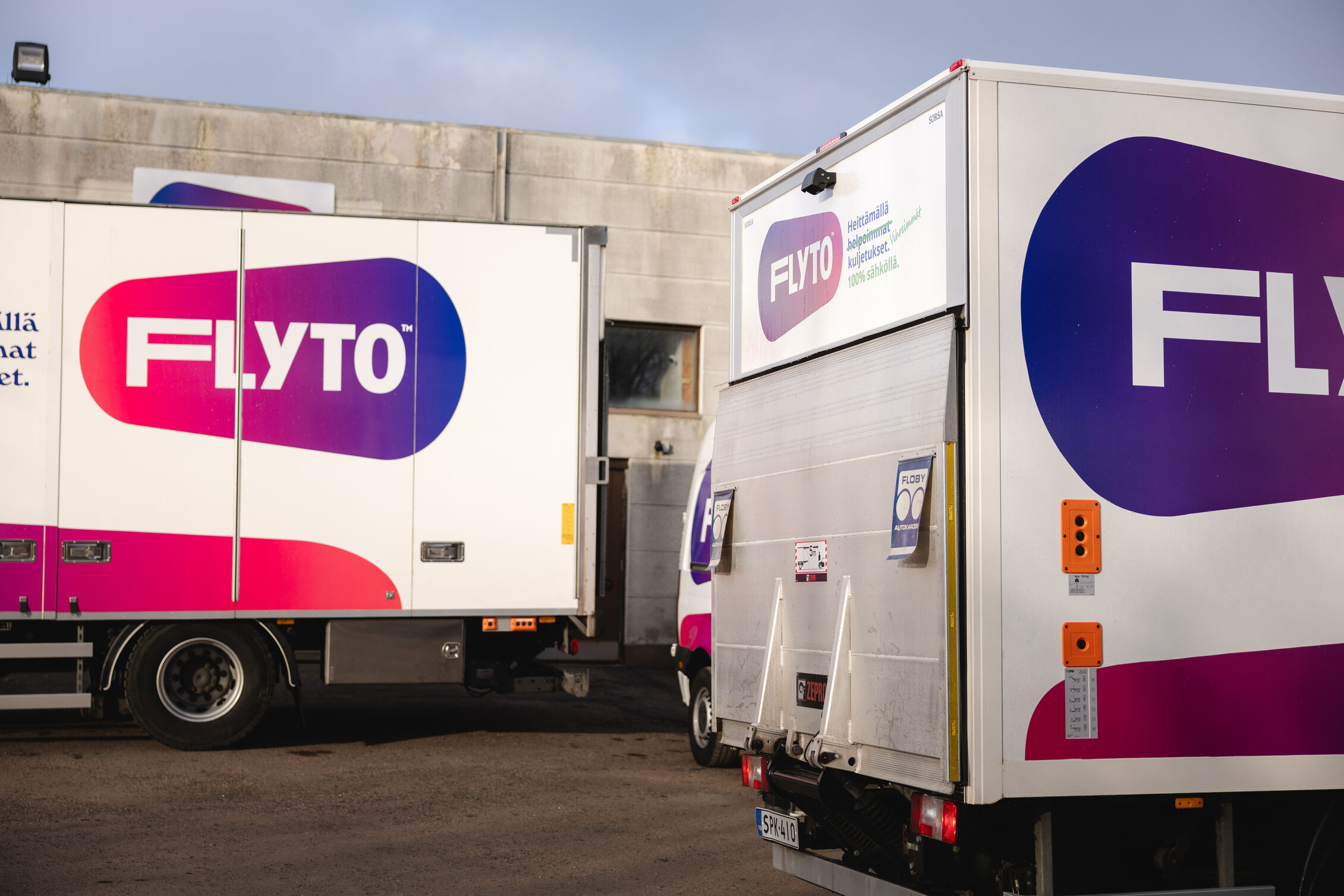
Flyto runs strong in-house European operations — our own offices, warehouses, teams and vehicles across Northern, Central and Southern Europe handle the Polish collection, packing and export side directly. For the Kuwait leg we combine a carefully chosen partner and subcontractor network with trusted local partners in Kuwait for customs clearance and delivery, so your move is coordinated end to end without us pretending to own every link in the chain.
Frequently asked questions
Do I pay customs duty on my used furniture in Kuwait?
Genuine used personal and household effects imported for personal, non-commercial use are treated favourably by the General Administration of Customs, while new items fall under standard GCC import duty — keep receipts for anything that looks new (Kuwait Gov Online — Customs).
Can I ship before my Kuwait residence permit is ready?
You can, but clearance is tied to your residence and sponsor status, so goods arriving before your paperwork is settled may sit in storage. Line up your sponsor and residency before the shipment lands (Kuwait Gov Online — Customs).
What is the AES declaration and who files it?
AES is Poland’s Automatic Export System, used through PUESC to lodge the export declaration when goods leave the EU. Your mover normally files it as declarant; keep the MRN and proof of exit (PUESC — Export).
Do I have to de-register my address in Poland?
If you are leaving permanently, yes — report wymeldowanie. It is free and can be done online or at your municipality; otherwise the office can de-register you by decision (Gov.pl — De-register from permanent residence).
What does my pet need for Kuwait?
A microchip, a rabies vaccination given 30 days to 1 year before arrival, and a health certificate issued within 30 days and endorsed by the Polish veterinary authority — plus a PAAAFR import permit arranged in advance, with some breeds banned (Kuwait MOFA — Importing pets; Główny Inspektorat Weterynarii).
When am I no longer a Polish tax resident?
When you move your centre of vital interests to Kuwait and spend fewer than 183 days per tax year in Poland; the double-tax treaty tie-breakers resolve borderline cases (podatki.gov.pl — Tax residence).
Sources
- PUESC — Export (AES), National Revenue Administration / Ministry of Finance
- PUESC — KAS customer area
- PUESC — Import
- Gov.pl — De-register from permanent residence (wymeldowanie)
- Gov.pl — Register for permanent/temporary residence (foreigners)
- podatki.gov.pl — Tax residence
- Główny Inspektorat Weterynarii — Travelling with pets / third countries
- European Commission (Food Safety) — Travelling with a pet
- Your Europe — Travelling with pets and other animals in the EU
- Kuwait Ministry of Foreign Affairs — Requirements for importing pets to Kuwait
- Kuwait Government Online — Customs system
- Kuwait Government — General Administration of Customs
- Baltic Container Terminal, Port of Gdynia