

Moving from Sweden to Kuwait (2026): Complete Guide

The Sweden-to-Kuwait corridor is a classic long-haul, non-EU move: your goods leave the European Union customs territory in Sweden and re-enter under Gulf Cooperation Council (GCC) customs rules in Kuwait. That means two separate sets of paperwork, two authorities, and two clocks running at once. This guide covers both halves — the Swedish export and deregistration side (handled by Tullverket and Skatteverket) and the Kuwaiti import side (handled by the General Administration of Customs under GCC law) — plus a short note on the reverse Kuwait-to-Sweden journey. It is written for a resident of Sweden — Swedish national, EU citizen, or third-country resident — relocating to Kuwait for work, family, or a fixed-term posting.
Key takeaways
- Moving to a non-EU country requires an export declaration to Tullverket (Swedish Customs); personal-property removal goods use commodity code 9905 00 00 (Field 33) and procedure code 1000 (Field 37) on the Single Administrative Document (SAD).
- If you will live abroad for one year or more, you must notify Skatteverket using form SKV 7665b and be deregistered from the population register (folkbokföring) as emigrated.
- Deregistration does not end Swedish tax liability by itself — Swedish citizens and long-term residents may keep unlimited tax liability for up to five years unless they prove no "close ties" remain (Skatteverket).
- Kuwait applies the GCC common external tariff of 5% (on CIF value) on most imported goods; used personal effects for genuine personal use are generally not charged duty (US ITA — Kuwait Import Tariffs).
- You generally need a valid Kuwaiti residence permit / work visa in hand before household goods clear customs — confirm the current documentary requirements with your customs broker and the General Administration of Customs.
- Alcohol, pork products, and certain printed material are prohibited in Kuwait — do not pack them; confirm the current prohibited list with the General Administration of Customs before shipping.
- Pets need a Swedish export health certificate from an official veterinarian and must meet Kuwait’s own import rules — you must confirm these with the destination authority in advance (Jordbruksverket).
1. Your Kuwaiti immigration status decides your customs treatment
Before customs, immigration. Kuwait ties duty-free import of household goods to lawful residence, so your visa status is the single biggest factor in how your shipment is treated. In practice, the duty-free personal-effects exemption is available to residents importing used goods for personal use, and clearance normally requires a passport, a residence permit or work visa, and a packing list. Confirm the exact documents currently required with your customs broker and the General Administration of Customs before you ship.
The practical consequence: do not ship until your Kuwaiti residency is confirmed and stamped. If your goods arrive at port before your residence permit is issued, the shipment can sit in bond accruing storage and demurrage while you wait — an expensive and common mistake. Many families ship a small air-freight "first-arrival" consignment and hold the full sea container until the residency is finalised.
2. The Sweden export side — Tullverket, Skatteverket and your tax exit
Customs authority. The Swedish customs authority is Tullverket. When you move from Sweden to a country outside the EU, you must lodge an export declaration for your personal belongings. You can do this yourself at a customs office, or — far more common for a full household — let your removal or forwarding company handle it (Tullverket). The declaration is made on the Single Administrative Document (SAD). For emigrant removal goods, Tullverket specifies commodity code 9905 00 00 in Field 33 and procedure code 1000 in Field 37; a detailed list of your personal belongings, specifying capital goods such as vehicles, televisions and computers, must be attached (Tullverket). Because these are personal effects rather than a commercial sale, a commercial invoice is not required. Tullverket sets no monetary or weight threshold that blocks the export of genuine personal belongings (Tullverket — moving overview).
Deregistration (folkbokföring). If you plan to live abroad for one year or more, you must notify Skatteverket and you will be removed from the Swedish population register as "emigrated." Notify as soon as you have decided to remain abroad for more than a year, and before you leave; the notification uses form SKV 7665b ("Moving Abroad, Notification"), and all family members moving must be listed (Skatteverket — civil de-registration).
Tax residency exit. Deregistration is an indicator, not a verdict. If you are a Swedish citizen or have lived in Sweden for ten years or longer, you may retain unlimited tax liability (worldwide income taxable in Sweden) for up to five years after departure unless you can show you no longer have "close ties" — factors such as retained property, family, or business influence in Sweden (Skatteverket — moving from Sweden). You must still file a Swedish tax return for your final fiscal year in Sweden. Once treated as a non-resident with limited tax liability, Sweden taxes only Swedish-source income; certain Swedish-source income can be taxed under SINK (special income tax for non-residents), whose flat rate was reduced from 25% to 22.5% from 1 January 2026, with a further reduction to 20% from 1 January 2027 (Skatteverket — SINK). Because Kuwait levies no personal income tax, your Swedish exit position is the part worth getting professional advice on.
3. Ports & transit — from Gothenburg to the Gulf
Most Sweden-to-Kuwait household shipments leave through the Port of Gothenburg (Göteborgs Hamn), which describes itself as the largest port in Scandinavia and handles a large share of Sweden’s container trade (Port of Gothenburg). On the Kuwaiti side, sea consignments arrive at the commercial seaports of Shuwaikh or Shuaiba, while air freight lands at Kuwait International Airport.
Transit times below are freight-industry estimates, not official figures, and vary with sailing schedules, transhipment and customs clearance:
- Sea freight (FCL/LCL), Gothenburg → Kuwait: roughly 4–6 weeks port-to-port, usually via a Mediterranean or Gulf transhipment hub; add 1–3 weeks for door-to-door packing and clearance.
- Air freight: transit of a few days, but door-to-door 1–2 weeks once collection, consolidation and clearance are counted.
Treat any single quoted number with caution and build slack into your plans, especially around Ramadan and Gulf public holidays when clearance slows.
4. The Kuwait import side — GCC customs and the 5% rule
Kuwait’s imports fall under the GCC Common Customs Law and the Single Customs Tariff, which Kuwait officially approved on 1 April 2003, setting a 5% common external tariff on the CIF value of most goods (US ITA — Kuwait Import Tariffs). A limited list of basic foodstuffs, agricultural, medical and pharmaceutical items is exempt, while tobacco is taxed at 100% (US ITA — Kuwait Import Tariffs). Kuwait applies WTO customs valuation and grants duty-free entry to qualifying GCC-origin goods (US ITA — Kuwait Customs Regulations).
For a household move, the key point is the personal-effects exemption: used personal belongings and household effects for genuine personal use — not for resale — are generally not charged duty. New items still in packaging may attract the 5% tariff. At clearance the customs broker files the import declaration with the General Administration of Customs, supported by:
- passport copy (photo page) and Kuwaiti residence permit / work visa copy;
- a detailed packing list and the original bill of lading or air waybill;
- a No-Objection Certificate where the employer/sponsor is involved.
Prohibited items must never be packed: alcohol, pork and pork products, firearms and ammunition, narcotics, and printed or recorded material deemed contrary to public morals or religion. Confirm the current prohibited list with the General Administration of Customs before shipping — a single prohibited item can trigger inspection of the whole container and heavy delays.
5. Pets — dogs and cats, both ends
Leaving Sweden. The Swedish Board of Agriculture (Jordbruksverket) is the authority. To take a dog, cat or ferret out of Sweden to a non-EU country, the animal will normally need identification (an ISO microchip), a valid rabies vaccination, and an export health certificate issued by an official veterinarian (not every Swedish vet is an official veterinarian). Jordbruksverket is explicit that the requirements which actually apply are set by the destination country’s veterinary authority, so you must contact the Kuwaiti authority (or its embassy) well in advance and use the correct certificate (Jordbruksverket).
Entering Kuwait. Pet import into Kuwait is regulated by the Public Authority for Agriculture Affairs and Fish Resources (PAAF). In practice you will need an import permit obtained before travel, a microchip, current rabies vaccination, and a veterinary good-health certificate issued shortly before arrival; Kuwait also bans several dog breeds. Because these details change and are enforced at the destination, confirm the current rules directly with the Kuwaiti authority before booking, exactly as Jordbruksverket instructs.
6. Vehicles, money and things people forget
- Vehicles. A car is a "capital good" and must be itemised on your Swedish export list under code 9905 00 00 (Tullverket). On arrival, vehicles are treated separately from household goods and Kuwait applies its GCC tariff and registration rules — verify eligibility and specification (Gulf-spec) before shipping, as many European cars need modification.
- Money. Kuwait levies no personal income tax, but currency-declaration rules apply at the border; carry proof of funds and declare cash above local thresholds. Do not move money based on anything other than the bank’s or customs authority’s own instructions.
- Documents. Carry originals of marriage/birth certificates, and educational and professional certificates — Kuwaiti residency and schooling often require attestation/legalisation, which is far easier to arrange in Sweden before you leave.
- Medicines. Kuwait restricts the import of certain medicines; carry your prescriptions and check controlled-substance rules with the Kuwaiti authorities before packing any medication.
- Timing. File the Skatteverket move-abroad notification early (form SKV 7665b) so your deregistration and mail forwarding are in place before departure (Skatteverket).
The reverse: Kuwait → Sweden
Coming back is stricter on animals than goods. For household effects you re-enter the EU customs territory and must declare returned personal property to Tullverket. For pets, Kuwait counts as a country outside the EU where rabies is not considered under control, so a dog or cat entering Sweden needs an ISO microchip, rabies vaccination, and a rabies antibody titer test showing at least 0.5 IU/ml from an EU-approved lab, with the blood sample taken at least 30 days after vaccination — and the EU health certificate cannot be issued until at least 90 days after that blood sample was taken. Pets from outside the EU must enter via a designated Entry Point; in Sweden these are at Arlanda (Stockholm) and Landvetter (Gothenburg) airports. Budget roughly four months (Jordbruksverket).
How Flyto handles your Sweden to Kuwait move
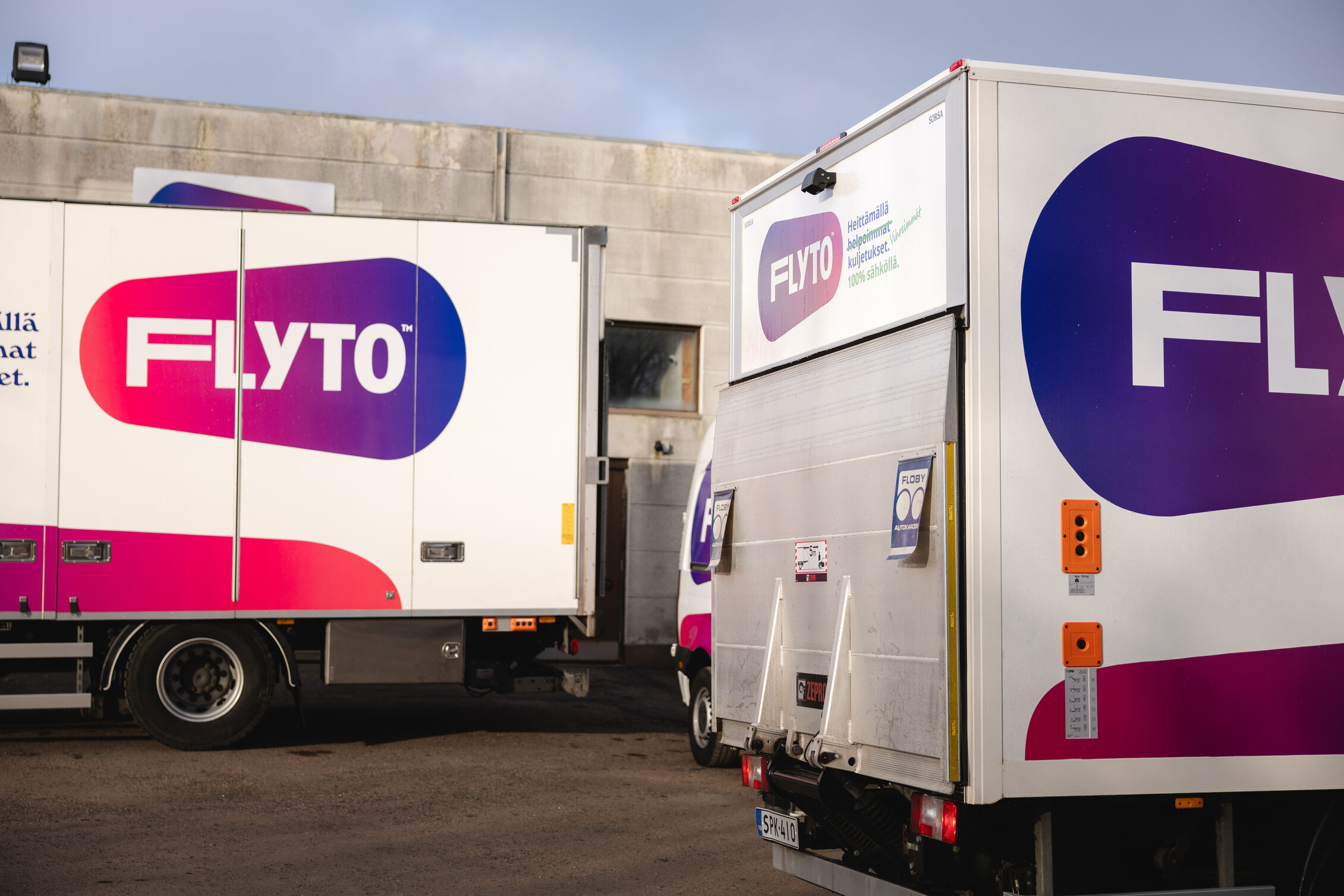
Flyto runs its own offices, warehouses, teams and vehicles across Northern, Central and Southern Europe, so the Swedish collection, packing, export declaration and departure are handled in-house. For the ocean or air leg and the Kuwaiti arrival we combine a carefully chosen network of vetted freight partners and subcontractors with trusted local partners in Kuwait who manage GCC customs clearance and final delivery. We coordinate both ends — and we are honest that the long-haul carriage and Kuwaiti clearance are delivered with partners rather than entirely by us.
Frequently asked questions
Do I have to file a Swedish export declaration for my own furniture?
Yes. Moving to a non-EU country requires an export declaration on the SAD form; removal goods use commodity code 9905 00 00 and procedure code 1000, with an itemised list attached. Your mover can lodge it for you (Tullverket).
When do I have to deregister from Sweden?
If you will be abroad for a year or more, notify Skatteverket before you leave and you’ll be deregistered as emigrated; use form SKV 7665b (Skatteverket).
If I deregister, do I stop paying Swedish tax immediately?
Not necessarily. Swedish citizens and long-term residents can keep unlimited Swedish tax liability for up to five years unless they prove no close ties remain; you still file a final tax return (Skatteverket).
Will my used household goods be taxed in Kuwait?
Used personal effects for genuine personal use are generally not charged duty; new items can attract the 5% GCC tariff on CIF value (US ITA — Kuwait Import Tariffs).
Can I ship before my Kuwaiti visa is ready?
It’s risky. Clearance normally requires a valid residence permit or work visa, so goods arriving early can be held in bond at cost. Confirm current requirements with the General Administration of Customs.
How long does the sea shipment take?
As a freight-industry estimate, roughly 4–6 weeks port-to-port from Gothenburg, longer door-to-door — not an official figure, and highly schedule-dependent (Port of Gothenburg).
Sources
- Tullverket — Moving from Sweden to a country outside the EU
- Tullverket — Moving to and from Sweden (overview)
- Skatteverket — Civil de-registration
- Skatteverket — Moving from Sweden (tax liability, close ties)
- Skatteverket — SINK, special income tax for non-residents
- Jordbruksverket — Bringing dogs, cats and ferrets out of Sweden
- Jordbruksverket — Movement of pets into Sweden from non-EU countries where rabies is not under control
- Port of Gothenburg (Göteborgs Hamn)
- Kuwait General Administration of Customs
- US International Trade Administration — Kuwait Customs Regulations
- US International Trade Administration — Kuwait Import Tariffs