

Moving from Germany to Egypt (2026): Complete Guide

Moving from Germany to Egypt means closing out two very different bureaucracies at once. On the German side you deregister with your local registration office, settle your tax status, and get your shipment through German export customs. On the Egyptian side, your immigration status — tourist, work, or residence visa — decides how your household goods, car, and pets are treated at the port or airport. This guide walks a Germany-based mover through both halves in order: what to do before you leave Germany, how the shipment physically moves, what happens when it lands in Egypt, and a short note on the return trip. It draws only on official government sources, linked inline throughout.
Key takeaways
- You must deregister your German address (Abmeldung) with your local Bürgeramt/Einwohnermeldeamt within a defined window around your move-out date — failing to do so can trigger fines and follow-up bills from tax and insurance bodies later (Berlin.de official deregistration service).
- German Customs (Zoll) treats a relocation shipment as Übersiedlungsgut; for private individuals carrying or shipping goods out of the EU, the person taking the goods out is generally the "exporter" of record under EU customs rules (Zoll – Ausführer).
- Shipments with a statistical value up to €3,000 can generally be declared directly at the exit customs office under Germany’s simplified single-stage export procedure, without a separate ATLAS pre-declaration; below €1,000 (or 1,000 kg), an oral declaration at the customs office of departure can suffice (Zoll – Warenausfuhr im einstufigen Verfahren).
- Carrying €10,000 or more in cash (or equivalent) out of the EU to a non-EU country like Egypt must be declared to German Customs before departure (Zoll – Anmelde-/Anzeigepflicht Drittländer).
- Ending unlimited German tax liability requires actually giving up both your residence and habitual abode in Germany — simply deregistering your address is not, by itself, enough; special forms exist for shareholders and people with other cross-border ties (Bundesministerium der Finanzen – Vordrucke Wegzugsbesteuerung).
- All cargo entering Egypt must carry an ACID number (Advance Cargo Information Declaration) registered on the Nafeza platform before the shipment leaves the origin port, or it faces re-export at the carrier’s expense (Nafeza – ACID notice).
- Egypt’s visa and residency system runs through the Ministry of Interior’s e-Visa portal, which is the correct starting point before you arrange entry as a tourist, worker, or resident (visa2egypt.gov.eg).
- Dogs and cats need an ISO-compliant microchip and a valid, up-to-date rabies vaccination plus an official export health certificate before travel; exact timing windows and paperwork are set by Egypt’s veterinary authority and should be confirmed with your airline/GOVS-approved vet before booking, since incomplete documentation can mean quarantine or refusal of entry (Egypt animal-health import profile, published via WOAH).
1. Your Egyptian immigration status decides your customs treatment
Before anything is packed, settle how you will enter and stay in Egypt — as a tourist, on a work-linked residence permit, or as a returning Egyptian national — because this status is the reference point customs authorities use for your entire shipment. Egypt’s Ministry of Interior issues both the electronic tourist visa and residence permits through its official channels, and the e-Visa portal is the government’s own entry point for visa matters (visa2egypt.gov.eg). If your move is tied to employment, a residence visa from the Ministry of Interior normally follows a work authorization; sort this out with your employer or sponsor before your shipment leaves Germany, since customs clearance of household goods and any privileged treatment is generally requested only once you can show you are entering to reside, not just to visit. Confirm your specific category and its documentation requirements directly with an Egyptian consulate or a licensed customs broker before booking your shipment — this is the single decision that shapes everything downstream.
2. The Germany export side: deregistration, customs, and tax exit
Deregister your address. Under German municipal registration law, moving your main residence abroad requires deregistering (Abmeldung) at the Bürgeramt/Einwohnermeldeamt responsible for your current address. You can do this in person, by post, or in many cities electronically, and you’ll receive a deregistration confirmation (Abmeldebestätigung) — keep several stamped copies, as banks, insurers, and Egyptian authorities may ask for one (Berlin.de – Abmeldung einer Wohnung).
Declare your shipment to German Customs. The Zoll treats removal goods leaving Germany as ordinary exports from the EU customs territory. The person who decides that the goods leave the EU customs territory (typically the private individual moving, or their appointed agent) is generally treated as the exporter for customs purposes (Zoll – Ausführer). Shipments with a statistical value up to €3,000 can go through the simplified single-stage export procedure directly at the exit customs office, without a separate written ATLAS declaration beforehand; shipments up to €1,000 (or 1,000 kg) can even be declared orally there. Most full household moves — once furniture, electronics, and vehicles are counted — exceed these thresholds and go through the standard ATLAS export declaration process, normally handled by your moving company or customs agent (Zoll – Warenausfuhr im einstufigen Verfahren).
Cash and valuables. If you or your household will carry €10,000 or more in cash or equivalent instruments when leaving the EU for Egypt, this must be declared to German Customs before departure (Zoll – Anmelde-/Anzeigepflicht Drittländer).
Close out your German tax residency. Unlimited income tax liability in Germany generally ends only once you have genuinely given up both your residence (Wohnsitz) and your habitual abode (gewöhnlicher Aufenthalt) — deregistering your apartment alone does not automatically terminate it. If you hold significant shareholdings, move to a low-tax jurisdiction, or otherwise have cross-border complications, the German Finance Ministry publishes specific declaration forms for exit taxation under §6 of the Foreign Tax Act (Außensteuergesetz) that must be filed with your last German tax office once you have moved (Bundesministerium der Finanzen – Vordrucke Wegzugsbesteuerung). Discuss your specific situation with a Steuerberater before departure — exit-tax questions are one of the most commonly mishandled parts of a Germany-to-Egypt move.
3. Ports & transit (freight-industry estimates, not official figures)
Household shipments to Egypt typically move by sea freight, with Hamburg and Bremerhaven — Germany’s two largest container ports — the usual points of departure, or by air freight out of Frankfurt for smaller or time-sensitive shipments. On the Egyptian side, sea shipments generally arrive via Alexandria or Damietta port, and air shipments via Cairo International Airport.
The following transit windows are industry rule-of-thumb estimates from freight forwarders, not figures published by any customs or port authority, and they vary with sailing schedules, transshipment routing, and customs backlog:
- Sea freight, Hamburg/Bremerhaven → Alexandria/Damietta: roughly 3–6 weeks door-to-port, plus Egyptian customs clearance time on top.
- Air freight, Frankfurt → Cairo: typically 3–10 days, though clearance formalities can add to this.
Always confirm current transit and clearance times with your mover rather than budgeting against these ranges.
4. The Egypt import side: ACID, customs clearance, and duties
Every shipment entering Egypt — commercial or personal — now runs through Egypt’s National Single Window (Nafeza) system, operated by the Egyptian Customs Authority under the Ministry of Finance. Before your shipment leaves Germany, it (or your Egyptian receiving agent/consignee) must be registered on Nafeza to obtain a unique ACID number (Advance Cargo Information Declaration); shipments arriving without a valid ACID number risk being refused entry and re-exported at the shipper’s or carrier’s cost (Nafeza – official ACID notice; Nafeza platform). Confirm with your Egyptian-based moving agent that ACID registration is arranged before your goods are loaded in Germany — this is Egypt’s single biggest procedural gate for any importer.
Customs clearance, physical inspection, duty assessment, and enforcement of import rules are all handled by the Egyptian Customs Authority, a body of the Ministry of Finance, which also publishes traveller and passenger-luggage guidance (Egyptian Customs Authority). Because duty treatment for personal and household effects depends heavily on your residency/visa status and on documentation like your entry stamp and an itemized, valued inventory, work directly with a licensed Egyptian customs broker or your moving company’s local partner to prepare the declaration — do not rely on generic online checklists, since duty exemptions and required paperwork are assessed case by case at the port.
5. Pets: rules on both ends
Leaving Germany. At minimum, a dog or cat travelling out of the EU needs an ISO-compliant microchip and a valid, in-date rabies vaccination, documented on an EU pet passport or equivalent health certificate. Requirements for the destination country come on top of this, and some destinations also expect proof of the vaccination timeline via a rabies antibody titer test, so check Egypt’s specific requirements (below) well before booking travel and keep vaccination records and the EU pet passport with you.
Entering Egypt. Egypt’s General Organisation for Veterinary Services (GOVS) is the competent authority for live-animal imports, and Egypt is a WOAH (World Organisation for Animal Health) member state that reports its import conditions accordingly. Dogs and cats generally need an ISO-compliant microchip, an up-to-date rabies vaccination administered within the window GOVS specifies, and an official export health certificate issued shortly before travel; incomplete or late paperwork can mean quarantine, re-export, or refusal of entry at the owner’s cost. Because exact day-windows and required forms are set by GOVS and can change, confirm the current requirements directly with your airline, a GOVS-approved veterinarian, or the Egyptian embassy before finalising travel dates — do not rely on a fixed number of days from an unofficial source. Certain species, including some birds, reptiles, and rodents, face import restrictions or outright bans (Egypt animal-health import profile, published via WOAH).
6. Vehicles, money, and things people forget
Vehicles. To export a car from Germany permanently, you deregister it at your local vehicle registration office (Kfz-Zulassungsstelle) and apply for export plates (Ausfuhrkennzeichen), which allow the car to be driven to the border/port under temporary export registration (Kreis Kleve – Ausfuhrkennzeichen mit internationaler Zulassung). On the Egyptian side, vehicle import is a specialist, high-duty process handled through the Egyptian Customs Authority; get a written cost and eligibility assessment from a local agent before committing to ship a car, as it is rarely the cheapest option compared with buying locally.
Money. Beyond the €10,000 EU cash-declaration threshold on exit from Germany noted above, plan how you’ll access funds in Egypt — confirm with your German bank that your account can still be used from abroad, and ask your Egyptian bank about opening a local account, since some Egyptian import/customs processes (vehicle imports especially) require a local bank-stamped authorization letter.
Things people forget. Cancel or transfer German recurring contracts (Rundfunkbeitrag, insurance, mobile) around your Abmeldung date, since German authorities and providers link billing to your registered address. Keep multiple original and certified-translated copies of key documents — birth/marriage certificates, diplomas, vaccination records — as Egyptian authorities frequently require notarized or legalized copies rather than plain photocopies. Build in extra time and a cash buffer for Egyptian customs inspection and duty payment, since your shipment being selected for closer inspection is a normal, not exceptional, occurrence.
How Flyto handles your Germany to Egypt move
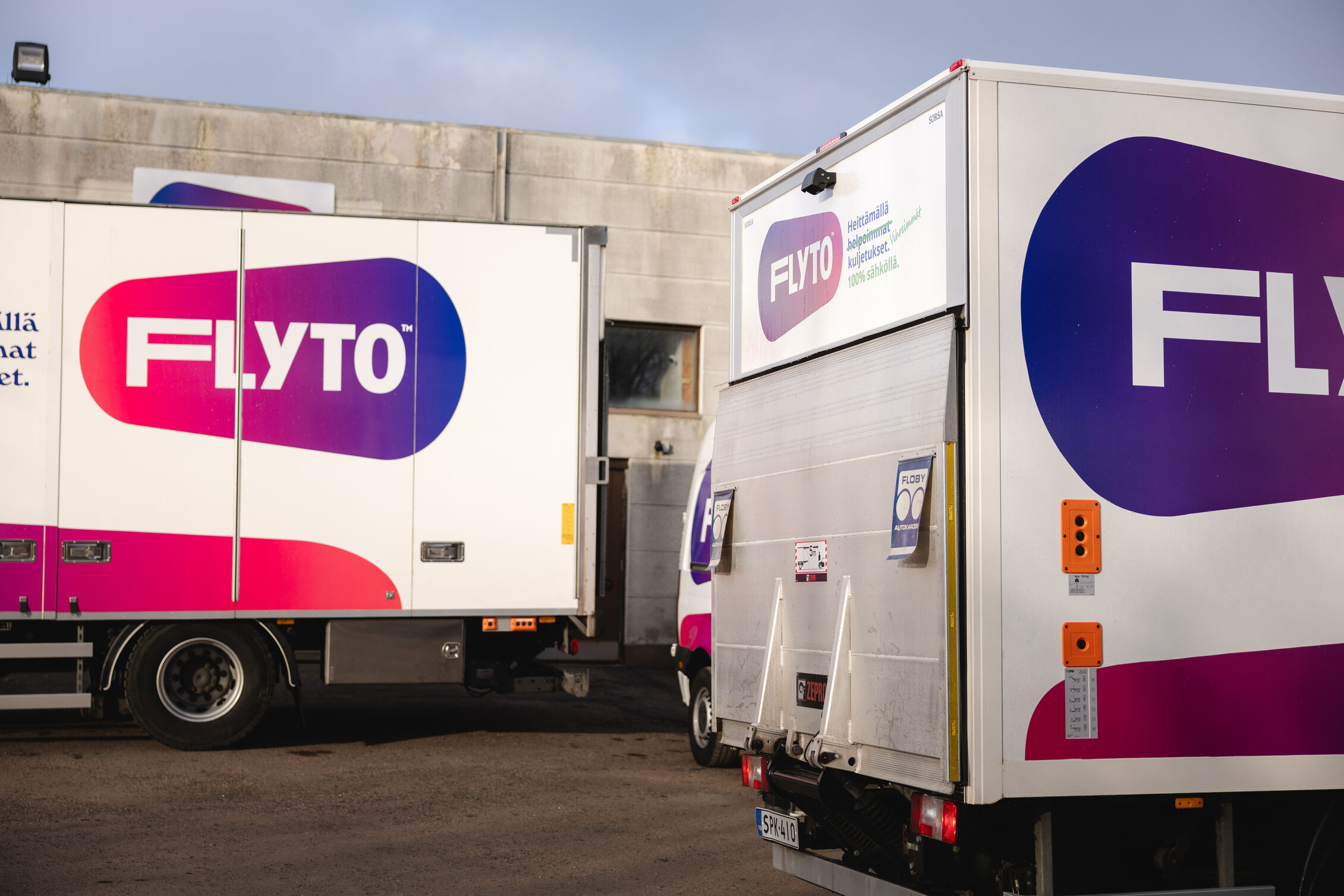
Flyto runs its own offices, warehouses, teams, and vehicles across Northern, Central, and Southern Europe, so the German side of your move — packing, export customs coordination, and transport to Hamburg, Bremerhaven, or Frankfurt — is handled largely in-house. For the sea or air leg and Egyptian-side clearance, we work through a carefully vetted network of freight subcontractors and trusted local partners on the ground in Egypt who manage Nafeza/ACID registration, port formalities, and last-mile delivery. This combination gives you one point of contact for the whole corridor while keeping local expertise where it matters most, at the Egyptian border.
Frequently asked questions
Do I need to deregister in Germany even if I might come back? Yes — if you are giving up your German address, you must deregister within the legal window regardless of whether you plan to return one day; you simply register again if you come back (Berlin.de).
Does deregistering my address end my German tax liability? Not automatically. Unlimited tax liability ends only once you’ve genuinely given up both your residence and habitual abode, and additional rules and forms can apply depending on your financial situation (BMF).
What is an ACID number and do I need one for a personal move? It’s a mandatory Egyptian customs identifier for any cargo entering the country, arranged via the Nafeza platform before your shipment departs; your mover or Egyptian receiving agent typically handles the registration, but confirm it explicitly (Nafeza).
Can I bring my dog or cat to Egypt without quarantine? Usually yes, if the microchip, rabies vaccination timing, and export health certificate are all correctly documented before arrival and match GOVS’s current requirements; incomplete paperwork can trigger quarantine, so confirm the exact rules with your airline or a GOVS-approved vet before travel (Egypt animal-health import profile, via WOAH).
Should I ship my car to Egypt? It’s possible but involves a specialist high-duty import process through Egyptian Customs; get a written quote and eligibility check before deciding, since it is often not cost-effective versus buying locally.
What about moving back from Egypt to Germany later? As an EU/German returnee, you may qualify for duty-free import of used household goods under Germany’s Übersiedlungsgut rules if you’ve lived abroad at least 12 months and owned/used the goods for at least 6 months, declared on Form 0350 within 12 months of re-establishing residence in Germany — and you would need to re-register (Anmeldung) your German address on arrival (Zoll – Transferring residence).
Sources
- Zoll (German Customs) – Transferring residence / Form 0350
- Zoll – Ausführer (private exporters, EU customs territory)
- Zoll – Warenausfuhr im einstufigen Verfahren (simplified export, €3,000 / €1,000 thresholds)
- Zoll – Anmelde-/Anzeigepflicht Barmittel bei Ausreise in Nicht-EU-Staaten (€10,000 cash declaration)
- Berlin.de – Abmeldung einer Wohnung (official deregistration service)
- Bundesportal – Declare removal goods at customs
- Bundesministerium der Finanzen – Vordrucke Wegzugsbesteuerung (exit-tax forms)
- Kreis Kleve – Ausfuhrkennzeichen mit internationaler Zulassung (vehicle export plates)
- Egypt e-Visa Portal (Ministry of Interior)
- Egyptian Customs Authority (Ministry of Finance)
- Nafeza – National Single Window platform
- Nafeza – official notice on mandatory ACID numbers
- Egypt animal-health import profile (General Organisation for Veterinary Services), published via WOAH