

Moving from Denmark to Egypt (2026): Complete Guide

Denmark to Egypt is a two-sided move: a EU/Nordic exit process on the Danish side and a non-EU customs and residency process on the Egyptian side. This guide is written for a Denmark resident — Danish citizen or foreign resident registered in Denmark — relocating to Egypt for work, retirement, or family reasons. It walks through deregistering correctly in Denmark, what Danish customs actually requires (and doesn’t) when you ship your belongings out, the real ports and realistic transit times, how Egyptian customs treats your shipment, pet and vehicle rules on both ends, and a short note on moving back the other way.
Key takeaways
- Your Egyptian residence status decides your customs bill: household goods only clear duty-free if you hold (or are applying for) an Egyptian residence/work permit and can prove prior ownership; without it, full duties and taxes apply — see the Egyptian Customs Authority.
- Denmark does not require an export customs declaration for personal household effects leaving for a non-EU country — the Toldstyrelsen moving guide covers imports into Denmark, and no equivalent export declaration exists for private removals.
- If you move abroad for more than 6 months you must report your departure ("udrejse") to the CPR register with your departure municipality before you leave — see cpr.dk and borger.dk.
- Danish full tax liability doesn’t end automatically on departure — it typically requires giving up your Danish home; Skattestyrelsen assesses this case by case — see info.skat.dk C.F.1.2.3.
- Carrying cash, cheques, or securities worth €10,000 or more out of Denmark (in any currency, to any destination) must be declared to Toldstyrelsen — see toldst.dk.
- Egypt requires declaration of undeclared incoming foreign currency above roughly USD 10,000 and caps Egyptian pounds carried in at EGP 5,000 — these limits are set and periodically revised by Egyptian customs and monetary authorities, so confirm the current figures before travelling; see the Egyptian Customs Authority.
- Pets need an export health certificate and rabies vaccination to leave Denmark (Fødevarestyrelsen) and a government-endorsed health certificate plus rabies proof to enter Egypt, under the Ministry of Agriculture and Land Reclamation’s veterinary authority (moa.gov.eg).
- Egyptian customs applies physical inspection to a large share of personal-effects shipments, so accurate, itemized inventories matter more than in most EU-to-EU moves.
1. How your Egyptian immigration status determines your customs treatment
Egypt’s duty-free allowance for household goods is tied directly to your legal status on arrival, not to the fact that you’re relocating. The Egyptian Customs Authority treats several groups differently: migrants arriving for permanent residence, returning Egyptian citizens, foreign residents holding a valid residence or work permit, and everyone else. Generally, only residents and returning citizens qualify for duty-free import of used household effects, and only if the goods are demonstrably for personal use, not resale, and were owned and used before shipment. A foreigner arriving without a residence or work visa — for example on a tourist e-visa — should expect to pay full customs duty and VAT on shipped belongings.
Practically, this means the sequence matters: secure your Egyptian residence permit application (or at minimum your entry visa tied to work/residence) before or immediately alongside your shipment’s arrival. Applications and most renewals are handled in person through the Ministry of Interior’s General Administration of Passports, Immigration and Nationality, whose headquarters is in Abbasiya, Cairo (enationality.moi.gov.eg) — confirm current branch options and requirements before you travel, since procedures are revised from time to time. If you’re arriving on a standard tourist e-visa via the official portal, visa2egypt.gov.eg, you’ll usually need to convert or apply for residency after arrival before customs will grant the personal-effects exemption — talk to your mover about timing the shipment’s arrival accordingly.
2. The Denmark export side: deregistration, tax exit, and what customs actually asks for
Customs authority. Danish customs is Toldstyrelsen, part of the Danish Tax Agency (Skatteforvaltningen). Unlike many countries, Denmark has no dedicated "export declaration" process for a private household move to a non-EU country — Toldstyrelsen’s published guidance for individuals covers importing belongings into Denmark (toldst.dk); there’s no equivalent private-export procedure, because personal effects leaving the EU generally don’t require a formal export customs declaration or EORI number the way commercial cargo does. Your mover will still typically lodge a standard export entry for the container/consignment as freight, but this is a shipping-industry formality, not something you personally file.
Deregistering (folkeregister). If you’re leaving Denmark for more than six months, Danish law requires you to register your departure ("udrejse") in the CPR (Central Person Register) with your outgoing municipality before you go. This is done digitally via borger.dk or your municipality’s self-service portal (cpr.dk); check your municipality’s own citizen-service page for exact submission windows, as these are set locally. Deregistering closes your access to Danish public healthcare (Sygesikringen) and welfare registrations from your departure date, so time it to your actual move date, not your shipment date.
Tax exit. Deregistering from CPR does not automatically end your Danish full tax liability. Skattestyrelsen’s guidance is explicit: whether your unlimited tax liability ("fuld skattepligt") ends depends primarily on whether you retain a year-round residence available to you in Denmark. If you keep an apartment or house you could move back into, tax liability generally continues; giving up that residence — typically by selling it or renting it out on a genuine, non-terminable long-term lease — is normally required to end it (info.skat.dk C.F.1.2.3). You must also actively notify Skattestyrelsen of your move abroad via your digital tax account (TastSelv) or by contacting the tax agency directly, since your Danish tax status doesn’t reset itself just because you’ve left the country.
Cash and valuables. If you personally carry cash, traveller’s cheques, or securities worth €10,000 or more out of Denmark to Egypt, you must declare this to Toldstyrelsen, regardless of the currency used (toldst.dk). Undeclared amounts can be seized and fined.
3. Ports and transit — real Danish ports, freight-industry estimates
Denmark’s two relevant seaports for an Egypt-bound household shipment are the Port of Aarhus, which the port itself describes as Denmark’s largest commercial port and states handles over 70% of the country’s container traffic, and Copenhagen Malmö Port (CMP), the joint Copenhagen–Malmö gateway; Fredericia is a secondary container terminal. From either, containers typically route via a European transhipment hub (commonly Rotterdam, Hamburg, or a Mediterranean hub such as Piraeus or Gioia Tauro) before continuing to Alexandria or Damietta, Egypt’s principal container ports for personal-effects consignments.
The following are freight-industry planning estimates, not figures published by any port or customs authority, and vary by carrier, season, and transhipment routing:
- Sea freight (FCL/LCL), Denmark to Alexandria/Damietta: roughly 3–6 weeks door-to-door, including transhipment and Egyptian customs clearance.
- Air freight, Copenhagen to Cairo: typically 5–10 business days including customs clearance, used for smaller or urgent consignments.
Build in extra buffer for Egyptian customs inspection (see below) — clearance delays are the most common cause of missed estimates, not the sea transit itself.
4. The Egypt import side: customs process and documents
On arrival, your shipment is cleared through the Egyptian Customs Authority, which handles household-effects and passenger-baggage shipments under its personal-effects/travel regulations, separate from commercial cargo clearance. You (or your customs broker, acting on your behalf) must complete a declaration for the goods and submit an itemized packing list marked as household effects for free-entry consideration. Required supporting documents typically include your passport, residence/work permit (or proof of application), proof of prior ownership and use of the goods (invoices, receipts), and the bill of lading or airway bill.
Personal-effects shipments are commonly subject to physical inspection by Egyptian customs — freight forwarders operating into Alexandria and Damietta report this as routine rather than the exception, well above typical EU-to-EU inspection rates — so a clean, accurate, translated (Arabic or English) inventory materially speeds clearance. Industry sources report typical clearance times of roughly 1–2 weeks after all documents are received, though this varies by port, season, and whether the shipment is selected for detailed inspection.
Foreign nationals without a work visa or residence permit should expect full duties and VAT on used household goods; those with valid residency, or Egyptian citizens returning from abroad, can generally clear used personal effects duty-free if the goods aren’t for resale.
5. Pets: rules on both ends
Leaving Denmark. To take a dog, cat, or other pet to a non-EU country like Egypt, your pet needs ID microchipping and — because EU pet passports and rules aren’t automatically recognised outside the EU — you’ll typically need a specific export health certificate matched to Egypt’s requirements rather than the standard EU pet passport, plus proof of a valid rabies vaccination in most cases. Requirements are set by the destination country and can involve visits to both your private vet and an official Food Authority veterinarian, so confirm the exact current steps well ahead of travel via Fødevarestyrelsen.
Entering Egypt. Egypt’s veterinary quarantine and import authority sits under the Ministry of Agriculture and Land Reclamation, which oversees veterinary services and quarantine for animal imports at Egyptian ports and airports. Import generally requires microchipping, a valid rabies vaccination administered within a country-specific timing window, a government-endorsed export health certificate, and veterinary inspection on arrival. Requirements and any breed restrictions are revised periodically, so verify the current rules directly with the Ministry or your airline shortly before travel rather than relying on older guides.
6. Vehicles, money, and things people forget
Vehicles. Foreigners relocating to Egypt can generally only bring a personal vehicle in on a temporary, duty-suspended basis tied to the length of their residence permit, historically arranged via a Carnet de Passage en Douane (CPD) — an internationally recognised customs document used in lieu of a cash deposit at the border. Given the cost, paperwork, and complexity involved, most relocating households find it simpler to sell the car in Denmark and buy locally in Egypt rather than ship one — confirm current rules and costs with the Egyptian Customs Authority before deciding.
Money. Beyond the €10,000 Danish declaration threshold on exit, Egypt requires declaration of foreign currency above roughly USD 10,000 on entry, and caps Egyptian pounds carried in at EGP 5,000. These limits are set by Egyptian customs and monetary authorities and are revised from time to time, so check the current figures before travelling via the Egyptian Customs Authority.
Commonly forgotten items:
- Danish full tax liability doesn’t end on the date you fly out — plan the property/lease question early, since it drives the tax outcome.
- Egyptian customs’ free-entry allowance is generally a one-time benefit tied to your first entry with residency — goods that arrive after you’ve already claimed it may not qualify.
- Keep original purchase receipts for higher-value electronics and appliances; Danish and Egyptian customs officers alike may ask for proof of prior ownership.
- Confirm your Egyptian residence permit timeline against your shipment’s estimated arrival — a shipment arriving before your permit is issued complicates the duty-free claim.
How Flyto handles your Denmark to Egypt move
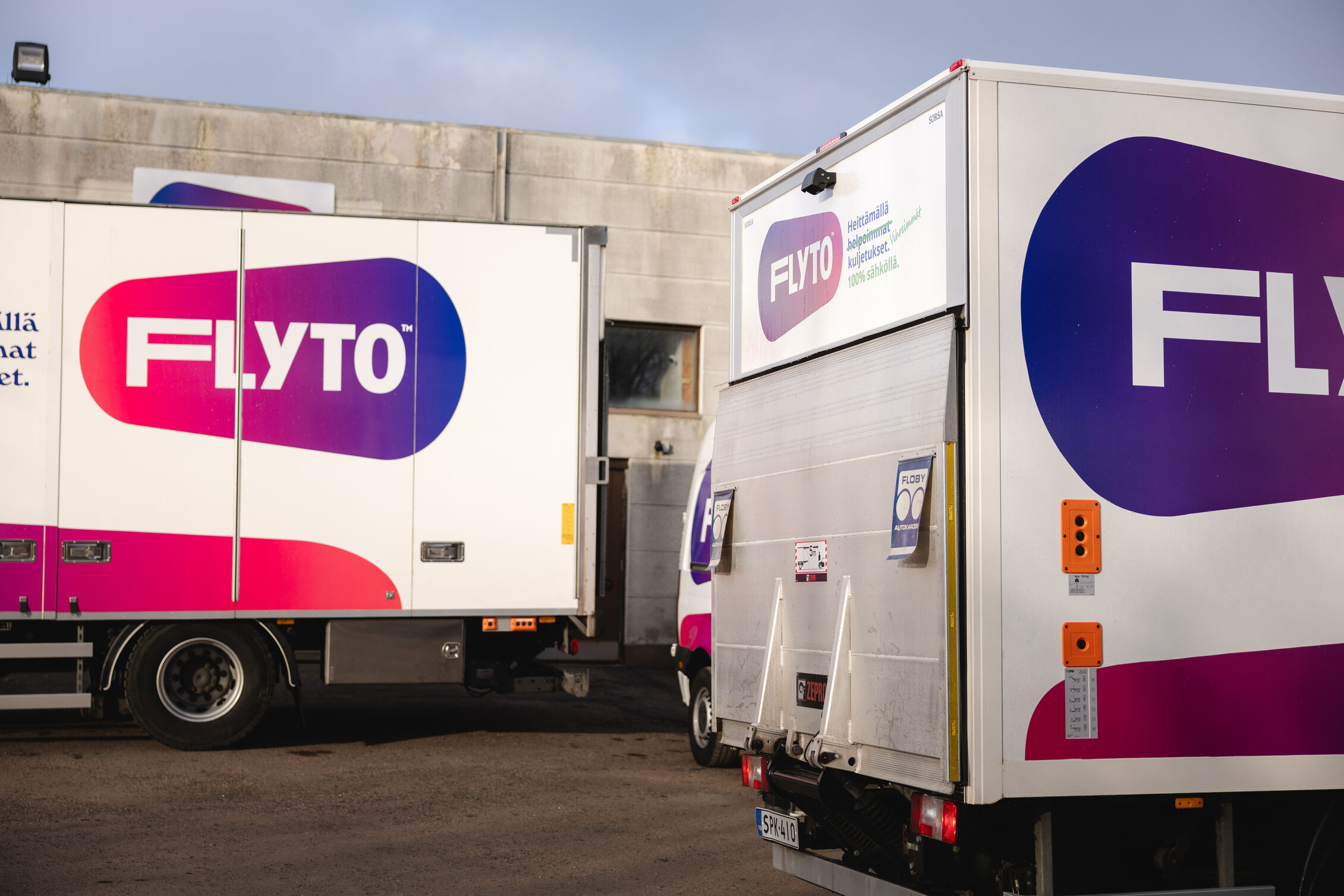
Flyto runs its own offices, warehouses, vehicles, and moving teams across Northern, Central, and Southern Europe, so the Danish collection, packing, and export leg of your move is handled in-house wherever we have local capacity, backed by a carefully vetted network of partner carriers and agents for the routes and equipment we don’t operate ourselves. On the Egyptian side, we work with trusted local partners experienced in Egyptian customs clearance, residency-linked duty exemptions, and last-mile delivery, so your shipment is met by people who clear Alexandria and Damietta regularly rather than a one-off arrangement.
Frequently asked questions
Do I need to file an export customs declaration to move my household goods out of Denmark?
No. Toldstyrelsen has no private-export declaration requirement for personal household effects leaving for a non-EU country; your mover files a standard freight export entry for the shipment itself (toldst.dk).
When do I stop paying Danish tax after I move to Egypt?
Not automatically on your departure date. Skattestyrelsen looks mainly at whether you still have a home available to you in Denmark; keeping one usually means your full tax liability continues (info.skat.dk).
Can I bring my household goods into Egypt duty-free?
Only if you hold or are applying for Egyptian residence (or are a returning Egyptian citizen), and can prove the goods are used, personal, and not for resale. Without residency status, full duty and VAT apply (Egyptian Customs Authority).
How long does sea freight from Denmark to Egypt actually take?
Industry planning estimate: roughly 3–6 weeks door-to-door via transhipment to Alexandria or Damietta, plus customs clearance time — not an official published figure.
What’s the cash limit for entering Egypt?
Travelers should declare foreign currency above roughly USD 10,000; Egyptian pounds carried in are capped at EGP 5,000 — confirm current figures with the Egyptian Customs Authority before you travel. On the Danish side, amounts of €10,000 or more must be declared to Toldstyrelsen before you leave.
Can I ship my car to Egypt?
Only temporarily, tied to your residence permit’s validity, typically via a Carnet de Passage since Egypt doesn’t generally issue local temporary import permits. Given the cost and complexity, most relocating households sell in Denmark and buy locally instead.
Moving back: Egypt to Denmark
Returning to Denmark reverses the logic. As an EU/Danish national or someone re-registering, you’d re-register with a Danish municipality on return, re-establishing full Danish tax liability if you resume residence, and clear personal effects into Denmark under Toldstyrelsen’s returning-residents rules covered on the same moving-to-Denmark guide used above. Pets returning to the EU from Egypt need to meet EU third-country entry requirements (a valid rabies vaccination and, depending on Egypt’s rabies risk classification, possibly a titer test) — confirm current requirements with Fødevarestyrelsen before booking travel.
Sources
- Toldstyrelsen — Moving to Denmark: Customs and VAT Guide
- Toldstyrelsen — Rules for travelling with large amounts of cash and cheques
- CPR.dk — Flytning til udlandet
- Borger.dk — Udrejse fra Danmark i mere end 6 måneder
- Skattestyrelsen (info.skat.dk) — C.F.1.2.3 Hvornår ophører skattepligten ved fraflytning?
- info.skat.dk — Rejser du med 10.000 euro eller mere?
- Fødevarestyrelsen — Rejse med selskabsdyr til tredjelande
- Port of Aarhus
- Copenhagen Malmö Port (CMP)
- Egyptian Customs Authority
- Egypt e-Visa official portal (Ministry of Foreign Affairs)
- Ministry of Agriculture and Land Reclamation, Egypt
- Ministry of Interior, Egypt — General Administration of Passports, Immigration and Nationality