

Moving from the UK to Ecuador (2026): Complete Guide

Moving from the UK to Ecuador means managing two separate customs and administrative systems: HM Revenue & Customs (HMRC) and Border Force on the export side, and Ecuador’s Servicio Nacional de Aduana del Ecuador (SENAE), the Ministerio de Relaciones Exteriores y Movilidad Humana, and Agrocalidad on the import side. This guide is for a UK resident — retiree, remote worker, or family — relocating household goods, pets, and sometimes a vehicle to Ecuador, and it also covers the reverse move for anyone later relocating back from Ecuador to the UK.
Key takeaways
- Your Ecuadorian residency visa status is the gate that unlocks duty-free import of household goods — without a valid residency visa (or, for Ecuadorian nationals, "returned migrant" status), your shipment is treated as a standard dutiable import, not exempt "menaje de casa" (SENAE, para migrantes; gob.ec tramite).
- Exporting goods from Great Britain requires a customs export declaration, filed through HMRC’s Customs Declaration Service (CDS); most private movers rely on their shipping/customs agent to handle this on their behalf (gov.uk, Export goods from the UK; gov.uk, Making a full export declaration).
- Foreign nationals importing household goods into Ecuador must be represented by a licensed customs agent — self-clearance is not available for this regime (gob.ec tramite).
- Tell HMRC you’re leaving using form P85 (unless you file Self Assessment, in which case leave via your return) to get your tax residence position and any refund correct (gov.uk, P85; gov.uk, Tax if you leave the UK).
- Carrying £10,000 or more in cash out of Great Britain (or the sterling equivalent) must be declared to UK customs before you travel; Ecuador separately requires travellers carrying US$10,000 or more, or dutiable goods, to file an online customs declaration form on arrival or departure (gov.uk, Take cash in and out of the UK; SENAE, Viajeros por vía aérea).
- Dogs and cats need a UK-issued export health certificate to leave Great Britain, and Ecuador requires an official zoosanitary export certificate from the country of origin plus an ISO microchip on arrival (gov.uk, Taking your pet abroad; Agrocalidad, Ingreso de perros y gatos).
- Foreign nationals cannot bring a vehicle in tax-free under Ecuador’s household-goods exemption at all — that particular benefit is reserved for returning Ecuadorian citizens — and UK cars are right-hand drive in any case, so plan to sell in the UK and buy locally in Ecuador instead (SENAE household goods framework, gob.ec).
- Coming back the other way, UK-bound arrivals from Ecuador can claim duty/VAT relief on personal belongings via HMRC’s Transfer of Residence (ToR1) scheme, provided goods were owned and used abroad for at least six months (gov.uk, ToR1).
1. How your Ecuadorian immigration status determines your customs treatment
Ecuador does not treat an incoming shipment of household goods as duty-free by default. The exemption regime known as menaje de casa ("household goods") is only available to two groups: Ecuadorian nationals who have lived abroad for more than two years and are certified as "returned migrants" by the Ministerio de Relaciones Exteriores, and foreign nationals who hold a valid Ecuadorian residency visa (SENAE, para migrantes; gob.ec tramite). If you arrive in Ecuador on a 90-day tourist stamp and ship your belongings before your residency visa is granted, they are not covered by this exemption and will be assessed as an ordinary commercial import, with duty and VAT applied. This is why the sequence matters: apply for your Ecuadorian visa through the Ministerio de Relaciones Exteriores y Movilidad Humana’s eVisa portal first (or at least have it in process), then time your shipment’s arrival to coincide with visa approval (Cancillería, Portal eVisas). A licensed Ecuadorian customs agent (agente de aduana) is mandatory for foreign nationals clearing goods under this regime — you cannot self-clear (gob.ec tramite). If your visa is still being processed when your shipment arrives, SENAE may allow you to withdraw your goods against a guarantee covering the applicable duties rather than leave them in storage — ask your customs agent whether this option applies to your case (gob.ec tramite).
2. The UK export side: HMRC, deregistration, and tax exit
Customs authority and export declaration. HM Revenue & Customs is the UK’s customs authority for goods leaving Great Britain. Any goods exported to a country outside the UK require a customs export declaration, submitted through HMRC’s Customs Declaration Service (CDS); the standard route is a full export declaration, which needs the goods’ classification, value, and destination details (gov.uk, Export goods from the UK: step by step; gov.uk, Making a full export declaration). In practice, for a household-goods move, your international mover or customs agent files this declaration on your behalf as part of the shipping contract — you will still need to provide an inventory and, in some cases, an Economic Operators Registration and Identification (EORI) number if you are named as the exporter of record.
Deregistering and leaving. Before departure, notify your local council (to stop Council Tax and come off the electoral register), deregister from your GP practice (request copies of your medical records first, as NHS treatment entitlement ends once you’ve permanently left), and update DVLA/insurers if you’re not shipping a vehicle (gov.uk, Moving, living or retiring abroad).
Tax residency exit. Notify HMRC that you’re leaving using form P85, unless you already submit a Self Assessment return for the tax year you leave, in which case you declare your departure through that return instead; P85 is also how you claim back any overpaid PAYE tax (gov.uk, Get your Income Tax right if you’re leaving the UK (P85)). Your continuing UK tax obligations after leaving — and whether you keep any UK income or gains liability — are set out in HMRC’s guidance on tax if you leave the UK to live abroad (gov.uk, Tax if you leave the UK to live abroad). If you’re carrying £10,000 or more in cash (or the equivalent, including as a family/group total) out of Great Britain, you must declare it to Border Force online or by phone before you travel (gov.uk, Take cash in and out of the UK).
3. Ports & transit: UK to Ecuador
Sea freight for a UK–Ecuador household move typically routes through one of Britain’s container ports — Felixstowe (the UK’s largest container port), Southampton, or London Gateway — with Heathrow the usual gateway for air freight and unaccompanied baggage. On the Ecuadorian side, sea shipments are consolidated through the Port of Guayaquil, the country’s main container port, while air freight and accompanied pet travel typically arrive at Mariscal Sucre International Airport (Quito, UIO) or José Joaquín de Olmedo International Airport (Guayaquil, GYE).
These are freight-industry planning estimates, not official government transit times, since neither HMRC nor SENAE publishes scheduled sailing durations:
- Sea freight (FCL/LCL), UK port to Guayaquil: roughly 6–9 weeks door to door, depending on carrier routing and any transshipment via the Caribbean, US East Coast, or Panama, plus Ecuadorian customs clearance time.
- Air freight/unaccompanied baggage, Heathrow to Quito or Guayaquil: roughly 5–10 days, including origin/destination handling.
Build in extra buffer at the Ecuador end specifically for menaje de casa document review and the mandatory physical customs inspection described below.
4. The Ecuador import side: menaje de casa clearance
Once your residency visa is granted (or your Certificate of Returned Person is issued, for returning Ecuadorians), the process for clearing household goods runs through SENAE:
- Sworn declaration and inventory. You (through your customs agent) submit a sworn declaration of the goods being imported, an itemised valuation, and supporting documents such as the visa or Certificate of Returned Person and the commercial invoice/bill of lading.
- Inspection request. An inspection request is filed at the SENAE district office covering the port or airport where the goods arrive (gob.ec tramite).
- Physical inspection. SENAE schedules a physical inspection of the shipment; qualifying goods are then released free of import duties and taxes.
- Admissible goods and limits. The list of goods admissible under the household-goods regime — including category-specific quantity limits, such as a cap on alcoholic beverages — is set out in SENAE’s household-goods resolution; confirm the current figures with your customs agent before finalising your inventory, since these limits are periodically updated by decree (SENAE, Aduana informa: condiciones para importación de menaje de casa).
There is no SENAE processing fee for the authorization itself; you pay your customs agent, transport, and any storage/demurrage separately (gob.ec tramite). If you’re personally carrying US$10,000 or more in cash (or dutiable goods above the personal allowance) when you enter or leave Ecuador, you must complete SENAE’s online Formulario de Registro Aduanero (FRA) before passing through customs control (SENAE, Viajeros por vía aérea).
5. Pets: official rules both ends
Leaving Great Britain. Dogs, cats, and ferrets travelling from Great Britain need an official export health certificate; since Ecuador is not on GB’s short "listed" pet-travel list, you’ll need to check current requirements directly, as gov.uk directs owners to contact the destination country’s competent authority — in Ecuador’s case, Agrocalidad — for the exact import health standards your certifying vet must confirm (gov.uk, Taking your pet dog, cat or ferret abroad).
Entering Ecuador. Agrocalidad, Ecuador’s agricultural/animal health authority, only recognises dogs and cats as conventional companion animals for import. You need: an official zoosanitary export certificate issued by the exporting country’s official veterinary service (in English or Spanish), confirming a clinical exam within 10 days of travel showing the animal free of transmissible disease, current vaccinations (rabies, distemper, hepatitis, leptospirosis and parvovirus for dogs; rabies and feline panleukopenia for cats), and an ISO 11784/11785-compliant microchip. If your pet travels in the cabin or is collected with checked baggage on arrival, the export certificate alone typically clears it; if it travels as cargo/in the hold, a separate Zoosanitary Import Permit is required, with supporting documents emailed to the arrival airport at least 72 hours before landing (Agrocalidad, Ingreso al Ecuador de animales de compañía).
Reverse direction (pet leaving Ecuador for the UK). Ecuador’s export-side rules for companion animals leaving the country are set by Agrocalidad (Agrocalidad, Salida de animales de compañía); on UK entry, since Ecuador is not on GB’s pet-travel "listed" countries table, your pet will need a Great Britain Pet Health Certificate plus a rabies blood titre test, rather than a standard pet passport route (gov.uk, Bringing your pet dog, cat or ferret to Great Britain).
6. Vehicles, money, and things people forget
Vehicles. As a UK national moving to Ecuador, you cannot bring a vehicle in tax-free under the menaje de casa regime — that particular exemption is reserved for returning Ecuadorian citizens, not foreign residency-visa holders (SENAE household goods framework, gob.ec). Ecuador’s broader vehicle-import rules are also restrictive around used, right-hand-drive, and salvage-titled vehicles. Since all UK cars are right-hand drive, shipping your own car isn’t a realistic option for this corridor in any case — plan to sell in the UK and buy locally in Ecuador instead.
Money. Two separate declaration regimes apply: UK customs requires a declaration for £10,000+ in cash leaving Great Britain (gov.uk, Take cash in and out of the UK), and Ecuador requires travellers to declare cash of US$10,000 or more via SENAE’s online traveller form when entering or leaving (SENAE, Viajeros por vía aérea). Wiring larger sums through your bank, rather than carrying cash, avoids both thresholds.
Things people forget. Get your Certificate of Returned Person or residency visa finalised before your shipment arrives — goods sitting at SENAE awaiting an unapproved visa accrue storage costs. Keep original purchase receipts or proof of ownership/use for higher-value items, since SENAE’s inspection can query anything on your inventory. And remember NHS entitlement ends on departure, so arrange private/local health cover in Ecuador before you need it, not after (gov.uk, Moving, living or retiring abroad).
How Flyto handles your UK to Ecuador move
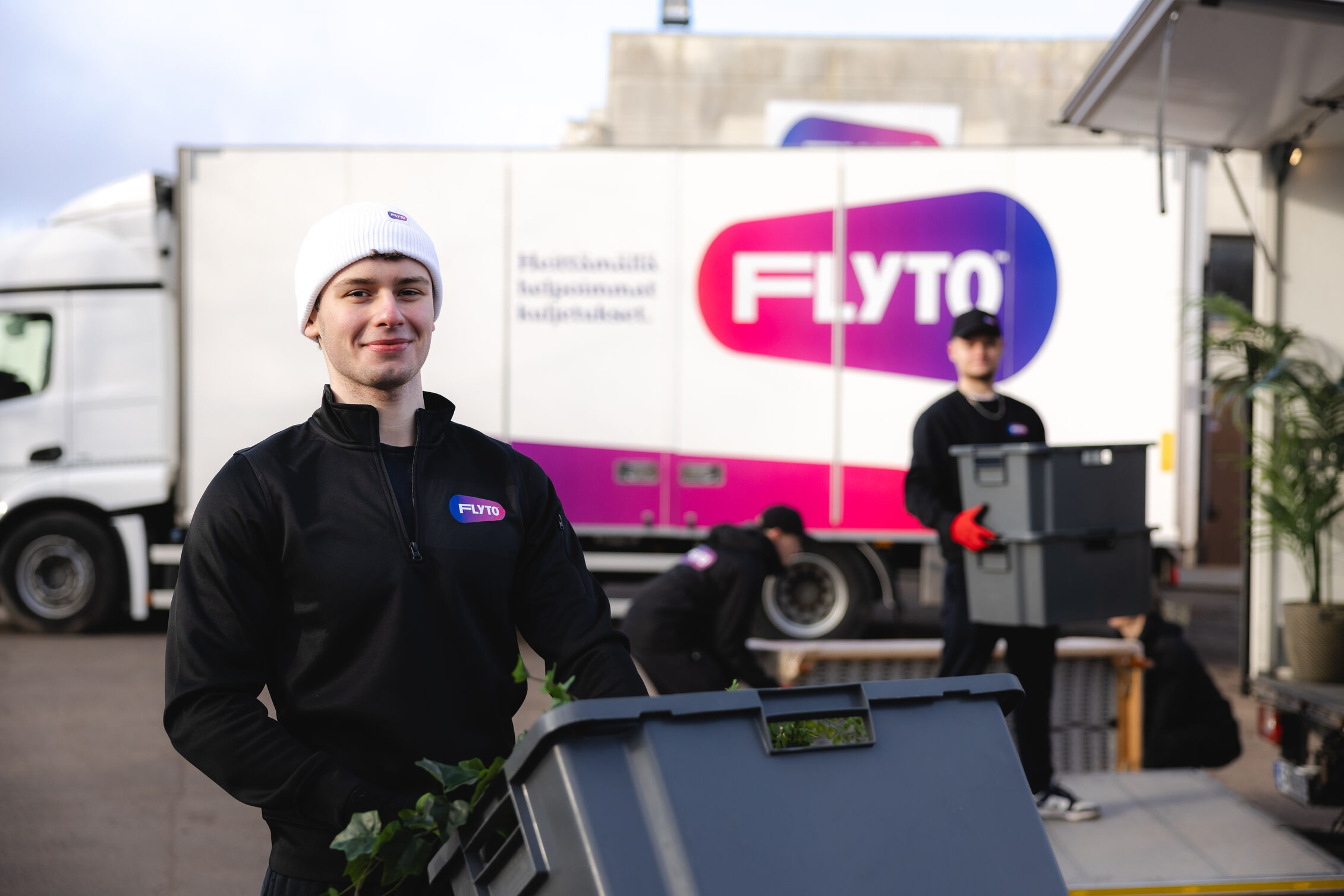
Flyto runs its own offices, warehouses, vehicles, and crews across Northern, Central and Southern Europe, so the UK collection, export documentation, and consolidation leg of your move is handled in-house wherever our network reaches. For the ocean crossing and Ecuadorian side, we work with a carefully vetted network of freight partners and trusted local agents on the ground in Ecuador, who handle SENAE clearance, customs-agent representation, and final delivery in coordination with our team — so you get one point of contact end to end, without us overstating what we operate directly outside Europe.
Frequently asked questions
Do I need a residency visa before I ship my belongings to Ecuador?
You need it granted (or well underway) before your shipment clears customs, since duty-free menaje de casa treatment depends on holding a valid Ecuadorian residency visa (gob.ec tramite).
Can I clear my own shipment through Ecuadorian customs without an agent?
No — foreign nationals importing household goods must be represented by a licensed Ecuadorian customs agent (gob.ec tramite).
Do I have to submit a UK export customs declaration myself?
Usually not personally — your moving/freight company or customs agent files the export declaration via HMRC’s Customs Declaration Service for you, though you remain responsible for an accurate inventory (gov.uk, Export goods from the UK).
Will I still owe UK tax after I leave?
It depends on your income sources and residency status; HMRC’s guidance and form P85 are the starting point, and complex cases (property, pensions, investments) usually warrant a UK tax adviser (gov.uk, Tax if you leave the UK to live abroad).
Can I ship my car to Ecuador?
No. As a foreign national you can’t import a vehicle tax-free under the menaje de casa regime — that benefit is reserved for returning Ecuadorian citizens — and separately, UK cars are right-hand drive, which Ecuador’s vehicle-import rules also restrict. Sell in the UK and buy locally instead (gob.ec tramite).
What if I later move back from Ecuador to the UK?
You can claim UK duty/VAT relief on personal belongings under HMRC’s Transfer of Residence (ToR1) scheme, provided you apply to HMRC and the goods were owned and used for at least six months before your move (gov.uk, ToR1).
Sources
- gov.uk – Export goods from the UK: step by step
- gov.uk – Making a full export declaration
- gov.uk – Get your Income Tax right if you’re leaving the UK (P85)
- gov.uk – Tax if you leave the UK to live abroad
- gov.uk – Moving, living or retiring abroad
- gov.uk – Take cash in and out of the UK
- gov.uk – Taking your pet dog, cat or ferret abroad
- gov.uk – Bringing your pet dog, cat or ferret to Great Britain: which document you need
- gov.uk – Application for transfer of residence relief (ToR1)
- SENAE (aduana.gob.ec) – Aduana informa: condiciones para importación de menaje de casa
- SENAE (aduana.gob.ec) – Para migrantes
- gob.ec / SENAE – Autorización de despacho y nacionalización de menaje de casa y equipo de trabajo
- SENAE (aduana.gob.ec) – Viajeros por vía aérea (declaración de efectivo y bienes)
- Cancillería del Ecuador – Portal eVisas: visas electrónicas para Ecuador
- Agrocalidad – Ingreso al Ecuador de animales de compañía (perros y gatos)
- Agrocalidad – Salida de animales de compañía (perros y gatos)