

Moving from Finland to Ecuador (2026): Complete Guide

Relocating from Finland to Ecuador means running two official processes in parallel: closing out your affairs in Finland — export clearance with Finnish Customs Tulli, deregistering from the population register, and settling your tax residency — and clearing your goods into Ecuador under the correct migratory category with SENAE, Ecuador’s customs service, and the Ministry of Foreign Affairs and Human Mobility. This guide is for a Finnish resident planning a household move to Ecuador, and covers both halves plus a short note on moving back.
Key takeaways
- Finnish Customs (Tulli) requires an export declaration through its online Customs Clearance Service whenever a shipment leaving the EU is worth more than €1,000 or weighs more than 1,000 kg — moving abroad is explicitly listed as a case requiring this (Tulli, export declaration for individuals).
- You must notify the Digital and Population Data Services Agency (DVV) of a move abroad; a move of under one year is registered as temporary, anything longer removes your domicile (kotikunta) in Finland (DVV, moving abroad).
- Leaving Finland does not automatically end your Finnish tax residency: a Finnish citizen is normally treated as generally tax liable in Finland for three full years after the year of the move unless they can show they have no substantial ties left to Finland (Vero, tax residency and non-residency).
- Carrying €10,000 or more in cash out of Finland (or the EU) must be declared to Tulli before departure (Suomi.fi/Tulli, cash declaration); Ecuador applies the same $10,000 threshold on arrival via its Formulario de Registro Aduanero, FRA (SENAE, air travelers).
- Household goods ("menaje de casa") can enter Ecuador duty-free, but only under a defined migratory regime — returning Ecuadorians who lived abroad 2+ years, or foreigners holding a valid Ecuadorian residency visa (SENAE, menaje de casa conditions; gob.ec/SENAE, dispatch and nationalization procedure).
- Popular residency routes for a Finnish mover are the rentista (passive income) and jubilado (pensioner) temporary residency visas, both requiring proof of qualifying monthly income and health insurance, applied for online via the e-VISAS platform (gob.ec/MREMH, rentista visa; gob.ec/MREMH, jubilado visa).
- Dogs and cats need an official Zoosanitary Export Certificate (Certificado Zoosanitario de Exportación) issued by the exporting country’s official veterinary service, confirming the animal meets Ecuador’s published sanitary requirements, to enter Ecuador (Agrocalidad, entry of companion animals); exporting a pet from Finland outside the EU is the sender’s responsibility to clear against the destination country’s rules, coordinated with the Finnish Food Authority (Ruokavirasto, pets outside the EU).
- Foreigners generally cannot bring a vehicle in duty-free as part of their menaje de casa the way returning Ecuadorian nationals can — vehicle importation has separate, stricter conditions (SENAE, menaje de casa conditions).
1. Your Ecuadorian visa status decides your customs treatment
Ecuador does not give duty-free household-goods clearance to anyone who simply shows up. The exemption regime for menaje de casa is tied to your migratory category: returning Ecuadorian nationals who have lived abroad for more than two years qualify automatically, while foreign nationals qualify only once they hold a valid Ecuadorian residency visa (gob.ec/SENAE, dispatch and nationalization procedure). In practice this means a Finn moving to Ecuador should secure the residency visa — most commonly the rentista visa for those living on qualifying passive/investment income, or the jubilado visa for pension income, both requiring monthly income of at least three times Ecuador’s Salario Básico Unificado plus valid health insurance, applied for online through the Ministry of Foreign Affairs and Human Mobility’s e-VISAS platform (gob.ec/MREMH, rentista visa; gob.ec/MREMH, jubilado visa) — before the shipping container leaves Finland. Without the visa in hand (or well advanced), household goods are cleared as ordinary commercial imports subject to full duties and VAT, which can multiply the cost of the move. SENAE requires a formal exemption request, a sworn declaration (declaración juramentada) of the goods, a physical inspection appointment, and submission within a deadline SENAE sets after your arrival — confirm the current deadline with SENAE or a licensed customs agent (agente de aduana) before your goods ship, since the exact window is set by resolution and can change (SENAE, menaje de casa conditions).
2. The Finland export side: Tulli, DVV and Vero
Customs. Finnish Customs (Tulli) governs goods leaving Finland for a non-EU country like Ecuador. If your shipment is worth more than €1,000 or weighs more than 1,000 kg, file an export declaration through Tulli’s online Customs Clearance Service, logged into with Finnish online-banking credentials, a mobile certificate, a certificate card, or the hightrust.id token. Attach an invoice or free-form valued list of the goods and select export procedure 10 — Final export for a permanent move (Tulli can confirm the correct commodity code for personal effects of someone changing residence when you file). Once Customs accepts the declaration you receive a "decision on release," and once the goods actually leave the EU, a "decision on release with certification of exit" — keep this, or its MRN, as your proof of export (Tulli, export declaration for individuals). Alcohol and other restricted items must be reported separately, and cash of €10,000 or more carried on your person must also be declared to Tulli at departure (Suomi.fi/Tulli, cash declaration).
Population registration. Anyone moving abroad must notify the Digital and Population Data Services Agency (DVV). A stay under one year is registered as temporary, keeping your Finnish domicile; longer or open-ended moves are permanent and remove your kotikunta. Notify DVV via its online form (faster authenticated) or a paper form; advisory line 0295 539 225. The foreign address on record matters for pension decisions, conscription letters, and passport renewal (DVV, moving abroad).
Tax residency exit. Leaving Finland does not by itself end your tax liability. Per Finnish Tax Administration (Vero) guidance, a Finnish citizen abroad remains generally tax liable (yleisesti verovelvollinen) — taxed on worldwide income — through the move year plus three full calendar years, unless they show Vero they have no substantial ties (olennaiset siteet) left, such as housing, family, or a business in Finland, which can start limited liability earlier. A non-Finnish-citizen resident’s liability generally ends on actually moving out, provided no home or tie remains. Contact Vero before departure and, if applicable, apply for a non-resident tax card (Vero, tax residency, non-residency and residency under a tax treaty).
3. Ports and transit: from Finland to Ecuador
Household goods shipped by sea from Finland typically move through one of the country’s container ports — Helsinki (Vuosaari), HaminaKotka, or Rauma — none of which run a direct service to South America’s Pacific coast. Freight forwarders normally consolidate cargo through a North European transshipment hub (Hamburg, Rotterdam, Antwerp) and load it onto a transatlantic/Panama-Canal service to Ecuador’s main container port, Guayaquil. Door-to-port transit on this routing is, as a freight-industry estimate rather than an official figure, commonly around 6–9 weeks depending on sailing schedules, consolidation time, and canal routing. Air freight or accompanied baggage typically routes via Helsinki-Vantaa with a European or US connection to Quito (UIO) or Guayaquil (GYE), estimated at roughly 4–10 days door-to-door. Neither range is published by any port or customs authority — treat both as planning estimates only. Whichever route you use, keep your Finnish export declaration and its MRN/exit certification with the shipment, since Ecuadorian customs will expect it to line up with the sworn declaration filed on arrival.
4. The Ecuador import side: SENAE’s menaje de casa process
The Ecuadorian national customs authority is the Servicio Nacional de Aduana del Ecuador (SENAE). To clear household goods duty-free under the menaje de casa regime, you (or a licensed customs agent, required for foreign nationals) submit a returnee/residency certificate together with a request for inspection of the goods, attend the physical inspection SENAE schedules on arrival, sign a sworn declaration (declaración juramentada) listing the goods with a commercial invoice or equivalent, and receive an import declaration with authorized release once SENAE approves it (gob.ec/SENAE, dispatch and nationalization procedure). The regime also carries quantity limits on items like alcohol; confirm the current published list with SENAE or your customs agent before you ship (SENAE, menaje de casa conditions). If instead you fly in with excess baggage, separate airport rules apply: Ecuador allows a defined list of duty-free personal effects (e.g. one television, one computer monitor, limited alcohol/perfume per traveler), and if you exceed those limits or carry $10,000+ in cash/negotiable instruments, you must file the Formulario de Registro Aduanero (FRA) electronically before reaching customs control (SENAE, air travelers).
5. Pets: Finland export, Ecuador import — and the trip home
Into Ecuador. Agrocalidad, Ecuador’s zoosanitary regulator, requires every dog or cat entering the country to carry an official Zoosanitary Export Certificate (Certificado Zoosanitario de Exportación), in Spanish, issued by the exporting country’s official veterinary service and detailing compliance with Ecuador’s sanitary requirements (Agrocalidad publishes the current detailed requirements — including microchip and vaccination specifics — as a downloadable sheet on the same page). A pet arriving in-cabin or collected with checked baggage clears simply by presenting that certificate; a pet arriving as cargo additionally needs an import inspection booked with Agrocalidad’s airport office at least 72 hours in advance (Agrocalidad, entry of companion animals).
Out of Finland. Ruokavirasto, Finland’s Food Authority, handles pet exports to non-EU countries. Only animals with verifiable origin may be exported, identified by microchip or tattoo; the destination country sets the actual health-certificate requirements, and it is the exporter’s responsibility to confirm and meet Ecuador’s specific conditions with their veterinarian before travel (Ruokavirasto, pets outside the EU).
Reverse direction (Ecuador → Finland). Moving back, the roles reverse: Agrocalidad governs the pet’s exit from Ecuador (Agrocalidad, exit of companion animals), while re-entry to Finland follows the EU’s harmonized pet-travel rules (EU pet passport or third-country certificate, rabies vaccination, and possibly titration) — confirm current terms with Ruokavirasto before departure.
6. Vehicles, money and what people forget
Vehicles. Unlike returning Ecuadorian nationals — who may import one used vehicle or motorcycle duty-free as part of their menaje de casa under specific age and value limits — foreigners generally cannot bring a car into Ecuador duty-free under this household-goods regime; vehicle importation for a foreign resident falls under separate, stricter customs procedures, so verify feasibility and cost with SENAE or a licensed customs broker before shipping a car (SENAE, menaje de casa conditions).
Cash. Both ends of this move use the same $10,000/€10,000 cash-declaration threshold: declare to Tulli if you carry that much cash out of Finland (Suomi.fi/Tulli, cash declaration), and file Ecuador’s FRA form if you carry that much cash into or out of Ecuador (SENAE, air travelers).
What people forget. The Finnish tax-residency exit is the most commonly underestimated step — many movers assume leaving Finland ends their tax liability immediately, when in fact substantial ties (a retained home, family remaining in Finland, ongoing Finnish-sourced income) can keep you generally tax liable for up to three years; get a ruling from Vero rather than assuming. On the Ecuador side, people frequently ship their container before their residency visa is approved, which forces the shipment into standard dutiable-import status instead of the tax-free menaje de casa regime — sequence the visa first. Finally, remember your Kela/social-insurance coverage: notifying DVV of the move does not automatically notify Kela, so check separately whether your Finnish health and social insurance coverage continues, lapses, or needs to be arranged privately once you are in Ecuador.
How Flyto handles your Finland to Ecuador move
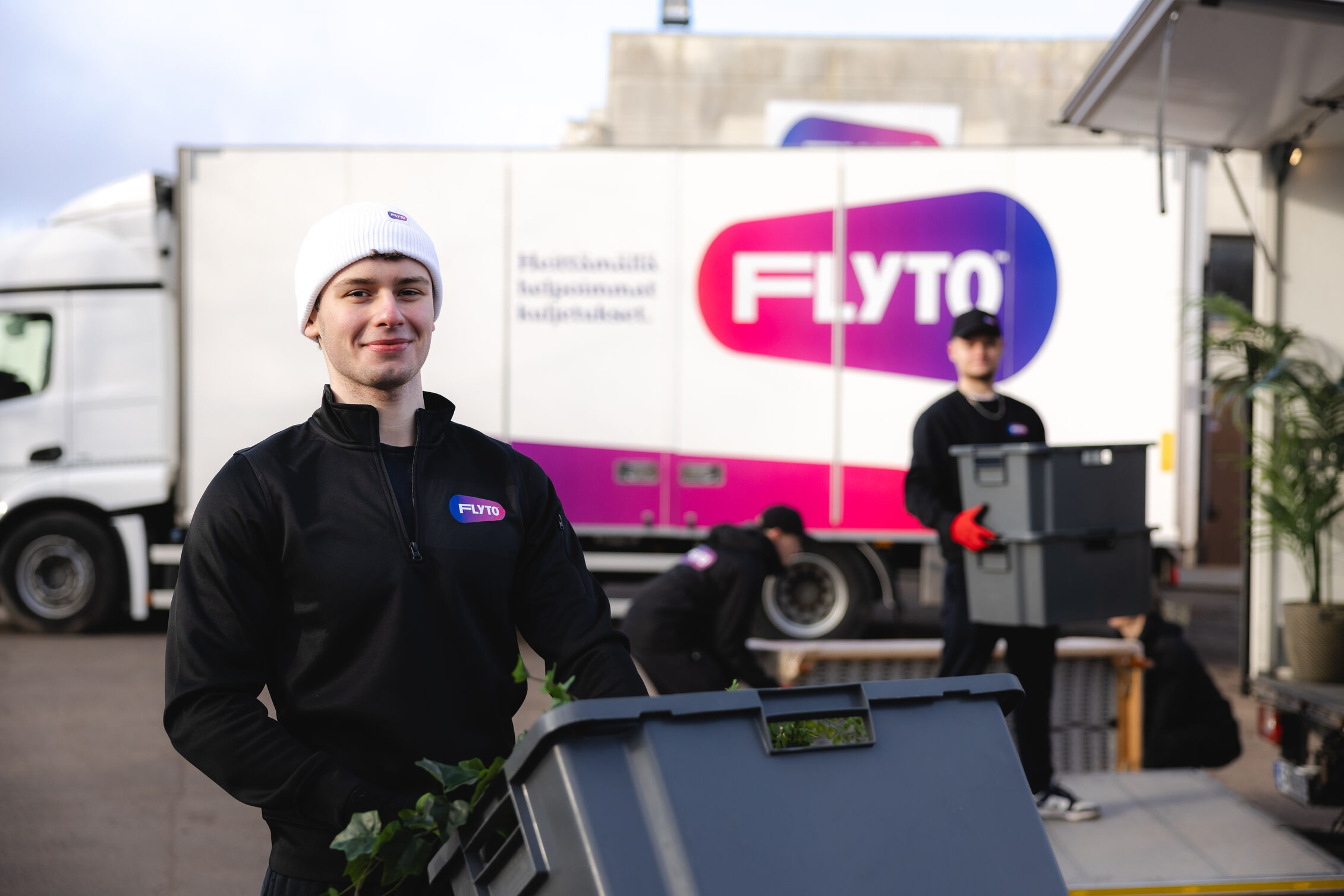
Flyto runs its own offices, warehouses, crews and vehicles across Northern, Central and Southern Europe, so the Finnish collection, export documentation and consolidation for your shipment stay in-house rather than being handed off blind. For the ocean leg to Guayaquil and the final Ecuadorian customs clearance we work through a carefully vetted network of partner carriers and licensed local agents in Ecuador, who handle the menaje de casa filing, physical inspection and delivery on the ground — giving you one point of contact in Finland backed by trusted local expertise at destination.
Frequently asked questions
Do I need an Ecuadorian residency visa before I can ship my household goods duty-free?
Yes in practice — SENAE’s duty-free menaje de casa regime for foreigners is tied to holding a valid Ecuadorian residency visa, so secure the visa (commonly the rentista or jubilado category) before your shipment departs Finland (gob.ec/SENAE; gob.ec/MREMH, rentista visa).
Which Finnish customs system do I file my export declaration in?
Tulli’s online Customs Clearance Service (Tulliselvityspalvelu), which you access with Finnish online-banking credentials or a mobile/certificate card (Tulli, export declaration for individuals).
Do I stop paying Finnish tax the day I move to Ecuador?
Not automatically. Finnish citizens are generally presumed tax-resident in Finland for three years after the move unless they can show they have no substantial ties left; confirm your status with Vero before you leave (Vero).
Can I bring my car to Ecuador as part of my move?
As a foreign resident, generally no — the menaje de casa vehicle exemption is aimed at returning Ecuadorian nationals; foreigners face separate, stricter vehicle-import procedures, so check feasibility with SENAE or a customs broker first (SENAE).
What do I need to bring my dog or cat into Ecuador?
An official Zoosanitary Export Certificate from Finland’s veterinary authority, confirming your pet meets Agrocalidad’s published sanitary requirements (including microchip identification) — check Agrocalidad’s current requirements sheet with your vet well before travel (Agrocalidad).
How long does a Finland-to-Ecuador shipment actually take?
There is no official published transit time; as a freight-industry estimate, sea freight via a North European transshipment hub to Guayaquil commonly runs roughly 6–9 weeks door-to-port, and air freight/accompanied baggage roughly 4–10 days, both varying by carrier, season and customs processing.
Sources
- Tulli — Export declaration for individuals
- Suomi.fi/Tulli — Declaring cash when traveling to/from the EU
- DVV — Moving abroad
- Vero — Tax residency, non-residency and residency in accordance with a tax treaty (natural persons)
- Ruokavirasto — Pets, export outside the EU
- SENAE — Conditions for importing household goods (menaje de casa)
- gob.ec/SENAE — Authorization for dispatch and nationalization of household goods and work equipment
- SENAE — Air travelers (duty-free allowance, FRA, cash declaration)
- gob.ec/MREMH — Rentista temporary residency visa
- gob.ec/MREMH — Jubilado (pensioner) temporary residency visa
- Agrocalidad — Entry of companion animals (dogs and cats) to Ecuador
- Agrocalidad — Exit of companion animals (dogs and cats) from Ecuador