

Moving from Belgium to Ecuador (2026): Complete Guide

Belgium to Ecuador is a two-continent relocation with two very different bureaucracies at each end: Belgium’s precise commune-based population registry and FOD Financiën/Douane customs system on departure, and Ecuador’s SENAE customs service and Cancillería (Ministry of Foreign Affairs and Human Mobility) immigration system on arrival. This guide is written for a Belgian resident — Belgian national or long-term foreign resident — relocating household goods, pets and sometimes a vehicle from Belgium to Ecuador, and it covers both halves of the move plus what changes if you ever move back.
Key takeaways
- You must deregister in person at your Belgian commune/gemeente at the latest the day before you leave, and you can obtain a certificate of deregistration ("Model 8") that’s used to register with the Belgian embassy or consulate abroad (IBZ – FPS Home Affairs).
- Moving personal effects out of the EU requires an export declaration to Belgian Customs (FOD Financiën/Douane), consisting of a full inventory of what you’re taking; FPS Finance does not publish a value-based exemption for household moves, so plan on filing it regardless of shipment size (FPS Finance – Moving from Belgium).
- Belgium introduced a new capital gains tax on financial assets from 1 January 2026, which treats emigration as a deemed sale of your portfolio at its market value on your departure date — residents moving their tax residence abroad should check the deferral rules with FOD Financiën before departure (FOD Financiën – Meerwaardebelasting).
- Your special departure-year tax return is due within three months of leaving, and you then move onto Belgian non-resident tax rules for any remaining Belgian-source income (FPS Finance – Leaving Belgium tax return, FPS Finance – Non-resident tax return).
- In Ecuador, only people entering under a returning-migrant status or on a valid residence visa can clear household goods ("menaje de casa") duty-free through SENAE; tourists cannot (SENAE Resolución 2024-0083-RE, gob.ec – SENAE household goods procedure).
- Dogs and cats need identification with a microchip, a rabies vaccination given between 1 and 12 months before shipment, and an official export health certificate/clinical exam dated within 10 days of travel to enter Ecuador (AGROCALIDAD); leaving Belgium, an official veterinary export health certificate is required, with any extra conditions set by the destination country attached (FASFC – Departure from Belgium).
- Carrying €10,000 or more in cash (or equivalent) out of Belgium requires an EU cash declaration (Your Europe – EU cash rules); carrying USD 10,000 or more into or out of Ecuador requires the online Formulario de Registro Aduanero (FRA) (SENAE – travellers).
- Vehicles are only importable duty-free as part of an Ecuadorian citizen’s returning-migrant menaje de casa — foreign residents generally cannot bring a car in under this regime (SENAE Resolución 2024-0083-RE).
1. Your Ecuador immigration status decides your customs treatment
Ecuador’s duty-free household-goods regime is not available to everyone who lands with boxes. SENAE’s "régimen de excepción de menaje de casa" applies only to two groups: Ecuadorians who have lived abroad and are returning (holding a Certificado de Migrante Retornado, generally after more than two years abroad, with the exoneration requested within 36 months of return) and foreigners who hold a valid Ecuadorian residence visa (SENAE Resolución Nro. SENAE-SENAE-2024-0083-RE; gob.ec – SENAE procedure). Ecuador’s residence system runs through the Cancillería (Ministry of Foreign Affairs and Human Mobility), which issues temporary residence visas that can later be converted to permanent residence once you have accumulated more than 21 months of regular temporary residence in Ecuador (gob.ec – Cancillería/MREMH visa procedure). Practically: secure your Ecuadorian visa before or shortly after your goods ship, because SENAE will ask for it during the customs process, and arriving on a tourist entry stamp with a container of furniture creates real delays and duty exposure.
2. The Belgium export side: deregistration, customs and tax exit
Deregister at your commune. Belgian and EU-citizen residents leaving Belgium permanently must report in person to their local commune/gemeente administration — at the latest the day before departure — to be struck from the population register. You’ll be asked for your ID and, if applicable, your residence card, and asked to state your new address abroad. The commune issues a free certificate of deregistration, often called "Model 8," which you’ll later need to register with the Belgian embassy or consulate covering Ecuador (IBZ – FPS Home Affairs; FPS Foreign Affairs – Before leaving).
Lodge a customs export declaration. Because Ecuador is outside the EU customs territory, your household effects need an export declaration filed with Belgian Customs (part of FOD Financiën/SPF Finances — Douane en Accijnzen/Douanes et Accises), consisting of a detailed inventory of what you’re taking. FPS Finance’s published guidance does not carry a value-based exemption for this declaration, so assume it applies to any household move of meaningful size; in practice, it’s typically filed on your behalf by your moving company or a licensed customs broker rather than by hand (FPS Finance – Moving from Belgium).
Close out your Belgian tax residency. Your commune deregistration date becomes the reference point FOD Financiën uses to switch your status from resident to non-resident taxpayer. You must file a special departure-year tax return within three months of leaving, covering income up to your departure date, via MyMinFin or on paper (FPS Finance – Leaving Belgium tax return). If you retain Belgian-source income (rental property, a Belgian pension, director’s fees) after the move, you’ll subsequently file as a non-resident taxpayer (FPS Finance – Non-resident tax return). Since 1 January 2026 Belgium also applies a new capital gains tax to financial assets, and it treats a change of tax residence as a deemed sale of your portfolio at its market value on the date you leave; a deferral of payment can apply automatically or on request depending on where you emigrate to, so anyone with a shares, bonds, ETF or crypto portfolio should check the emigration-specific rules with FOD Financiën or a tax adviser before departure (FOD Financiën – Meerwaardebelasting).
3. Ports and realistic transit times
Belgium’s relevant gateway is the Port of Antwerp-Bruges — the merged Antwerp and Zeebrugge port authority and one of Europe’s largest container hubs, with global deep-sea container connections (Port of Antwerp-Bruges). On the Ecuadorian side, the main container gateway is Guayaquil (including the newer Posorja deep-water terminal), with Esmeraldas handling smaller volumes.
The following are freight-industry planning estimates, not figures published by any customs or port authority, and actual transit varies by carrier, routing and season:
- Sea freight (FCL/LCL), Antwerp–Guayaquil/Posorja: roughly 3–5 weeks door-to-port transit, plus Ecuadorian customs clearance and inspection time under the menaje de casa regime, which commonly adds 1–3 weeks on top.
- Air freight: typically 3–7 days transit, used mainly for a small essentials shipment rather than full household goods, given cost.
Build in extra buffer at the Ecuador end specifically for the mandatory SENAE physical inspection and declaration steps described below — this is usually the longest variable in the whole timeline.
4. The Ecuador import side: SENAE and the menaje de casa process
All household-goods imports under the exception regime go through Ecuador’s Servicio Nacional de Aduana del Ecuador (SENAE), currently governed by Resolución Nro. SENAE-SENAE-2024-0083-RE. The published procedure is: (1) request admission to the regime and a pre-inspection appointment at the SENAE office in the district where your goods arrive; (2) attend the physical inspection of the goods yourself; (3) sign a sworn declaration ("declaración juramentada") of the inventory; (4) transmit the customs declaration — foreign residents normally need a licensed customs agent (agente de aduana) to do this, while returning Ecuadorian migrants may do it themselves at SENAE’s citizen service window; and (5) withdraw the goods from temporary deposit once SENAE authorizes release (gob.ec – SENAE procedure; SENAE Resolución 2024-0083-RE). Only goods belonging to the family members listed on your migrant/residence documentation qualify. SENAE also runs a dedicated information channel for migrants at aduana.gob.ec/servicio-al-ciudadano/para-migrantes.
5. Pets: what both authorities require
Leaving Belgium: FASFC/AFSCA (Belgium’s federal food and animal-health agency) requires an official veterinary export health certificate for pets travelling to a non-EU ("third") country. If Ecuador imposes its own additional conditions, official proof of those conditions has to be submitted to FASFC in advance, so check Ecuador’s AGROCALIDAD requirements before you request the certificate, and keep your pet’s EU passport, microchip record and rabies vaccination proof current (FASFC – Departure from Belgium).
Entering Ecuador: AGROCALIDAD (Ecuador’s agricultural/animal-health authority) requires dogs and cats to carry an official Certificado Zoosanitario de Exportación issued by the origin country’s official veterinary service, meeting Ecuador’s standard health conditions (certificate model ASE-946). In practice this means: a microchip, with the animal’s vaccination booklet showing the microchip’s application date; a rabies vaccination given between 1 and 12 months before shipment; and a clinical exam no more than 10 days before shipment confirming the animal is free of transmissible disease, reflected in a veterinary certificate from a licensed vet. Pets arriving in the cabin or with checked luggage are nationalized on presentation of the export certificate alone; pets arriving as air cargo additionally need an Import Zoosanitary Permit requested in advance, with documents sent to the arrival airport ahead of the flight (AGROCALIDAD – Ingreso al Ecuador de animales de compañía).
6. Vehicles, money, and things people forget
Vehicles. Under Ecuador’s menaje de casa regime, a motor vehicle or motorcycle can only be imported duty-exempt as part of an Ecuadorian citizen’s returning-migrant household goods — foreign residents moving from Belgium generally cannot bring a car in duty-free under this route (SENAE Resolución 2024-0083-RE). Selling your Belgian-registered car before departure is usually simpler than attempting a standard commercial import.
Cash. Leaving Belgium (or any EU state) with €10,000 or more in cash or equivalent instruments requires an EU cash declaration at the border (Your Europe – EU cash controls). Entering or leaving Ecuador with USD 10,000 or more (cash, negotiable instruments, or goods of that value) requires completing the online Formulario de Registro Aduanero (FRA) in advance, generating a code presented at the border; failing to declare risks fines (SENAE – Viajeros).
Things people forget. Keep your Belgian Model 8 deregistration certificate — Belgian consular registration and some Ecuadorian residency steps ask for it. Ecuador’s exoneration window for returning migrants is time-limited (36 months from return), so don’t let goods sit in storage in Belgium indefinitely. Only items belonging to family members named in your Ecuadorian residence/migrant documentation clear under the menaje de casa exemption, so goods belonging to adult children or roommates travelling separately generally won’t qualify.
How Flyto handles your Belgium to Ecuador move
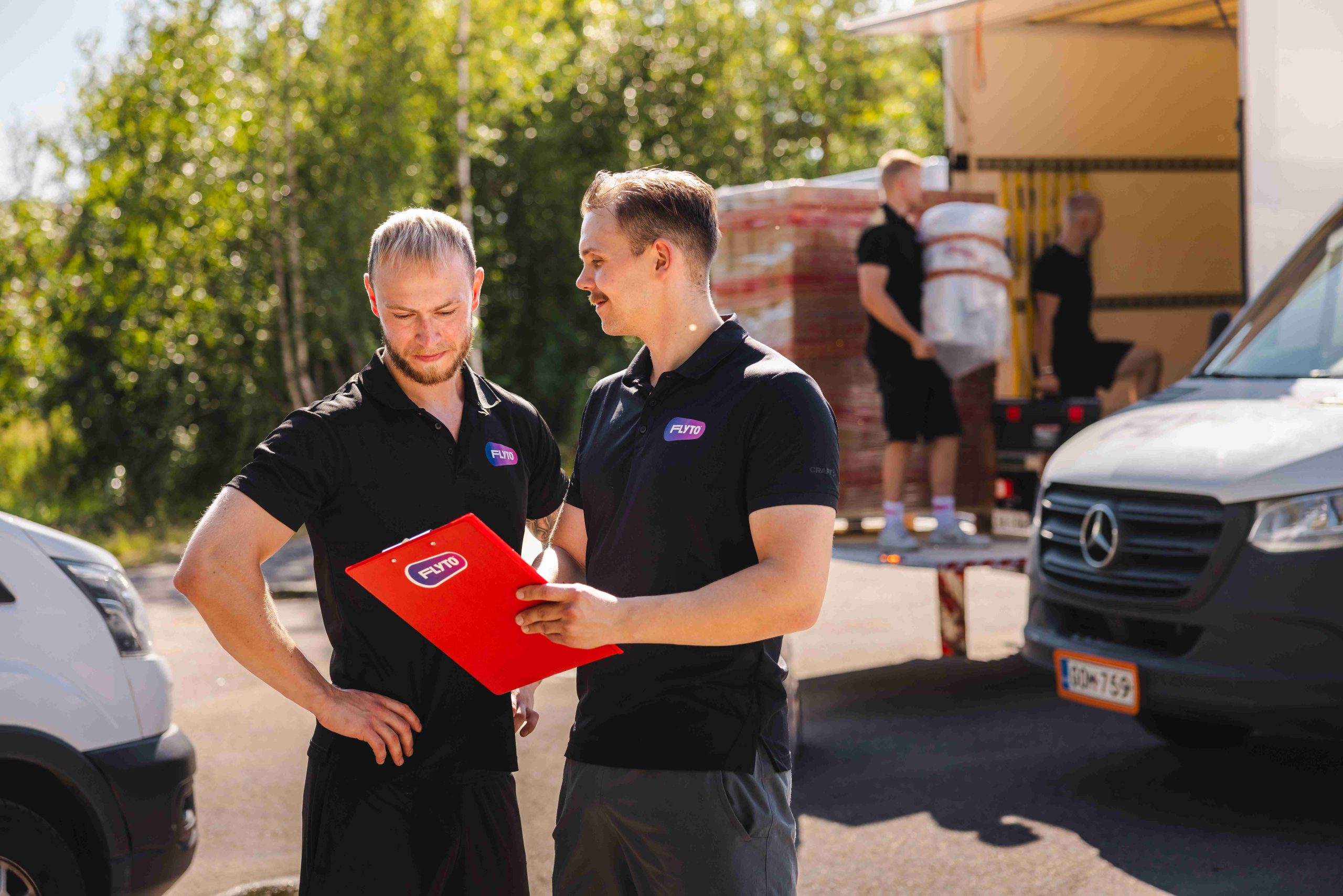
Flyto runs its own offices, warehouses, crews and vehicles across Northern, Central and Southern Europe, so the Belgian collection, packing and export-documentation side of your move is handled in-house from origin to port. For the ocean leg and the Ecuadorian side, we work through a carefully chosen network of partner carriers and subcontractors, plus trusted local partners on the ground in Ecuador who handle the SENAE menaje de casa inspection and clearance process day in and day out — so your shipment is never handed to an unvetted stranger.
Frequently asked questions
Do I need an Ecuadorian visa before my household goods arrive?
Yes in practice. SENAE’s duty-free household-goods regime only applies to holders of a valid Ecuadorian residence visa (or returning Ecuadorian migrants), so goods should not be shipped before your visa status is secured (SENAE Resolución 2024-0083-RE).
When exactly do I stop being a Belgian tax resident?
Your commune deregistration date is the reference point FOD Financiën uses, provided you’ve genuinely relocated your home and main ties abroad; a special departure-year return is due within three months (FPS Finance – Leaving Belgium tax return).
Can I bring my car to Ecuador?
Generally no, unless you are an Ecuadorian citizen returning under the migrant regime — foreign residents cannot import a vehicle duty-free as menaje de casa (SENAE Resolución 2024-0083-RE).
What if my dog or cat is flying in the cabin with me?
You still need the official export health certificate from Belgium, but a separate AGROCALIDAD Import Zoosanitary Permit isn’t required for cabin or checked-luggage arrivals — AGROCALIDAD still inspects the animal on arrival (AGROCALIDAD).
How long do I have to import my household goods after arriving in Ecuador?
Returning Ecuadorian migrants must request the exoneration within 36 months of their return; foreign residents should coordinate timing with their visa validity and SENAE directly, as the physical inspection and declaration steps must be completed before goods leave temporary deposit (SENAE Resolución 2024-0083-RE; gob.ec – SENAE procedure).
Moving back from Ecuador to Belgium — does anything reverse?
Yes: you’d register (not deregister) with your new Belgian commune on arrival, resume Belgian tax residency going forward, and your pet would need an EU-compliant return process — check FASFC’s return-to-Belgium pet page for the current conditions before travelling (FASFC – Return to Belgium). Import of used household goods back into Belgium as an EU resident follows separate "moving to Belgium" customs rules (FPS Finance – Moving to Belgium).
Sources
- IBZ – FPS Home Affairs: Compulsory deregistration for EU citizens leaving Belgium
- FPS Foreign Affairs: Before leaving Belgium – consular registration
- FPS Finance: Moving from Belgium (export declaration)
- FPS Finance: Leaving Belgium – tax return
- FPS Finance: Non-resident income tax return
- FOD Financiën: Meerwaardebelasting (capital gains tax)
- FPS Finance: Moving to Belgium (reverse-direction import rules)
- FASFC: Travelling with your pet – Departure from Belgium
- FASFC: Travelling with your pet – Return to Belgium
- Your Europe (EU): Rules for carrying cash in/out of the EU
- Port of Antwerp-Bruges: Deepsea terminals
- SENAE: Resolución Nro. SENAE-SENAE-2024-0083-RE – Regulations for the menaje de casa and work-equipment exception regime
- gob.ec: Summary of Resolución SENAE-SENAE-2024-0083-RE
- gob.ec / SENAE: Authorization for dispatch and nationalization of household goods procedure
- SENAE: Servicio al ciudadano – Para migrantes
- gob.ec / Cancillería (MREMH): Permanent residence visa procedure
- AGROCALIDAD: Ingreso al Ecuador de animales de compañía (perros y gatos)
- SENAE: Servicio al ciudadano – Viajeros (cash/goods declaration, FRA)