

Moving from Germany to Ecuador (2026): Complete Guide

Moving from Germany to Ecuador means closing out two bureaucratic systems: German precision (Zoll, Bürgeramt, Finanzamt) on one end, and Ecuador’s residency-linked customs regime (SENAE, Cancillería, AGROCALIDAD) on the other. Written for a resident of Germany — German, EU, or third-country national — relocating household goods, pets, a vehicle, and tax residency to Ecuador, this guide covers the Germany export/departure formalities, the Ecuador import/arrival formalities, and closes with a short note on moving back.
Key takeaways
- Your Ecuador visa/residency status decides your customs treatment: the duty-free "menaje de casa" (household goods) regime is only available if you’re relocating with a valid residence visa, not as a tourist — see Cancillería’s residency requirements and SENAE’s household-goods procedure.
- German customs (Zoll, formally the Generalzolldirektion) does not levy export duty on personal household effects, but once a shipment exceeds a low value/weight threshold it must be filed as a formal electronic export declaration through the ATLAS system before it can leave the EU — your mover or its customs agent normally handles this under its own EORI number; see Zoll’s guidance for private individuals transferring residence.
- You must deregister (Abmeldung) your German address at your local Bürgeramt/Meldebehörde — required only when leaving without a new German address, doable no earlier than one week before moving out — per the Bundesportal service description.
- Deregistering your flat does not automatically end unlimited German tax liability; that ends only once you give up your German residence under §8 Abgabenordnung and stop spending more than six months a year in Germany.
- Ecuador’s duty exemption for household goods requires more than two years of continuous residence abroad and, once used, generally cannot be claimed again for ten years — see SENAE’s guidance for migrants and SENAE’s official procedure page.
- Dogs and cats need an ISO microchip, rabies vaccination, and an official zoosanitary export certificate issued shortly before travel to enter Ecuador — see AGROCALIDAD’s pet-entry requirements.
- Carrying €10,000 or more in cash across the German border to/from a non-EU country, or US$10,000 or more into or out of Ecuador, triggers a mandatory declaration — see Zoll’s third-country cash rules and SENAE’s traveler cash declaration.
- The vehicle exemption is for Ecuadorian nationals, not foreigners: a single car or motorcycle can be imported duty-exempt as part of the menaje de casa only by an Ecuadorian citizen returning to reside in Ecuador — a German/EU/third-country national moving on a residence visa qualifies for the household-goods exemption but generally not for the vehicle exemption; see SENAE’s guidance for migrants.
1. How your Ecuador immigration status determines the customs treatment
Whether your container clears Ecuadorian customs duty-free or gets taxed as a commercial import depends on one decision made before you pack a single box: what visa you’re moving on. Ecuador’s Cancillería (Ministry of Foreign Affairs and Human Mobility) issues temporary residence visas (up to two years, covering work, investment, rentier/pensioner and other categories) and permanent residence visas, each with its own income, background-check and documentation requirements — see the Cancillería’s temporary-residence requirements page.
SENAE’s household-goods ("menaje de casa") duty exemption is explicitly tied to this status: available to Ecuadorian nationals returning to reside in Ecuador and to foreign nationals with a valid visa returning to reside in Ecuador, provided they’ve lived abroad more than two years, per SENAE’s official procedure page. Arriving as a tourist and applying for residency later does not retroactively qualify your shipment — the exemption is built around a Certificado de Persona Retornada issued by the Zonal Coordination of the Ministry of Foreign Affairs, tied to your immigration record, so securing your visa before your container leaves Germany is the most important sequencing decision in this move.
2. The Germany export/departure side
Customs authority. Germany’s customs administration is the Generalzolldirektion (Zoll); its portal at zoll.de is the authoritative reference for anyone transferring residence in or out of the EU customs territory. Zoll does not levy export duty on personal household effects leaving the EU, but the shipment must still clear formal export procedures.
Deregistration (Abmeldung). Under the Bundesmeldegesetz, you only need to deregister with your local Meldebehörde (Bürgeramt) if you’re moving abroad without a new German address. This can be done no earlier than one week before moving out; the Bundesportal’s official service listing is the federal reference, though the exact office and channel depends on your city.
Export declaration. Once your shipment leaves EU customs territory for Ecuador, it’s legally an export to a third country. Once the goods’ value or weight rises above the EU’s low-value/non-commercial threshold — commonly cited as €1,000 or 1,000 kg, a limit nearly every household shipment exceeds — a formal electronic export declaration through the ATLAS system becomes mandatory; below that, a simplified oral declaration can suffice. Confirm the currently applicable figures with your mover’s customs agent, and see Zoll’s guidance for private individuals transferring residence for the underlying framework. In practice, your mover or its customs agent files the declaration under its own EORI number, generating the Movement Reference Number (MRN) Ecuadorian customs will want referenced later.
Cash. Carrying cash out of Germany yourself in amounts of €10,000 or more must be declared, unsolicited, when crossing the border to or from a non-EU country — see Zoll’s third-country cash rules.
Tax residency exit. Deregistering your flat is not, by itself, sufficient to end German unlimited tax liability. Under §8 Abgabenordnung, you retain a German "Wohnsitz" for tax purposes wherever you keep a dwelling "under circumstances indicating that you will keep and use it" — so subletting or keeping a flat "just in case" can keep you fully taxable even after Abmeldung. If you or your spouse hold a 1%+ stake in a GmbH, AG or other corporation, leaving can also trigger the exit tax (Wegzugsbesteuerung) under §6 Außensteuergesetz, taxing unrealized share gains as though sold on departure day; the Bundesministerium der Finanzen publishes the official notification form at bundesfinanzministerium.de. Get personal tax advice before departure if this applies.
3. Ports and transit — Germany to Ecuador
Germany’s two principal container gateways for intercontinental household-goods shipments are the Port of Hamburg and Bremerhaven. On the Ecuadorian side, nearly all seaborne household-goods shipments arrive through Guayaquil, Ecuador’s main commercial port, where SENAE’s clearance procedure is administered locally at the district where the container lands (per SENAE’s migrant procedure page).
Transit-time estimate (freight-industry figure, not an official government statistic): sea freight from Hamburg or Bremerhaven to Guayaquil typically runs roughly 4–7 weeks port-to-port, depending on transshipment routing and sailing frequency, plus several days for the mandatory SENAE pre-inspection once the container lands. Air freight from Frankfurt or Munich to Quito or Guayaquil is typically 3–7 days, far pricier per kilo and normally reserved for a small "essentials" shipment rather than full household goods. These figures come from general freight-forwarding experience, not from Zoll, SENAE, or any port authority — treat them as planning estimates only.
4. The Ecuador import side
Two distinct SENAE procedures apply, and it’s important not to confuse them:
- General import declaration (DAI): any commercial or non-exempt shipment is cleared via the standard Declaración Aduanera de Importación, transmitted electronically by a licensed customs agent — see SENAE’s "Para Importar" page. It must be transmitted no more than 15 calendar days before the transport arrives and up to 30 calendar days after.
- Household-goods exemption (menaje de casa): for qualifying returnees/migrants, the process is the Autorización de Despacho y Nacionalización de Menaje de Casa y Equipo de Trabajo, detailed on SENAE’s official gob.ec procedure page and on SENAE’s guidance for migrants. You’ll need your Certificado de Persona Retornada, a sworn declaration ("declaración juramentada") of the goods, and the commercial invoice/inventory. SENAE requires a physical inspection before the declaration is finalized, and the exemption generally cannot be claimed again for ten (10) years from the date the previous shipment was released, per the same SENAE guidance. The list of goods eligible as menaje — and items that are restricted or excluded, such as alcohol and tobacco in bulk — is set by SENAE resolution (currently Resolution SENAE-SENAE-2024-0083-RE); check the current list with your customs agent before shipping anything unusual.
Family members who can’t travel together with the main shipment can bring their share of the household goods separately, but SENAE ties this to a defined window after the main customs declaration is registered — confirm the current deadline directly with SENAE or your customs agent when you file, since these windows are periodically revised by resolution.
Cash on arrival. If you or a family member is carrying US$10,000 or more in cash, negotiable instruments, or precious metals/stones into or out of Ecuador, it must be declared through SENAE’s Formulario de Registro Aduanero — see SENAE’s air-traveler declaration page.
5. Pets — official rules both ends
Leaving Germany: dogs, cats and ferrets need an ISO-compatible microchip and a current rabies vaccination; for travel to a non-EU country you’ll need an official veterinary export health certificate (an EU pet passport only covers intra-EU travel), and some third countries additionally require a rabies antibody titration blood test — per the Bundesministerium’s (BMLEH) pet-travel regulations.
Entering Ecuador: AGROCALIDAD requires a Certificado Zoosanitario de Exportación issued by the official veterinary service of the origin country, based on a clinical exam performed shortly before embarkation, confirming the animal is free of transmissible disease. A current rabies vaccination and an ISO microchip are also required — see AGROCALIDAD’s pet-entry requirements. The exact pre-travel waiting period after a first rabies dose and how far in advance the clinical exam must be performed are set by AGROCALIDAD and can be revised — confirm current windows with your vet and AGROCALIDAD before booking travel. Only dogs and cats count as conventional companion animals under this regime.
6. Vehicles, money, and things people forget
- Vehicles are an Ecuadorian-nationals-only benefit. Within the menaje de casa regime, a car or motorcycle can be included duty-exempt only for an Ecuadorian citizen (18 or older) returning to reside in the country — not for a foreign national moving on a residence visa. For an Ecuadorian citizen, the vehicle must be from the last five model years and, per SENAE, capped at 80 Salarios Básicos Unificados (SBU) in value for a car or 25 SBU for a motorcycle (with limited nationalization of a modest excess above the cap); the SBU rate applied is the one in force on the date the declaration is accepted. Confirm the current SBU value and any updates with SENAE before committing to ship a car.
- Clothing/personal-effects cap: each family member (the migrant and each accompanying relative) can bring up to 200 kg of clothing, footwear and accessories under the same exemption, matched to family composition on arrival, per the same SENAE guidance.
- Reverse re-entry clock: if you ever ship goods back to Germany, duty relief there requires that you maintained your normal residence outside the EU for at least 12 months and had used the goods for at least 6 months before the move, per Zoll’s rules.
- Restricted items: Ecuador’s menaje de casa goods list is set by SENAE resolution and excludes or restricts certain items, including alcohol and tobacco in bulk — don’t assume your wine collection travels duty-free; check the current list before shipping.
- German tax filing doesn’t stop at the border: German-source income (rental property, a German pension, capital income) can keep you subject to limited tax liability even after you’ve fully emigrated — raise this with a Steuerberater before you leave.
- The exemption clock is real: SENAE ties the duty exemption to more than two years abroad — start gathering proof of your German residence period early, since SENAE verifies this against passport and migration records.
Reverse direction: moving from Ecuador back to Germany
If you later relocate back, the same two systems apply in mirror image. On the Ecuador side, complete SENAE’s normal export formalities for goods leaving the country, and for pets obtain an AGROCALIDAD export zoosanitary certificate before departure (AGROCALIDAD publishes companion-animal export requirements alongside its entry rules — confirm the current procedure directly with AGROCALIDAD). On the German side, re-register (Anmeldung) at your new address, and household goods can again qualify for duty relief under the Übersiedlungsgut regime if you maintained your residence outside the EU for at least 12 months and had used the goods for at least 6 months, per Zoll’s guidance. Your pet must meet standard EU entry conditions (rabies vaccination, microchip, and — depending on Ecuador’s rabies risk classification — possibly a titer test) under the same BMLEH framework.
How Flyto handles your Germany to Ecuador move
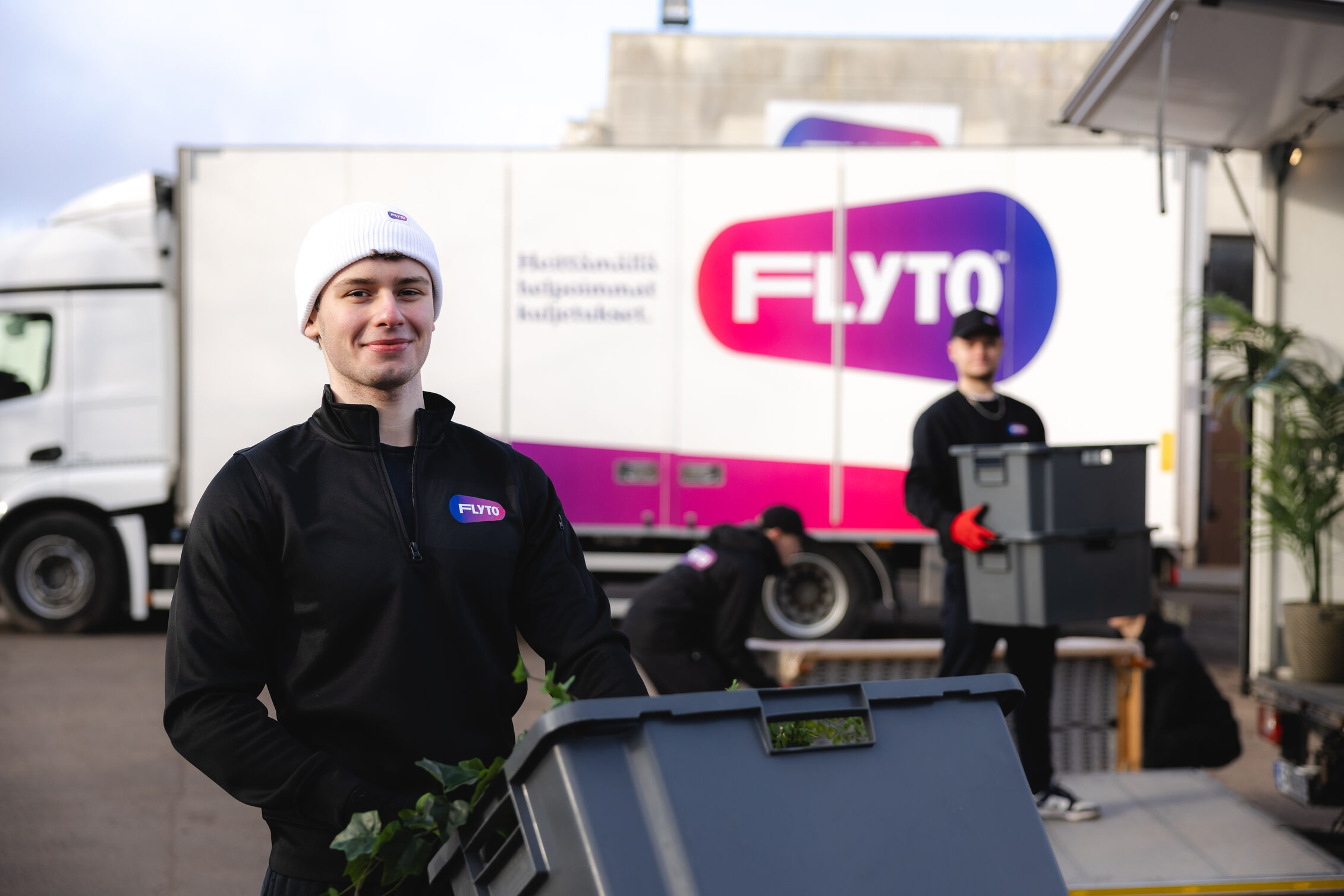
Flyto runs its own offices, warehouses, crews and vehicles across Northern, Central and Southern Europe, so the German end of your move — packing, export documentation, and trucking to Hamburg or Bremerhaven — is handled by our in-house teams rather than handed off cold to a subcontractor. For the ocean leg and the Ecuadorian side, we work through a carefully vetted network of shipping partners and trusted local agents in Ecuador who handle SENAE clearance, the menaje de casa filing, and final delivery, so you get consistent European-side service paired with genuine on-the-ground expertise in Guayaquil and beyond.
Frequently asked questions
Do I need a residence visa before I ship my household goods to Ecuador?
You need it before you can claim the duty exemption. SENAE’s menaje de casa regime is available to foreign nationals with a valid Ecuadorian residence visa, tied to a Certificado de Persona Retornada — see SENAE’s official procedure. Shipping as a tourist means your goods are cleared as an ordinary taxable import instead.
Do I have to deregister in Germany even if I plan to keep a bank account there?
Yes if you’re giving up your only German residence — banking relationships don’t affect the Abmeldung requirement, which is address-based under the Bundesmeldegesetz (see the Bundesportal listing). Keeping a German bank account is unrelated to your tax residency status too.
Will I still owe German income tax after I move to Ecuador?
Not on worldwide income, once your unlimited tax liability genuinely ends under §8 AO — but German-source income (rent, pensions) can still be taxed there under limited tax liability, and business owners with significant company shareholdings should check exit-tax exposure under §6 AStG first.
How long does SENAE take to clear a household-goods shipment?
There’s no single official processing time published; expect a scheduled physical inspection after your documents are submitted, followed by clearance once the inspection report and any corrections are accepted — build buffer time into your move rather than assuming a fixed turnaround.
Can I bring my dog or cat without a quarantine period?
Ecuador does not require quarantine for dogs/cats that arrive with a compliant Certificado Zoosanitario de Exportación, current rabies vaccination and microchip, per AGROCALIDAD’s requirements — the key is getting the export certificate issued correctly by your German vet before departure.
Is there a duty-free allowance for a car?
Only for Ecuadorian citizens, and only within the menaje de casa regime — a car from the last five model years capped at 80 SBU in value, or a motorcycle at 25 SBU. Foreign nationals moving on a residence visa generally cannot use this vehicle exemption even though they qualify for the household-goods exemption itself — confirm current limits with SENAE before you commit to shipping a car, as it’s often more cost-effective to buy locally in Ecuador.
Sources
- Zoll (Generalzolldirektion) — Transferring residence
- Zoll — Cash declaration requirement, third countries
- Bundesportal — Wohnsitz abmelden (deregistration)
- Gesetze im Internet — § 8 Abgabenordnung (Wohnsitz)
- Bundesministerium der Finanzen — Wegzugsbesteuerung / § 6 AStG notification form
- BMLEH — Pet travel/entry regulations
- SENAE — Para Migrantes (household-goods import)
- SENAE / gob.ec — Autorización de Despacho y Nacionalización de Menaje de Casa
- SENAE — Para Importar (general import declaration)
- SENAE — Viajeros por Vía Aérea (traveler cash declaration)
- Cancillería del Ecuador — Requisitos básicos para residencia temporal
- AGROCALIDAD — Ingreso al Ecuador de animales de compañía (perros y gatos)
- AGROCALIDAD — Salida de animales de compañía (perros y gatos)