

Moving from Sweden to Brazil (2026): Complete Guide

Relocating from Sweden to Brazil means crossing two very different administrative systems: Sweden’s EU-integrated export and civil-registration rules, and Brazil’s customs "bagagem" (baggage) regime for incoming residents. This guide is for anyone folkbokförd in Sweden — Swedish or foreign national — moving household goods, pets and possibly a vehicle to Brazil for work, family or retirement. It covers what you must do with Tullverket and Skatteverket before you leave Sweden, what Receita Federal and the Polícia Federal require once you land in Brazil, and closes with a short note on moving the other way, Brazil back to Sweden.
Key takeaways
- Your Brazilian visa/residence status is what unlocks duty-free import of your goods — a residence visa (not a tourist visa) is required to use Brazil’s "bagagem desacompanhada" (unaccompanied baggage) exemption, and foreigners must register for an RNM within 90 days of arrival (Gov.br – Registrar-se como estrangeiro no Brasil).
- If you’ll live abroad one year or more, you must report the move to Skatteverket — via e-service or form SKV 7665 — no later than one week before departure.
- Leaving the Swedish population register does not automatically end your Swedish tax liability: if you’re a Swedish citizen or have lived in Sweden at least 10 years, you must prove you no longer have "väsentlig anknytning" (essential ties) to Sweden (Skatteverket).
- Household goods leaving Sweden for a non-EU country like Brazil require an export customs declaration through the EU’s AES system, filed by you or your mover (Tullverket).
- In Brazil, unaccompanied baggage must arrive within a window of 3 months before to 6 months after you personally arrive, or a penalty applies (Receita Federal).
- Dogs and cats entering Brazil need an International Veterinary Certificate (CVI), current rabies vaccination and antiparasitic treatment, checked by VIGIAGRO on arrival — no quarantine, microchip only recommended (MAPA).
- Brazil’s import-licensing rules do not authorise used consumer goods, which in practice rules out shipping a used passenger car for individual relocation, with only narrow exceptions (Siscomex/gov.br).
- Carrying cash of €10,000 or more out of Sweden, or US$10,000 or more into Brazil, must be declared to Tullverket (Tullverket) and Receita Federal (Receita Federal) respectively.
1. Why your Brazilian visa status decides your customs treatment
Brazil’s duty-free "bagagem" regime for movers isn’t available to everyone who lands with a container of furniture — it’s tied to immigration status. The regime covers Brazilians returning after more than a year abroad and foreigners relocating with an appropriate residence visa (temporary or permanent), issued via Brazil’s consular network under the Ministério das Relações Exteriores’ visa categories such as the work visa VITEM V (Embaixada do Brasil em Estocolmo). Arriving on a tourist visa (VITEM I / VITUR) does not qualify you for the household-goods exemption. Once in Brazil, every foreign resident holding a temporary visa or residence authorisation must additionally register with the Polícia Federal for a Registro Nacional Migratório (RNM) within 90 days of entry — which first requires a CPF tax number — under penalty of fines (Gov.br – Registrar-se como estrangeiro no Brasil). Sort your visa and CPF before your shipment leaves Sweden: customs brokers in Santos will ask for proof of your residence status before releasing your container.
2. The Sweden side: export declaration, deregistration and tax exit
Customs authority: Tullverket is Sweden’s customs agency and the body that governs moving goods leaving the country. Moving from Sweden to a country outside the EU (Brazil) requires you to declare your goods for export — either yourself at a customs office/online, or through your moving or freight company (Tullverket). Technically this runs through the EU’s electronic AES (Automated Export System): private individuals’ declarations carry the additional-information code "PRIVA," and ordinary moving-goods exports use procedure code 1000 in the declaration (Tullverket). There is no minimum-value exemption from declaring — every export consignment leaving EU customs territory needs a declaration regardless of value; your mover normally handles this as part of the shipment paperwork.
Deregistration (folkbokföring): If you plan to live abroad for one year or more, Swedish law requires you to notify Skatteverket, via their e-service or paper form SKV 7665, no later than one week before you leave. Your population-register status then changes from "Bosatt" (resident) to "Utvandrad" (emigrated); you keep your Swedish personnummer and citizenship is unaffected (Skatteverket).
Tax residency exit: Deregistering from folkbokföring is a civil-registration act, not automatically a tax exit. Skatteverket separately assesses whether you remain "obegränsat skattskyldig" (unlimited tax liability) based on "väsentlig anknytning" (essential ties) — family, housing, business interests left in Sweden. If you’re a Swedish citizen or have lived in Sweden at least ten years, the burden of proof that ties have been severed rests on you for the first five years after the move (Skatteverket). Practically: sell or fully let your Swedish home, resign directorships, and keep records, or Skatteverket may keep taxing your worldwide income after you’ve left.
Cash: If you leave Sweden (or cross any EU external border) carrying €10,000 or more in cash or equivalent bearer instruments, you must report it to Tullverket, ideally via their online service before travelling (Tullverket).
3. Ports and transit: the physical route
Sweden’s main container gateway is the Port of Gothenburg, Scandinavia’s largest port, handling roughly 30% of Sweden’s foreign trade and about half of all Swedish container traffic (Göteborgs Hamn – Hamnen i siffror). It has no direct liner service to South America; cargo bound for Brazil is typically trans-shipped through hub ports such as Bremerhaven or Antwerp onto a South America-bound vessel. On the Brazilian side, most household-goods shipments and general cargo clear through the Port of Santos, widely recognised as Latin America’s largest port, overseen by Brazil’s Ministério de Portos e Aeroportos (gov.br/portos-e-aeroportos).
Transit times (freight-industry estimate, not an official figure): sea freight for a full or shared container from Gothenburg to Santos, including one trans-shipment, typically runs 6–9 weeks door-to-port, plus Brazilian customs clearance. Airfreight is faster in transit (roughly 3–7 days flight-side) but far more expensive per cubic metre and usually reserved for a small "first-needs" shipment rather than a full household. Always build in buffer for Brazilian customs clearance and VIGIAGRO/Receita Federal document checks, which can add one to several weeks depending on documentation completeness.
4. The Brazil side: bagagem desacompanhada and the import process
Household goods brought into Brazil by an incoming resident fall under the unaccompanied baggage regime (regulated by Receita Federal normative instructions), open to Brazilians returning after over a year abroad and to foreigners moving in with a valid residence visa (Receita Federal). Key rules:
- Timing window: goods must arrive in Brazil no earlier than 3 months before, and no later than 6 months after, your own arrival; missing the window without an accepted justification means losing the special tax treatment for the shipment.
- Duty treatment: used personal effects, books and used household furniture/domestic goods generally enter tax-free under the regime; new goods and items beyond your personal allowance are taxed, so keep new-purchase items to a minimum in the shipment.
- Clearance process: your shipment is cleared via a Simplified Import Declaration (DSI) registered in Siscomex (Brazil’s integrated foreign-trade system), supported by an itemized packing list with approximate values, the original bill of lading in your name, your passport/entry proof, ID copy, and — for foreigners — your visa documentation. A licensed customs broker (despachante aduaneiro) normally files this on your behalf under a power of attorney.
- Declaring goods and cash on arrival: if you’re carrying goods above the traveller’s tax-free allowance, or cash/bearer instruments equivalent to US$10,000 or more, you must file Brazil’s electronic e-DBV (Declaração Eletrônica de Bens do Viajante) online before or on arrival (gov.br e-DBV; Receita Federal cash rule).
5. Pets: both ends of the journey
Leaving Sweden: pets that normally reside in Sweden and are travelling abroad should be reported to Tullverket before or when you (or they) next cross the Swedish border, particularly relevant if you plan to return with them later (Tullverket). Check Brazil’s entry requirements (below) well ahead, since the rabies-antibody blood test needed for the return journey has a mandatory waiting period.
Entering Brazil: dogs and cats need an International Veterinary Certificate (CVI) issued by the official veterinary authority of the country of origin, presented to VIGIAGRO on arrival at the airport, port or border post. Brazil requires a valid rabies vaccination (pets over 90 days old, at least 21 days since the primary dose) and antiparasitic treatment within 15 days before the CVI is issued. Brazil does not require a rabies antibody titer test from any country, has no quarantine for dogs or cats, and microchipping is recommended best practice but not a legal entry requirement (MAPA/VIGIAGRO).
Reverse direction (bringing a pet back to Sweden from Brazil): this is the harder leg. Brazil is treated by Sweden as a country where the rabies situation is not under control, so a dog or cat entering Sweden from Brazil needs: ISO microchipping, a valid rabies vaccination, an approved rabies-antibody blood test taken at least 30 days after vaccination, and then a mandatory wait of at least 90 days from the date of that blood sample before entry into Sweden — with no quarantine but strict, checked paperwork at a designated travellers’ point of entry (Jordbruksverket). Start this process months before a return move.
6. Vehicles, money and things people forget
Vehicles: don’t plan to ship your Swedish car as part of the household move. Vehicles fall outside Brazil’s baggage/duty-exemption concept, and Brazil’s import-licensing rules (Portaria SECEX nº 249/2023) do not authorise the import of used consumer goods — which in practice rules out bringing a used passenger car into Brazil as an ordinary individual. Narrow exceptions exist (for example, collectible vehicles over 30 years old for cultural/collection purposes, and vehicles specially adapted for people with disabilities relocating to Brazil), but there is no general route for an ordinary relocating household to import its car — new or used — without going through a licensed importer, full standard duties and a Siscomex Import Declaration (Siscomex/gov.br). Budget to sell your car in Sweden and buy locally in Brazil instead.
Money: as above, declare cash of €10,000+ leaving Sweden (Tullverket) and cash equivalent to US$10,000+ entering or leaving Brazil via the e-DBV (Receita Federal).
Things people forget: get your CPF (Brazilian tax number) sorted before or immediately on arrival — it’s a prerequisite for the RNM registration, for opening a bank account, and for the customs broker to file your DSI. Keep your original bill of lading and a detailed, valued packing list; Brazilian clearance moves faster with a complete inventory than a vague one. And because folkbokföring deregistration and Swedish tax-residency exit are two separate processes, don’t assume that reporting your move to Skatteverket alone closes out your Swedish tax file — confirm your status directly with them.
How Flyto handles your Sweden to Brazil move
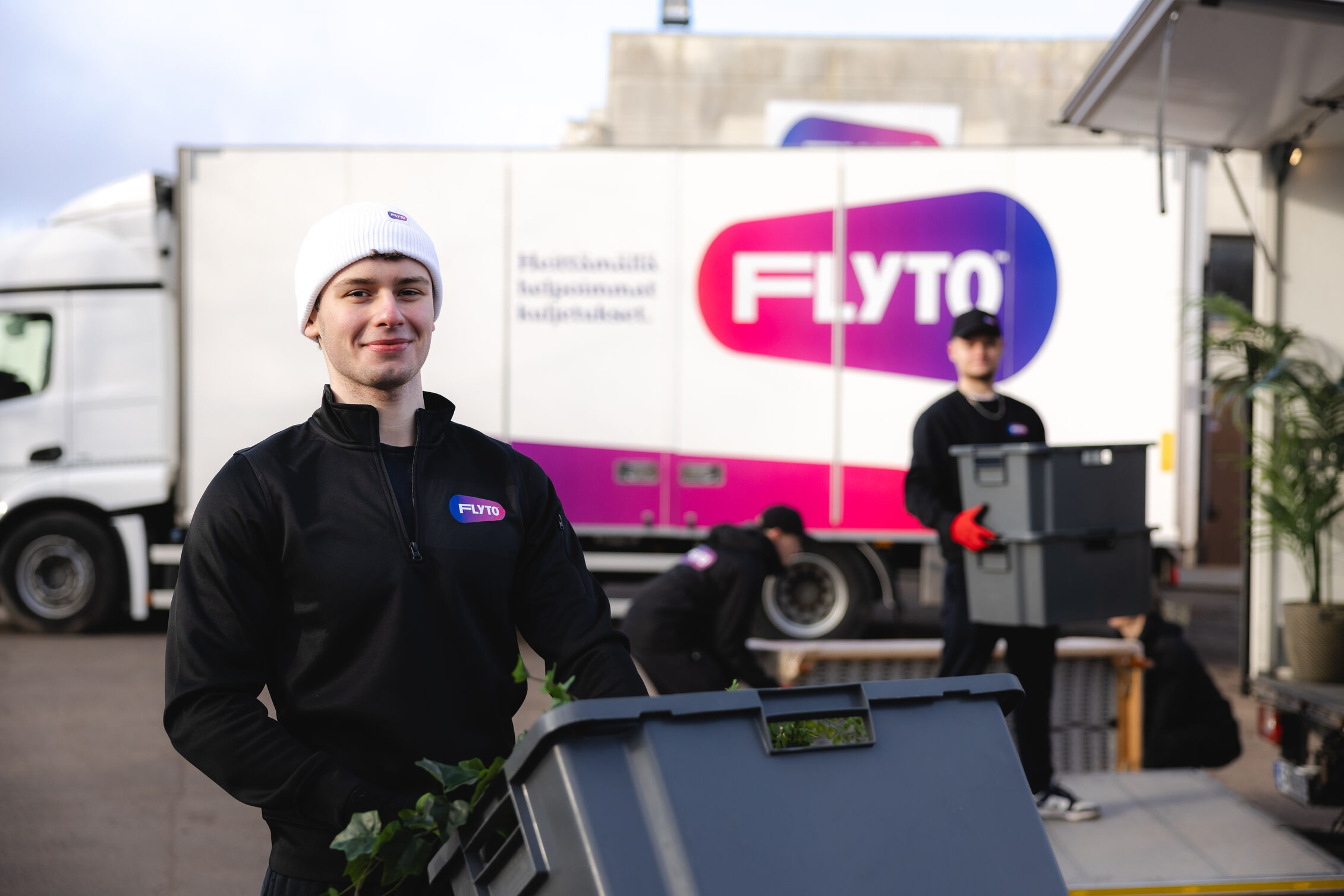
Flyto runs its own offices, warehouses, crews and vehicles across Northern, Central and Southern Europe, so the Swedish collection, packing and Gothenburg export handling on your move is done in-house by our own teams. For the ocean leg and Brazilian customs clearance we work through a carefully vetted network of subcontractor carriers and trusted local partners on the ground in Brazil, who handle VIGIAGRO/Receita Federal formalities and last-mile delivery so your shipment clears smoothly at Santos.
Frequently asked questions
Do I need a Brazilian residence visa before my shipment leaves Sweden?
You don’t need the visa in hand before packing starts, but you do need it — and eventually your CPF and RNM registration — to claim duty-free treatment under Brazil’s bagagem regime when your goods arrive (Receita Federal; Gov.br – Registrar-se como estrangeiro no Brasil).
How long does Skatteverket give me to report my move?
You must notify Skatteverket no later than one week before departure if you intend to live abroad for a year or more (Skatteverket).
Can my unaccompanied baggage arrive before I do?
Yes — up to 3 months before your own arrival, or up to 6 months after; outside that window you risk losing the regime’s tax-free treatment (Receita Federal).
Can I ship my Swedish car to Brazil?
No, not as a normal move. Brazil’s import rules effectively bar individuals from importing a used passenger car, and there’s no general route for a new one either without going through a licensed importer — budget to sell in Sweden and buy locally in Brazil instead (Siscomex/gov.br).
Does my dog need a blood test to enter Brazil?
No — Brazil does not require a rabies-titer blood test from any country, only a current rabies vaccination, antiparasitic treatment and a CVI checked by VIGIAGRO on arrival (MAPA).
Am I still liable for Swedish tax after I deregister from folkbokföring?
Possibly — deregistration is separate from tax residency. If you’re a Swedish citizen or lived in Sweden 10+ years, you must show you no longer have "väsentlig anknytning" to Sweden before unlimited tax liability ends (Skatteverket).
Sources
- Tullverket – Flytta från Sverige till ett land utanför EU
- Tullverket – Deklarationshandledning för e-tjänsten Tulldeklaration export
- Tullverket – Kontanta medel
- Tullverket – Resa med hund eller katt
- Skatteverket – Jag ska flytta utomlands. Ska jag ändra min folkbokföring?
- Skatteverket – Väsentlig anknytning till Sverige
- Göteborgs Hamn – Hamnen i siffror
- Ministério de Portos e Aeroportos
- Receita Federal – Bagagem desacompanhada e mudança para o Brasil
- Gov.br – Declarar bens para viagem internacional (e-DBV)
- Receita Federal – Dinheiro em espécie na entrada no Brasil
- Gov.br – Registrar-se como estrangeiro no Brasil (RNM)
- MAPA/VIGIAGRO – Animais de Estimação
- Embaixada do Brasil em Estocolmo – Vistos/Visas (incl. VITEM V)
- Siscomex/gov.br – Portaria SECEX nº 249/2023, texto consolidado
- Jordbruksverket – Ta in hundar från länder utanför EU där rabiessituationen inte är under kontroll