

Moving from Portugal to Brazil (2026): Complete Guide

Portugal to Brazil is one of the most common relocation corridors in the Lusophone world, run every year by Portuguese nationals taking up jobs or retirement in Brazil, by Brazilians "voltando" after years in Portugal, and by third-country nationals moving on from a spell in Lisbon or Porto. The move has two entirely separate bureaucratic halves: on departure, Portugal’s tax and customs authority wants your fiscal address updated and, in some cases, an export declaration for your goods; on arrival, Brazil’s Receita Federal decides whether your household goods enter duty-free under its "mudança de residência" regime — and that decision depends on your immigration status, not just what you’re carrying. This guide is written for a resident of Portugal — Portuguese, Brazilian, or any other nationality — relocating to Brazil, and covers both the export and import side plus a short note on the reverse move.
Key takeaways
- Duty-free import of household goods into Brazil only applies if you qualify as a "traveler in relocation" — a foreigner with regular immigration status, or a Brazilian who lived abroad for more than one year — per Receita Federal’s rules for moving to Brazil.
- Your unaccompanied baggage (the shipped container) must arrive in Brazil within a window of three months before to six months after you personally arrive, or you risk losing the exemption or facing a 20% penalty, per Receita Federal.
- Portugal requires you to update your fiscal address (morada fiscal) with the Autoridade Tributária e Aduaneira (AT) within 60 days of switching from resident to non-resident, done online via the Portal das Finanças if you have no Cartão de Cidadão, or automatically if you do, per Portal das Finanças and the gov.pt "Mudar de casa" guide.
- Since Decree-Law 44/2022, most people moving to a non-EU country like Brazil no longer must appoint a Portuguese tax representative — but the exemption only applies if you have no outstanding Portuguese-source tax matters and opt into electronic notifications, per the Portuguese government’s announcement.
- Carrying or shipping €10,000 or more in cash out of the EU requires a declaration to customs before departure, per the European Commission’s Your Europe portal; the mirror rule on the Brazilian side is US$10,000 or its equivalent in any currency (including reais), declared via the e-DBV, per Receita Federal.
- Used vehicles are, as a general rule, not importable into Brazil outside narrow special regimes; a proper vehicle import needs a formal Declaração de Importação (DI) filed in Siscomex, per Receita Federal.
- Pets generally need an official veterinary health certificate to exit Portugal for a non-EU destination — confirm the exact requirement for Brazil via DGAV’s Certific@+ system — per DGAV, and a Certificado Veterinário Internacional plus valid rabies vaccination to enter Brazil, per MAPA/VIGIAGRO.
- Your Brazilian immigration status is handled by the Polícia Federal: you register in person (via the SISMIGRA system) to obtain the Carteira de Registro Nacional Migratório (CRNM) — within 90 days of entry on a temporary visa, or within 30 days of your residence authorization being published, per gov.br — Registrar-se como Estrangeiro no Brasil.
1. Why your immigration status decides your customs treatment
Brazil does not give tax-free treatment to household goods simply because you’re moving countries — it gives it to people who qualify as being in a bona fide change of residence. Receita Federal’s own rules state the regime applies to foreigners moving to Brazil, or to a "brasileiro que residiu no exterior por mais de 1 (um) ano" — a Brazilian who lived abroad for more than one year, with occasional trips home capped at 45 days a year without breaking that continuity (Receita Federal). A tourist-visa entry does not unlock this exemption.
For a foreign national, that means the sequence matters: obtain your Brazilian visa through a Brazilian consulate under the visa categories set out by the Ministério das Relações Exteriores (MRE — Quadro geral de regime de vistos), then register in person with the Polícia Federal — within 90 days of entry on a temporary visa, or within 30 days of your residence authorization being published in the Official Gazette — to obtain your Carteira de Registro Nacional Migratório (CRNM), the document that proves your regular migratory status (Polícia Federal — Registrar-se como Estrangeiro no Brasil). Until that status is regularized, customs can treat your shipment as an ordinary dutiable import rather than a tax-exempt household move. Brazilian returnees should keep proof of their period of residence abroad (rental contracts, employment records, Portuguese residence permits) on hand, since Receita Federal can ask for evidence of the qualifying period.
2. The Portugal export side: deregistering and declaring
The authority. Customs and export declarations in Portugal fall under the Autoridade Tributária e Aduaneira (AT), the merged tax-and-customs body operating through the Portal das Finanças (AT / Portal das Finanças).
Reporting your departure. Portugal doesn’t run a separate "leaving the country" population register the way some EU states do; what you actually update is your fiscal address (morada fiscal) with the AT. Changing from resident to non-resident status (or back) must be reported within 60 days (Portal das Finanças — Morada). If you hold a Cartão de Cidadão, the update is automatic once you change your address on the gov.pt portal; if you don’t (common for non-Portuguese nationals), you update it directly with the AT via the Portal das Finanças e-balcão, or in person at a Tax Service desk or Loja de Cidadão, generally by appointment (gov.pt — Mudar de casa).
Tax-residency exit and the representative question. Once your morada fiscal moves outside Portugal, you cease to be a Portuguese tax resident for IRS purposes from that date. Historically, taxpayers residing abroad for more than six months had to appoint a Portuguese tax representative; since Decree-Law 44/2022 (published 8 July 2022, in force from 1 July 2022), that obligation can be waived for people residing outside the EU/EEA (Norway, Iceland, Liechtenstein), provided they enrol in electronic notifications through the Finance Portal and have no pending Portuguese tax exposure. If you keep a property, a vehicle registered in Portugal, an employment contract, or VAT-liable activity in the country, appointing a representative (or enrolling in electronic notifications) is still required (Governo de Portugal).
Export declaration and cash. Because Brazil sits outside the EU customs union, goods physically leaving EU territory are subject to EU/Portuguese export customs formalities administered by the AT; in practice, your moving company or freight forwarder lodges this declaration electronically on your behalf as part of the shipment paperwork. Separately, if you (or your shipment) carry €10,000 or more in cash or easily-convertible instruments out of the EU, you must declare it to customs before departure — the AT enforces this at the point of exit (Your Europe — carrying cash).
3. Ports and transit — what’s real, and what’s an estimate
Portugal’s relevant export gateways for a Brazil-bound shipment are its three main container ports: Porto de Lisboa, run by the Administração do Porto de Lisboa (Porto de Lisboa); Porto de Leixões, near Porto, administered by APDL — Administração dos Portos do Douro, Leixões e Viana do Castelo (APDL); and Porto de Sines, Portugal’s deep-water hub, run by the Administração dos Portos de Sines e do Algarve (APS). On the Brazilian side, shipments typically land at Santos, Rio de Janeiro, or another major container port depending on your destination city.
Freight-industry estimate, not an official figure: sea freight on this corridor typically runs somewhere around 3–5 weeks door-to-port depending on sailing schedules and transshipment, plus Brazilian customs clearance time on top; air freight for a smaller, urgent shipment is closer to a few days transit but is priced by weight and usually reserved for essentials rather than a full household move. Always get a current transit estimate from your forwarder — schedules shift with shipping-line capacity and season.
4. The Brazil import side: the actual customs process
The mechanism Receita Federal uses for a household move is the Declaração Simplificada de Importação (DSI), filed electronically in Siscomex, Brazil’s integrated foreign-trade system (Receita Federal). Your unaccompanied baggage — the sea or air freight shipment separate from what you carry personally — must be covered by a bill of lading, and must arrive within three months before, or six months after, your own arrival in Brazil; missing that window triggers a 20% penalty on duties unless the delay was outside your control.
Exempt items under this regime include used clothing, personal effects, books, household furniture and domestic goods, and professional tools and instruments (with proof of your profession). Anything treated as ordinary "bagagem" outside these categories, or above quantity/value limits, is instead taxed under the special baggage regime at a flat 50% import-duty rate. If you’re arriving with cash, a physical entry (not just the shipment) above US$10,000 or its equivalent in any currency, including reais, must be declared via the electronic e-DBV before you reach customs (Receita Federal — dinheiro em espécie).
5. Pets: two official processes, back to back
Leaving Portugal. DGAV, Portugal’s food and veterinary authority, confirms that exit requirements for pets vary by destination country and species: in most cases a health certificate issued by an official veterinarian is required (model Mod. 1452/DGAV where applicable), for some destinations only official verification of the animal’s documents is needed, and for a few none at all. Check the exact requirement for Brazil through DGAV’s Certific@+ system before booking your vet appointment, and build in time to collect the physical certificate from a DGAV service point (DGAV — Sair de Portugal para um país fora da UE).
Entering Brazil. MAPA, through its VIGIAGRO agricultural-surveillance system, requires a Certificado Veterinário Internacional (CVI) or an equivalent official pet passport from the country of origin, and a valid rabies vaccination (for animals over 90 days old, at least 21 days after the primary dose); a microchip is not always mandatory under Brazilian rules but is required by most airlines and strongly recommended regardless. There is no mandatory quarantine for dogs and cats that meet the entry requirements, and VIGIAGRO clears pets at the customs desk as part of the normal arrival flow (MAPA/VIGIAGRO). Build in a comfortable margin before your flight — vaccination and certificate timing windows are strict on both ends.
6. Vehicles, money, and what people forget
Vehicles. Don’t plan on shipping your car. Used-vehicle import into Brazil is restricted outside narrow special regimes; a legitimate import requires a formal Declaração de Importação (DI) registered in Siscomex, plus supporting authorization channelled through the Ministério das Relações Exteriores (Receita Federal). For most relocating households, selling the car in Portugal and buying locally in Brazil is the realistic path.
Money. Two separate cash-declaration regimes apply on this corridor and people often only remember one: €10,000+ leaving the EU must be declared to the AT before departure (Your Europe), and US$10,000+ (or equivalent, including in reais) arriving in Brazil must be declared via e-DBV (Receita Federal). Neither declaration is a tax — failing to file it is what causes trouble, not the amount itself.
What people forget. The 60-day window to update your Portuguese fiscal address once you become a non-resident; that Brazil’s exemption hinges on your visa/CRNM status, not on ownership of the goods; the 90-day (temporary visa) or 30-day (residence authorization) deadline to register in person with the Polícia Federal after you arrive; and that unaccompanied baggage has a hard arrival deadline on the Brazilian side, so a delayed sailing can silently put your exemption at risk.
Reverse direction: moving from Brazil back to Portugal
The same logic runs in reverse. On the Brazilian side, your goods are treated as "bagagem desacompanhada" for a move abroad, exempt from Brazilian export taxes if shipped under a proper cargo document within the timeframe Receita Federal sets around your departure (Receita Federal — mudança para o exterior). On arrival in Portugal, the AT applies the EU’s normal transfer-of-normal-residence relief for used personal property coming from a non-EU country, and pets need an EU-compliant entry certificate rather than the exit paperwork described above (AT / Portal das Finanças).
How Flyto handles your Portugal to Brazil move
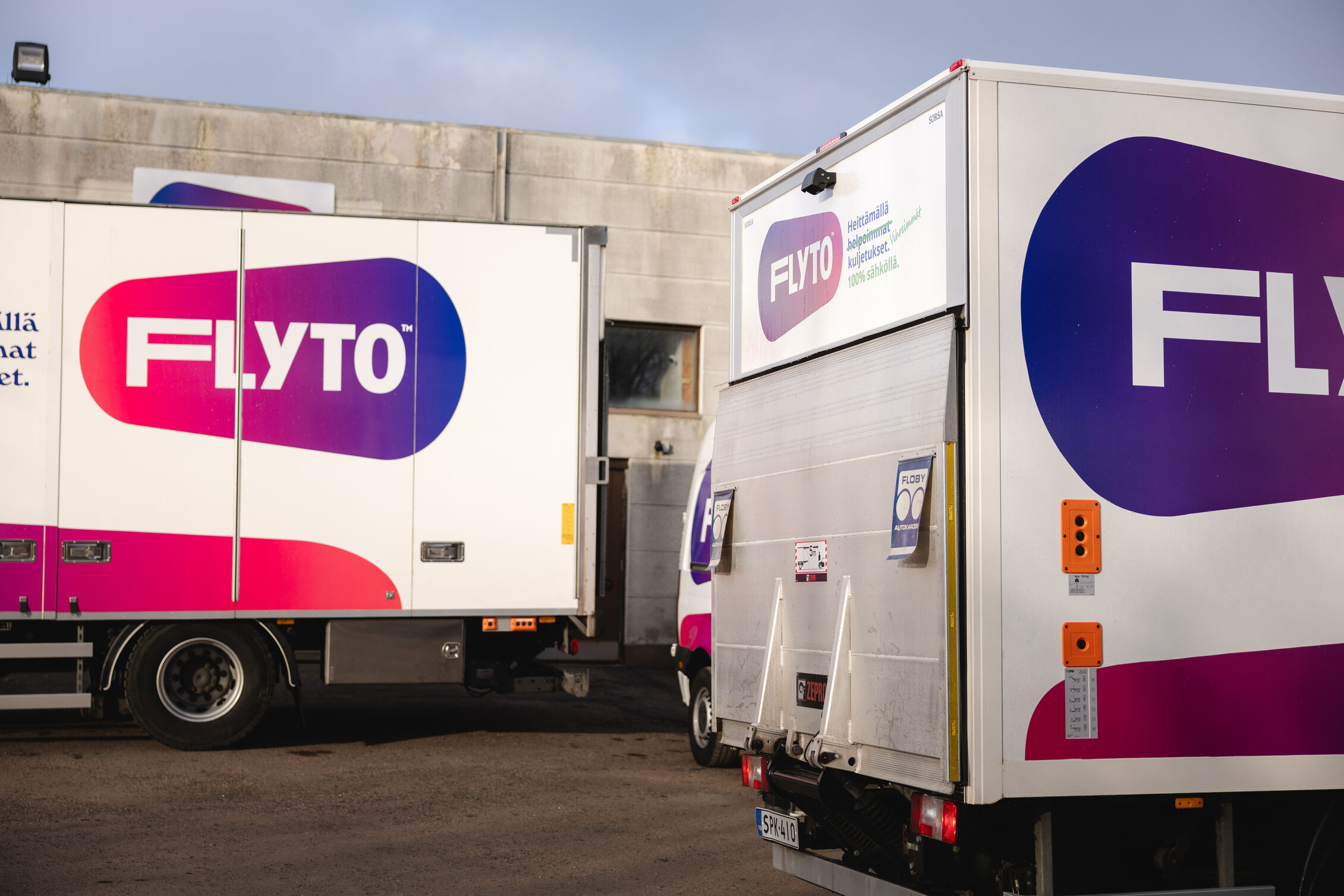
Flyto runs its own offices, warehouses, crews and vehicles across Northern, Central and Southern Europe, so the Portugal side of your move — packing, export documentation, and transport to whichever port fits your schedule — is handled in-house end to end. For the ocean leg and the Brazilian side, we work with a carefully vetted network of shipping partners and trusted local agents on the ground in Brazil who manage customs clearance, VIGIAGRO pet processing, and final delivery, so you get one accountable point of contact without us overstating what we do ourselves outside Europe.
Frequently asked questions
Do I need a Brazilian visa before I can import my household goods duty-free?
You need to qualify under Receita Federal’s relocation rules — either as a foreigner with regular migratory status or a Brazilian who lived abroad over a year — which in practice means your visa and CRNM registration with the Polícia Federal needs to be underway or resolved (Receita Federal; Polícia Federal — Registrar-se como Estrangeiro no Brasil).
How long do I have to ship my belongings after I arrive in Brazil?
Up to six months after your arrival (or shipped up to three months before it), covered by a bill of lading; late arrival can trigger a 20% penalty on duties unless the delay was outside your control (Receita Federal).
Do I still owe Portuguese tax after I move to Brazil?
Only on Portuguese-source matters that remain open — property, a Portuguese employer, or VAT-liable activity. Otherwise, once your morada fiscal is updated and you’re outside the EU/EEA, the tax-representative requirement is generally lifted if you opt into electronic notifications (Governo de Portugal).
Can I bring my car to Brazil?
Realistically, no — used-vehicle imports face heavy restrictions outside special regimes and require a full Siscomex import declaration; most people sell before leaving Portugal (Receita Federal).
What paperwork does my dog or cat need?
Exit requirements from Portugal vary by destination and are confirmed through DGAV’s Certific@+ system, but generally involve an official veterinary health certificate for a non-EU destination like Brazil; on entry, MAPA/VIGIAGRO requires a Certificado Veterinário Internacional or recognized pet passport plus a valid, sufficiently recent rabies vaccination (DGAV; MAPA/VIGIAGRO).
Is there a cash limit I need to worry about?
Yes, on both ends: €10,000+ leaving the EU needs a declaration to the AT, and US$10,000+ (or equivalent) entering Brazil needs an e-DBV declaration; both are reporting requirements, not taxes (Your Europe; Receita Federal).
Sources
- Receita Federal — Bagagem desacompanhada e mudança para o Brasil
- Receita Federal — Bagagem desacompanhada e mudança para o exterior
- Receita Federal — Dinheiro em espécie na entrada no Brasil
- MAPA/VIGIAGRO — Entrar no Brasil com animal de estimação
- Polícia Federal — Registrar-se como Estrangeiro no Brasil (CRNM)
- Ministério das Relações Exteriores — Quadro geral de regime de vistos
- Autoridade Tributária e Aduaneira — Portal das Finanças
- Portal das Finanças — Morada (alteração de morada fiscal)
- gov.pt — Guia "Mudar de casa"
- Governo de Portugal — Fim da obrigatoriedade de representante fiscal para emigrantes fora da UE
- DGAV — Sair de Portugal para um país fora da UE (animais de companhia)
- European Commission — Your Europe: carrying cash
- Administração do Porto de Lisboa
- APDL — Administração dos Portos do Douro, Leixões e Viana do Castelo
- Administração dos Portos de Sines e do Algarve (APS)