

Moving from Belgium to Brazil (2026): Complete Guide

Moving from Belgium to Brazil means closing out one of Europe’s most tightly administered residency systems on one end and clearing one of Latin America’s most document-heavy customs regimes on the other. This guide covers both halves of the corridor: deregistering in Belgium, filing the Belgian export declaration, and settling your Belgian tax position; then, on arrival, satisfying Brazil’s Receita Federal (Federal Revenue) that your household goods qualify as a duty-free "mudança" rather than a taxable import. It is written for a Belgian resident — Belgian national or long-term resident foreigner — relocating to Brazil for work, family, retirement, or investment, and closes with a short note on the reverse move back to Belgium.
Key takeaways
- EU destinations need no export declaration from Belgium, but Brazil is non-EU, so an export declaration for your personal goods, with a list of items, is mandatory when you leave — FPS Finance, Moving from Belgium.
- You must report your departure in person to your Belgian commune/gemeente no later than the day before you leave; the municipality deregisters you from the national population register — IBZ – Compulsory deregistration for EU citizens leaving Belgium.
- Belgian tax residency does not end automatically on the day you fly out — registration in the National Register creates a legal presumption of Belgian tax residence, and if you keep Belgian-source income you may still owe a non-resident tax return — FPS Finance, Leaving Belgium – Tax return.
- Brazil clears household goods under the "bagagem desacompanhada" (unaccompanied baggage) regime using an electronic Simplified Import Declaration (DSI) in the Siscomex system, per Instrução Normativa RFB nº 1.059/2010 — Receita Federal, Mudança para o Brasil.
- Your shipment must land in Brazil within a fixed window — from 3 months before to 6 months after you personally arrive — or it loses the baggage exemption, is taxed as a regular commercial import, and (unless the delay was outside your control) also draws a 20% penalty on the import duty owed — Receita Federal, Mudança para o Brasil.
- Pets need an official veterinary export certificate on the Belgian side (FASFC) and, since 6 September 2025, a specific Brazil-format International Veterinary Certificate (CVI) processed by Vigiagro on arrival — FASFC, Travelling outside the EU; MAPA/Vigiagro, Entrar no Brasil.
- Carrying more than R$10,000 (or the equivalent in another currency) in cash into Brazil requires an electronic declaration (e-DBV) — Receita Federal, Dinheiro em Espécie na Entrada no Brasil.
- Used passenger cars cannot be imported into Brazil as personal effects at all — no motor vehicle qualifies as "baggage" under Brazilian customs rules, and only a narrow, separate collector-vehicle procedure exists outside this regime — Receita Federal, Perguntas e Respostas.
1. Your Brazilian immigration status decides your customs treatment
Brazilian customs does not treat "moving to Brazil" as one uniform category — the duty-free baggage exemption is explicitly tied to your immigration status. The unaccompanied-baggage regime is available to foreigners who are relocating permanently to Brazil and to Brazilians returning after living abroad, and Receita Federal cross-checks this against your CPF (tax ID) and proof of address, which must match Receita Federal, Mudança para o Brasil. In practice this means securing your Brazilian visa first: most Belgians relocating long-term use a VITEM (temporary residence) visa category — for work, family reunification, investment or retirement — issued by Brazil’s Ministério das Relações Exteriores through a Brazilian consulate (MRE, Tipos de visto). After arrival, every foreign resident must register with the Polícia Federal for a Registro Nacional Migratório (RNM) and the physical Carteira de Registro Nacional Migratório (CRNM) — within 90 days of entry — which is what proves resident status to customs when your shipment clears (Registrar-se como Estrangeiro no Brasil). Arrive without a residence-track visa, or ship your goods outside the 3-months-before/6-months-after window, and Receita Federal treats the shipment as a standard commercial import — full duties, not the baggage exemption.
2. The Belgium export side: deregistration, customs, and tax exit
Customs authority. Export declarations for goods leaving Belgium are handled by the customs and excise administration within the Federal Public Service (FPS) Finance. Within the EU, goods move freely with no declaration; because Brazil is outside the EU, you must lodge an export declaration for your personal effects and submit an itemized list of what you are taking — FPS Finance, Moving from Belgium. Declarations are filed electronically through PLDA (Paperless Douane en Accijnzen), the Belgian customs administration’s declaration platform; in practice, most international moving companies or customs brokers handle this filing for you rather than you doing it yourself — FPS Finance, PLDA. Special categories — excise goods (alcohol, tobacco), vehicles, pets, and cultural goods — carry additional rules on top of the standard declaration.
Deregistration (leaving the population register). Belgium requires anyone permanently relocating abroad to report the departure in person at the population department of their commune or gemeente, no later than the day before leaving; each accompanying family member must also appear in person, and the process cannot be completed online. The municipality then removes you from the Rijksregister/Registre national and asks you to hand in your residence permit, if applicable — IBZ – FPS Home Affairs, Compulsory deregistration. Skipping this step leaves you administratively "resident" in Belgium, which complicates everything from healthcare coverage to tax filings.
Tax residency exit. Deregistering from the commune does not, by itself, end Belgian tax residence. Belgian tax law treats registration in the National Register as a legal presumption of tax residency (rebuttable, but a presumption nonetheless), and if you continue to receive Belgian-source income (salary, pension, rental income) after you leave, you will typically need to file a non-resident income tax return; which country actually taxes that income depends on the Belgium–Brazil double-taxation position for the income type — FPS Finance, Leaving Belgium – Tax return. Settle this with FPS Finance (and, if relevant, your employer/pension fund) before or shortly after departure rather than leaving it unresolved.
3. Ports, transit and realistic timelines
Belgium’s dominant maritime gateway is the Port of Antwerp-Bruges, formed by the 2022 merger of the ports of Antwerp and Zeebrugge — Europe’s largest export port and its second-largest container port, with more than 300 liner services connecting to over 800 destinations worldwide — Port of Antwerp-Bruges, Maritime shipping. Air freight and accompanied baggage typically route through Brussels Airport (BRU), Belgium’s main international gateway; goods carried or shipped from there to Brazil still fall under the same non-EU export declaration described above — FPS Finance, travelling outside the EU with goods. On the Brazilian side, sea shipments overwhelmingly clear through the Port of Santos, Latin America’s largest container port and Brazil’s principal maritime gateway, handling roughly a third of the country’s foreign trade by value — Ministério de Portos e Aeroportos, Porto de Santos.
Estimated transit times (freight-industry estimates, not official government figures): sea freight from Antwerp to Santos for a consolidated or full container typically runs 4-7 weeks port-to-port, plus Brazilian customs clearance which, given the routine physical inspection on baggage shipments, commonly adds 1-3 weeks. Air freight is far faster in transit — roughly 2-5 days flight time plus a few days of clearance — but costs several multiples more per kilo, so it is generally reserved for essentials, not full household moves.
4. The Brazil import side: bagagem desacompanhada and DSI clearance
Brazil clears relocating households under the "bagagem desacompanhada" (unaccompanied baggage) regime, formally governed by Instrução Normativa RFB nº 1.059/2010. Clearance runs through a Declaração Simplificada de Importação (DSI) registered electronically in Siscomex (Brazil’s integrated foreign-trade system), accompanied by an itemized packing list with values, the original bill of lading in the traveler’s name, proof of arrival (passport/ticket), and ID/CPF documentation — Receita Federal, Mudança para o Brasil. Personal-use items, used household goods, books and periodicals are exempt from import tax under this regime; goods that fall outside the "personal use" definition are instead taxed at a flat 50% rate under Brazil’s Special Taxation Regime for baggage. Receita Federal routinely carries out a physical inspection of unaccompanied-baggage shipments as part of clearance — build extra time into your plan for this. The shipment must arrive within the 3-months-before to 6-months-after-arrival window noted above, or it falls outside the regime entirely, is cleared as an ordinary commercial import with full duties via a standard Declaração de Importação (DI), and — unless the delay was beyond your control — also draws the 20% penalty mentioned above.
5. Pets: both ends
Leaving Belgium. Belgium’s Federal Agency for the Safety of the Food Chain (FASFC) oversees pet exports to non-EU countries. Because Brazil is outside the EU, the standard EU pet passport is not sufficient on its own for export — you generally need an official health certificate, issued by an FASFC-recognized veterinarian, confirming your pet’s rabies vaccination and other health requirements set by Brazil — FASFC, Travelling outside the European Union.
Entering Brazil. Since a rule change taking effect 6 September 2025 (Portaria MAPA nº 741/2024), dogs and cats entering Brazil need the Brazil-specific Certificado Veterinário Internacional (CVI) — or an equivalent official certificate — issued by an official veterinary authority in Belgium, confirming current rabies vaccination, processed on arrival by Vigiagro, the Ministry of Agriculture and Livestock’s international agricultural surveillance service, at the port or airport of entry. Other companion species (rabbits, ferrets, chinchillas, etc.) additionally require a prior import authorization from Brazil’s federal agriculture authority in the destination state — MAPA/Vigiagro, Entrar no Brasil. Start the paperwork well ahead of travel; certificates typically carry short validity windows tied to the flight date.
6. Vehicles, money, and what people forget
Vehicles. Brazil’s import rules for used passenger vehicles are strict: no motor vehicle or vehicle part can be classified as "baggage," so the personal-effects exemption used for household goods does not extend to cars at all; separate legislation restricts used-vehicle imports generally, with a narrow exception for vehicles over 30 years old imported as collector’s items under a dedicated procedure — Gov.br, Importação de Veículo de Coleção; see also Receita Federal’s general FAQ on traveler goods — Receita Federal, Perguntas e Respostas. Most people relocating from Belgium sell their car before departure rather than attempt to import it.
Cash. Entering Brazil with more than R$10,000 (or the equivalent in another currency) in cash — per traveler, including within a family group — requires filing the electronic Declaração de Bens e Valores (e-DBV) with Receita Federal; failing to declare risks forfeiture of the undeclared excess — Receita Federal, Dinheiro em Espécie na Entrada no Brasil.
What people forget: matching your comprovante de residência and CPF address before goods clear (a mismatch stalls the DSI), completing the Belgian commune deregistration before departure rather than after (it cannot be backdated), keeping proof of the export declaration and packing list together with the Brazilian import paperwork (Receita Federal cross-checks descriptions and values), and starting pet certification and RNM/CRNM registration well before the shipment departs, since both processes run on their own clocks independent of the moving company’s schedule.
Reverse direction: moving back from Brazil to Belgium
Household goods leaving Brazil for Belgium clear under Receita Federal’s mirror-image "bagagem desacompanhada e mudança para o exterior" regime — Receita Federal, Mudança para o Exterior — with its own cash-declaration rule for amounts leaving Brazil — Receita Federal, Dinheiro em Espécie na Saída do Brasil. On the pet side, MAPA/Vigiagro has a parallel outbound process for exporting animals from Brazil — MAPA/Vigiagro, Sair do Brasil — and on arrival in Belgium (back inside the EU), FASFC’s return-to-EU pet rules apply: since Brazil is not on the EU’s list of rabies-controlled third countries, a rabies antibody titration test and a waiting period after sampling are likely to apply — FASFC, Returning to the European Union; European Commission, Bringing a pet into the EU from a non-EU country. Goods re-entering Belgium from outside the EU also go through the standard "moving to Belgium" import process at FPS Finance — FPS Finance, Moving to Belgium.
How Flyto handles your Belgium to Brazil move
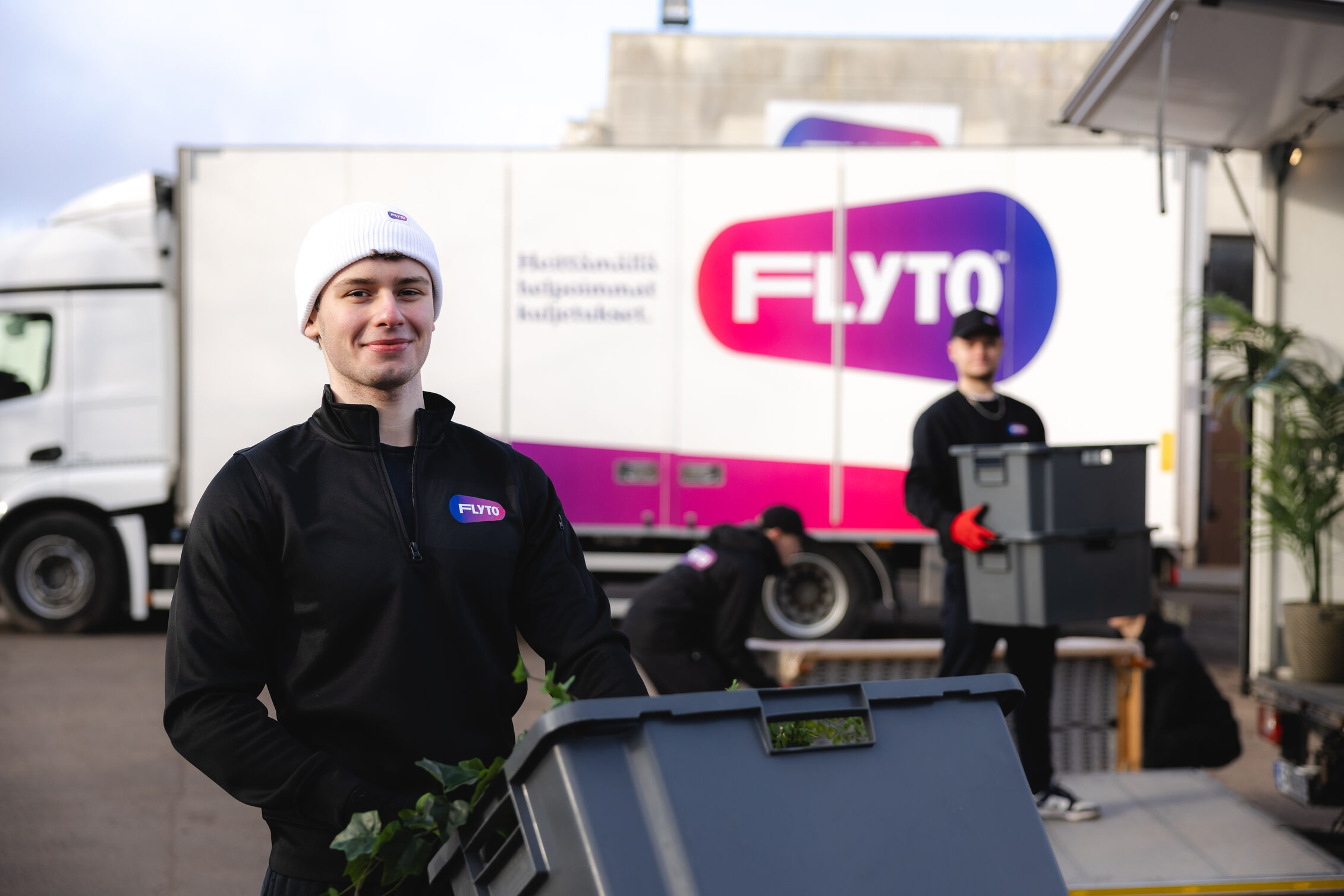
Flyto runs its own offices, warehouses, crews and vehicles across Northern, Central and Southern Europe, so the Belgian collection, export documentation and consolidation for your shipment stay in-house rather than being handed off blind. For the ocean or air leg and the Brazilian side, we work through a carefully vetted network of subcontracted carriers and trusted local partners on the ground in Brazil, who handle the Vigiagro, Receita Federal and last-mile delivery formalities day in and day out. That combination — direct European control plus experienced local partners in Brazil — is what keeps a Belgium-to-Brazil move on schedule and out of customs limbo.
Frequently asked questions
Do I need to deregister in Belgium before I ship my belongings? Not strictly in that order, but you must report your departure to your commune no later than the day before you leave, and it’s simplest to have your Belgian export declaration and deregistration handled around the same time — IBZ, Compulsory deregistration.
Will I still owe Belgian tax after I move to Brazil? Possibly, if you keep Belgian-source income — registration history creates a presumption of tax residence, and Belgian-source income may still require a non-resident return depending on the applicable double-tax treatment — FPS Finance, Leaving Belgium – Tax return.
How long does my shipment have to reach Brazil after I arrive? Up to six months after your personal arrival (or it can arrive up to three months before you), to remain within the duty-free unaccompanied-baggage window — Receita Federal, Mudança para o Brasil.
Can I bring my car from Belgium to Brazil? No — motor vehicles cannot be classified as personal baggage under Brazilian customs rules at all, and Brazil’s separate used-vehicle import rules are otherwise restrictive — Gov.br, Importação de Veículo de Coleção.
What paperwork does my dog or cat need? An official Belgian veterinary export certificate confirming rabies vaccination (via FASFC) and, on the Brazilian side, the Brazil-format CVI processed by Vigiagro at entry — FASFC, Travelling outside the EU; MAPA/Vigiagro, Entrar no Brasil.
Is there a limit on how much cash I can bring into Brazil? Amounts over R$10,000 per traveler must be declared electronically via the e-DBV on arrival — Receita Federal, Dinheiro em Espécie na Entrada no Brasil.
Sources
- FPS Finance – Moving from Belgium
- FPS Finance – Moving to Belgium
- FPS Finance – Leaving Belgium: Tax return
- FPS Finance – PLDA (customs declaration platform)
- FPS Finance – Travelling outside the EU with goods
- IBZ – FPS Home Affairs: Compulsory deregistration for EU citizens leaving Belgium
- FASFC – Travelling outside the European Union
- FASFC – Returning to the European Union
- European Commission – Bringing a pet into the EU from a non-EU country
- Port of Antwerp-Bruges – Maritime shipping
- Ministério de Portos e Aeroportos – Porto de Santos container record
- Receita Federal – Mudança para o Brasil (bagagem desacompanhada)
- Receita Federal – Bagagem Desacompanhada e Mudança para o Exterior
- Receita Federal – Dinheiro em Espécie na Entrada no Brasil
- Receita Federal – Dinheiro em Espécie na Saída do Brasil
- Receita Federal – Perguntas e Respostas (Guia do Viajante)
- Gov.br – Importação de Veículo de Coleção
- Ministério das Relações Exteriores – Tipos de visto (VITEM)
- Gov.br – Registrar-se como Estrangeiro no Brasil (RNM/CRNM, Polícia Federal)
- MAPA/Vigiagro – Entrar no Brasil (animais de estimação)
- MAPA/Vigiagro – Sair do Brasil (animais de estimação)