

Moving from the Czech Republic to Qatar (2026): Complete Guide

Relocating from the Czech Republic to Qatar means moving your household out of the EU customs union and into a Gulf Cooperation Council (GCC) state — two completely different rulebooks that meet in the middle of your shipment. On the Czech side you are dealing with an EU export, a landlocked country with no seaport of its own, and questions about tax residency and population registration. On the Qatari side you are dealing with the General Authority of Customs, a residence-permit-driven exemption system, and thorough physical inspection of most personal shipments. This guide covers both halves — the Czech departure side and the Qatar arrival side — plus a short note on the reverse move. It is written for a resident of the Czech Republic (Czech citizen or foreign resident) planning a permanent move to Qatar for work.
Key takeaways
- Your Qatari residence permit (RP) is the master key: used household goods and personal effects can enter duty-free only for someone taking up residence, subject to conditions set by the Chairman of the General Authority of Customs (General Authority of Customs).
- Goods leaving the Czech Republic for a non-EU country need an electronic export declaration through the EU Automated Export System (AES) (European Commission).
- The Czech Republic is landlocked, so ocean freight stages through North Sea or Adriatic ports — real Czech river ports on the Elbe (Mělník, Děčín, Ústí nad Labem) feed Hamburg (Czech Customs Administration).
- Qatar’s gateway is Hamad Port, south of Doha, managed by Mwani Qatar (Mwani Qatar).
- Qatar applies the GCC 5% ad valorem tariff on the CIF value of dutiable goods; personal-effects exemptions are the exception movers rely on (Invest Qatar).
- Alcohol and pork are prohibited imports — do not pack them; their import is controlled by the General Authority of Customs (General Authority of Customs).
- Pets need an import permit from Qatar’s Ministry of Municipality, obtained before travel (Hukoomi); on the Czech side the State Veterinary Administration governs export (SVS).
- Consider whether to terminate your Czech permanent residence and review your Czech tax residency before you go (gov.cz).
1. Your Qatari immigration status decides the customs treatment
Everything downstream depends on the visa and residence status you hold when your shipment lands. Qatar does not grant a household-goods exemption to tourists or visitors — the duty-free entry of used personal effects and household items is reserved for people establishing residence, and it is applied "subject to the conditions and regulations specified by the Chairman" of the General Authority of Customs (GAC).
In practice that means your Qatar ID / residence permit must be issued before your shipment clears, and clearance for a non-Qatari resident also requires a no-objection letter from your Qatari employer or sponsor. If your goods arrive before your RP does, they sit in bond and accrue storage costs. Sequence the move so your work visa and RP are finalised first, then release the container. New residents must generally import their household goods within six months of arrival and undertake not to sell the imported goods for at least one year after entry — these are personal-use effects, not stock for resale (GAC).
2. The Czech export side: authority, declaration, residence and tax exit
The customs authority. The competent body is the Customs Administration of the Czech Republic (Celní správa České republiky). It is responsible for customs supervision over the import, export and transit of goods and for enforcing trade rules (Czech Customs Administration – powers).
The export declaration. Because Qatar is outside the EU, your removal goods leave the EU customs territory and the export procedure is obligatory for EU goods with very few exceptions. The declaration is lodged electronically through the Automated Export System (AES), normally at the customs office responsible for where the exporter is established or where the goods are loaded; the export accompanying document then travels to the customs office of exit (European Commission – Exportation). In a full-container household move your appointed mover or freight forwarder acts as declarant and files this for you.
Value/weight and reliefs. There is no export duty on personal belongings leaving the Czech Republic, and any quantity of non-commercial goods may be taken out — the notable restriction is that objects forming part of the national cultural heritage require an export permit (Czech Customs Administration). Note that the EU duty-relief framework for "transfer of normal residence" under Council Regulation (EC) No 1186/2009 governs goods coming into the EU, not the outbound leg — Qatar’s own exemption rules apply on arrival (European Commission – duty relief).
Population registration (deregistration). A Czech citizen may terminate their permanent residence at any time by notifying the registration office (ohlašovna — the municipal authority, or in Prague the city-district office) or a Czech diplomatic mission abroad; the office records the termination within three working days (gov.cz – termination of permanent residence). This step is optional but has consequences — notably, your ID card must be surrendered and Czech public health insurance stops applying, so weigh it against your future ties to the country.
Tax residency exit. Under Czech law you are a tax resident if you have a permanent home (residence) in the country or spend at least 183 days there in the calendar year, in which case you have unlimited (worldwide) tax liability; otherwise you are taxed only on Czech-source income (gov.cz – personal income taxes). A mid-year departure to Qatar can split your year and shift your centre of vital interests, so confirm your status with the Financial Administration (Finanční správa) before assuming you have exited the Czech tax net.
3. Ports and transit: how goods actually leave a landlocked country
The Czech Republic has no coastline, so there is no Czech ocean port. Sea freight is trucked or railed to a gateway port and loaded there. The country’s own inland river ports sit on the Elbe — Mělník, Děčín and Ústí nad Labem — and historically feed the North Sea via Hamburg. For containers to Qatar, the common routings are:
- North Sea gateways — Hamburg, Bremerhaven or Rotterdam — for most deep-sea services.
- Adriatic gateways — Koper (Slovenia) or Trieste (Italy) — often shorter for Middle East and Suez routings.
- Air freight via Václav Havel Airport Prague (PRG) to Hamad International Airport (DOH) for urgent or small consignments.
On the Qatari side, ocean containers discharge at Hamad Port, Qatar’s main seaport south of Doha in Umm Al-Houl, operated by Mwani Qatar (Mwani Qatar).
Transit times below are freight-industry estimates, not official figures, and vary with sailing schedules, transhipment and season: roughly 4–7 weeks door-to-port for sea freight from Central Europe to Hamad Port, and roughly 1–2 weeks for air freight door-to-airport. Treat these as planning ranges only and get firm figures from your carrier at booking.
4. The Qatar import side: form, documents and process
Clearance in Qatar is handled by the General Authority of Customs, which files a customs declaration for the shipment and applies the GCC Unified Customs Law. For personal imports under an individual’s name, the core requirements are (GAC – individuals importing):
- A detailed inventory / packing list stating the contents and whether each item is used or new.
- Your passport (with entry stamp) and Qatar ID / residence permit copies.
- A no-objection letter in Arabic from your Qatari employer or sponsor authorising the import.
- Authorisation for the clearing agent to act on your behalf.
Used personal effects and household goods of a person taking up residence are eligible for duty exemption subject to the conditions prescribed by the Chairman (GAC). Where duty does apply, Qatar levies the GCC standard rate of 5% on the CIF value of dutiable goods (Invest Qatar). Expect the shipment to be palletised and physically inspected — GAC screens personal consignments thoroughly, so an accurate inventory saves time and disputes.
Prohibited and restricted goods matter most here. Do not pack alcohol or pork products — both are prohibited for personal import and their entry is controlled by the GAC. Also leave out narcotics, e-cigarettes, and any political, religious or adult material that could trigger a hold.
5. Pets: official rules on both ends
Leaving the Czech Republic. The State Veterinary Administration (SVS) governs pet export. When travelling with a dog or cat outside the EU, you must meet the import conditions set by the destination country’s veterinary authority; the animal needs a microchip and valid rabies vaccination, and health certification is issued by your Regional Veterinary Administration — the pet passport can serve as the health document where it complies with the destination’s rules (SVS).
Entering Qatar. An import permit from the Ministry of Municipality is mandatory and must be obtained before the pet travels; you apply online via Qatar’s government portal (Hukoomi – import permit). The Ministry sets the veterinary conditions (microchip, current rabies and other vaccinations, and an official health certificate from a licensed vet). Qatar also restricts certain dog breeds, which require special dispensation. Because the permit is time-limited, coordinate the SVS certification and the Qatari permit so the dates align with your flight — pets almost always travel by air, not in the sea container.
6. Vehicles, money and things people forget
- Vehicles. Importing a car adds tariff, GCC conformity and registration steps and is often not worth it for a temporary posting; price the alternative of buying locally before shipping a Czech-plated car.
- Cash and valuables. On arrival in Qatar you must declare currency, bearer negotiable instruments, precious metals or precious stones worth QAR 50,000 or more (or the foreign-currency equivalent) to the GAC (GAC – declaration of money across borders).
- Documents. Carry attested/apostilled personal documents (marriage, birth, degree certificates) — these are needed for Qatari residence and family sponsorship, not for the container.
- Timing. Do not ship before your RP is secured; an early-arriving container means bonded-storage charges.
- Prohibited packing. Recheck every box for alcohol, pork, medicines and other controlled items before sealing — inspection in Qatar is thorough.
How Flyto handles your move from the Czech Republic to Qatar
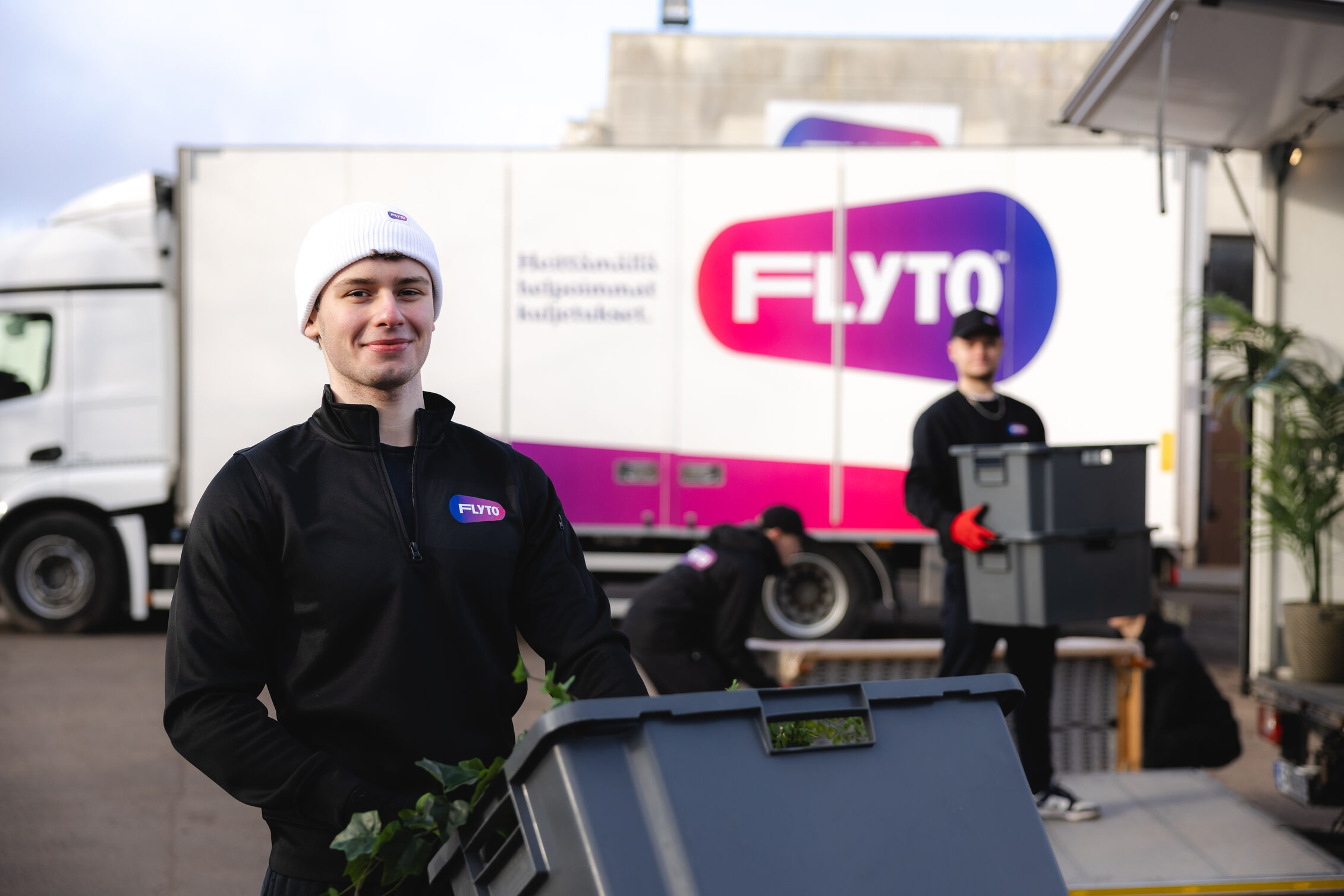
Flyto runs strong in-house European operations — our own offices, warehouses, teams and vehicles across Northern, Central and Southern Europe — combined with a carefully chosen partner and subcontractor network for the legs we do not run ourselves. For the Qatar arrival side we work with trusted local partners in Doha for customs clearance and delivery, so your export from the Czech Republic and your import into Qatar are managed as one coordinated move rather than two disconnected halves.
Frequently asked questions
Do I need my Qatar residence permit before my goods arrive?
Yes in practice. Qatar’s duty-free treatment of used personal effects is tied to taking up residence, and clearance requires your Qatar ID/RP plus a sponsor’s no-objection letter, so finalise the RP first (GAC).
Will I pay customs duty on my household goods?
Used personal effects and household items of a new resident can be exempt subject to the Chairman’s conditions; where duty applies, Qatar’s standard rate is 5% of CIF value (GAC; Invest Qatar).
Which port will my container arrive at?
Ocean freight to Qatar discharges at Hamad Port, south of Doha, managed by Mwani Qatar (Mwani Qatar).
How long does shipping take?
As a freight-industry estimate (not an official figure), roughly 4–7 weeks by sea and 1–2 weeks by air from Central Europe; confirm exact timings with your carrier.
Do I have to cancel my Czech permanent residence?
It is optional. You may terminate it at the ohlašovna, but doing so ends Czech public health insurance and requires surrendering your ID card, so weigh your future ties (gov.cz).
What about moving back from Qatar to the Czech Republic?
The direction reverses: you export from Qatar under GAC rules and import into the EU, where relief on transfer of normal residence under Regulation (EC) No 1186/2009 may apply if you have lived outside the EU for the required period (normally 12 consecutive months) and the goods qualify — file the Czech import declaration and claim the relief on arrival (European Commission; Czech Customs Administration).
Sources
- Customs Administration of the Czech Republic – Customs
- Customs Administration of the Czech Republic – Powers/competence
- Customs Administration of the Czech Republic – Moving of natural persons
- gov.cz – Termination of permanent residence (S620)
- gov.cz – Personal income taxes (INF-293)
- State Veterinary Administration – Travelling with dogs, cats and ferrets from the Czech Republic to third countries
- European Commission – Exportation (AES)
- European Commission – Duty relief (Reg. 1186/2009)
- General Authority of Customs (Qatar) – Individuals importing under a personal name
- General Authority of Customs (Qatar) – Customs declaration
- General Authority of Customs (Qatar) – Customs declaration of money transferred across borders
- Invest Qatar – Customs, duty tariffs and exemptions
- Mwani Qatar – Hamad Port
- Hukoomi (Qatar e-Government) – Request import permit
- Customs Administration of the Czech Republic – Veterinary goods