

Moving from the Czech Republic to Bahrain (2026): Complete Guide

Relocating from the landlocked heart of Central Europe to a Gulf island kingdom is a two-country customs problem, not one. On the Czech side your household goods leave the EU customs territory through the Customs Administration of the Czech Republic (Celní správa ČR) as a formal export; on the Bahraini side they arrive as an import that is only duty-free if your immigration status and paperwork line up exactly. This guide walks both halves of the corridor — the Czech export, deregistration and tax-exit side, and the Bahraini import, residency and pet side — plus a short note on moving back. It is written for a resident of the Czech Republic (Czech national or long-term foreign resident) shipping personal effects to Bahrain for work or family reasons.
Key takeaways
- Your Bahraini residence status decides everything: duty-free import of used household goods requires a valid Bahraini Residence Permit and a Central Population Registry (CPR) card, with the goods brought in within six months of arrival (Bahrain Customs).
- The Czech export is a real customs formality handled electronically through the AES (Automated Export System) operated by Celní správa ČR (Celní správa).
- Used, personally-owned goods enter Bahrain free of duty; new items attract 5% customs duty plus 10% VAT (Bahrain Customs, National Bureau for Revenue (VAT)).
- The Czech Republic is landlocked — sea shipments transit German ports (Hamburg / Bremerhaven); transit times quoted here are freight-industry estimates, not official figures.
- You should report your change of permanent residence to the Czech registration office and notify your Finanční úřad (tax office) so you are no longer treated as a Czech tax resident (gov.cz, Finanční správa).
- Pets need EU exit paperwork from the State Veterinary Administration (SVS) and prior approval on the Bahraini side, where live animals are restricted goods (Bahrain Customs).
- Your work permit comes from the LMRA; the residence permit that unlocks duty-free import is issued through the Nationality, Passports & Residence Affairs (NPRA) process.
- Personal imports and gifts under BD 300 are excluded from VAT (Bahrain Customs).
1. Your Bahraini immigration status sets the customs treatment
In Bahrain the customs question "do I pay duty on my furniture?" is answered by an immigration document. Bahrain Customs grants a duty exemption on used personal and household effects only to a person who undertakes to change their place of residence to the Kingdom of Bahrain and who can prove settled status (Bahrain Customs).
That status is built in a fixed order. Your employer sponsors a work permit through the Labour Market Regulatory Authority (LMRA) (LMRA). The LMRA application feeds the Nationality, Passports & Residence Affairs (NPRA) process, which issues the residence visa. After you land, complete the medical test and biometrics, you receive your Residence Permit and CPR card — the Central Population Registry number that identifies every resident.
Only once those exist can your shipment clear duty-free, because Bahrain Customs asks for the residence permit (with Ministry stamp and QR code) and both sides of the CPR card at clearance. The practical consequence: do not let your sea container arrive before your residency is finalised. If it lands first, the goods sit under a temporary-import or bonded regime — incoming passengers may bring dutiable goods under a temporary import regime for six months, extendable, sometimes against a refundable deposit (Bahrain Customs) — and you risk storage charges. Time the shipment to arrive after your CPR is in hand.
2. The Czech export side — customs, deregistration and tax exit
The customs authority. Exports from Czech territory are handled by the Customs Administration of the Czech Republic — Celní správa ČR (Celní správa). Because Bahrain sits outside the EU customs union, your move is a formal export to a third country, not an intra-EU transfer.
The export declaration. Since 2 October 2023 the Czech Republic runs exports on the modernised AES (Automated Export System), which replaced the older ECS (Celní správa). AES is an EU-wide, fully electronic regime: the export declaration is lodged in AES, and the office of export releases the goods before they leave EU territory. The free public web client was discontinued, so declarations are filed either through commercial customs software or, in practice for a household move, through your customs representative / forwarder who lodges it on your behalf (Celní správa). For personal effects the declaration is accompanied by a detailed valued inventory (packing list). There is no export duty on used personal belongings leaving the EU; the declaration is a control formality, not a tax event.
Deregistration. Czech law lets a citizen hold one permanent residence (trvalý pobyt) in the country. You report a change of address in person at the registration office (ohlašovna / obecní úřad) for your new address using the Přihlašovací lístek k trvalému pobytu form; the office records the change from that submission (gov.cz). When leaving the country you can register a delivery address or update your record so official post reaches you abroad.
Tax exit. The Finanční správa (Financial Administration), under the Ministry of Finance, decides tax residency. You are a Czech tax resident if you keep a permanent home there with the intent to use it, or spend more than 183 days in the calendar year in the country (Finanční správa). Genuinely relocating breaks both tests, but you should notify your local Finanční úřad of the departure so you are not asked for future returns or tax advances. Bahrain levies no personal income tax, so the corridor is attractive — but clean Czech tax records (settling the year of departure, keeping proof of exit) prevent later disputes over which country could tax you.
3. Ports and transit times
The Czech Republic has no seaport, so sea freight is trucked or railed to a North-Sea gateway — most commonly Hamburg or Bremerhaven in Germany — and loaded there. Air freight departs from Václav Havel Airport Prague (PRG). On the Bahraini end, ocean containers discharge at Khalifa Bin Salman Port (KBSP) at Hidd, and air cargo arrives at Bahrain International Airport (BAH).
The following are freight-industry estimates for planning only — they are not official published transit times and vary with sailing schedules, transhipment (Gulf boxes often route via Jebel Ali) and customs:
- Road leg Czech Republic → Hamburg/Bremerhaven: roughly 1–2 days.
- Sea, North Europe → Bahrain (KBSP), typically via a Gulf hub: roughly 28–45 days port-to-port.
- Door-to-door by sea (LCL/FCL) including both customs clearances: commonly 7–11 weeks.
- Air freight door-to-door: commonly 1–2 weeks.
Treat any single number a mover gives you as an estimate and build slack into your timeline, especially around the residency-before-arrival rule in section 1.
4. The Bahraini import side — form, process and documents
Bahrain Customs clears goods on an electronic customs (import) declaration, completed by the importer, their representative or a licensed customs broker, with supporting documents lodged at the customs office (Bahrain Customs). For a household move the core documents are:
- Bill of Lading (sea) or Air Waybill.
- Detailed inventory / packing list and commercial-style invoice or valuation.
- A clear copy of both sides of your CPR card.
- Your Residence Permit bearing the Ministry stamp and QR code.
Provided the goods are used, owned by you, for personal (non-commercial) use, and imported within six months of your arrival, they are cleared free of customs duty (Bahrain Customs). New items are treated as ordinary imports: 5% customs duty (the GCC common external tariff) plus 10% VAT collected at clearance (GCC Common Customs Law, National Bureau for Revenue – VAT). Note that personal imports and gifts worth under BD 300 are excluded from VAT (Bahrain Customs).
Every shipment is subject to physical inspection. Keep your inventory honest and detailed; declaring "used household goods" over a box of new, boxed electronics is the fastest way to lose the exemption on the whole consignment. Alcohol, pork products, certain media, weapons, and similar sensitive goods are prohibited or restricted and should not be packed into a household consignment without checking Bahrain Customs’ restricted-items guidance first.
5. Pets — both ends of the journey
Leaving the Czech Republic. Pet travel is overseen by the State Veterinary Administration (Státní veterinární správa, SVS) (SVS). For dogs, cats and ferrets leaving for a non-EU country the baseline is an ISO microchip, a valid rabies vaccination, and a veterinary export health certificate issued by an official vet — and the SVS is explicit that the exact requirements (extra tests, rabies antibody titration, timing) depend on the destination country’s rules, so the Bahraini requirements drive the Czech paperwork.
Entering Bahrain. Live animals are restricted goods at Bahrain Customs, meaning they require prior approval / an import permit from the competent Bahraini authority before arrival (Bahrain Customs). In practice this means arranging the Bahraini import permit and confirming the vaccination and health-certificate specifics with the authority before your official vet in the Czech Republic finalises the export certificate — the certificate must match Bahrain’s conditions. Do not book the pet’s flight until the permit is confirmed; some breeds and species face additional restrictions.
6. Vehicles, money and things people forget
Vehicles. A car is not a duty-free personal effect. Vehicles fall under the normal GCC tariff — around 5% customs duty on the CIF value — plus VAT, and must then be registered locally (GCC Common Customs Law). On the Czech side you should deregister the vehicle from the Czech vehicle register before permanent export. For most people, selling the car in the Czech Republic and buying locally in Bahrain is cheaper than shipping and re-homologating it.
Money. Large cash sums moving across the EU border must be declared: leaving the EU with EUR 10,000 or more in cash requires a customs declaration in the Czech Republic (Celní správa). Bahrain, by contrast, places no restriction on importing local or foreign currency, though customs may ask a traveller to prove the source of the funds they are carrying (Bahrain Customs). Move relocation funds by bank transfer where possible and keep the paper trail.
Passenger allowances. What you carry in your suitcase is separate from the shipment. Arriving passengers to Bahrain may bring, duty-free, up to 400 cigarettes (or 250 g tobacco), 3 litres of alcoholic beverages, and personal (non-commercial) effects and gifts worth up to BD 300, subject to age 18+ (Bahrain Customs).
Easy to forget: cancel Czech health-insurance and utility contracts, keep proof of the date you left for the tax office, take certified translations of key documents, and photograph high-value items for your inventory and insurance.
How Flyto handles your Czech Republic → Bahrain move
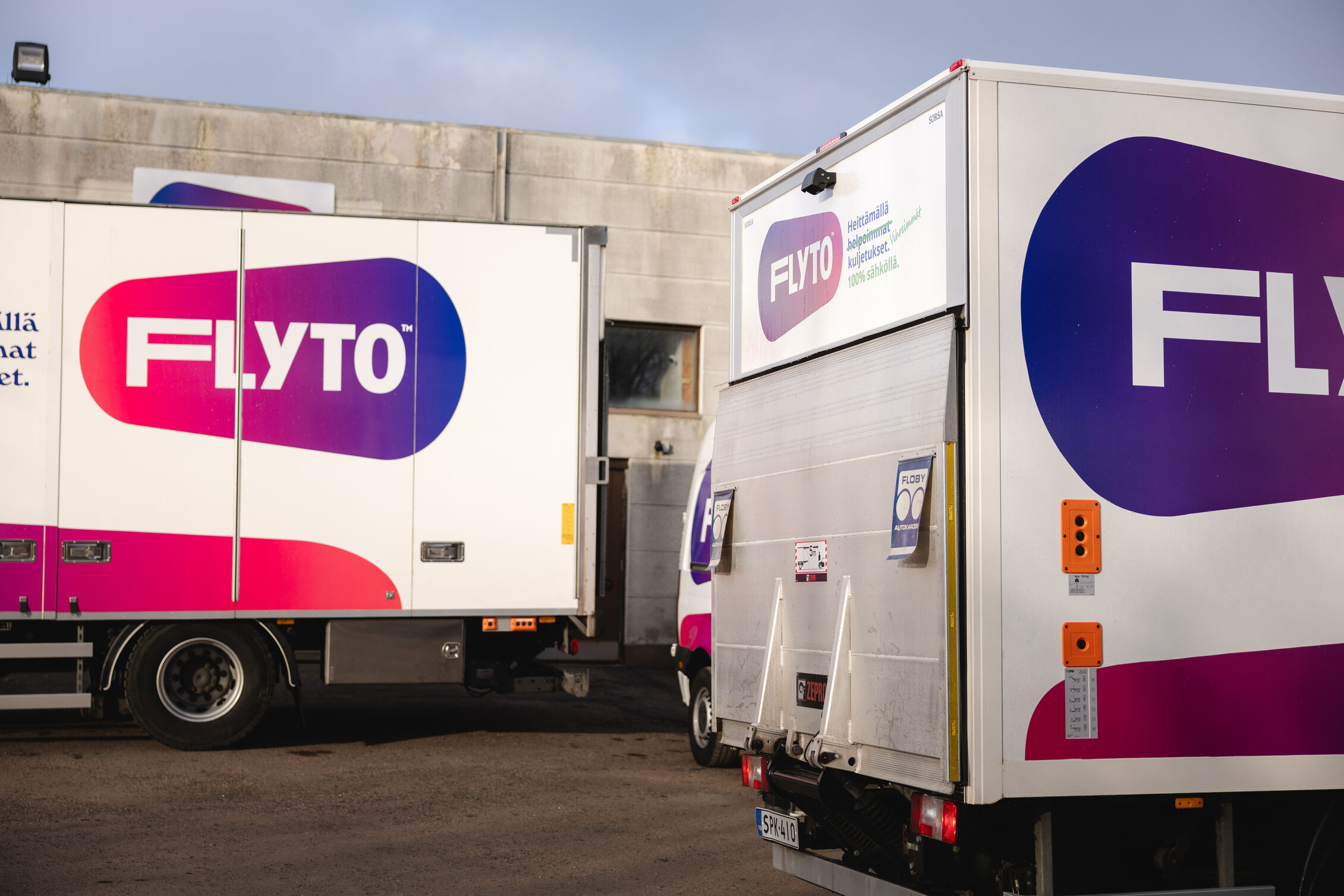
Flyto runs strong in-house European operations — our own offices, warehouses, teams and vehicles across Northern, Central and Southern Europe — which we combine with a carefully chosen network of vetted partners and subcontractors for the legs we do not cover directly. For the Bahraini end we work with trusted local partners who handle KBSP clearance, the CPR/residence-permit paperwork and delivery, so the export and import halves stay coordinated. We don’t claim to do every mile ourselves — we own the parts we’re best at and manage the rest tightly.
Frequently asked questions
Can I ship before my Bahraini residence permit is issued?
You can, but you shouldn’t. The duty-free exemption needs your Residence Permit and CPR card at clearance. Goods arriving earlier sit under a temporary/bonded regime and may accrue storage charges (Bahrain Customs).
Is there a deadline to import my household goods duty-free?
Yes — used personal effects must be imported within six months of your arrival in Bahrain to qualify (Bahrain Customs).
Do I pay tax on used furniture?
No customs duty on genuinely used, personally-owned goods. New items are charged 5% duty + 10% VAT, though personal items under BD 300 are VAT-excluded (Bahrain Customs).
Do I need to formally leave the Czech tax system?
There is no single "exit stamp," but you should notify your Finanční úřad of your departure and stop meeting the residency tests (permanent home / 183 days) (Finanční správa).
How do the customs systems differ at each end?
The Czech export runs on the EU AES electronic export system via Celní správa (Celní správa); Bahrain clears on its own electronic import declaration lodged by a licensed broker (Bahrain Customs).
What about moving back — Bahrain → the Czech Republic?
The direction reverses: you export from Bahrain through Bahrain Customs, then import into the EU through Celní správa ČR. Returning residents’ used personal effects can qualify for relief from import duty and VAT under EU rules, but you must declare the goods and prove prior residence abroad; Bahrain export and EU import declarations both apply (Celní správa).
Sources
- Customs Administration of the Czech Republic (Celní správa ČR)
- Celní správa ČR — AES/ECS export system (eVývoz)
- gov.cz — Notification of change of permanent residence
- Finanční správa (Czech Financial Administration)
- State Veterinary Administration (Státní veterinární správa)
- Bahrain Customs Affairs — Special Instructions for Relocating to Bahrain
- Bahrain Customs Affairs — Importing
- Bahrain Customs Affairs — Duty Free Allowances
- Bahrain Customs Affairs — Personal Pets
- Bahrain Customs Affairs — No VAT on personal imports worth less than BD300
- Common Customs Law of the GCC States (Bahrain Customs)
- National Bureau for Revenue (NBR) — Value Added Tax (VAT)
- Labour Market Regulatory Authority (LMRA) — Work Permit