

Moving from Portugal to Bahrain (2026): Complete Guide

Relocating from Portugal to the Kingdom of Bahrain means leaving the European Union’s customs territory and entering a Gulf Cooperation Council (GCC) state, so your move is really two moves stitched together: an export out of Portugal, cleared by Portugal’s tax and customs authority, and an import into Bahrain, cleared by Bahrain Customs against a valid residence status. This guide covers both halves in the order they actually happen, plus a short note on the reverse route (Bahrain to Portugal). It is written for people already living in Portugal — expats on a residence permit, Portuguese nationals taking a Gulf job, and families shipping a household to Manama, Riffa or Hidd.
Key takeaways
- Your Bahrain residence status drives everything: duty-free entry of used household goods requires that you are genuinely changing your residence to Bahrain, that you own the goods, and that you can prove your work, entry and residence visa via your passport, per Bahrain Customs.
- On the Portugal side the authority is the Autoridade Tributária e Aduaneira (AT), which runs both taxation and customs (info.portaldasfinancas.gov.pt).
- Leaving Portugal means filing an export declaration through AT’s automated export processing system (STADA-Exportação), as described by Portugal’s official trade agency Portugal Exporta.
- You must update your Portuguese tax address (morada fiscal) to non-resident within 60 days; a fiscal representative is generally not required if you adhere to Portugal’s electronic notification channels (Portal das Finanças).
- Used personal and household effects can enter Bahrain duty-free under transfer-of-residence conditions, but new items attract 5% customs duty plus 10% VAT (Bahrain Customs; National Bureau for Revenue).
- Sea freight sails from Portuguese ports such as Sines (APS) and Leixões (APDL) and typically discharges at Khalifa Bin Salman Port in the Hidd area (Ministry of Transportation and Telecommunications).
- Pets need a prior import permit from Bahrain’s Veterinary Quarantine and an official export health certificate endorsed by Portugal’s veterinary authority DGAV (Bahrain Customs; DGAV).
1. Your Bahrain immigration status decides the customs treatment
Before a single box is packed, understand the hinge of the whole move: Bahrain grants duty-free entry of used household goods only to people who are actually settling there. Bahrain Customs’ instructions for relocating tie the exemption to changing your place of residence to Bahrain, being the owner of the imported goods, importing them for personal (non-commercial) use, and presenting a copy of your passport proving your work, entry and residence visa. The exemption does not cover tobacco products or means of transportation (vehicles).
In practice your employer-sponsored residence visa should be in hand — or very close to issue — before your shipment arrives, because clearance is done against those documents. Note that in daily life in Bahrain you will also need your Central Population Registry (CPR) card, so completing that formality early is sensible, even though the customs exemption itself is claimed against your residence visa rather than the CPR.
The consequence is a sequencing problem. If your goods land before your residence status is established, you may be unable to claim the transfer-of-residence exemption, and the shipment can sit in bond (accruing storage costs) or be assessed for duty and VAT as an ordinary import. The safe pattern is to enter Bahrain, complete your medical and residence/CPR formalities, and only then clear your sea or air freight. Time the vessel’s arrival to your paperwork, not the other way around.
2. The Portugal export side — authority, declaration and tax exit
The customs authority. Portugal does not have a separate customs agency; customs sits inside the Autoridade Tributária e Aduaneira (AT), the Tax and Customs Authority under the Ministry of Finance, which handles both tax and the alfândega (customs) (Portal das Finanças).
The export declaration. Because Bahrain is outside the EU, your household goods leave the Union customs territory and an export declaration is required. Portugal’s official export agency explains that the declaration is lodged electronically through AT’s automated export system (STADA-Exportação — Sistema de Tratamento Automático da Declaração Aduaneira de Exportação) (Portugal Exporta). For a personal move, your international mover or a customs broker normally files this on your behalf, listing you as exporter and attaching a valued inventory of everything in the container. This inventory is the backbone document for both the Portuguese export and the Bahraini import, so make it detailed and honest.
Deregistration and tax-residency exit. Portugal has no municipal "population register" to sign out of the way some countries do; your residency footprint lives mainly with AT as your morada fiscal (tax address). When you leave, you must change that address abroad and switch your status to non-resident. Portugal’s official guidance says foreign citizens and nationals must communicate a change from resident to non-resident within 60 days, done through the Portal das Finanças, a tax office (Serviço de Finanças) or a Citizen Shop (Loja do Cidadão) (Portal das Finanças PDF; gov.pt). Getting this right stops Portugal from continuing to treat your worldwide income as taxable at home. The obligation to appoint a fiscal representative when moving your NIF address to a third country has also been eased — it is generally not required if you adhere to Portugal’s electronic notification channels. Because Bahrain sits outside the EU/EEA, confirm your own situation with AT before deciding whether to nominate a representative or keep a Portuguese contact address for any residual tax matters.
Foreign residents leaving Portugal should also close out their AIMA residence permit obligations and keep their NIF active — you will likely still need it to settle final utilities, IRS filings and any property sale.
3. Ports and transit — real routes, honest timings
Portugal ships to the Gulf mainly by sea, with air freight for smaller or urgent loads.
On the Portuguese side, the deep-water Port of Sines (south of Lisbon), run by the port authority APS – Administração dos Portos de Sines e do Algarve, is the country’s principal deep-sea container gateway (APS). In the north, the Port of Leixões near Porto, operated by APDL, is the main maritime gateway for northern Portugal and a common loading point for households in the Porto/Braga region (APDL). Lisbon’s port also handles containers. Most Portugal-to-Gulf sailings are not direct; they route via a Mediterranean or Middle East transhipment hub.
On the Bahraini side, ocean cargo discharges at Khalifa Bin Salman Port (KBSP) in Salman Industrial City in the Hidd area — a modern deep-water port whose operations are supervised and regulated by the Ministry of Transportation and Telecommunications (MTT). Air cargo arrives at Bahrain International Airport in Muharraq.
Transit times are freight-industry estimates, not official figures. As a planning guide only, movers typically quote roughly 4–8 weeks door-to-port-to-port for sea freight from Portugal to Bahrain (transhipment adds variability), and 1–2 weeks for air freight including clearance. Treat these as ballpark ranges; actual schedules depend on carrier, transhipment, consolidation (LCL vs full container) and clearance speed. No government body publishes a guaranteed door-to-door time.
4. The Bahrain import side — form and process
Every commercial and personal import into Bahrain is cleared on a customs declaration submitted to Bahrain Customs. The official importing guidance lists the core supporting documents: the import customs declaration form, original commercial/purchase invoices, an original certificate of origin, the bill of lading (except at land ports), and any permits for restricted goods (Bahrain Customs – Importing; Commercial Import). A detailed packing list and the shipping agent’s delivery order are also required in practice, and Bahrain Customs may require foreign invoices and documents to be translated into Arabic.
For a household move specifically, Bahrain Customs’ relocation instructions set out the transfer-of-residence path: used personal and household goods can be admitted free of customs duty provided you are changing your residence to Bahrain, you own them, they are for personal use, and you present a copy of your passport proving your work, entry and residence visa. New items in the same shipment are treated as ordinary imports and attract 5% customs duty (the GCC common external tariff) plus 10% VAT, the standard rate applied since 1 January 2022 by the National Bureau for Revenue (National Bureau for Revenue). The exemption does not extend to tobacco or vehicles, which must be declared. Because clearance is document-heavy and often needs a licensed clearing agent, most families use their mover’s Bahrain partner to lodge the declaration.
5. Pets — the rules at both ends
Moving a dog or cat is a two-authority process.
Leaving Portugal (export). Bahrain is a third country, so an EU pet passport alone is not enough. Portugal’s veterinary authority, the Direção-Geral de Alimentação e Veterinária (DGAV), issues official export health certificates for animals travelling to non-EU countries, endorsed to the destination country’s own model by the official veterinary services rather than by a private clinic (DGAV – Animals for export to third countries). Start with your vet for microchipping and vaccination, then arrange DGAV certification close to travel (DGAV – dogs and cats).
Entering Bahrain (import). Bahrain requires a prior import permit issued by the Veterinary Quarantine (Veterinary Control Department), and animals are subject to veterinary control on arrival (Bahrain Customs – Veterinary Control). In practice this means an ISO-standard microchip, an original government health certificate, and a rabies blood test (RNAT titre), with the permit applied for before travel. Note that some dog breeds (for example Pit Bull, Mastiff, Tosa and Presa types) are prohibited from import. Live animals generally enter as air cargo at Bahrain International Airport. Because exact timing windows (rabies interval, examination period, permit validity) are set by the Veterinary Quarantine and can change, confirm the current checklist directly with that office (vetquarantine@mun.gov.bh) before booking flights.
6. Vehicles, money and the things people forget
Vehicles. Bahrain allows imports of motor vehicles under customs rules, and vehicles are not covered by the transfer-of-residence exemption — expect the 5% GCC customs duty on the vehicle’s value plus VAT, and separate roadworthiness and registration steps after import (Bahrain Customs – Relocating; Importing). Left-hand-drive Portuguese cars, EU specifications and shipping cost often make selling in Portugal the cheaper choice — price it both ways.
Money. Bahrain does not tax personal income, but moving funds still has rules: declare cash above the reporting threshold on arrival and keep clean bank records (Bahrain Customs). On the Portugal side, settle any final IRS obligations and confirm your non-resident status so you are not double-taxed.
Restricted and prohibited goods. Bahrain enforces strict controls on alcohol, pork products, media and religious material; do not pack anything on the restricted list into a household container without checking (Bahrain Customs). Alcohol in a household shipment is a common and costly mistake.
Documents people forget: apostilled marriage and birth certificates, degree certificates for work visas, your Portuguese NIF details, and a full valued inventory signed and dated — the single document that protects you at both borders.
How Flyto handles your Portugal to Bahrain move
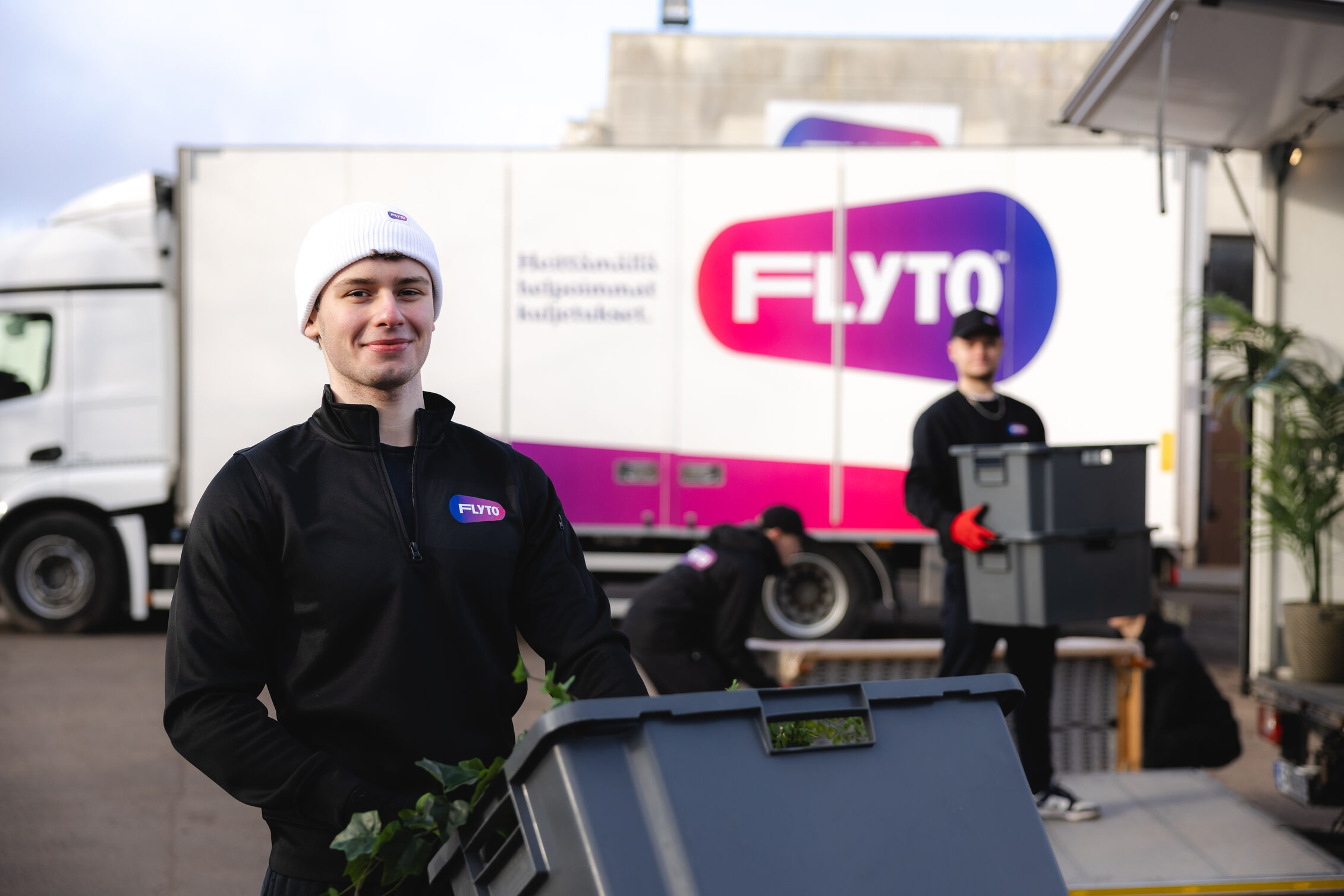
Flyto runs the European half of your move with genuine in-house strength: our own offices, warehouses, teams and vehicles across Northern, Central and Southern Europe handle the packing, export paperwork and loading in Portugal directly. For the ocean and air legs, and for clearance and delivery inside Bahrain, we rely on a carefully chosen network of vetted subcontractors and trusted local partners in the Gulf. That gives you one accountable point of contact from Sines or Leixões to your door in Manama — without us pretending we own trucks in Bahrain we don’t.
Frequently asked questions
Can I import my used furniture into Bahrain without paying duty?
Yes — used personal and household goods can enter duty-free under transfer-of-residence rules, provided you are changing your residence to Bahrain, you own them, they are for personal use, and you present a copy of your passport proving your residence visa (Bahrain Customs).
Do I need my Bahrain residence status before my shipment arrives?
Effectively yes. The duty exemption is claimed against proof of your residence (work/entry/residence visa), so time your container’s arrival to after your residence and CPR formalities are done (Bahrain Customs).
What tax steps must I take when leaving Portugal?
Update your morada fiscal to a non-resident address with the Tax and Customs Authority (AT) within 60 days; a fiscal representative is generally not required if you adhere to AT’s electronic notification channels (Portal das Finanças).
Which Portuguese port will my goods leave from?
Most deep-sea shipments load at Sines (APS) or, in the north, Leixões near Porto (APDL), usually via a transhipment hub before reaching Bahrain.
How do I bring my dog or cat?
Get an ISO-standard microchip and rabies vaccination, obtain a DGAV-endorsed export health certificate (DGAV), and secure a prior Bahrain import permit from the Veterinary Quarantine before travel (Bahrain Customs).
What about moving back — Bahrain to Portugal?
Portugal (via AT/EU transfer-of-residence relief) can grant VAT and duty relief on used household goods when you transfer your normal residence to Portugal, subject to conditions on how long you lived abroad, how long you owned and used the goods, and the deadline to import them after establishing residence; otherwise Portugal’s standard 23% VAT applies. Conditions change, so confirm the current rules with the Autoridade Tributária e Aduaneira (AT) and support your claim with a change-of-residence certificate and a valued inventory (Portal das Finanças).
Sources
- Bahrain Customs – Special Instructions for Relocating to Bahrain
- Bahrain Customs – Importing
- Bahrain Customs – Commercial Import
- Bahrain Customs – Quarries and Veterinary Control Department
- National Bureau for Revenue (Bahrain) – VAT
- Ministry of Transportation and Telecommunications – Khalifa Bin Salman Port
- Autoridade Tributária e Aduaneira – FAQ, address change
- Portal das Finanças – Change of tax address for foreign citizens (PDF)
- Portal das Finanças – Change from non-resident to resident
- gov.pt – NIF and address-change channels
- Portugal Exporta (AICEP) – Export customs declaration
- DGAV – Export of animals to third countries
- DGAV – Dogs and cats, travel requirements
- APS – Administração dos Portos de Sines e do Algarve
- APDL – Port of Leixões