

Moving to Malmö (2026): The Complete Relocation Guide

Malmö is Sweden’s third-largest city and the unofficial capital of the Öresund region — a young, densely international city of roughly 360,000 people sitting at the Swedish end of the bridge to Copenhagen. It is the cheapest of Sweden’s three big cities to rent in, and the only one where ”moving to Malmö but working in Denmark” is a normal life setup rather than an oddity. It is also, quietly, a tricky city to physically move into: the inner city is full of turn-of-the-century stone walk-ups with no lift, a moving truck cannot simply reserve the kerb outside your door without a permit, and a slice of arrivals are hauling their household across a currency and registration border from Denmark. This guide covers the practical mechanics of moving to Malmö in 2026 — the truck logistics only a mover knows, where to live and what rent really costs, how to find a flat and register your address, the Copenhagen commute, and what monthly life actually costs — with official sources throughout.
Freshness note: prices and rules verified against malmo.se, polisen.se, Boplats Syd, Skatteverket, SkåneTrafiken, 1177 Vårdguiden and Øresundsbron’s 2025 traffic report in 2026. Fees, rents and queue times move — confirm figures with the linked authorities before you rely on them.
Quick answer: moving to Malmö in 2026
What does it cost to move to Malmö? An international household move (a full flat) typically lands in the low-to-mid four figures in euros from within the Nordics and northern Europe, driven mostly by volume, distance and access. Malmö’s inner-city access difficulties (see below) add real cost, so get a fixed quote for your specific address rather than a generic estimate — get a Flyto quote here. Note that with Sweden’s RUT deduction you can claim 50% of the labour cost back (Skatteverket).
How long does the move take? Road moves from within the Nordics and the EU are usually a few days to about two weeks door-to-door. The one Malmö-specific quirk everyone underestimates: you can’t count on free kerb space, and to place a moving truck, container or an exterior furniture lift on a public street you need a police permit for use of public space plus a fee to the city — arrange it well ahead (Polisen, Malmö stad).
Key takeaways
- Your truck and furniture lift need a permit for the street. Reserving kerb space or standing a möbelhiss, skylift or container on a public street in Malmö requires a permit from the police for ”use of public space” (offentlig plats), and Malmö stad then charges a separate land-lease fee per its rate schedule. The police begin handling only once the application fee is paid, so apply early (Polisen, Malmö stad).
- Malmö’s inner city is a walk-up city. The prized sekelskifte (turn-of-the-century) stone blocks in Gamla Väster, Möllevången and around the centre are typically four to six storeys with no lift and tight, winding staircases — which is why an exterior furniture lift (möbelhiss) is so often needed to get a sofa or wardrobe in through a window or balcony.
- Rent is the cheapest of Sweden’s big three. Malmö’s rents run well below Stockholm’s and slightly below Gothenburg’s — housing costs in the city are materially lower than the capital (Numbeo, 2026). The catch is availability, not price.
- First-hand contracts run through a queue. The main channel is Boplats Syd, the regional housing queue covering Malmö and most of Skåne; average wait for a first-hand contract is a few years, though flexible searchers get offers far faster (Boplats Syd).
- Many move to Malmö and work in Copenhagen. The Öresundståg crosses the bridge in about 35 minutes and runs roughly every 20 minutes; in 2025 the bridge counted a record 21,585 daily commuters, the large majority Swedes working on the Danish side (Øresundsbron).
Planning the move itself as well? Costs, transit times and how to choose a mover are covered on our page about removals to Sweden.
1. The move into Malmö — logistics only a mover knows
This is the part generic ”moving to Malmö” guides skip, and it is exactly where a move goes wrong. Malmö’s inner districts were built for handcarts and courtyards, not for a full-size removal truck, and a meaningful share of arrivals are crossing a border to get here. Three things determine whether your move day runs smoothly.
The street permit: your truck’s and lift’s parking space
Sweden has no cheap, standard ”moving no-parking sign” order like Germany’s Haltverbot. Instead, if you want to reserve kerb space for the truck, or — far more commonly in Malmö — stand an exterior furniture lift (möbelhiss), a skylift or a container on the street, you are temporarily using public space (offentlig plats), and that needs a permit. Key facts from the authorities themselves:
- Who grants it: the police issue the permit to use public space (Polisen — använda offentlig plats). The city, as landowner, is consulted and sets conditions.
- The cost is two-part. The police charge an application (handling) fee, and Malmö stad then invoices a land-lease fee (markupplåtelseavgift) according to its published rate schedule for the days and area you occupy (Malmö stad — använda offentliga platser). Budget for both.
- Handling starts only after you pay. The police explicitly begin processing a public-space application only once the application fee is settled — a classic cause of last-minute delays for people who leave it late.
- Apply early. There is no guaranteed express lane, so submit the application well ahead of move day. Most people delegate the whole permit-and-lift job to their moving company, which does it as routine.
Separately, if you keep a car in Malmö, remember that a boendeparkering (residents’ parking) permit is tied to your registered address — when you move you must re-register it or it stops being valid (Malmö stad — byta fordon eller flytta).
Sekelskifte blocks, no lift, and the möbelhiss
Malmö’s most sought-after flats sit in sekelskifte and 1930s funkis buildings — the handsome brick-and-stone walk-ups of Gamla Väster, Möllevången, Davidshall and Rörsjöstaden. Many are four to six storeys with no lift (hiss) and narrow, turning staircases. The practical consequence is the same one Berlin and Copenhagen movers know well: sofas, wardrobes, double beds and pianos frequently will not fit up the stairwell or around its tight corners.
The standard solution is an exterior furniture lift (möbelhiss / möbellift) — a ladder hoist run up the facade to lift bulky items straight in through a window or balcony. Because the lift stands on the street, it needs the public-space permit described above and enough clear kerb to set up. A good mover assesses staircase width, floor and access before the day and books the lift in advance, rather than discovering the problem when the sofa is stuck on the second-floor landing.
The cross-border wrinkle: moving from Denmark
A distinctive Malmö reality is the number of people relocating from the Copenhagen side of the bridge — often keeping a Danish job while settling in cheaper Malmö. A household move from Denmark to Sweden is light as cross-border moves go: both are EU countries, so there is no customs duty or import declaration on your used household goods, and the physical distance is tiny. But it is not a domestic move, and three things change:
- Currency and contracts. You leave the Danish krone for the Swedish krona; rents, deposits and utilities are all in SEK, and your Danish bank set-up won’t seamlessly carry over.
- Registration resets. You must register with the Swedish population register and get a Swedish personnummer (see section 4) — your Danish CPR number does not transfer.
- The commute becomes a daily fact. If you keep working in Copenhagen, factor the bridge into where you live (see sections 2 and 6).
None of this is difficult if it’s planned for — and all of it is a bad surprise if it isn’t.
2. Where to live — Malmö neighborhoods by profile
Malmö is compact and bikeable, so ”central” covers a lot of ground. Character changes sharply from one district to the next, and — unlike Stockholm — you are rarely far from the sea. Because most first-hand rents run through the queue (section 3), treat the price notes below as relative positioning rather than to-the-krona quotes; Malmö sits below Stockholm and Gothenburg city-wide (Numbeo, 2026).
Best for young professionals and first arrivals:
- Möllevången (”Möllan”) — the multicultural, left-leaning heart of young Malmö: a market square, cheap eats from every continent, bars and a genuinely mixed crowd. Lively and affordable by central standards, but noisy at night and rough at the edges on the wrong street.
- Davidshall — small, central and stylish, with tree-lined streets, functionalist and Art Nouveau facades and independent shops. It also posts some of the city’s strongest school results. Central-premium pricing and limited stock.
- Rörsjöstaden — quiet, handsome sekelskifte blocks a short walk from the central station and Möllan; a sweet spot of central location without the party noise, though flats are scarce and mostly lift-less.
Best for character and city life:
- Gamla Väster — Malmö’s oldest, prettiest quarter: cobbled lanes, low pastel houses, cafés and galleries by the castle grounds. The most charming address in the city and priced accordingly; small, old buildings mean tight access and no lifts.
- Slottsstaden — leafy, well-heeled streets between the centre and the sea, near Slottsparken and Ribersborg beach; calmer and more residential, popular with settled professionals and families.
Best for families and space:
- Limhamn — a former limestone-quarry town absorbed into Malmö, now a ”town within the city”: low-rise, calm and family-friendly, with good schools, the sea and the bridge on-ramp close by. Longer trip to the centre and quieter evenings.
- Ribersborg — right behind Malmö’s long city beach, with the open-air bath (Ribersborgs kallbadhus); green, airy and desirable, at a seaside premium.
- Hyllie — the newest district, built around Hyllie station on the bridge line: modern flats, the Emporia mall and the arena, and a direct train to Copenhagen. The obvious pick for cross-border commuters, though it still feels newer and less lived-in than the old city.
Best for modern waterfront living:
- Västra Hamnen (Western Harbour) — Malmö’s flagship regeneration on the old shipyard: the Turning Torso tower, new architecture, the seafront promenade and a young, well-off crowd. Modern, lift-served buildings (an easier move-in) at the top of the city’s price range, and windy by the water.
3. The Malmö housing market — how flats are actually found
In Malmö the search, not the move, is usually the hard part — and the system is different from most countries. Here is how it works.
- First-hand vs second-hand. A förstahandskontrakt (first-hand lease) is the prize: an open-ended contract directly with the landlord at a regulated rent. A andrahandskontrakt (sublet) is easier to get but pricier, time-limited and less secure. Most newcomers start second-hand and queue for first-hand in parallel.
- Boplats Syd is the main queue. Malmö’s municipal and many private landlords let first-hand flats via Boplats Syd, which covers Malmö and most of Skåne rather than just one city — making it the most accessible of Sweden’s big-city queues. You can register from your date of birth before you even have a personnummer, and register early because priority is by queue time (how it works).
- Expect a wait — but not always a long one. Average wait for a first-hand contract runs a few years, yet a large share of flats go to people with well under a year of queue time, and flexible searchers across Skåne can be housed in months. Treat the queue as a background process you start on day one.
- Deposit. First-hand rentals in Sweden usually take no deposit; sublets and some private lets may ask for one, typically one to a few months’ rent. Rent is normally paid one month in advance.
- Scam warning. Fake listings and sublet fraud are common in Skåne. Never pay a deposit or ”reservation” before you have viewed the flat and verified the landlord holds a real first-hand contract (a sublet needs the property owner’s or association’s permission). Red flags: keys promised by post, an ”owner abroad”, prices well below market, or pressure to pay to a foreign account. Register directly on Boplats Syd rather than paying anyone who promises to jump you up a queue.
4. Folkbokföring — registering your address and getting a personnummer
Population registration (folkbokföring) with Skatteverket is the master key to Swedish life: it drives your personnummer, which you need for a bank account (BankID), healthcare, a phone contract and much else. The rules:
- Moving to Sweden. If you intend to live in Sweden for at least a year, you register as moving here and are entered in the population register, which gives you a personnummer if you don’t already have one. You generally have to visit a Skatteverket service centre in person for an identity check — book ahead (Skatteverket — Moving to Sweden). Our step-by-step Swedish personnummer and registration guide walks through the whole process.
- Moving within Sweden. If you already have a personnummer and move house, you must report the new address to Skatteverket (a flyttanmälan) — do it around the move; the report also updates the official mail-forwarding partner (Skatteverket — flytta inom Sverige).
- Coming from Denmark or another Nordic country. Nordic citizens register in person at a service centre; there is no residence-permit step, but the population-registration and personnummer process is the same, and your Danish CPR number does not carry over.
5. Cost of living in Malmö (2026)
Malmö is the most affordable of Sweden’s three big cities, and noticeably cheaper than Copenhagen across the bridge — one reason so many people live here and work there. The current picture:
- Rent is the big variable and Malmö’s advantage: city-wide rents sit clearly below Stockholm and a little under Gothenburg (Numbeo, 2026). First-hand (queued) rents are lower than second-hand market lets for the same flat, so the queue pays off over time.
- Public transport. Within the city you use SkåneTrafiken. Single tickets were left unchanged in 2026, while 30-day period tickets rose by 21–41 kr/month depending on how many zones they cover; a summer half-price campaign on 30-day tickets runs until 2 November 2026 (SkåneTrafiken). Check the live zone price for your route on skanetrafiken.se.
- The Copenhagen premium. If you commute over the bridge, budget for a cross-border monthly pass (SkåneTrafiken plus the Danish DSB leg), which costs more than a purely local card — the trade-off for Malmö’s cheaper rent and a Copenhagen salary.
- Utilities and everyday costs are broadly in line with the rest of Sweden; electricity in southern Sweden (price area SE4) can spike in cold snaps, so check whether your flat has fixed or variable pricing.
Remember the RUT deduction on the move itself: 50% of the labour cost of packing, unpacking, moving your goods and move-out cleaning is deductible, within a combined ROT+RUT cap of 75,000 kr per person per year. It applies to labour only — not transport or materials (Skatteverket).
6. Getting settled — transport, the bridge, health, kids, internet
- Local transport and the bridge. SkåneTrafiken runs Malmö’s buses and the regional trains, including the Öresundståg across the bridge to Copenhagen — about 35 minutes city-centre to city-centre, roughly every 20 minutes, with a direct stop at Hyllie and the airport (Kastrup) on the way (Øresundsbron). Malmö is also flat and bike-first, so many residents cycle year-round and skip a car entirely.
- Healthcare. Once you have a personnummer you choose (list yourself at) a local health centre — a vårdcentral — which becomes your first point of contact for non-emergencies. You do this online via 1177, and can change up to twice a year (1177 Vårdguiden — välja vårdcentral i Skåne). Call 1177 for medical advice and 112 for emergencies.
- Schools and childcare. Malmö offers subsidised preschool (förskola) and free compulsory school; you apply through Malmö stad and can rank preferences. Davidshall and Slottsstaden are known for strong school results, while Limhamn is a popular family choice — apply early, as the best schools fill up.
- Internet. Most Malmö flats are fibre-connected; you typically pick a provider through the building’s open network (often via the city’s Bredband/Öppen fiber infrastructure) rather than laying a new line, so activation is usually quick. Check what the building already supports before you sign.
7. How Flyto handles your move to Malmö
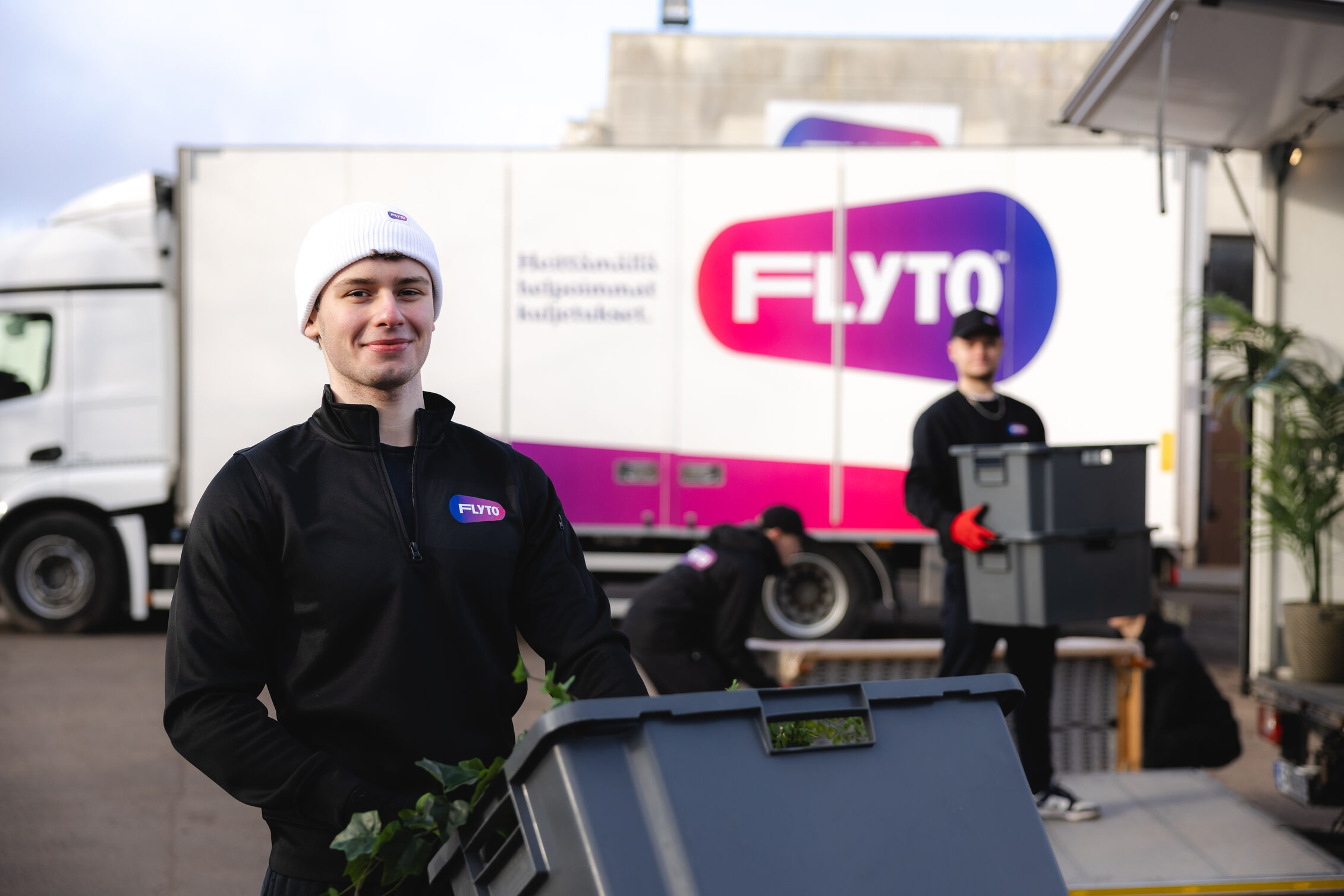
Everything in section 1 is why a Malmö move rewards a mover who actually knows the city — and it’s where Flyto earns its keep. We arrange the public-space permit and city fee for the truck and the furniture lift, in good time, so there’s a legal, clear space when we arrive. We assess sekelskifte access in advance — staircase width, floor, courtyard — and bring an exterior furniture lift (möbelhiss) when the sofa won’t make the stairwell, rather than discovering the problem mid-carry. And because so many Malmö moves start in Denmark, we handle the cross-border move from Copenhagen and the rest of the Nordics as routine — EU household goods with no customs duty, coordinated to your new Malmö address. That’s the honest difference between a generic van hire and a relocation partner who has done this street by street. Get a fixed quote for your Malmö move, or browse our full Sweden moving guides, our Stockholm guide and our Copenhagen guide for the other side of the bridge.
Moving to Malmö? Get a fixed quote.
Tell us your addresses and volume and we’ll price the whole move — including the street permit and any furniture lift your walk-up needs, and cross-border from Denmark if that’s where you’re starting. No surprises on the day.
Frequently asked questions
Do I need a permit for my moving truck or furniture lift in Malmö?
In practice, yes, whenever you use public space. Reserving kerb space, or standing an exterior furniture lift (möbelhiss), skylift or container on a public street, needs a permit from the police for ”use of public space” (offentlig plats), and Malmö stad then charges a separate land-lease fee per its rate schedule. The police start handling the case only after the application fee is paid, so apply well ahead of move day — most people let their mover arrange it.
Can I really live in Malmö and work in Copenhagen?
Yes — it’s one of the most common Malmö setups. The Öresundståg crosses the bridge in about 35 minutes, roughly every 20 minutes, with a stop at Hyllie and Copenhagen Airport. In 2025 the bridge recorded a record 21,585 daily commuters, the large majority Swedes working on the Danish side (Øresundsbron). Budget for a cross-border SkåneTrafiken-plus-DSB monthly pass, which costs more than a purely local card.
How do I find an apartment in Malmö?
Register with Boplats Syd, the regional housing queue for Malmö and most of Skåne, as early as possible — priority is by queue time and you can register before you have a personnummer. First-hand (förstahand) contracts come through the queue at regulated rents; many newcomers rent second-hand (andrahand) in the meantime. Average waits run a few years, but a large share of flats go to people with well under a year queued, especially if you’re flexible across Skåne.
Will my furniture fit up a Malmö staircase?
Often not. Malmö’s most desirable flats are in turn-of-the-century (sekelskifte) and 1930s funkis walk-ups, typically four to six storeys with no lift and narrow, turning stairs. Large items frequently have to go in via an exterior furniture lift (möbelhiss) through a window or balcony. A good mover checks the staircase, floor and access before move day and books the lift — and its street permit — in advance.
Is Malmö cheaper than Stockholm and Gothenburg?
Yes. Malmö is the most affordable of Sweden’s three big cities, with rents clearly below Stockholm and a little under Gothenburg (Numbeo, 2026). It’s also noticeably cheaper than Copenhagen across the bridge, which is exactly why so many people live in Malmö and work in Denmark. The main constraint is availability through the housing queue, not price.
How do I register my address and get a personnummer in Malmö?
Population registration (folkbokföring) is handled by Skatteverket. If you’re moving to Sweden for at least a year, you register as moving here and are given a personnummer, usually after an in-person identity check at a service centre. If you already have a personnummer and are moving within Sweden, you file a flyttanmälan with Skatteverket around the move. A Danish CPR number does not carry over. See our Swedish personnummer guide for the full walkthrough.
Can I claim the RUT deduction on my move?
Yes. The RUT deduction gives 50% off the labour cost of packing, unpacking, moving your household goods and move-out cleaning, within a combined ROT+RUT cap of 75,000 kr per person per year. It applies to labour only — not transport or packing materials (Skatteverket). Your mover normally applies the discount on the invoice.
Do I need a deposit to rent in Malmö?
Usually not for a first-hand contract, where Swedish landlords typically take no deposit and rent is paid one month in advance. Second-hand (sublet) and some private lets may ask for a deposit of one to a few months’ rent. Never pay a deposit before viewing the flat and confirming the landlord’s contract is genuine — sublet fraud is common in Skåne.
Official sources
- Polisen — permit to use public space (offentlig plats)
- Malmö stad — using public spaces (permit and land-lease fee)
- Malmö stad — residents’ parking when you move or change vehicle
- Malmö stad — Housing (New in Sweden)
- Boplats Syd — the Skåne housing queue
- Boplats Syd — how the queue works
- Skatteverket — Moving to Sweden and population registration (English)
- Skatteverket — reporting a move within Sweden (flyttanmälan)
- Skatteverket — how the RUT deduction works
- SkåneTrafiken — prices and discounts
- SkåneTrafiken — 2026 fare adjustments and summer campaign
- 1177 Vårdguiden — choosing a health centre (vårdcentral) in Skåne
- Øresundsbron — bridge traffic and commuting
- Numbeo — cost of living in Malmö (2026)
- Flyto — Swedish personnummer and registration guide
- Flyto — moving to Stockholm guide
- Flyto — moving to Copenhagen guide
- Flyto — Sweden moving guides
Hiring an international mover? See our full International removals to Sweden service — Flyto’s own European hubs, vetted local partners and one English-speaking coordinator, door to door.