

Moving from the Netherlands to New Zealand (2026): Complete Guide

Relocating from the Netherlands to New Zealand means clearing two very different border systems, roughly 18,000 kilometres apart, and getting them to line up. On the Dutch side you deregister from your municipality, settle your tax position and file a customs export declaration through the Netherlands’ customs authority. On the New Zealand side you claim a duty and GST concession on your household effects, satisfy one of the strictest biosecurity regimes in the world, and prove you are entitled to live there. This guide covers both halves in order, plus a short note on the reverse move, so a Dutch resident can see the whole corridor before booking a single container.
Key takeaways
- If you move to a non-EU country such as New Zealand, you must file an export declaration with the Netherlands’ customs authority (Douane), submitted electronically through the DMS or AGS systems (Dutch Customs).
- You must deregister from the BRP (Personal Records Database) at your municipality between 5 days before departure and your departure date; your details then move to the Non-residents Records Database (RNI) and your BSN stays valid (NetherlandsWorldwide).
- In your year of emigration you file an M-form (migration return) with the Dutch Tax Administration, splitting the year into resident and non-resident periods (Belastingdienst).
- New Zealand gives a duty and GST concession on used household effects if you are moving there to live, but you must complete form NZCS 218 (NZ Customs).
- Your shipment is also screened for biosecurity risk by the Ministry for Primary Industries (MPI); used outdoor gear, wooden items and anything soiled with soil or plant matter must be declared and cleaned (MPI).
- Cats and dogs need an MPI import permit, microchip, rabies vaccination and health testing, and most non-Australian animals spend a minimum stay in an approved quarantine facility (MPI).
- Carrying NZ$10,000 or more in cash (or foreign equivalent) into or out of New Zealand must be declared on a Border Cash Report under the AML/CFT Act 2009 (NZ Customs).
- Motor vehicles are excluded from the household-effects concession and must pass NZTA entry certification before they can be driven (NZTA).
1. Your New Zealand visa status decides everything
Before you touch a shipping quote, confirm your right to live in New Zealand, because the customs concession is tied directly to it. New Zealand’s household-effects concession is available if you are moving to the country for the first time or returning after 21 months or more away, and you hold qualifying documentation — a New Zealand or Australian passport, a residence visa, a work visa valid for at least 12 months, or a visitor visa valid for three years or more (NZ Customs).
Most people leaving the Netherlands arrive on either the Accredited Employer Work Visa (AEWV) or the points-based Skilled Migrant Category Resident Visa; the current settings and pathways are published by Immigration New Zealand. Sort the visa first: if your permission to reside is too short, your goods are treated as an ordinary dutiable import rather than a concessionary personal move, and that changes both your paperwork and your costs.
2. The Netherlands export side: authority, deregistration and tax exit
The customs authority you deal with is the Customs Administration of the Netherlands (Douane), part of the Ministry of Finance. Because New Zealand is outside the EU, goods leaving the customs territory of the Union require an export declaration. Declarations can only be submitted electronically, through the DMS or AGS systems, and doing so requires an Electronic Messaging Registration (Dutch Customs). In practice a moving company or customs agent lodges this on your behalf; the Dutch guidance on moving personal belongings to and from the Netherlands confirms that removal-goods declarations run through the customs declaration system rather than being filed casually by the individual (Dutch Customs).
Deregister from the BRP. You must report your move abroad to your municipality (the Burgerzaken department) between 5 days before departure and the day you leave, using the emigration declaration; the rule bites when you will live outside the Netherlands for more than 8 months of the year. Once processed, your data transfers to the Non-residents Records Database (RNI) and your citizen service number (BSN) remains valid, which matters if you keep Dutch ties (NetherlandsWorldwide). Ask for written proof of deregistration — you may need it to close accounts or register in New Zealand.
Settle your tax residency. In the calendar year you emigrate you file an M-form with the Belastingdienst. The M (migration) return splits the year into the resident period, when you are taxed on worldwide income, and the non-resident period, when only Dutch-source income is taxed. It is normally filed online via Mijn Belastingdienst with a DigiD, with a paper form available if you cannot file online (Belastingdienst). Deregistration from the BRP is shared with the tax authority, so the two processes are linked — do the BRP step properly and your tax exit is cleaner.
3. Ports and transit: real Dutch gateways, estimated timings
Your container will almost certainly leave through Rotterdam, Europe’s largest seaport and the natural deep-sea gateway for a New Zealand-bound shipment (Port of Rotterdam). Amsterdam handles some sea freight too, while air freight for smaller or urgent shipments moves through Amsterdam Schiphol.
Transit times below are freight-industry estimates, not official figures, and they vary with sailing schedules, transhipment hubs (often Singapore or a Middle East port) and port congestion:
- Sea freight (FCL/LCL), Rotterdam to Auckland or Tauranga: roughly 6–9 weeks port to port, before Dutch export handling and New Zealand clearance.
- Air freight, Schiphol to Auckland: roughly 5–10 days door to door once documentation is ready.
Treat these as planning ranges. Build in extra time for the biosecurity inspection on arrival, which can add days if your goods are selected for examination.
4. The New Zealand import side: the concession and the form
New Zealand runs a two-agency check at the border: Customs for duty and GST, and MPI for biosecurity. For household effects the key document is form NZCS 218 (Bring personal household items into New Zealand), which every immigrant or returning resident shipping unaccompanied effects must complete (NZ Customs).
To qualify for the concession — meaning you will not pay GST and duty on most items — you must have resided or been domiciled outside New Zealand for the whole of the 21-month qualifying period, have personally owned and used the goods before you depart, and be importing them for your own use, not for gift, exchange or sale. New or unused items, motor vehicles, boats, aircraft and commercial goods are excluded and may attract duty and GST (NZ Customs).
Alongside Customs, MPI screens the shipment for biosecurity risk. Used items that have been in contact with soil, plants, animals or water — camping and hiking gear, garden tools, bikes, vacuum cleaners, outdoor footwear — must be declared, and anything carrying soil, seeds or plant or animal residue must be cleaned before it will be released. Wooden articles and some foods are also risk goods. Declaring items honestly and cleaning them thoroughly before packing is the single biggest thing you can do to avoid delays, treatment fees or destruction on arrival (MPI).
5. Pets: both ends of the journey
The Dutch export side. You leave with an EU pet passport, but travelling with a dog or cat to a country outside the EU means meeting the destination country’s rules and, where required, having the veterinary health certificate legalised by the NVWA (the Netherlands Food and Consumer Product Safety Authority). Your vet completes and signs the certificate, and the NVWA advises arranging legalisation at least 14 working days ahead; requirements and binding certificates for a given destination are set out in its Export Assistant (NVWA).
The New Zealand import side. New Zealand’s rules are strict and are set by MPI’s Import Health Standard for cats and dogs. In outline you need a microchip, rabies vaccination, an MPI import permit, prescribed parasite treatments and blood testing, and animals from most countries other than Australia serve a minimum stay in an MPI-approved quarantine facility on arrival. Because MPI updates this standard and the required tests and timelines run over several months, start with MPI’s official step-by-step guide and confirm the current version before you book flights (MPI). Plan pets on a longer runway than your furniture — often the critical path of the whole move.
6. Vehicles, money and the things people forget
Vehicles. Your car is not covered by the household-effects concession, and even a duty-cleared vehicle cannot be driven until it passes entry certification. NZTA (Waka Kotahi) requires every imported vehicle to be checked and certified against safety and emissions standards, with a specific pathway for immigrants’ vehicles (NZTA). Between shipping cost, compliance and the fact that Dutch cars are left-hand drive for a right-hand-drive country, importing a car is often not worth it — price a local purchase first.
Money. Moving funds is not restricted, but carrying NZ$10,000 or more in cash or bearer instruments into or out of New Zealand must be declared on a Border Cash Report; failing to do so is an offence under the AML/CFT Act 2009 (NZ Customs). Larger sums are best moved by bank transfer or a regulated currency service, which leaves a clean record.
Easy to forget: cancel or transfer Dutch health insurance and utilities only after your BRP deregistration date; keep your DigiD active for the M-form; retain proof of ownership and dates for high-value goods in case Customs queries the concession; and time the container so it does not arrive before you do, since you generally need to be in New Zealand for clearance.
How Flyto handles your Netherlands to New Zealand move
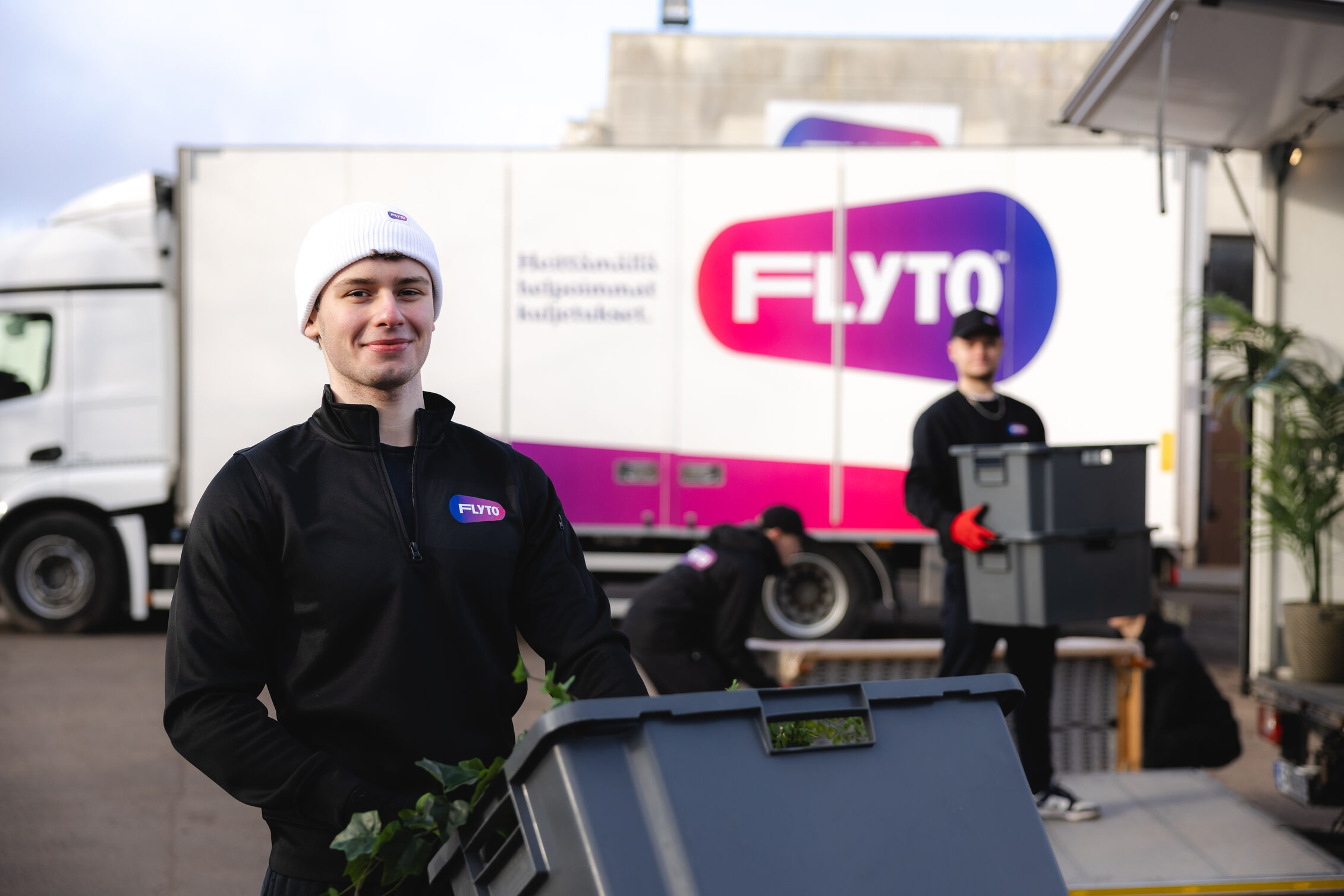
Flyto runs its own offices, warehouses, crews and vehicles across Northern, Central and Southern Europe, so the Dutch end of your move — packing, export documentation and loading at Rotterdam or Schiphol — is handled directly by our own European operation, backed by a carefully chosen network of vetted partners and subcontractors where it makes sense. For the New Zealand side we work with trusted local partners for customs clearance, MPI biosecurity and final delivery. We coordinate the whole corridor end to end; we do not pretend to own every truck on both sides of the planet.
Frequently asked questions
Do I file the Dutch export declaration myself?
In practice, no. Export declarations to a non-EU country must be lodged electronically through the DMS or AGS systems and require an Electronic Messaging Registration, so a mover or customs agent normally files it for you (Dutch Customs).
When exactly do I deregister from my municipality?
Between 5 days before departure and your departure date, at your municipality’s Burgerzaken. Your data then moves to the RNI and your BSN stays valid (NetherlandsWorldwide).
Will I pay GST or duty on my furniture in New Zealand?
Usually not, if you qualify for the household-effects concession — you have been outside New Zealand for the full 21-month period, hold qualifying residence documentation, and personally owned and used the goods for your own use. You still complete form NZCS 218 (NZ Customs).
What gets my shipment held at the border?
Undeclared or dirty risk goods. MPI targets items exposed to soil, plants, animals or water — outdoor gear, garden tools, wooden articles — so declare and clean everything (MPI).
How far ahead should I start on the pets?
Months ahead. New Zealand requires a microchip, rabies vaccination, an import permit, testing and usually a quarantine stay, and the sequence runs over an extended period, so begin with MPI’s step-by-step guide first (MPI).
What about moving back — New Zealand to the Netherlands?
It reverses. You would leave New Zealand and, on the Dutch end, import removal goods from a non-EU country by filing an import declaration and applying for the tax exemption; Dutch Customs generally asks for a signed inventory and proof of when you settled in the Netherlands (such as your BRP registration) (Dutch Customs).
Sources
- Dutch Customs — Moving things from a non-EU country
- Dutch Customs — Export: submitting a declaration
- NetherlandsWorldwide — How to deregister from the BRP
- NetherlandsWorldwide — When to deregister from a Dutch municipality
- Belastingdienst — M tax return (year of emigration/immigration)
- NVWA — Legalisation of pet documents / travelling outside the EU
- Port of Rotterdam Authority
- New Zealand Customs — Household effects
- MPI — Household goods and personal effects importing to NZ
- MPI — Step-by-step guide to bringing cats and dogs to NZ
- New Zealand Customs — Border Cash Report
- Immigration New Zealand
- NZTA Waka Kotahi — Importing a vehicle