

Moving from Belgium to New Zealand (2026): Complete Guide

Relocating from Belgium to New Zealand means running two customs regimes back to back: a Belgian export out of the EU customs union, and a New Zealand import roughly 18,000 km away. Getting one half right does not save you if the other half fails — Belgian customs decides whether your container legally leaves, and New Zealand Customs plus the Ministry for Primary Industries (MPI) decide whether it is cleared, taxed, or held at the border. This guide covers both directions in full for anyone leaving Belgium — a returning Kiwi, a Belgian citizen on a new visa, or a third-country national resident in Flanders, Wallonia or Brussels — and closes with a short note on the reverse move.
Key takeaways
- Your New Zealand duty and GST treatment depends on your immigration status: household effects enter free of duty and GST only if you hold a document authorising residence, have resided or been domiciled outside NZ for the whole of the 21-month period preceding your arrival, and owned and used the goods before import (NZ Customs).
- Unaccompanied belongings are declared to New Zealand Customs on form NZCS 218 (NZ Customs form).
- Belgium’s customs authority is the General Administration of Customs and Excise within FPS Finance; a move outside the EU requires an export declaration listing your goods (FPS Finance).
- You must deregister at your commune’s municipal administration no later than the day before departure (IBZ – FPS Home Affairs).
- Leaving Belgium triggers a final "special" resident tax return covering 1 January to your departure date (FPS Finance).
- Cats and dogs need an MPI import permit, ISO microchip, rabies antibody titre of ≥0.5 IU/ml, and a minimum 10 days in an MPI-approved quarantine facility (MPI).
- Pets leaving Belgium need an export health certificate signed by an official FASFC/FAVV veterinarian (FASFC).
1. Your NZ visa status sets the customs rules
Before you price a single crate, confirm your New Zealand immigration status, because it determines everything downstream. New Zealand Customs grants the household-effects concession only to a person who "holds a document authorising residence in New Zealand at the time of importation of the goods" — in practice a resident visa, or a work or visitor visa of sufficient duration (NZ Customs). Check your entitlement on Immigration New Zealand first.
The full concession has four cumulative conditions: you have arrived in New Zealand; you hold a residence-authorising document at the time of import; you have resided or been domiciled outside New Zealand for the whole of the 21-month period preceding your arrival (brief holidays or business trips aside); and you have owned and personally used the goods before importing them (NZ Customs). Miss any one and your shipment may attract duty (where applicable) and 15% GST on the Customs value (NZ Customs).
2. The Belgium export side
Belgium’s customs work is run by the General Administration of Customs and Excise (Algemene Administratie van de Douane en Accijnzen / Administration générale des Douanes et Accises), part of FPS Finance. For a move within the EU no customs declaration is needed thanks to free movement of goods, but for a move outside the EU — which New Zealand is — "you need to lodge an export declaration for your personal goods with Customs" by submitting a list of the goods you are taking with you (FPS Finance). In practice your removal company or a customs agent files this electronically; since 18 November 2024 Belgium requires export declarations through the AES (Automated Export System), which replaced the older PLDA platform. Belgium applies no personal exit tax on your household goods themselves.
Deregistration (uitschrijving / radiation). If you move your main residence abroad you must make a departure declaration to the municipal administration of your commune — the city or town where you are registered — no later than the day before you leave. The municipality collects your residence permit and removes you from the population register (IBZ – FPS Home Affairs). This deregistration date is the legal anchor for your tax exit, so do not skip it.
Tax-residency exit. You are a Belgian tax resident while your domicile or the seat of your assets is in Belgium. On leaving, contact your local tax office: your obligations differ depending on whether you remain domiciled in Belgium, become domiciled abroad, and whether you keep any Belgian-source income (FPS Finance). Departure normally triggers a final resident personal-income-tax return covering 1 January up to your departure date, after which your file moves to the non-resident unit (FPS Finance).
3. Ports and transit
Belgium punches far above its size in maritime freight. Most household containers for New Zealand leave through the Port of Antwerp-Bruges — the merged entity that combines the deep-sea container terminals at Antwerp with the ro-ro and short-sea quays at Zeebrugge (Port of Antwerp-Bruges). North Sea Port (Ghent) is a secondary option. There is no direct Belgium–New Zealand shipping lane, so your container is trucked to the quay, loaded, and transhipped via a hub such as Singapore or Tanjung Pelepas before reaching Auckland, Tauranga or Lyttelton. Belgian seaport export formalities are described by FPS Finance.
Transit times — freight-industry estimates, not official figures. As a planning rule of thumb, sea freight port-to-port runs roughly 6–8 weeks, with total door-to-door commonly 10–14 weeks once packing, export clearance, transhipment and NZ biosecurity are included. Air freight moves in days but multiplies cost. Treat these as industry estimates; neither Belgian nor New Zealand authorities publish guaranteed transit times.
4. The New Zealand import side
Every shipment into New Zealand is cleared by two agencies working together — New Zealand Customs Service and MPI for biosecurity (NZ Customs). For unaccompanied household and personal effects the core document is form NZCS 218 – Bring Personal Household Items into New Zealand, submitted directly to Customs or through your broker or moving company (NZ Customs). If your goods are cleared before you arrive, a nominee appointed by you in writing completes the NZCS 218 on your behalf (NZ Customs).
Apply for clearance before arrival to avoid delay, or within 20 days of your goods arriving. Commercial-value goods above NZ$1,000 need a standard electronic import declaration, but your genuine personal and household effects are exempt from that threshold when they meet the concession above. Expect an MPI biosecurity step regardless of duty status: wooden furniture, outdoor gear, bicycles and shoes are common targets for inspection or cleaning, and the shipping container itself is treated as a risk good (NZ Customs). A detailed, valued packing list is your single most useful document.
5. Pets
Leaving Belgium. Belgium’s competent authority for animal exports is the Federal Agency for the Safety of the Food Chain (FASFC / FAVV-AFSCA). Your cat or dog needs a valid rabies vaccination and an export health certificate that must be checked and signed by an official veterinarian of the local FASFC control unit in your province; the certificate model is dictated by the destination country (FASFC). General guidance on travelling with pets, including CITES species, is published by FPS Public Health.
Entering New Zealand. Belgium is an MPI Category 3 country (rabies present but well controlled) (MPI). Your pet needs, in sequence: an MPI import permit (apply at least six weeks ahead; MPI needs 30 working days to process once your documentation is complete and correct), an ISO-standard microchip, a current rabies vaccination, and a rabies antibody titre test (RNATT) on blood drawn three to four weeks after vaccination, tested by an approved laboratory at 0.5 IU/ml or higher. On arrival every cat and dog except those from Australia must spend a minimum of 10 days in an MPI-approved quarantine facility (MPI step-by-step guide). Note the 2026 Import Health Standard phasing in from 1 July 2026, mandatory for all pets from 1 April 2027 — start from the current MPI page so you follow the version in force on your travel date (MPI).
6. Vehicles, money and things people forget
Vehicles. A car, small ship or aircraft can enter New Zealand free of duty and GST, but the owner must have owned and used it for 12 months before shipping or departure (whichever is earlier), on top of the standard concession conditions, and used vehicles must meet the Vehicles, Machinery and Parts Import Health Standard (NZ Customs). Left-hand-drive Belgian cars are legal in NZ but rarely worth the shipping and compliance cost.
Money. There is no limit on funds you may transfer, but plan the currency conversion and keep records. Do not carry large cash sums to sidestep reporting; declare where required.
Easy to overlook: unwashed hiking boots, garden tools, tents and anything soil-contaminated will be stopped by MPI; European electrical appliances need plug/voltage checks (NZ uses 230 V, Type I sockets); ask your Belgian mutualité about health-cover cancellation; and keep at least one certified copy of your model 8 / deregistration certificate, which the Belgian embassy or consulate may ask for when you register abroad (IBZ).
Reverse direction (New Zealand → Belgium). Moving back the other way, you import into the EU customs union. Belgium grants duty and tax relief on personal property when you transfer your normal residence, provided you have resided outside the EU for at least 12 consecutive months, apply for the exemption, and bring the goods in within 12 months of establishing residence; you may not lend, pledge, rent out or sell them within 12 months of import without notifying Customs (FPS Finance). Pets return under EU rules with a rabies antibody test, and you re-register at your Belgian commune.
How Flyto handles your Belgium to New Zealand move
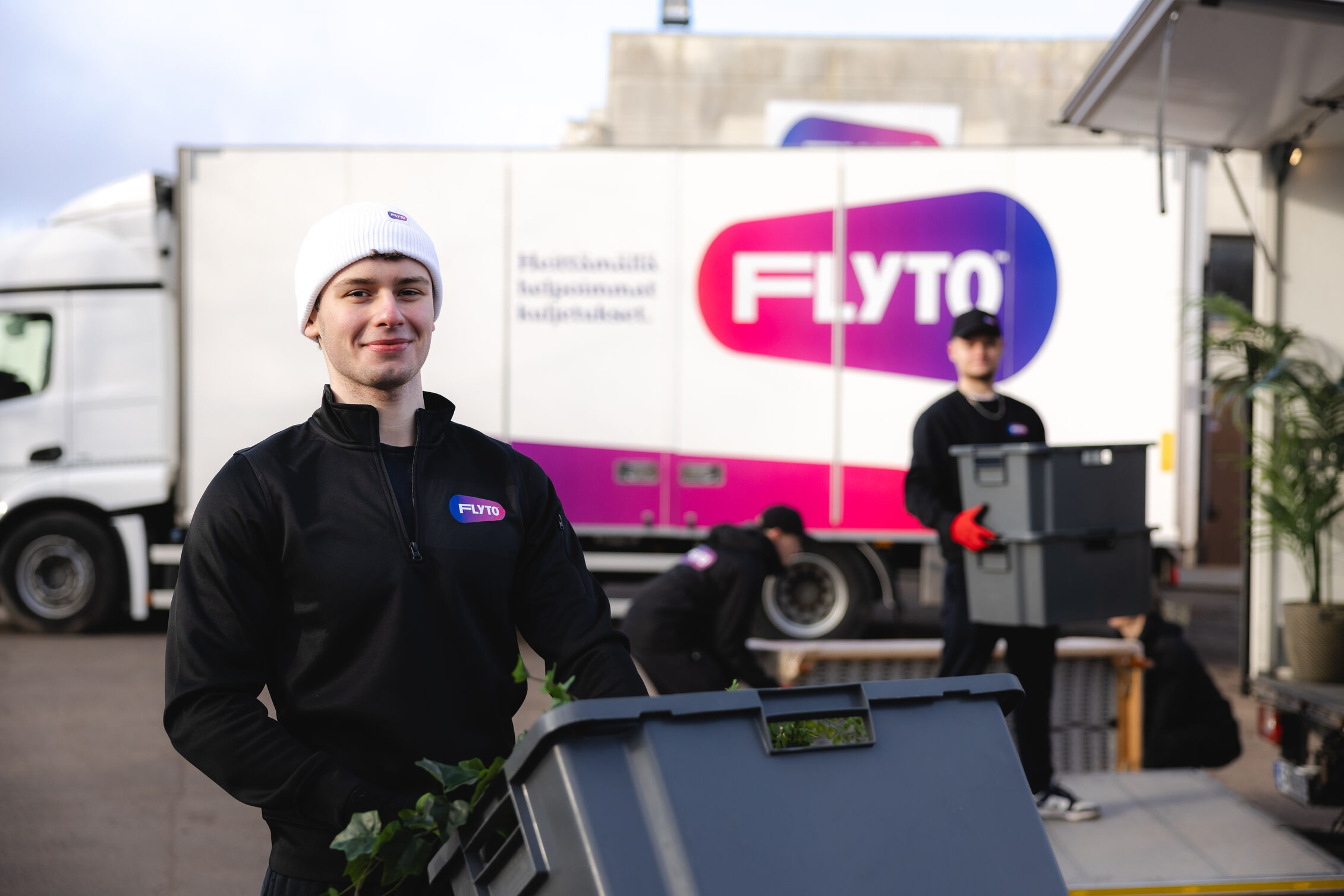
Flyto runs strong in-house European operations — our own offices, warehouses, teams and vehicles across Northern, Central and Southern Europe — so the Belgian packing, export paperwork and port handoff stay under our direct control. For the long-haul leg and the New Zealand arrival we combine a carefully chosen partner and subcontractor network with trusted local partners in New Zealand for customs clearance, biosecurity and final delivery. We coordinate the whole corridor end to end without pretending we do every mile ourselves.
Frequently asked questions
Will I pay tax on my furniture in New Zealand?
Not if you meet the concession: residence authorisation, residence outside NZ for the whole 21-month period before arrival, and prior ownership and use. Otherwise 15% GST applies to the Customs value (NZ Customs).
Do I really have to deregister at my commune?
Yes. Declare your departure to your municipal administration no later than the day before you leave; it sets your official Belgian exit date for tax and civil purposes (IBZ).
Which form clears my shipment in New Zealand?
NZCS 218 for unaccompanied personal and household effects, filed by you, your nominee, or your mover (NZ Customs).
How long is pet quarantine?
A minimum of 10 days in an MPI-approved facility for cats and dogs from Belgium, after the permit, microchip, rabies vaccination and antibody test are complete (MPI).
Do I still file a Belgian tax return after I leave?
You file a final "special" resident return covering 1 January to your departure date; afterwards you deal with the non-resident unit for any Belgian-source income (FPS Finance).
How long will the sea shipment take?
As a freight-industry estimate, plan 10–14 weeks door to door; no authority guarantees a transit time, so build in a buffer.
Sources
- NZ Customs – Importing goods for personal use (fact sheet, PDF)
- NZ Customs – Household effects
- NZ Customs – Form NZCS 218 (PDF)
- Immigration New Zealand – Visas
- MPI – Bringing cats and dogs to NZ
- MPI – Step-by-step guide to bringing cats and dogs to NZ
- MPI – Category 3 countries support document (Belgium)
- IBZ / FPS Home Affairs – Compulsory deregistration when leaving Belgium
- FPS Finance – Moving from Belgium (customs)
- FPS Finance – Leaving Belgium
- FPS Finance – Leaving Belgium: tax return
- FPS Finance – Export from a Belgian seaport
- FPS Finance – Moving to Belgium (reverse direction)
- FASFC / FAVV-AFSCA – Travelling with your pet
- FPS Public Health – Travelling with your pets
- Port of Antwerp-Bruges