

Moving from Belgium to Kazakhstan (2026): Complete Guide

Belgium to Kazakhstan is a two-sided move: an EU exit on one end (Antwerp-Bruges for sea freight, Brussels for air) and an Eurasian Economic Union (EAEU) entry on the other, over 5,000 km away with no shared land border and no common customs union. Getting it right means handling the Belgian side — municipal deregistration, the FPS Finance export declaration, and your tax exit — correctly, and separately satisfying Kazakhstan’s State Revenue Committee customs rules and immigration status on arrival. This guide is for a Belgian resident (Belgian national, EU national resident in Belgium, or third-country national with a Belgian residence permit) relocating to Kazakhstan for work, family or investment reasons, and covers both halves plus the return leg.
Key takeaways
- Belgium has no exit permit for household goods, but if you are leaving permanently you must report in person to your municipality — no later than the day before you leave — for a "declaration of departure," after which the commune deregisters you and issues Model 8, your proof of deregistration; this is a compulsory step for EU citizens and their family members leaving Belgium.
- Your move triggers a Belgian tax exit: a special "departure return" (vertrekaangifte) covering worldwide income up to your departure date must be filed within 3 months of leaving, via MyMinFin — see FPS Finance, Leaving Belgium – tax return.
- Household-goods exports from Belgium go through customs electronically via PLDA (Paperless Douane en Accijnzen), run by FPS Finance customs.
- Belgian passport holders can enter Kazakhstan visa-free for up to 30 days per visit (max 90 days per 180-day period) under Kazakhstan’s visa-free regime; longer stays require a visa and, for relocation, a residence permit obtained after arrival — Kazakhstan MFA visa regime.
- On the Kazakhstan side, goods crossing the EAEU customs border are declared on the passenger customs declaration administered by the State Revenue Committee; duty-free personal-effects allowances since 1 April 2024 are €10,000/50 kg by air and €500/25 kg by other transport.
- Cash: leaving the EU with €10,000 or more must be declared under EU Regulation 2018/1672; entering or leaving Kazakhstan with the equivalent of USD 10,000 or more must likewise be declared, per the State Revenue Committee.
- Pets need to meet Kazakhstan’s own entry conditions (the destination country’s rules apply, not a Belgian standard) plus a Belgian-issued health/rabies certificate to leave under FASFC export rules — confirm the exact certificate Kazakhstan requires with its veterinary authority or the Belgian embassy before you fly.
- Vehicles brought into Kazakhstan by individuals face a Special Combined Customs Payment of roughly 48–54% of value (or a per-cm³ minimum) for newer cars, and right-hand-drive vehicles cannot be registered in Kazakhstan.
1. Your Kazakhstan immigration status decides your customs treatment
Kazakhstan’s customs rules for "goods for personal use" hinge on how long you are allowed to stay, not on what you are carrying. As a Belgian passport holder you can enter visa-free for up to 30 days per visit (90 days in any 180-day period) under the visa-free regime Kazakhstan applies to EU member states, confirmed on the Kazakhstan Ministry of Foreign Affairs visa-regime page. That status is fine for a house-hunting trip but not for a full household shipment: a genuine relocation needs a work visa/permit, an investor or family-reunification basis, or another long-stay category, followed by a temporary residence permit applied for once inside Kazakhstan — the process and required documents (application, ID, medical insurance, mandatory fingerprinting since 1 January 2024) are set out by Electronic Government of Kazakhstan (egov.kz), temporary residence permit for foreigners. Only once you can show a residence basis do the more generous "goods for personal use" customs allowances (rather than tourist import limits) apply cleanly, and only then should you time a shipment’s arrival to match your own arrival and registration.
2. The Belgium export side: deregister, declare, and close your tax file
Customs authority. Belgian customs is run by FPS Finance (FOD Financiën / SPF Finances), Customs & Excise Administration. There is no separate "export licence" for used household goods leaving the EU, but the freight forwarder handling your shipment will lodge an electronic export declaration through PLDA (Paperless Douane en Accijnzen), Belgium’s customs IT platform for export declarations, generating an Export Accompanying Document (EAD) that must travel with the goods to the point of exit from the EU — see FPS Finance, Leaving Belgium overview and FPS Finance, PLDA. There is no minimum value or weight threshold that exempts a household-goods export from this declaration — used personal effects being permanently exported are typically duty- and VAT-free on the Belgian side, but they still need a customs export declaration for the paperwork trail.
Deregistering with your commune. If you are leaving Belgium permanently, you must report in person to the municipal administration of the place where you are registered — no later than the day before your departure, and in practice most communes only accept the declaration a week or so in advance, not months ahead. Hand over any Belgian residence permit or ID as instructed, and the commune deregisters you from the population registers free of charge, issuing Model 8 (your certificate of discharge, typically same-day or within a few days) as proof you left cleanly — keep it, since Belgian consulates abroad and future re-registration will ask for it. If you are only leaving for a defined period of more than three months and intend to keep your right to return (up to two years for permanent residents), the commune instead registers a temporary absence and issues Annex 18, not Model 8 — check which applies to your situation. This is a compulsory step for EU citizens and their family members under Belgian residence-register rules; if you skip it you are automatically struck from the register and your ID card or residence permit is cancelled — see FPS Home Affairs (IBZ), compulsory deregistration on leaving Belgium and the city-level walkthrough at Stad Gent, reporting your departure.
Tax exit. Leaving Belgium changes your status at FPS Finance from resident to non-resident taxpayer. You must file a special departure tax return (vertrekaangifte) covering your worldwide income up to the departure date within 3 months of your actual departure, submitted via MyMinFin with itsme or your eID — detailed on FPS Finance, Leaving Belgium – tax return. After that you switch to the non-resident income tax regime (belasting niet-inwoners / BNI) for any remaining Belgian-source income, described on FPS Finance, non-resident income tax return. Separately, Belgium introduced a new tax on capital gains from financial assets effective 1 January 2026, which includes an exit-tax mechanism: unrealised gains on a "substantial shareholding" (broadly, at least 20% of a company held at any point in the preceding five years) can be taxed as if realised when you move your tax residence abroad, above a roughly €1,000,000 exemption and at progressive rates. Automatic deferral of payment generally applies only when relocating within the EU/EEA or to a country with a tax treaty covering exchange of information and mutual recovery assistance — Kazakhstan is unlikely to qualify by default. If you hold a significant stake in a Belgian company, get advice from a Belgian tax adviser well before you leave, since this regime is brand new and details are still being refined in practice.
3. Ports and transit: realistic routes and timings
Belgium’s two relevant seaports have operated under one port authority since 2022: Port of Antwerp-Bruges, formed by the merger of Antwerp and Zeebrugge, where Antwerp handles containerised, breakbulk and chemical cargo and Zeebrugge specialises in roll-on/roll-off, automotive and LNG traffic — see the Port of Antwerp-Bruges official site. Kazakhstan is landlocked, so household-goods sea freight from Belgium typically routes via a Baltic, Black Sea, or Caspian transshipment port (e.g. Riga, Klaipėda, or via Georgia/Azerbaijan) and finishes by rail or road into Kazakhstan, or goes overland/rail directly from Northern Europe. Brussels Airport (BRU) is the usual air-freight gateway for smaller or time-critical shipments, connecting onward to Almaty or Astana.
These transit times are freight-industry planning estimates, not figures published by any customs or port authority, and vary by route, season and carrier:
- Sea/rail combined (Antwerp-Bruges → Baltic or Black Sea port → rail into Kazakhstan): roughly 6–10 weeks door-to-door for a full household shipment.
- Overland groupage/road-rail via the Caucasus corridor: roughly 4–7 weeks, subject to route and border-crossing conditions.
- Air freight (Brussels → Almaty/Astana): roughly 1–2 weeks including customs clearance, for smaller shipments only given cost.
Build in buffer time for Kazakhstan customs clearance and, if applicable, your own residence-permit processing, since goods generally should not arrive and clear before you can present your own immigration documentation.
4. The Kazakhstan import side: passenger declaration and clearance
All goods crossing into the EAEU customs territory (which Kazakhstan is part of, alongside Russia, Belarus, Armenia and Kyrgyzstan) must be declared. Individuals use the passenger customs declaration (пассажирская таможенная декларация), whose format was established by Decision of the Customs Union Commission No. 287 of 18 June 2010 and is explained, together with current allowances, by the State Revenue Committee, information for passengers. Clearance procedures at customs posts are described in the same section; verify unaccompanied-baggage specifics directly with the State Revenue Committee or a licensed Kazakh customs broker before shipping.
Duty-free "goods for personal use" allowances (in force since 1 April 2024) depend on how you travel:
- By air: up to €10,000 in value and 50 kg.
- By land or other modes (accompanied/unaccompanied baggage): up to €500 in value and 25 kg.
- Amounts above these thresholds attract a payment of 30% of the customs value, but not less than €4/kg, on the excess.
There are also per-item quantity caps on new, factory-packaged goods regardless of value — for example up to two new smartphones, two new tablets, one new laptop, one new bicycle and one fur item per calendar year; used items are generally not subject to these quantity limits. These reflect EAEU personal-goods rules administered by the State Revenue Committee — check current figures before shipping, since thresholds are revised periodically. A household-goods shipment arriving separately from you (unaccompanied baggage/freight) is assessed under these same personal-use provisions when linked to your relocation and residence documentation, so keep your Belgian departure paperwork (Model 8, inventory, proof you are relocating) to support the personal-use classification at clearance.
5. Pets: two separate official regimes
Leaving Belgium. For travel to a non-EU country, FASFC (the Belgian food and animal-health authority) states that the conditions of the destination country apply, and recommends your dog, cat or ferret be microchipped, hold a valid rabies vaccination, and travel with an EU pet passport or an equivalent health certificate matching what Kazakhstan requires; FASFC does not publish Kazakhstan-specific paperwork, so check directly with the Kazakhstan authorities or the Belgian embassy before departure — see FASFC, travelling outside the European Union.
Entering Kazakhstan. Kazakhstan’s own import conditions for pets — required certificates, timing, and any permit for more than a couple of animals — are set by its state veterinary authority rather than by any Belgian source, so confirm the current certificate template, vaccination timing, and any age or animal-count limits directly with Kazakhstan’s veterinary/sanitary service or your airline before travel, and build in enough lead time for a rabies vaccination and any waiting period it requires.
Returning to the EU later. If you later bring a pet back from Kazakhstan into the EU/Belgium, check whether Kazakhstan is on the EU’s list of "listed" (lower-risk) third countries for rabies under the applicable EU pet-movement implementing regulation; if it is not listed, your pet will need a rabies antibody titration (blood) test at an EU-approved laboratory taken at least 3 months before travel, in addition to microchip and vaccination, per the European Commission, bringing a pet into the EU from a non-EU country and FASFC, returning to the EU. Verify Kazakhstan’s current listing status before you plan the return timeline, since the EU’s country list is updated by implementing regulation.
6. Vehicles, money, and things people forget
Vehicles. Bringing a car into Kazakhstan as an individual is expensive: under EAEU tariff rules, individuals importing a vehicle "for personal use" pay a Special Combined Customs Payment, reaching roughly 48–54% of value for newer combustion/hybrid cars, or a minimum per-cm³ engine-displacement charge if that is higher — administered by the State Revenue Committee. Right-hand-drive vehicles cannot be registered in Kazakhstan. Given the cost, most relocating Belgian residents sell their car in Belgium and buy locally in Kazakhstan rather than shipping it — get a formal duty quote from a licensed Kazakh customs broker before deciding, since rates and exemptions change.
Cash. Leaving the EU (including from Belgium) with €10,000 or more in cash or bearer instruments must be declared to customs under EU Regulation 2018/1672. Entering or leaving Kazakhstan, the equivalent of USD 10,000 is the declaration threshold; larger amounts require proof of the funds’ legal origin, and a presidential decree caps the cash export of foreign currency at the equivalent of USD 10,000 — see the State Revenue Committee, export of foreign currency.
Things people forget: cancelling/transferring Belgian utility contracts and health insurance only after Model 8 is issued (some communes require it); keeping copies of your Belgian export declaration and packing inventory for Kazakh customs; registering your residential address in Kazakhstan with the local migration point promptly after arrival, since even short private-accommodation stays generally require registration within days; and not sending high-value electronics or documents showing inflated values inside the household shipment, since customs value is assessed on the declared inventory.
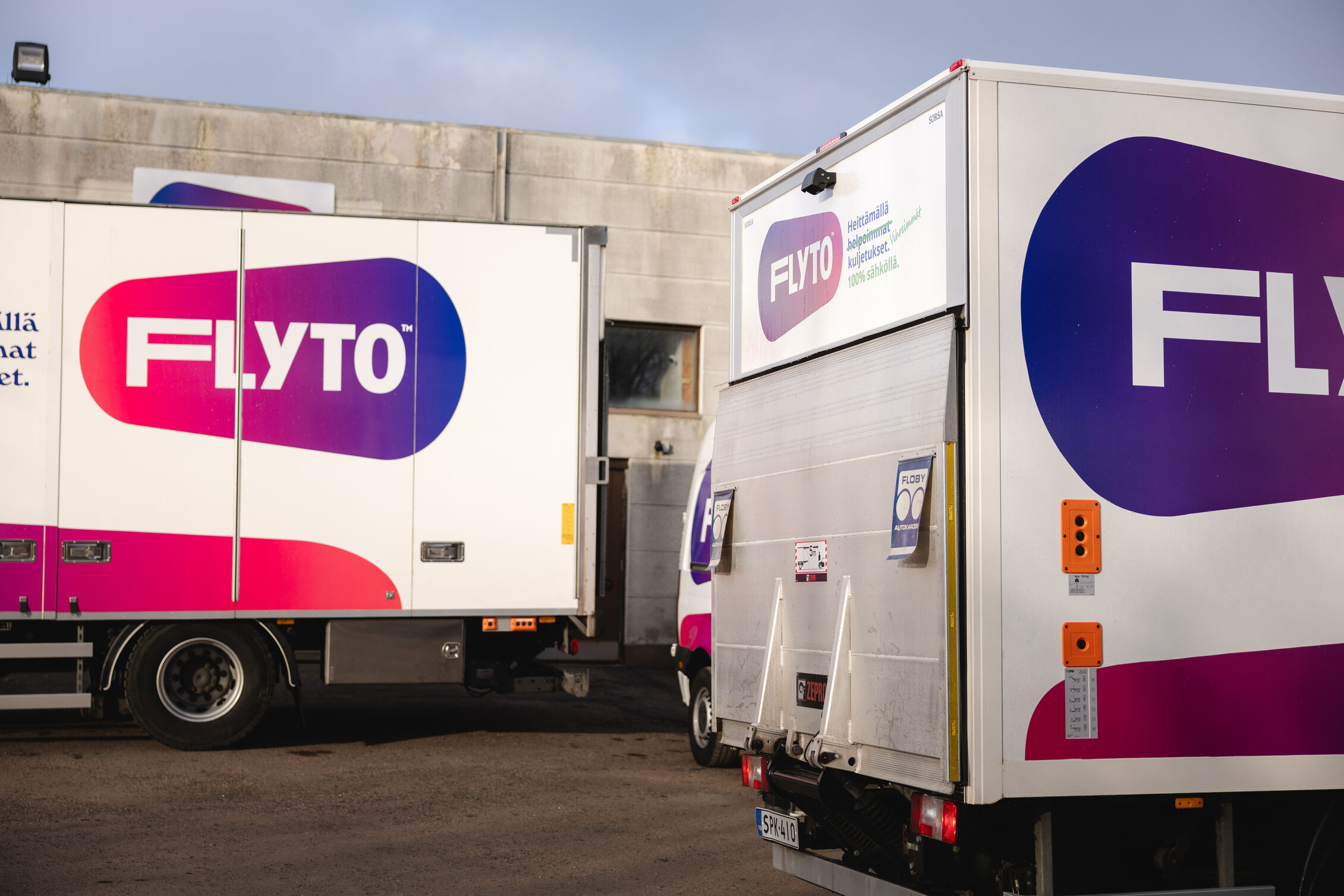
How Flyto handles your Belgium to Kazakhstan move
Flyto runs its own offices, warehouses, vehicles and moving teams across Northern, Central and Southern Europe, so the Belgian collection, packing, and EU export documentation on your shipment are handled in-house rather than outsourced blind. For the long-haul leg into Central Asia and final delivery inside Kazakhstan, we work through a carefully chosen network of partners and subcontractors, including trusted local partners in Kazakhstan, who handle the EAEU customs clearance and last-mile delivery on the ground — so you get one point of contact from Belgium through to your new home in Kazakhstan.
Frequently asked questions
Do I need a visa to move to Kazakhstan from Belgium? For stays up to 30 days, Belgian passport holders enter visa-free; a genuine relocation needs a visa category matched to your purpose (work, investment, family) followed by a residence permit applied for after arrival, per Kazakhstan’s Ministry of Foreign Affairs and egov.kz’s residence permit service.
What is Model 8 and do I actually need it? It is the Belgian municipality’s official proof that you deregistered before leaving permanently, issued after your in-person departure declaration; keep it, since it is your evidence of a clean exit and closes your entry in the Belgian population register — see FPS Home Affairs. If you are only leaving temporarily and plan to return, you’ll get Annex 18 instead.
Will I pay import duty on my used furniture and electronics in Kazakhstan? Only on the value/weight above the duty-free personal-use thresholds (€10,000/50 kg by air, €500/25 kg by other transport) — the excess is charged at 30% of value with a €4/kg minimum, per EAEU rules applied by the State Revenue Committee.
Can I bring my car? Legally yes, but the combined customs payment can reach roughly half the vehicle’s value, and right-hand-drive cars cannot be registered, so most people sell in Belgium and buy in Kazakhstan instead.
When exactly do I file my Belgian departure declaration? In person at your municipality, no later than the day before you leave — most communes won’t accept it more than about a week in advance either, so plan the visit for your final days in Belgium.
What happens to my Belgian taxes after I leave? You file a departure return covering worldwide income up to your departure date within 3 months of leaving, then move to non-resident tax status for any remaining Belgian-source income; if you hold a substantial shareholding in a Belgian company, ask an adviser about the exit-tax rules that started 1 January 2026 — see FPS Finance.
Sources
- FPS Finance – Leaving Belgium (overview)
- FPS Finance – PLDA (customs export declaration system)
- FPS Finance – Leaving Belgium, tax return
- FPS Finance – non-resident income tax return
- FPS Home Affairs (IBZ) – compulsory deregistration for EU citizens leaving Belgium
- Stad Gent – reporting your departure from Belgium
- Port of Antwerp-Bruges – official site
- FASFC – travelling with pets outside the EU
- FASFC – returning to the EU with a pet
- European Commission – bringing a pet into the EU from a non-EU country
- European Commission – cash declaration rules leaving/entering the EU
- Kazakhstan State Revenue Committee (kgd.gov.kz) – information for passengers
- Kazakhstan State Revenue Committee – export of foreign currency
- Electronic Government of Kazakhstan (egov.kz) – rules for importing goods for personal use
- Electronic Government of Kazakhstan (egov.kz) – temporary residence permit for foreigners
- Kazakhstan Ministry of Foreign Affairs – visa regime with other countries