

Moving from Poland to South Korea (2026): Complete Guide

Relocating from Poland to South Korea is a long-haul intercontinental move that touches two very different administrations. On the departure side you deal with Polish and EU rules: residence deregistration, an electronic export declaration, and tax-residency exit. On the arrival side you deal with the Korea Customs Service and, for animals, the Animal and Plant Quarantine Agency. This guide covers both halves of the corridor plus a short note on the reverse direction, and is written for a resident of Poland — Polish, EU, or third-country national — shipping household goods to Korea for work, study, family, or retirement.
Key takeaways
- Your Korean immigration status drives everything: the duty-free "moving goods" clearance requires that you intend to live in Korea for at least one year (six months if accompanied by family), and you must show a visa and alien registration card Korea Customs Service.
- Your shipment should reach Korea within six months of your own arrival, and only goods used abroad for more than three months qualify for duty exemption Korea Customs Service.
- Poland’s customs authority is the National Revenue Administration (Krajowa Administracja Skarbowa, KAS) gov.pl; leaving the EU customs territory requires an electronic export declaration through the AES system on the PUESC portal PUESC.
- Before you leave, report your departure abroad and deregister your Polish residence (wymeldowanie) — now possible fully online gov.pl.
- Carrying €10,000 or more in cash out of the EU must be declared to KAS or the Border Guard granica.gov.pl; bringing the equivalent of USD 10,000 or more into Korea must be declared to Korean Customs Korea Customs Service.
- Dogs and cats need an ISO 11784/11785 microchip and, from a non-rabies-free country like Poland, a rabies antibody titer of at least 0.5 IU/ml APQA; the Polish exit paperwork is certified by the state veterinary inspection wetgiw.gov.pl.
- Tax residency follows your centre of vital interests, not just your address — plan your exit deliberately podatki.gov.pl.
1. Your Korean visa status decides the customs treatment
In Korea, customs treatment of your household goods flows directly from your immigration status. The Korea Customs Service defines a "person who moves to Korea" as a foreigner or overseas Korean who intends to live in Korea for at least one year (six months if accompanied by family members). Only such a person can lodge a Moving-Goods Declaration and claim duty exemption on used personal effects Korea Customs Service.
That is why the required documents include your visa and alien registration card, alongside a packing list, bill of lading, passport, and — where relevant — a domestic employment certificate Korea Customs Service. If you arrive on a short-stay or tourist entry with no qualifying long-term visa, you cannot use the moving-goods route, and your effects are treated as ordinary imports. Line up the correct long-term visa (work, study, family, or F-series) before you ship, and get your alien registration underway on arrival.
2. The Poland export side
The authority. Customs in Poland is run by the National Revenue Administration — Krajowa Administracja Skarbowa (KAS), the integrated body responsible for tax and customs and for protecting the customs territory of the European Union gov.pl.
The export declaration. South Korea is outside the EU, so your goods leave the EU customs territory and an export procedure applies. This is handled electronically through the Automated Export System (AES) on the customs and tax service’s PUESC portal; taking goods out of the EU is initiated by lodging an export declaration PUESC. A licensed forwarder or customs agent normally files this for you against your packing list and inventory PUESC. Personal removal goods are not commercial exports, but the declaration still documents the consignment leaving the Union and provides the export evidence your Korean clearance will reference.
Deregistration (wymeldowanie). Before departure, use the official gov.pl e-service "Zgłoś wyjazd za granicę" (report your departure abroad). Reporting a permanent departure automatically deregisters you from both permanent and temporary residence, and the notification should be made no later than the day you leave gov.pl. You can also deregister directly via "Wymelduj się z pobytu stałego," which can be completed fully online with a trusted profile (profil zaufany) or e-dowód gov.pl. Your PESEL number stays with you for life; deregistration simply updates the residence register.
Tax-residency exit. Deregistering an address does not by itself end Polish tax residency. Under Polish rules you are a resident if your centre of personal or economic interests (centre of vital interests) is in Poland, or if you spend more than 183 days there in a tax year podatki.gov.pl. To become a non-resident with only limited Polish tax liability, genuinely move that centre of interests — family, home, and economic ties — to Korea, and keep evidence (Korean lease, employment, family relocation dates). Settle outstanding obligations with your Urząd Skarbowy before you go.
3. Ports and transit (freight estimates, not official figures)
Poland’s main deep-sea gateways for containerised household goods are Gdańsk (home to the Baltic Hub terminal) and Gdynia on the Bay of Gdańsk Port of Gdańsk Authority, Port of Gdynia Authority, and the twin ports of Szczecin–Świnoujście on the western coast Szczecin and Świnoujście Seaports Authority. Most Korea-bound shipping goes out of Gdańsk or Gdynia, feeding via a North European hub onto Asia services that arrive at Busan or Incheon.
The following transit times are freight-industry estimates, not official government figures, and vary with routing, sailing schedules, and transhipment:
- Sea freight (FCL/LCL): roughly 6–9 weeks door-to-port from Poland to Korea, plus packing, consolidation, and Korean clearance at each end.
- Air freight: typically 1–2 weeks door-to-door for a smaller, time-critical consignment, at a much higher cost per cubic metre.
Treat any quoted date as indicative and build in buffer, especially to satisfy Korea’s six-month arrival window.
4. The South Korea import side
On arrival, clearance runs through the Moving-Goods Declaration with the Korea Customs Service. Key rules Korea Customs Service:
- The declaration is lodged in the name of the person moving to Korea.
- Goods should arrive within six months of that person’s own entry date.
- Items used overseas for more than three months are duty-exempt, unless subject to mandatory taxation.
- Mandatory-taxation items include motor vehicles and high-value jewellery or luxury goods (valued at 5 million KRW or more per unit) — these are taxed even within a move, as are goods used less than three months and household quantities beyond the recognised limits.
- Documents: item descriptions, packing list, bill of lading, alien registration card, visa, passport, and (if applicable) vehicle papers.
If part of your shipment follows later as unaccompanied baggage, declare it on your Traveler Declaration Form when you land, so it can clear under your entry rather than as a separate import Korea Customs Service. For anything you carry yourself that is not used personal effects, note that the traveller duty-free allowance for personal effects is USD 600, with separate limits for alcohol, tobacco, and perfume Korea Customs Service. Work with a Korean customs broker; the process expects Korean-language or properly translated documentation.
5. Pets — both ends
Korean import rules (APQA). Dogs and cats must carry an ISO 11784/11785-compliant microchip. Because Poland is not a rabies-free country, an animal aged 90 days or older needs a rabies-neutralising antibody test result of at least 0.5 IU/ml, performed by an internationally approved laboratory, with blood collected within a 24-month window. A health certificate confirming the microchip number and the antibody result must accompany the animal. Animals that fail these checks — no or mismatched microchip, missing test, or titer below 0.5 IU/ml — go into extended quarantine at the owner’s expense APQA.
Polish export rules. On the Polish side the identification document is the EU pet passport (or an official health certificate), and export documents to a third country are certified by the state veterinary inspection wetgiw.gov.pl. The rabies antibody sample must be taken by an authorised vet and meet Korea’s 0.5 IU/ml minimum in an approved laboratory. Because the titer test carries a waiting period after vaccination, start the pet timeline several months ahead of your move.
6. Vehicles, money, and things people forget
Vehicles. A car is not covered by the duty-free moving exemption — motor vehicles are a mandatory-taxation item, so expect duties, taxes, and Korean type-approval/emissions compliance; declare vehicle documents with your moving goods Korea Customs Service. Many movers sell the car in Poland instead.
Money. Leaving the EU with €10,000 or more in cash or bearer instruments must be declared to KAS or the Border Guard, and you can pre-file via the PUESC portal granica.gov.pl. Entering Korea with the equivalent of USD 10,000 or more must be declared to Korean Customs on arrival, before you leave the clearance area Korea Customs Service.
Easily forgotten. Prohibited and restricted goods (certain foods, plants, and agricultural products) need quarantine clearance; keep proof that used items are older than three months; align your shipment’s arrival with the six-month window; and hold your alien registration card and visa ready — clearance stalls without them Korea Customs Service.
How Flyto handles your Poland to South Korea move
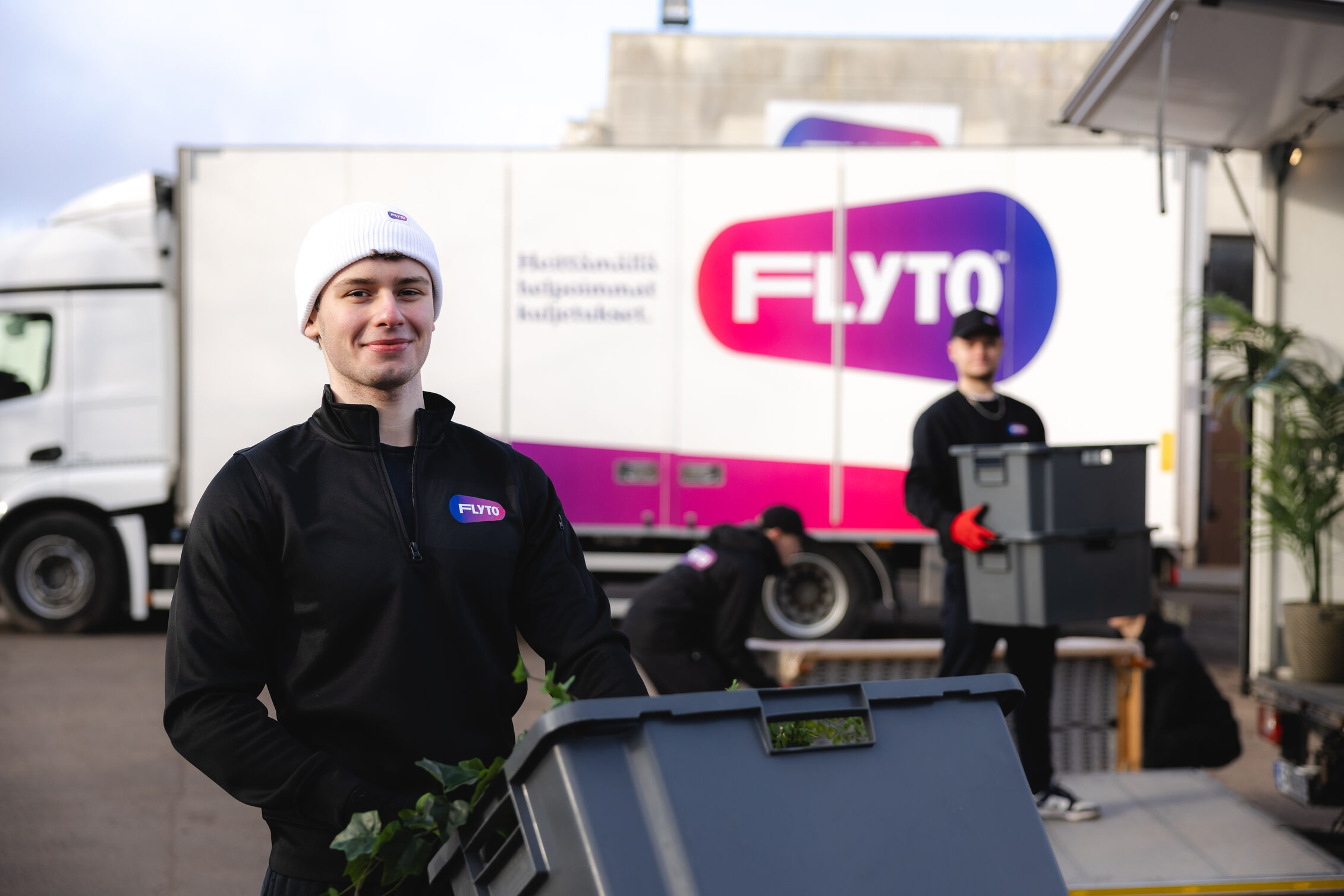
Flyto runs strong in-house European operations — our own offices, warehouses, teams, and vehicles across Northern, Central, and Southern Europe — so origin packing, collection in Poland, and export handling stay under our direct control. For the ocean or air leg and Korean delivery we combine a carefully chosen partner and subcontractor network with trusted local partners in South Korea. We do not claim to do everything ourselves; we coordinate the parts we own and the specialists we trust so your move stays accountable end to end.
Frequently asked questions
Do I need a specific visa before I ship my household goods?
Yes. The duty-free moving-goods route requires you to intend to live in Korea for at least one year (six months with family) and to present a visa and alien registration card Korea Customs Service.
How long do I have for my shipment to arrive in Korea?
Your goods should arrive within six months of your own entry date to clear as moving goods Korea Customs Service.
Which used items are duty-free?
Personal effects used overseas for more than three months are duty-exempt, except mandatory-taxation categories such as vehicles and high-value jewellery Korea Customs Service.
Do I have to deregister my Polish address?
Report your departure abroad and deregister via the gov.pl e-services, ideally by your departure day; it can be done fully online gov.pl.
When should I start the pet process?
Months ahead. The rabies antibody titer (minimum 0.5 IU/ml) requires a waiting period, and a failed check means quarantine in Korea at your cost APQA.
What about the reverse move, South Korea back to Poland?
Then Korea is the export side and Poland/the EU is import. Returning residents can claim EU transfer-of-residence relief on personal property under Council Regulation 1186/2009 when moving a normal place of residence into the EU, filed through PUESC European Commission. Pet, currency, and quarantine rules then apply in the opposite direction.
Sources
- National Revenue Administration (KAS) — About us, gov.pl
- PUESC — Export of goods
- PUESC — AES system
- gov.pl — Report your departure abroad (Zgłoś wyjazd za granicę)
- gov.pl — Deregister permanent residence (Wymelduj się z pobytu stałego)
- Ministry of Finance (podatki.gov.pl) — Tax residence
- granica.gov.pl — Cross-border movement of cash (EU external border)
- Główny Inspektorat Weterynarii — Travelling with pets from third countries
- Korea Customs Service — Moving-Goods Declaration / clearance for moving household effects
- Korea Customs Service — Duty-free allowance for personal effects
- Korea Customs Service — Declaration of foreign currency
- Korea Customs Service — Traveler Declaration Form
- Animal and Plant Quarantine Agency (APQA) — Bring a dog or a cat to Korea
- European Commission, Taxation and Customs Union — Duty relief (Regulation 1186/2009)
- Port of Gdańsk Authority
- Port of Gdynia Authority
- Szczecin and Świnoujście Seaports Authority