

Moving to Cork (2026): The Complete Relocation Guide

Cork is Ireland’s second city — around 224,000 people in the city and roughly 360,000 across the metropolitan area — and the country’s fastest-growing tech and pharmaceutical hub, home to Apple’s European headquarters on the northside and a pharma coast of Pfizer, Eli Lilly, Johnson & Johnson and Stryker plants around Ringaskiddy and Little Island. Locals only half-joke that Cork is ”the real capital”, and the ”rebel city” wears its independence proudly. It is also one of Ireland’s trickier cities to physically move into: the old centre sits on an island between two channels of the River Lee, laced with narrow one-way streets; the northside climbs genuinely steep hills; the housing stock runs to narrow-doored Georgian townhouses and terraces; and a removal truck cannot legally sit on a city-centre street without a council permit. This guide covers the real mechanics of moving to Cork in 2026 — the truck logistics only a mover knows, where to live and what rent actually costs, how registration and the PPS number work, and what monthly life costs — with official sources throughout.
Freshness note: prices and rules verified against corkcity.ie, the Cork City Council permit portal, the Daft.ie Rental Report Q1 2026, the Residential Tenancies Board (RTB), citizensinformation.ie, revenue.ie, Transport for Ireland/Leap Card and Brittany Ferries in 2026. Fees and rents move — confirm figures with the linked authorities before you rely on them.
Quick answer: moving to Cork in 2026
What does it cost to move to Cork? An international household move (a full home) typically lands in the low-to-mid four figures from within Europe and higher from overseas, driven mostly by volume, distance and access. Because Cork’s island centre, hills and narrow terraces add real handling cost, get a fixed quote for your specific address rather than a generic estimate — get a Flyto quote here.
How long does the move take? Road moves from within the EU are usually a few days to about two weeks door-to-door, most of it on the direct Cork–Roscoff ferry or the UK land-bridge; overseas sea freight runs several weeks. The one Cork-specific quirk everyone underestimates: to reserve kerb space for the truck in a pay-parking area you need a Cork City Council work permit — costed per day and applied for on a weekly basis (5 days maximum, excluding Sunday) at least 24 hours ahead (Cork City Council). And that permit is worthless on the city’s 17 pedestrianised streets, where a truck simply cannot go.
Key takeaways
- The centre is an island, and 17 streets are pedestrianised. The old core sits between the north and south channels of the River Lee, with narrow one-way lanes, and Cork permanently pedestrianised 17 streets — including St Patrick’s Street (no parking after 3pm) and Oliver Plunkett Street — where the work permit does not apply at all (Cork City Council).
- The northside is steep. Shandon, St Luke’s and St Patrick’s Hill climb sharply, and elevated Victorian districts like Montenotte and Sunday’s Well have long flights of external steps — a real constraint on trolleys and large items that often forces a hand-carry.
- Rent rises are capped and the deposit is limited. From 1 March 2026 rent increases nationwide are capped at general inflation or 2% a year, whichever is lower (RTB), and a landlord cannot ask for more than two months’ rent upfront in total — one month’s deposit plus one month in advance (RTB security deposits).
For the practical side of the move – crews, customs paperwork and a fixed price – start here: international movers in Ireland.
1. The move into Cork — logistics only a mover knows
This is the part generic ”moving to Cork” guides skip, and it is exactly where a Cork move goes wrong. The centre was laid out on reclaimed river channels, the northside was built up the side of a hill, and the terraces were built for handcarts, not 7.5-tonne trucks. Four things determine whether move day runs smoothly.
The work permit: reserving kerb space for your truck
You cannot count on a free stretch of kerb outside a Cork city-centre building, and most central streets are pay-parking with 1-hour or 2-hour limits. To hold a legal spot for the removal truck you apply to Cork City Council for a commercial-vehicle work permit — the same permit used to place a skip in a parking bay. The facts from the council itself (Cork City Council work-permit application):
- Cost: €25 per day to occupy a bay in a 1-hour parking zone, or €12.50 per day in a 2-hour zone. It is billed per day, and you apply on a weekly basis for a maximum of 5 days at a time (Sunday excluded).
- Lead time: apply at least 24 hours before the work is due to start (Cork City Council — contractors permit). In practice, apply earlier: the permit is only issued for commercially taxed vehicles and the receipt must be displayed clearly through the windscreen.
- Where it does not work: the permit is invalid on Cork’s pedestrianised streets. The council has permanently pedestrianised 17 streets, including St Patrick’s Street (no parking after 3pm), Oliver Plunkett Street (11am–4am), Maylor Street and Cook Street. If your new address is on or just off one of these, the truck stages elsewhere and the crew carries in — plan the carry distance in advance.
Because the permit is address- and zone-specific and has to be timed to the move, most people leave it to a mover who knows which Cork zone each street falls in. It is the single most common thing international arrivals forget, and there is no fix on the day.
The island centre and its one-way lanes
Cork’s historic core is literally an island: the River Lee splits into a north channel and a south channel and rejoins downstream, so the centre is reached only by bridge. St Patrick’s Street — the main curving shopping street — traces an old river channel, and behind it runs a grid of narrow medieval lanes off Oliver Plunkett Street and around the Coal Quay. Many are one-way, several are pedestrian- or bus-priority, and quays along the river are tight and busy. A large truck often cannot get within easy reach of the door, which is why an experienced crew plans the approach, the one-way sequence and the staging point before arrival rather than discovering a no-entry sign mid-move.
The hilly northside
Cork is built around and up a river valley, and the northside is genuinely steep. St Patrick’s Hill is often compared to San Francisco; Shandon (below the famous bells of St Anne’s) and St Luke’s Cross climb sharply; and the desirable Victorian districts of Montenotte and Sunday’s Well sit high on the slopes, frequently reached by long external stone stairways from the street to the front door. Gradients and steps like these rule out wheeling heavy items on a trolley and often mean a manual carry up a flight — something to flag to your mover so the right crew size and equipment turn up.
Georgian doors, terraced stairs and the hoist
Much of inner Cork is Georgian and Victorian terraced housing — tall, narrow, and handsome, with slim front doors, tight entrance halls and steep, turning staircases. Wardrobes, sofa beds, double mattresses and large appliances routinely will not go up a Cork terrace stair or round its half-landing. The standard solution is to hand-carry through the house where possible, or to hoist bulky items in through a first-floor window or over a railing. As in the truck-access question, this is a non-issue if it is assessed beforehand and a bad surprise if it is not.
Ferry logistics: Roscoff, the land-bridge and customs
Cork is a working ferry port, and how your goods reach the city matters. There are two main routes from the Continent:
- Direct Cork–Roscoff ferry. Brittany Ferries sails between Cork (the ferry terminal at Ringaskiddy, about 15km south of the city) and Roscoff in Brittany. The crossing takes roughly 15.5 hours and runs about twice weekly on a seasonal timetable, typically spring to autumn (Brittany Ferries). For a move from France, Iberia or western Europe this avoids Britain entirely.
- The UK land-bridge. The alternative routes goods through Britain (for example via Dover–Calais and a Welsh port to Ireland). It can be faster for northern-European origins but, post-Brexit, means two customs interactions as your consignment enters and leaves Great Britain, so paperwork must be exact.
If you are moving to Ireland from outside the EU, your household goods can usually come in free of customs duty and VAT under Transfer of Residence (ToR) relief. Broadly, you must have lived outside the EU for at least 12 months, have owned and used the goods for at least six months, and import them within 12 months of moving; the C&E 1076 form should reach Revenue about two weeks before the goods arrive (Revenue — Transfer of Residence, rules). Moves from within the EU are free-circulation and need no customs entry, but the ferry or land-bridge choice still shapes the timeline.
2. Where to live — Cork neighborhoods by profile
Cork’s character changes sharply from the flat island centre, up the northside hills, and out to the leafy southern and western suburbs. Cork does not have Dublin’s published street-by-street rent tables, so the anchor figures below are the Cork city averages from the Daft.ie Rental Report Q1 2026 — one-bed apartment €1,806, two-bed apartment €2,126, three-bed apartment €2,416, two-bed house €2,206, three-bed house €2,516 and four-bed house €2,924 (Daft.ie). Treat the notes below as where each area sits relative to those averages, not as street-level quotes.
Best for city living and young professionals:
- City Centre & the Victorian Quarter (around the city average, apartment-led) — the island core plus the regenerated MacCurtain Street / St Luke’s strip on the near-northside, now Cork’s café-and-cocktail ”Victorian Quarter”. Walk-everywhere convenience and the best nightlife, but mostly apartments, some street noise, and the access constraints from section 1.
- Sunday’s Well (premium) — an elevated, leafy Victorian district just northwest of the centre, close in but calm and characterful. Handsome period houses, river views, and a short walk to town, at a premium to the average — and often with those long entrance steps.
Best for families:
- Douglas (premium) — the classic Cork family suburb about 4km southeast, with a busy village centre, two shopping centres, well-regarded schools and quick access to the South Ring Road. Popular, so it commands above-average rents and demand is strong.
- Ballintemple & Blackrock (premium) — riverside southeast Cork along the Marina and the Blackrock greenway, with the landmark Blackrock Castle observatory. Settled, green and sought-after; among the pricier suburbs.
- Montenotte & St Luke’s (premium) — Cork’s traditional ”address”, high on the northside slopes with big Victorian villas and harbour views. Prestigious and quiet, with the steep-access caveat from section 1.
- Glanmire (mid) — a commuter suburb to the northeast near the Dunkettle interchange and Kent Station, good for families who want space and a fast run to the M8 and the eastern employment cluster, accepting a car-dependent lifestyle.
Best for students, hospital and campus workers, and value:
- Bishopstown (mid) — a large southwestern suburb beside Munster Technological University (MTU) and Cork University Hospital, with the Wilton shopping centre nearby; a practical, well-served choice for campus and hospital staff and for families, with a big student rental market.
- Wilton (mid) — immediately around Cork University Hospital and MTU, dominated by hospital and university demand; convenient and functional rather than pretty, and usually a touch below the premium suburbs.
Best value: the commuter towns. Rents and house prices generally ease as you leave the city, and Cork’s commuter belt is well connected:
- Carrigaline — a large, family-heavy town to the south, near the Ringaskiddy pharma plants and the ferry port; lots of modern housing, but car-dependent and prone to peak-hour traffic into the city.
- Cobh — the colourful harbour town (the Titanic’s last port of call) on its own island, on the direct commuter rail line to Kent Station; scenic and community-minded, with the trade-off of a longer commute.
- Midleton — a growing east-Cork town (home of the Jameson distillery) at the end of its own commuter rail line, with good schools and shops; popular with families priced out of the southern suburbs.
3. The Cork housing market — how homes are actually found
Cork shares Ireland’s national rental shortage, and in a smaller market that bites hard: the search, not the move, is usually the difficult part. Here is how it works in 2026.
- Acute scarcity. On 1 May there were only about 295 homes to rent across the four cities outside Dublin (Cork, Galway, Limerick and Waterford combined) — nearly double a year earlier but still far below normal, when over 500 were typically available (Daft.ie Q1 2026). Expect competition and be ready to decide fast.
- Where to search: Daft.ie and MyHome.ie are the main portals; Rent.ie and Facebook groups add sublets and shares. Good listings move within days.
- Rent caps. From 1 March 2026 annual rent increases are capped nationwide at general inflation or 2% a year, whichever is lower, with a limited exception for certain new-build apartments (RTB; Citizens Information). Rent can be reviewed at most once every 12 months.
- Deposit and advance rent. A landlord cannot require more than two months’ rent upfront in total — typically one month’s deposit plus one month in advance (RTB — security deposits). Every tenancy must be registered with the RTB.
- Scam warning. Fake listings target newcomers who cannot view in person. Never transfer a deposit or ”holding fee” before you have seen the property and met the landlord or a verified agent. Classic red flags: the ”owner is abroad”, keys promised by post against a payment, a price well below the Daft averages above, or pressure to pay to a foreign account.
4. Registration and the PPS number — the reality
Ireland has no residents’-register or address-registration step like Germany’s Anmeldement — there is no town-hall sign-in when you arrive. What you do need are two things that unlock work, banking, healthcare and tax:
- PPS number (everyone). The Personal Public Service number is Ireland’s key identifier for work, tax, healthcare and social services. You apply through MyWelfare (with a verified MyGovID) and normally attend an in-person appointment, bringing photo ID, proof of your Irish address, and evidence of why you need it — usually a job offer or employment contract (gov.ie — Get a PPS number).
- Irish Residence Permit / IRP (non-EEA nationals). If you are not an EU/EEA or Swiss citizen and are staying more than 90 days, you must register your immigration permission and get an IRP card. In Cork this is done through the local immigration registration office rather than Dublin’s Burgh Quay; book and prepare through the official service (Irish Immigration Service). EU/EEA and Swiss citizens do not register and have an automatic right to live and work in Ireland.
For the customs and shipping side of an inbound move, see our Ireland customs guide for household goods and the official Citizens Information note on shipping your belongings to Ireland.
5. Cost of living in Cork (2026)
Cork is expensive by Irish standards but consistently cheaper than Dublin, and the gap is clearest in rent. The current numbers:
- Rent is the big variable — see section 2. As a benchmark, the Cork city average two-bed apartment was €2,126/month in Q1 2026, against a national average of €2,176 and much higher figures in Dublin, while a studio averaged €1,198 and a double room about €731 (Daft.ie).
- Public transport is cheap by city standards. On Cork city buses the TFI 90-Minute fare is €1.70 for an adult (€0.85 young adult/student, €0.55 child) on a Leap Card, giving unlimited transfers within 90 minutes, plus daily and weekly fare caps (Transport for Ireland; TFI Leap Card Cork).
- Utilities and broadband sit near the national level: budget a few hundred euros a month for electricity, gas, water charges where they apply, and waste, plus around €30–€60/month for home broadband once installed.
- Everyday costs — groceries, eating out and pints — generally run a little below Dublin, which is part of Cork’s appeal for people relocating on a similar salary.
6. Getting settled — transport, health, schools, internet
- Transport. Cork’s public transport is Bus Éireann city routes plus a small commuter-rail network run from Kent Station to Cobh, Midleton and Mallow; a Leap Card covers all of it with the 90-minute fare and caps above (TFI Leap Card Cork). The compact centre is very walkable, though the northside hills are a workout, and many suburban families still rely on a car.
- Healthcare and GPs. Ireland runs a mixed public–private system. Most people register with a local GP (family doctor) and pay per visit unless they qualify for a medical card or GP visit card, which are means-tested. How eligibility and fees work is set out plainly by Citizens Information — medical cards. Register with a GP early, as some Cork practices have waiting lists.
- Schools and colleges. Primary and secondary schooling is free in state schools, though popular schools fill up — apply early. Cork is a major university city: University College Cork (UCC) near the city centre and Munster Technological University (MTU) in Bishopstown together bring tens of thousands of students, which shapes the rental market in Bishopstown, Wilton and the centre.
- Internet. Main providers include Eir, Vodafone, Sky and Virgin Media, with fibre widely available in the city and suburbs. Installation can take a couple of weeks after you sign, so order as soon as you have an address, and check what the specific building already supports.
7. How Flyto handles your move to Cork
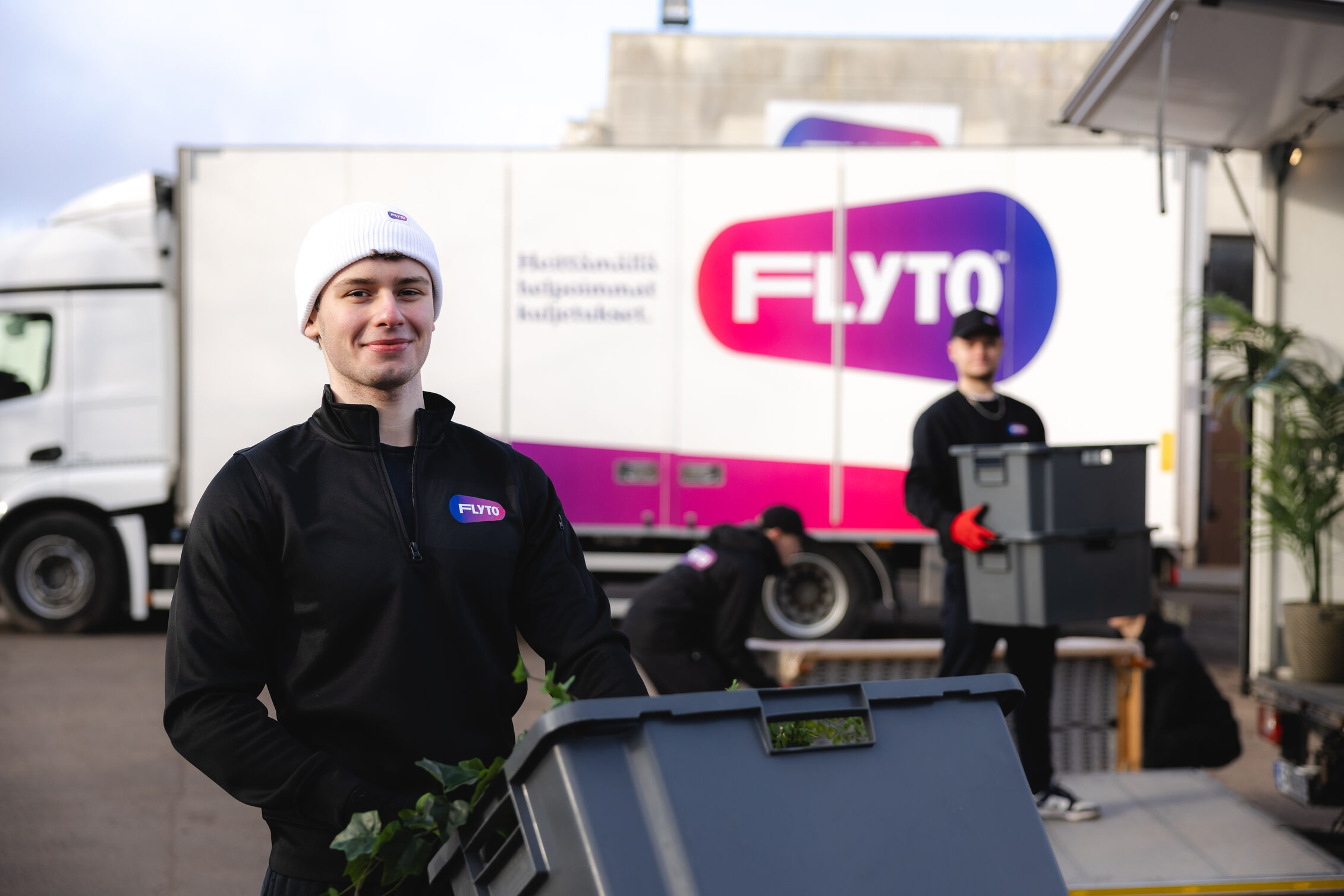
Everything in section 1 is why a Cork move rewards a mover who actually knows the city — and it is where Flyto earns its keep. We arrange the Cork City Council work permit to reserve kerb space for the truck in the correct pay-parking zone, with the required lead time, and we plan around the 17 pedestrianised streets where no truck can go. We map the island centre’s one-way lanes and quays and the steep northside so the truck stages in the right place and the crew, numbers and equipment match the carry. We assess Georgian and terraced access in advance — door widths, stair turns, whether a window hoist is needed — rather than discovering the wardrobe won’t turn the landing. And we handle the ferry routing (direct Cork–Roscoff or the UK land-bridge) and the customs paperwork, including Transfer of Residence relief for moves from outside the EU. That is the honest difference between a van and a relocation partner who has done Cork street by street. Get a fixed quote for your Cork move, compare it with our moving to Dublin guide, or read our route guides for Ireland–France moves and Ireland–UK moves.
Moving to Cork? Get a fixed quote.
Tell us your addresses and volume and we’ll price the whole move — including the council work permit, any window hoist your terrace needs, and the ferry or land-bridge routing. No surprises on the day.
Frequently asked questions
Do I need a permit to park a removal truck in Cork city centre?
In a pay-parking area, yes. Cork City Council issues a commercial-vehicle work permit to reserve a bay, priced at €25 per day in a 1-hour zone or €12.50 per day in a 2-hour zone. You apply on a weekly basis (maximum 5 days at a time, Sunday excluded) at least 24 hours before the work starts, and the permit must be displayed in the vehicle. It does not apply on Cork’s 17 pedestrianised streets, where a truck cannot park at all (Cork City Council).
Why is moving into central Cork harder than it looks?
The old centre is an island between the two channels of the River Lee, reached only by bridge and laced with narrow, often one-way lanes; St Patrick’s Street and 16 other streets are pedestrianised; and the northside is steep, with elevated districts like Montenotte and Sunday’s Well reached by long external stairways. Large trucks frequently cannot get close to the door, so the approach, staging point and carry have to be planned in advance.
Will my furniture fit into a Cork Georgian or terraced house?
Often not without care. Inner Cork’s Georgian and Victorian terraces have narrow front doors, tight halls and steep, turning stairs, so wardrobes, sofa beds and large appliances routinely won’t go up. The usual solutions are to hand-carry through the house or to hoist bulky items in through a first-floor window. A good mover checks door widths, stair turns and access before move day and brings the right equipment.
How much is rent in Cork in 2026?
Per the Daft.ie Rental Report for Q1 2026, average market rents in Cork city were about €1,806 for a one-bed apartment, €2,126 for a two-bed apartment and €2,416 for a three-bed apartment, with houses higher. That is just below the national average and well below Dublin, but availability is very tight, so budget time for the search as well as the move.
How much deposit can a Cork landlord ask for, and can they raise the rent?
A landlord cannot require more than two months’ rent upfront in total — normally one month’s deposit plus one month’s rent in advance (RTB). From 1 March 2026 rent increases nationwide are capped at general inflation or 2% a year, whichever is lower, with a limited exception for certain new-build apartments, and rent can be reviewed at most once a year.
Do I have to register my address when I move to Cork?
No. Ireland has no address-registration or residents’-register step. What you do need is a PPS number (for work, tax and healthcare), applied for through MyWelfare with an in-person appointment, and — if you are a non-EEA national staying over 90 days — an Irish Residence Permit (IRP), registered through the local immigration office. EU/EEA and Swiss citizens can live and work in Ireland without registering.
Is there a direct ferry to Cork from mainland Europe?
Yes. Brittany Ferries operates a direct Cork–Roscoff route between the Ringaskiddy terminal south of the city and Brittany, taking roughly 15.5 hours and sailing about twice weekly on a seasonal timetable (typically spring to autumn). The alternative is the UK land-bridge through Britain, which since Brexit involves two customs interactions, so paperwork must be exact.
Can I bring my household goods into Ireland duty-free from outside the EU?
Usually yes, under Transfer of Residence relief. You generally must have lived outside the EU for at least 12 months, have owned and used the goods for at least six months, and import them within 12 months of moving, submitting the C&E 1076 form to Revenue about two weeks before the goods arrive. Moves from within the EU are in free circulation and need no customs entry (Revenue).
Official sources
- Cork City Council — commercial work-vehicle permit application (fees, weekly basis, pedestrianised streets)
- Cork City Council — apply for a contractors permit (24-hour lead time)
- Cork City Council — parking permits overview
- Daft.ie Rental Report Q1 2026 (Cork city rents and availability)
- Residential Tenancies Board — rental law changes from 1 March 2026 (2% cap)
- Citizens Information — rent increases in private rented housing
- Residential Tenancies Board — security deposits (two-month upfront limit)
- Revenue — Transfer of Residence relief (moving to Ireland from outside the EU)
- Revenue — Transfer of Residence: rules and conditions
- gov.ie — Get a Personal Public Service (PPS) number
- Irish Immigration Service — registering your immigration permission (IRP)
- Citizens Information — shipping your belongings to Ireland
- Citizens Information — medical cards and GP visit cards
- Transport for Ireland — Cork TFI 90-Minute fare
- TFI Leap Card — Cork
- Brittany Ferries — Cork–Roscoff crossings
- Flyto — Ireland customs guide for household goods
- Flyto — moving to Dublin (2026)