

Moving from Luxembourg to Costa Rica (2026): Complete Guide

Moving from Luxembourg to Costa Rica means closing out one of Europe’s most tightly administered residency and tax systems on one end, and clearing goods through a Central American customs regime built around a single, one-time household-goods exemption on the other. The two halves rarely line up automatically: Luxembourg wants a clean deregistration from your commune and, eventually, from tax residency; Costa Rica wants proof of qualifying immigration status before it will release your container duty-free. This guide is written for a Luxembourg resident — Luxembourgish, EU-national, or third-country national living in the Grand Duchy — planning a household relocation to Costa Rica, and covers the export side, the import side, pets, vehicles, and money.
Key takeaways
- Costa Rica’s duty-free household-goods exemption ("menaje de casa") is granted only once per person and is tied to your Costa Rican residency status — it is not automatic just because you’re moving there (Ministerio de Hacienda).
- Before leaving Luxembourg you must file a déclaration de départ with your commune, at the latest the day before you leave (Guichet.lu).
- Your Luxembourg income tax obligations hinge on whether you still have your tax domicile or habitual residence there — losing both moves you from resident to non-resident tax status (Administration des contributions directes).
- Luxembourg has no seaport — its only inland port is Mertert on the Moselle, a trimodal water/road/rail hub used mainly for bulk cargo (petroleum, steel, agri-food), not personal shipments (Transports.lu).
- Dogs and cats entering Costa Rica need a microchip, species-specific vaccinations, deworming within 15 days of arrival, and an official health certificate from the country of origin (Ministerio de Agricultura y Ganadería / SENASA).
- Carrying €10,000 or more in cash out of the EU requires a declaration at the point of exit; carrying US$10,000 or more into or out of Costa Rica requires a separate declaration there (Europa.eu, Instituto Costarricense sobre Drogas).
- Importing a vehicle into Costa Rica is handled through a registered customs broker and valued under WTO customs-valuation rules set out in Resolución MH-DGA-RES-1897-2024 — expect substantial import taxes on the invoice value (Ministerio de Hacienda).
- Exports from Luxembourg’s customs territory run through the Administration des douanes et accises’ electronic e-Douane system; for a household move this is normally filed by your moving company or customs agent, not you personally (Guichet.lu).
1. Your Costa Rican immigration status decides your customs treatment
Costa Rica does not grant duty-free import of household goods simply because a shipment is arriving from abroad. The exemption — known as "menaje de casa" — is a customs modality under the Dirección General de Aduanas (DGA), part of the Ministerio de Hacienda, and it is available once, for life, to a foreigner who has obtained residency in Costa Rica (or to a Costa Rican returning after living abroad) (Ministerio de Hacienda). In practice this means your residency file with the Dirección General de Migración y Extranjería (DGME) has to be far enough along — typically a valid, recently issued residency card (DIMEX) — before customs will process the exemption (Migración Costa Rica). If you ship your household goods while still on a tourist stamp or before your residency is formalized, they arrive under the general import regime instead, with full duties and taxes applied through Costa Rica’s electronic customs platform, TICA. There is also a firm deadline for the goods to arrive relative to your residency approval — the DGA’s household-goods policy enforces this strictly, so confirm the current window with your customs broker or moving company before you commit to a ship date; do not assume you can extend it. This is why sequencing matters: get residency-application timing and shipping timing aligned before goods leave Luxembourg, not after.
Costa Rica’s main temporary residency categories — Rentista, Inversionista, Pensionado, and the Digital Nomad visa, plus permanent residency reachable after three years or through a Costa Rican family link — are all processed by DGME, whose official portal is the authoritative source for current document lists, fees, and processing times (Dirección General de Migración y Extranjería). Processing realistically runs several months, so most people ship household goods only after residency is granted or well underway, using temporary storage in Luxembourg or transit in the meantime.
2. The Luxembourg export side: who to deal with, and how to leave cleanly
Customs authority. Luxembourg’s customs authority is the Administration des douanes et accises (Customs and Excise Agency), part of the Ministry of Finance. As an EU member state, Luxembourg applies the EU customs code, and goods leaving the EU’s customs territory must be declared through the agency’s electronic export system, part of the broader e-Douane platform (Guichet.lu). This process is built primarily for companies — it requires an EORI (Economic Operators Registration and Identification) number and tariff classification codes — which is why for an international household-goods move, your moving company or customs agent normally files the export declaration on your behalf rather than you doing it yourself.
Deregistration ("déclaration de départ"). Before leaving Luxembourg you must formally declare your departure to your commune of residence. The declaration must be filed at the latest the day before your departure, is signed by the person leaving, and can — depending on the commune — be submitted online via MyGuichet.lu under "Declaration of change of usual place of residence," or in person at your commune’s population office. It can cover you together with a spouse or registered partner and minor children sharing the same address. The commune then issues a departure certificate confirming you’re no longer registered as a resident (Guichet.lu).
Tax residency exit. Luxembourg’s Administration des contributions directes (ACD) treats you as a resident taxpayer, liable on worldwide income, for as long as you keep either your tax domicile or your habitual residence in the Grand Duchy. Once neither applies, you become a non-resident taxpayer, liable only on Luxembourg-source income; the ACD is also explicit that simply holding a Luxembourg residence permit does not, by itself, establish tax residency (Administration des contributions directes). There is no single "exit tax" form on the ACD’s resident/non-resident page — the change of status follows from the underlying facts (where you actually live, where your family and center of economic interests are), so your last Luxembourg tax filing should reflect the date those ties ended. Because this interacts with any Luxembourg-Costa Rica tax treaty position and with pension or investment income left in Luxembourg, get this reviewed by a Luxembourg tax adviser before you file your final return.
3. Ports and transit: the geography problem
Luxembourg is landlocked. It has no seaport, and its only significant port of any kind is the Port de Mertert on the Moselle River — Luxembourg’s only trimodal (water/road/rail) transshipment platform, handling mostly bulk cargo such as petroleum products, iron and steel, and agri-food goods, not personal household shipments (Transports.lu). In practice, a household shipment leaving Luxembourg for Costa Rica travels by road to a major North Sea container port — most commonly Antwerp (Belgium) or Rotterdam (Netherlands), both a few hours’ drive from Luxembourg City — where it is loaded onto an ocean vessel.
On the Costa Rican side, sea freight typically arrives at Puerto Limón/Moín on the Caribbean coast or Puerto Caldera on the Pacific coast, depending on the shipping line’s routing.
Freight-industry estimate, not an official figure: door-to-port transit from Luxembourg (via Antwerp/Rotterdam) to a Costa Rican port typically runs in the range of roughly 4–7 weeks for full-container-load sea freight, depending on carrier, transshipment, and season, plus onward customs clearance time in Costa Rica once the menaje de casa exemption is confirmed. Air freight is much faster — commonly a matter of days — but is priced by volume/weight and is usually reserved for a smaller subset of essential items rather than a full household move. Always treat quoted transit times as estimates from your mover, not a government-guaranteed schedule.
4. The Costa Rica import side: menaje de casa and TICA
Costa Rica’s customs authority is the Dirección General de Aduanas (DGA), under the Ministerio de Hacienda. All formal import declarations, including household-goods shipments, are processed through TICA (Tecnología de Información para el Control Aduanero), the DGA’s electronic customs system, and must be filed by a licensed customs broker (agente aduanero) — private individuals cannot self-file a formal customs declaration.
Under the DGA’s household-goods policy (Política General para la Importación en la Modalidad de Menaje de Casa), the duty-free exemption is available once, for life, to a foreigner who has obtained Costa Rican residency, or to a Costa Rican national returning after living abroad. Key elements include:
- A valid, recently issued residency card/visa proving the immigration status that qualifies you.
- A sworn statement of domicile establishing your address in Costa Rica.
- A detailed, itemized inventory of the household goods, with descriptions and quantities.
- A defined window for the goods to arrive relative to your residency approval, strictly enforced by the DGA.
Confirm the exact current validity and timing requirements — which the DGA updates from time to time — directly with your customs broker or against the official policy document before you finalize a shipping date (Ministerio de Hacienda). Because the exemption is granted only once, do not split it across two shipments assuming you can "top it up" later — plan the full inventory before the first container leaves Luxembourg.
5. Pets: two different official regimes to satisfy
Entering Costa Rica. The Servicio Nacional de Salud Animal (SENASA), part of the Ministerio de Agricultura y Ganadería, sets the sanitary requirements for dogs and cats entering the country: a clinical examination by a veterinarian in the country of origin within two weeks of travel; an official health certificate issued by the competent authority in the country of origin; identification by microchip, with the number recorded on the certificate; rabies vaccination if the animal is older than three months; for dogs, vaccination against distemper, hepatitis, parvovirus, leptospirosis and rabies according to age; for cats, vaccination against rhinotracheitis, calicivirus, feline panleukopenia and rabies; and deworming against internal and external parasites within 15 days before arrival, with the product, batch and expiry recorded. If the pet travels as cargo rather than accompanying you, a prior import permit obtained through a customs agency is also required. Non-compliance can mean the animal is refused entry and returned to the country of origin at the owner’s cost (MAG/SENASA).
Leaving Luxembourg/the EU. For the export side, Luxembourg’s Administration luxembourgeoise vétérinaire et alimentaire (ALVA) issues the official health certificate needed to move an animal to a non-EU destination country, requested via TRACES.NT or directly from ALVA, with a minimum one to two business days’ notice depending on journey length (Guichet.lu). This procedure is written broadly enough to cover companion animals as well as livestock, but requirements can differ for a single pet travelling with its owner versus a commercial consignment — confirm the exact process for your situation with ALVA and your vet, and make sure the Luxembourg-issued certificate is prepared to match what SENASA will require on arrival.
Reverse direction. If you later bring a pet back from Costa Rica into the EU, SENASA also publishes its own procedure for animals leaving Costa Rica, which is worth checking alongside EU pet-travel rules on the Luxembourg side (SENASA).
6. Vehicles, money, and what people forget
Vehicles. Importing a car into Costa Rica goes through a registered customs broker, and since a November 2024 reform the DGA no longer uses fixed "tax class" reference values — it now calculates customs value using the WTO Customs Valuation Agreement method, based on the actual invoice price paid or payable plus adjustments, as set out in Resolución MH-DGA-RES-1897-2024. This produces a substantial ad valorem import tax bill on top of the vehicle’s declared value, and the vehicle must ultimately be registered with Costa Rica’s national vehicle registry after customs clearance. Get a landed-cost estimate from a Costa Rican customs broker before deciding whether to ship a car at all — for many relocating households it’s cheaper to sell in Luxembourg and buy locally (Ministerio de Hacienda).
Money. Two separate declarations can apply on one trip. Leaving the EU (including from Luxembourg) with €10,000 or more in cash, or equivalent in other currencies or bearer instruments, must be declared to customs at the point of exit (Europa.eu). Separately, entering or leaving Costa Rica with US$10,000 or more in cash or securities must be declared to Costa Rican authorities, using the official sworn declaration form; failure to declare can mean the funds are forfeited to the state (Instituto Costarricense sobre Drogas).
What people forget. The menaje de casa exemption is one-shot — inventory carefully before you ship. Your residency card needs to still be validly within whatever window the DGA requires when the customs filing happens, so timing your shipment against your residency approval date matters more than most people expect. And on the Luxembourg side, the commune departure declaration and the end of tax residency are two separate steps handled by two different authorities — filing one does not automatically trigger the other.
How Flyto handles your Luxembourg to Costa Rica move
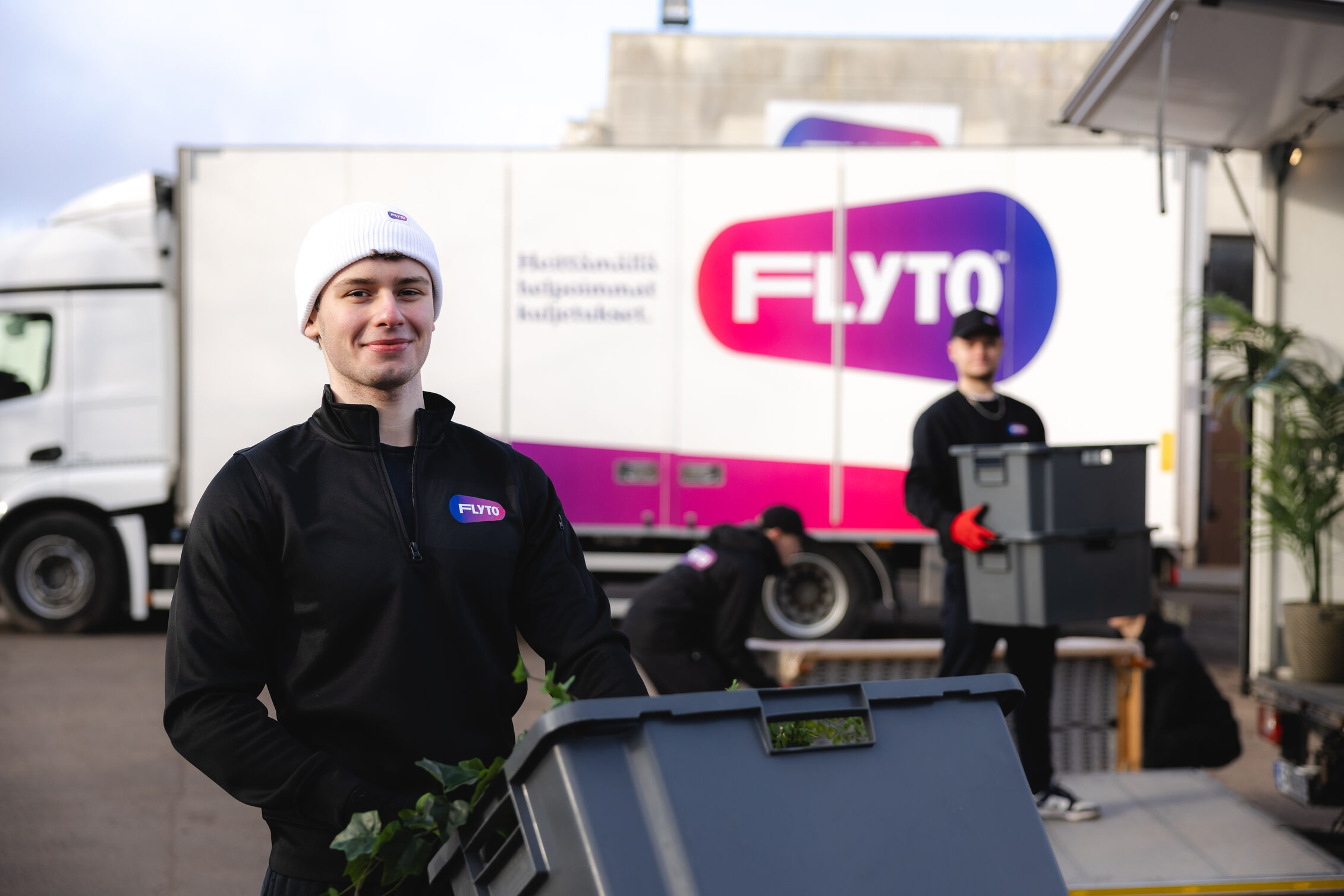
Flyto runs its own offices, warehouses, crews and vehicles across Northern, Central and Southern Europe, so the Luxembourg collection, coordination of the EU export paperwork, and consolidation through a North Sea port are handled largely in-house rather than handed off blind. For the ocean leg and the Costa Rican side, we work with a carefully chosen network of shipping partners and subcontractors, plus trusted local partners on the ground in Costa Rica who handle DGA clearance, the menaje de casa filing, and final delivery — so you get one point of contact in Luxembourg coordinating a move that, by necessity, crosses several different operators along the way.
Frequently asked questions
Do I need Costa Rican residency before I can ship my household goods duty-free?
Effectively yes — the menaje de casa exemption is tied to having qualifying residency status (or being a returning Costa Rican national), so shipments arriving before your residency is formalized are generally subject to standard import duties instead (Ministerio de Hacienda).
Can I use the household-goods exemption twice if I make two trips?
No — it is granted once, for life, per person (Ministerio de Hacienda).
Does Luxembourg have a port I can ship from directly?
No — Luxembourg is landlocked. Its only port, Mertert on the Moselle, is a trimodal bulk-cargo river/rail/road terminal; personal shipments route by road to Antwerp or Rotterdam for the ocean leg (Transports.lu).
What happens to my Luxembourg taxes once I move?
You remain a resident taxpayer as long as you keep your tax domicile or habitual residence in Luxembourg; once both end, you become a non-resident taxpayer liable only on Luxembourg-source income — confirm your exact filing position with a tax adviser (Administration des contributions directes).
Can I bring my dog or cat with me?
Yes, subject to SENASA’s entry requirements: microchip, species-specific vaccinations, a health certificate from a vet in Luxembourg, and deworming within 15 days of arrival (MAG/SENASA).
Is it worth shipping my car to Costa Rica?
Usually only after getting a landed-cost quote — Costa Rica applies substantial ad valorem import taxes on vehicles under its official customs valuation rules, and clearance requires a licensed customs broker (Ministerio de Hacienda).
Sources
- Ministerio de Hacienda (Costa Rica) — Política General para la Importación en la Modalidad de Menaje de Casa
- Ministerio de Hacienda (Costa Rica) — Resolución MH-DGA-RES-1897-2024, importación de vehículos
- Dirección General de Migración y Extranjería (Costa Rica)
- Dirección General de Migración y Extranjería — Regularización
- Ministerio de Agricultura y Ganadería / SENASA — Requisitos sanitarios para importación de perros y gatos
- SENASA — Trámite para salida de perros y gatos desde Costa Rica
- Instituto Costarricense sobre Drogas — Declaraciones de dinero y títulos valores
- Europa.eu — Rules for taking cash in/out of the EU
- Guichet.lu — Déclaration d’exportation depuis le Luxembourg
- Guichet.lu — Declaring a move to a new commune of residence (declaration of departure)
- Administration des contributions directes — Résident / non-résident
- Transports.lu — Port de Mertert
- Guichet.lu — Certificat sanitaire pour le transport d’animaux vers un pays tiers (ALVA)