

Moving to Ghent (2026): The Complete Relocation Guide

Ghent (Gent) is the capital of East Flanders and one of Europe’s great medieval cities — a Dutch-speaking university town of roughly 265,000 people, home to Ghent University (UGent) and its tens of thousands of students, a canal-laced historic core between the Leie and the Scheldt, and one of the largest car-free centres on the continent. It is a very different move from Brussels or Antwerp: not a bilingual patchwork of 19 communes, and not a port giant, but a compact, walkable, student city whose medieval heart has been deliberately closed to through-traffic. That last point is the whole story on move day. Ghent’s centre is split into sectors a truck cannot drive between, wrapped in a strict low-emission zone, and lined with tall Flemish townhouses that have no lift. This guide covers the practical mechanics of moving to Ghent in 2026 — the truck logistics only a mover knows, where to live and what rent really costs, how to register your address, and what monthly life actually costs — with official sources throughout.
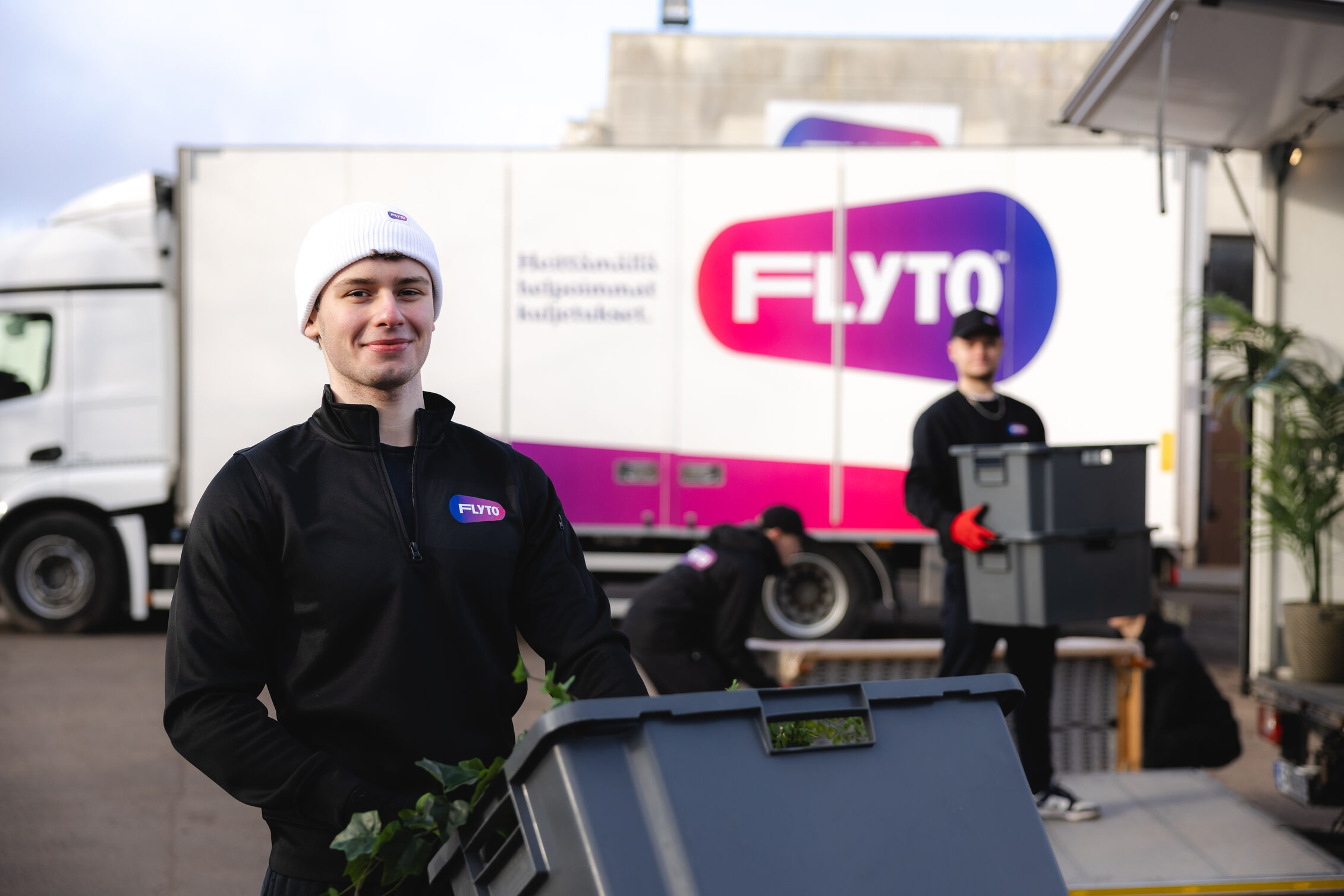
Freshness note: prices and rules verified against Stad Gent (stad.gent), the Ghent circulatieplan and low-emission-zone pages, De Lijn, IBZ (FPS Home Affairs), RIZIV, and the CIB/Korfine rental barometer in 2026. Fees and rents move — confirm figures with the linked authorities before you rely on them.
Quick answer: moving to Ghent in 2026
What does it cost to move to Ghent? An international household move (a full flat or house) typically lands in the low-to-mid four figures from within Europe and higher from overseas, driven mostly by volume, distance and access. Ghent’s access difficulties — a car-free centre split into sectors, a strict low-emission zone, and narrow lift-less townhouses (see below) — add real complexity, so get a fixed quote for your specific address rather than a generic estimate: get a Flyto quote here.
How long does the move take? Road moves from within the EU are usually a few days to about two weeks door-to-door; overseas sea freight runs several weeks. The Ghent-specific quirks everyone underestimates: if your address is inside the car-free zone (autovrij gebied) your truck needs a special free access permit from Stad Gent applied for at least 5 working days ahead (Stad Gent), and an old diesel truck may be banned from the centre outright by the low-emission zone (Stad Gent LEZ).
Key takeaways
- Ghent has one of Europe’s largest car-free centres — and it changes how a truck reaches your door. The pedestrian zone (autovrij gebied) covers just over 50 hectares, the biggest in Belgium and larger than Brussels’ (Intolaw). A motorised vehicle heading into it always needs a permit.
- The circulation plan splits the centre into sectors trucks can’t cross. Since 3 April 2017 the inner city inside the R40 ring has been divided into six sectors plus the pedestrian area; you can no longer drive straight from one sector to the next, and traffic filters (knippen) cannot be crossed even with a permit (Stad Gent circulatieplan).
- The moving parking permit is free — but you provide the signs and apply early. A public-space permit for a move (inname openbaar domein voor verhuis / signalisatievergunning) is exempt from tax, but you must apply at least 15 days ahead for the parking strip (26 days if the truck stands on the road, cycle path or pavement), and you rent and place the signs yourself (Stad Gent).
- The centre is tall, narrow and lift-less. Ghent’s medieval Kuip and 19th-century belt are full of tall Flemish townhouses with no elevator and steep, narrow staircases — which is why an exterior furniture lift (verhuislift / ladderlift) is so often needed to get a sofa in through a window.
If you still need to book the removal – price ranges, what is included and the questions to ask before you sign – see international removals to Belgium.
1. The move into Ghent — logistics only a mover knows
This is the part generic ”moving to Ghent” guides skip, and it is exactly where a move goes wrong. Ghent has spent the last decade deliberately pushing cars out of its medieval core, and the result is genuinely unusual: even with the right paperwork, there is no straight line for a truck through the centre. Three things determine whether your move day runs smoothly.
The car-free zone and the sectors — will the truck even reach the door?
This is the Ghent-specific catch a Brussels or Antwerp guide won’t warn you about. Since 3 April 2017 Ghent’s circulatieplan has governed the whole inner city inside the small ring road (R40). It divides that area into six sectors plus a central pedestrian area, and the core rule is simple and brutal for logistics: you can no longer drive directly from one sector to another. To get from one to its neighbour you must leave the centre onto the R40 ring and come back in. On top of that sit hard traffic filters (knippen) — at Bargiebrug, Hippoliet Lippensplein and Ottogracht — which no vehicle may cross, permit or not (Stad Gent).
At the heart of it is the car-free zone (autovrij gebied) — at just over 50 hectares the largest pedestrian area in Belgium, larger than Brussels’ (Intolaw). Any motorised vehicle with a destination inside it needs a permit. For a move there is a dedicated one: the vergunning verhuis naar autovrij gebied. The facts, from the city itself:
- Cost: it is free — a digital permit, no paper, no fee.
- Validity: it is valid for three months and gives 24/7 access to one car-free zone (you register a single number plate, with a replacement vehicle allowed).
- Lead time: apply at least 5 working days before the start date.
- The limit: even with it you still cannot cross the knippen, and you may not park on the public road inside the zone — which is why the separate parking permit below matters (Stad Gent — permits for the car-free zone).
The practical upshot: a mover has to plan the exact approach — which sector your street sits in, which entrance to use, and where the truck can legally stand — before the day, not on it.
The parking permit: free, but you place the signs
To guarantee the truck a spot outside the building you set up a temporary occupation of public space for a move — an inname van het openbaar domein voor verhuis, arranged through the city’s signalisatievergunning system. Two things surprise people coming from Antwerp, where the city does the work for a fee. In Ghent (Stad Gent):
- Cost: a move or delivery is exempt from tax — the permit itself is free. (From 1 January 2026 the city grants a one-day exemption on public-space occupation generally, with tax due only from day two, but moving and delivery are already exempt.)
- Lead time: apply at least 15 days ahead if the truck stands on the parking strip, or at least 26 days ahead if it (partly) occupies the road, cycle path or pavement. That long window is the single most common thing international movers underestimate.
- The signs are your job. Unlike Antwerp, Ghent does not place the boards for you. The permit specifies which signs you must set up; you rent them from a signage firm or rental centre and put them up yourself, in time for cars to move.
You usually need two permits: one at the old address and one at the new one. There is no last-minute fix on move day if the kerb is full of parked cars.
The Low Emission Zone — will your truck be allowed in?
Ghent runs a strict low-emission zone (lage-emissiezone, LEZ), in force since 1 January 2020. It covers almost the entire area inside the R40 ring — that is, the whole centre most people move into — applies around the clock, and covers all vehicles, including vans and trucks (Stad Gent).
In 2026 diesel vehicles must generally meet at least the Euro 5 standard to enter freely; Euro 4 diesels are admitted only after paying, and Euro 3 and older diesels are refused unless the owner buys a day pass, of which there is a maximum of 12 per licence plate per year (Stad Gent — admission conditions). Fines for driving in without permission run €150 to €350. A planned tightening was postponed by the Flemish government, which will reassess air quality in 2027, so the current rules hold for now — but the practical point stands: an old diesel removal truck simply cannot drive to your door in the centre. The move has to be done with a LEZ-compliant vehicle. This is exactly the kind of thing that turns into a fine, or a stranded truck, when a cheap out-of-town van hire shows up on the day.
Tall townhouses, no lift, and the verhuislift
Ghent’s most sought-after streets — the medieval Kuip, Patershol, the 19th-century belt around the stations — are lined with tall, narrow Flemish townhouses (herenhuizen and burgerwoningen), typically three to five storeys with no elevator and steep, winding staircases built for people, not wardrobes. Sofas, double beds, large wardrobes and pianos frequently will not fit up the stairwell or around its tight turns.
The standard Flemish solution is an exterior furniture lift (verhuislift, ladderlift or meubellift) — a ladder hoist run up the facade to lift bulky items straight in through a window or balcony. It needs its own kerb space, which is another reason the parking permit placement matters, and in a car-free or one-way street it needs planning against the sector rules above. A good mover assesses the staircase, the floor and the frontage before the day — not when the sofa is stuck on the second-floor landing.
2. Where to live — Ghent neighborhoods by profile
Ghent is a single Dutch-speaking municipality, but its character changes street by street and neighbourhood to neighbourhood. As a benchmark, the average apartment rent in Ghent was about €972/month in 2025, with the wider province of East Flanders averaging €944 across all housing — up 5.2% on 2024 (CIB/Korfine rental barometer, via AVS). Encouragingly for movers, renting an apartment in Ghent is now typically cheaper than in Antwerp, Leuven or Mechelen. Treat the tiers below as indicative; a renovated flat on a prime canal street costs well above a plain one two streets over.
Best for atmosphere and city-centre living:
- Binnenstad / de Kuip — premium. The medieval core between the Graslei, the Korenmarkt and the belfry: maximum atmosphere, everything on your doorstep, and you live inside the car-free zone. The trade-offs are real — tall lift-less houses, tourist crowds, tricky truck access, and the strictest part of the LEZ.
- Patershol — premium. Ghent’s oldest quarter, a tangle of cobbled medieval lanes packed with restaurants right behind the Gravensteen castle. Beautiful and central, but the houses are small, old and lift-less, and it is lively at night.
Best for young professionals and students:
- Sluizeken-Tolhuis-Ham — mid-range and up-and-coming. A diverse, increasingly popular pocket just north of the core around Portus Ganda, with 19th-century terraces and a real neighbourhood mix. Good value close in, though uneven street to street.
- Ledeberg — value and regenerating. Dense, diverse and just south of the centre across the ring; heavily renovated in recent years and popular with first-time renters priced out of the core. Busy and built-up, but well connected.
Best for families and space:
- Sint-Amandsberg — mid-range. A large, popular residential district north-east of the centre with solid townhouses, schools and a genuine neighbourhood feel; a favourite with families and couples wanting more room within cycling distance of town.
- Gentbrugge — mid-range. Greener and more suburban to the south-east, with houses, gardens and the Gentbrugse Meersen nature area; good for families, quieter socially, and a little more car-dependent.
- Drongen & Mariakerke — mid-range, leafy. Outer, greener districts to the west with detached and semi-detached houses and gardens; the space-and-quiet choice, at the cost of a longer, tram- or car-dependent commute.
Best for budget:
- Rabot — value. A dense, diverse, working-class district right by Gent-Dampoort and the old textile quarter, under long-running regeneration; among the lowest rents close to the centre, honest and unglamorous.
- Nieuw Gent — value. A high-rise, largely social-housing area to the south near the UZ Gent hospital, in the middle of a major renewal programme; some of the cheapest rents in the city, plain but well served by tram.
3. The Ghent housing market — how flats are actually found
Ghent has a tight rental market with a twist no other Flemish city shares at this scale: it is a student city. Ghent University and the university colleges bring tens of thousands of students, and every year the run-up to the September term drains the market of small flats and rooms. A student room (kot) averaged about €544/month in early 2025 (VRT NWS), and that demand pushes up competition for one-bedroom flats too. Here is how the market works.
- Where to search: the mainstream portals are Immoweb, Realo, Zimmo and Immovlan, plus estate-agent (vastgoedmakelaar) windows and Facebook groups for rooms and sublets. Good listings go fast — be ready to view within a day or two, and avoid arriving to house-hunt in late August if you can.
- Deposit (huurwaarborg): under the Flemish Housing Rent Decree (Woninghuurdecreet, art. 37) it is capped at three months’ rent and must be placed on a blocked account in the tenant’s name — never paid to the landlord directly. The money and its interest stay yours and are released only at the end of the lease by mutual agreement (Woninghuurdecreet overview).
- Lease registration is the landlord’s job — and it’s free. For a main-residence lease the landlord must register the contract with the tax authority within two months, at no cost. If they don’t, you as tenant gain extra protections, including easier termination (Mijn eerste woning / Belgium.be). A written plaatsbeschrijving (detailed inventory of condition) at move-in is also standard and protects your deposit.
- Agency fees: in Flanders the letting agent works for, and is paid by, the party who hires them — normally the landlord. As a tenant you should not be charged a separate ”commission” to rent a normal flat; be sceptical of anyone demanding one.
- Scam warning. Fake listings exist here too, and target students especially. Never transfer any money — deposit or ”reservation” — before you have viewed the property in person and confirmed the landlord. Classic red flags: the ”owner is abroad”, keys promised by post against an advance payment, prices well below market, or being pushed to a foreign IBAN.
4. Registering your address in Ghent (inschrijving)
Registration is the master key to Belgian life: without it you can’t easily finalise a bank account, a job, health insurance or a utility contract. In Ghent the process is run by the city’s Dienst Burgerzaken and confirmed by the local police.
- Report within 8 days. Declare your move to the Dienst Burgerzaken — online, or in person at the Stadskantoor (Woodrow Wilsonplein 1) or a local service centre (dienstencentrum). The declaration is free and you need the national register details of everyone in the household (Stad Gent — aangifte van adreswijziging). Newly arriving non-EU nationals should register within 8 days and EU nationals within 3 months (IBZ / FPS Home Affairs).
- The police residence check (woonstcontrole). After you declare the move, the city passes your address to the Lokale Politie Gent and a neighbourhood inspector (wijkinspecteur) visits at an unannounced moment to confirm you actually live there, usually within a few weeks (Stad Gent).
- Update your ID. Once the check is approved and you’re registered at the new address, you make an appointment to update your eID or residence card.
- Leaving Belgium instead? If you’re emigrating rather than arriving, the process runs the other way — see our Belgium deregistration and emigration guide.
5. Cost of living in Ghent (2026)
Ghent is more affordable than Brussels or Antwerp for rent, and everyday costs are moderate by Western-European standards. The current numbers:
- Rent is the big variable — see section 2. The average apartment rent in Ghent was about €972/month in 2025, with East Flanders averaging €944 across all housing (CIB/Korfine barometer). Ghent now typically undercuts Antwerp, Leuven and Mechelen on apartment rent, with budget districts (Rabot, Nieuw Gent, Ledeberg) below the average and prime central streets above it.
- Public transport. Ghent runs on De Lijn trams and buses. A single ride bought via the app or contactless is €3, a day ticket is €9, and a monthly adult Omnipas is €62 (annual €499), plus a one-off €10 for the MOBIB card (De Lijn fares). With the car-free centre, the LEZ and paid parking, most residents skip the car in town.
- Utilities. Energy is a real line item. In 2025 an average Flemish household paid roughly €108/month for electricity and €123/month for gas, per the Flemish regulator’s price report (VREG). Compare offers and consider a dynamic or variable tariff, which were among the cheapest options in 2025.
6. Getting settled — health, kids, transport, internet
- Health insurance (mutualiteit). Statutory health insurance is compulsory in Belgium, but it is not automatic: once you’re registered as a resident you must join a health insurance fund (mutualiteit / ziekenfonds) — CM, Solidaris, the Liberale or Neutrale funds, or Helan/Partenamut — or the public fund CAAMI/HZIV, generally within about 90 days (RIZIV — insurability). Bring your ID and Belgian address; do this early, as your reimbursements and cover depend on it. If you’re leaving Belgium, see our mutuality on emigration guide.
- Schools. Ghent’s schools are Dutch-medium, and places in the city are allocated through a central registration system (aanmelden) rather than first-come queues — apply in the official window, which is well before the school year. Popular schools fill quickly, so register as soon as you have an address.
- Transport. Beyond De Lijn, Ghent is compact and famously flat, so cycling is the default way to get around; the car-free centre makes the bike faster than the car for most trips. Gent-Sint-Pieters, the main station, gives fast rail to Brussels, Antwerp and the coast, and it’s a short hop to Brussels Airport.
- Internet. The main providers in Flanders are Telenet and Proximus, with Orange and others reselling; common speeds run from 100 Mbit/s up to gigabit fibre in a growing number of streets. Installation can take a couple of weeks after you sign, so order early and check what the building already supports.
7. How Flyto handles your move to Ghent
Everything in section 1 is why a Ghent move rewards a mover who actually knows the city — and it’s where Flyto earns its keep. We identify which sector your street sits in and plan the truck’s approach around the circulatieplan and the knippen, so we don’t discover a dead-end filter on the day. Where your address is inside the car-free zone we arrange the free car-free-zone access permit (vergunning verhuis naar autovrij gebied) and the public-space parking permits at both addresses, with the long lead time Ghent requires and the signage set up in time. We move you in a LEZ-compliant vehicle, so an old diesel truck being turned away at the ring — or fined €150–€350 — never becomes your problem. And we assess the staircase, floor and frontage in advance, bringing an exterior furniture lift (verhuislift) when the sofa won’t make a Ghent townhouse stairwell. That’s the honest difference between a generic van hire and a relocation partner who has done this street by street. Get a fixed quote for your Ghent move, or browse our full Belgium moving guides and compare with our Antwerp and Brussels relocation guides.
Moving to Ghent? Get a fixed quote.
Tell us your addresses and volume and we’ll price the whole move — including the car-free-zone access permit, the parking permits, a LEZ-compliant truck and any furniture lift your townhouse needs. No surprises on the day.
Frequently asked questions
Can a moving truck drive into Ghent’s car-free zone?
Only with a permit, and only within limits. Ghent’s car-free area (autovrij gebied) is just over 50 hectares — the largest pedestrian zone in Belgium. For a move you apply for the free vergunning verhuis naar autovrij gebied at least 5 working days ahead; it is a digital permit valid three months for one zone. Even with it, you cannot cross the traffic filters (knippen) at Bargiebrug, Hippoliet Lippensplein or Ottogracht, and you can’t park on the public road inside the zone — which is why an experienced local mover plans the approach in advance.
What is Ghent’s circulation plan and why does it matter on move day?
Since 3 April 2017 the inner city inside the R40 ring has been split into six sectors plus the pedestrian area, and you can no longer drive directly from one sector to the next — you have to leave onto the R40 ring and come back in. For a removal truck that means the route to your door depends entirely on which sector your street is in, so the approach has to be worked out before the day, not improvised on it.
Do I need a parking permit for my moving truck in Ghent?
In practice yes, and the good news is it’s free — a move is exempt from the public-space tax. But you must apply at least 15 days ahead if the truck stands on the parking strip, or 26 days ahead if it occupies the road, cycle path or pavement. Unlike Antwerp, Ghent does not place the signs for you: you rent and put up the required boards yourself. You usually need one permit at the old address and one at the new one.
Can my removal truck enter Ghent’s Low Emission Zone?
Only if it’s clean enough. Ghent’s LEZ has covered almost the whole area inside the R40 ring since 1 January 2020, around the clock, for all vehicles including trucks. Diesels must generally meet at least Euro 5; Euro 4 is admitted only after paying, and Euro 3 and older need a day pass (max 12 per plate per year). Fines run €150–€350. In short, your move must use a LEZ-compliant vehicle, which is why using an experienced local mover matters.
How much is rent in Ghent in 2026?
The average apartment rent in Ghent was about €972/month in 2025, with East Flanders averaging €944 across all housing (CIB/Korfine barometer). Ghent now typically undercuts Antwerp, Leuven and Mechelen on apartment rent. Budget districts like Rabot, Nieuw Gent and Ledeberg sit below the average; prime central streets in the Kuip and Patershol sit above. A student room (kot) averaged about €544/month. On top of rent, budget for energy (roughly €230/month combined electricity and gas).
How big a deposit can a Ghent landlord ask for?
Under the Flemish Housing Rent Decree (Woninghuurdecreet, art. 37) the deposit is capped at three months’ rent and must be held on a blocked account in the tenant’s name — never paid to the landlord directly. The money and any interest stay yours and are released at the end of the lease by mutual agreement.
How do I register my address after moving to Ghent?
Report the move within 8 days to the city’s Dienst Burgerzaken — online, or in person at the Stadskantoor (Woodrow Wilsonplein 1) or a local service centre. It’s free. A neighbourhood police inspector (wijkinspecteur) then visits unannounced to confirm you live there, usually within a few weeks. Once approved, you book an appointment to update your eID or residence card. Non-EU nationals should register within 8 days and EU nationals within 3 months.
Is Ghent cheaper than Brussels and Antwerp?
For rent, generally yes — Ghent’s average apartment rent now runs below Antwerp, Leuven and Mechelen, and below central Brussels. Everyday costs are comparable to the rest of Flanders. The bigger practical differences are Ghent’s car-free centre and sector-based circulation plan, which make the move logistics unusually demanding even though the city is cheaper to live in.
Official sources
- Stad Gent — mobility, circulation and parking plan (sectors, since 2017)
- Stad Gent — moving permit for the car-free zone (free, 3 months, 5 working days)
- Stad Gent — permits for the car-free zone (overview)
- Stad Gent — public-space permit for a move/delivery (cost and lead time)
- Stad Gent — Low Emission Zone (since 2020, R40 area)
- Stad Gent — LEZ admission conditions (Euro standards, day pass)
- Stad Gent — report a change of address (inschrijving)
- IBZ / FPS Home Affairs — registering a change of address
- Intolaw — Ghent’s pedestrian zone, 50+ hectares, largest in Belgium
- CIB/Korfine rental barometer 2025 (Ghent and East Flanders rents), via AVS
- VRT NWS — average Ghent student-room (kot) rent 2025
- Flemish Housing Rent Decree (Woninghuurdecreet) — deposit rules
- Mijn eerste woning / Belgium.be — renting and lease registration
- De Lijn — ticket and subscription fares
- VREG — 2025 energy price report
- RIZIV — health insurance and mutuality (insurability)
- Flyto — Belgium deregistration and emigration guide
- Flyto — moving to Antwerp guide
- Flyto — moving to Brussels guide
- Flyto — Belgium moving guides
Hiring an international mover? See our full International removals to Belgium service — Flyto’s own European hubs, vetted local partners and one English-speaking coordinator, door to door.