

Moving to Melbourne from Abroad (2026): Complete Relocation Guide

Moving to Melbourne from abroad is two journeys at once: a legal one, where a visa gives you the right to live and work in Australia, and a physical one, where your household crosses an ocean and passes through the strictest biosecurity regime on earth. Get either wrong and the move stalls. This guide walks through both — the skilled and employer visa pathways (including Victorian state nomination, which is Melbourne’s own fast lane), intercontinental sea freight to the Port of Melbourne, DAFF biosecurity and ABF customs — and then the part everyone actually cares about: what living in Melbourne is really like, which suburbs suit you, what rent costs, and how to set up Medicare, a tax file number and a bank account. Every figure below is linked to an official or primary source.
Key takeaways
- Visa first, everything else second. The main permanent routes are the points-tested Skilled Independent 189, the state-nominated Skilled Nominated 190 and the regional 491. For Melbourne specifically, Victoria’s own nomination program can unlock the 190 with extra points.
- Employer-sponsored? The Skills in Demand visa (subclass 482) — which replaced the old TSS visa on 7 December 2024 — and the permanent Employer Nomination Scheme 186 are the sponsored pathways.
- Sea freight is the workhorse. A dedicated 20ft or 40ft container (or a shared LCL consignment) sails to the Port of Melbourne — Australia’s busiest container port — in roughly 4–8 weeks port-to-port, and realistically 8–14 weeks door-to-door once packing and clearance are counted.
- Biosecurity is non-negotiable. Every shipment is assessed by the Department of Agriculture, Fisheries and Forestry (DAFF). Timber, food, seeds and “dirty” outdoor gear trigger inspection, treatment fees or destruction.
- Used goods are usually duty- and GST-free under the Unaccompanied Personal Effects (UPE) concession, declared on form B534 — but alcohol, tobacco and vehicles are always taxable.
- Melbourne is one of the world’s most liveable cities (3rd globally in the Economist Intelligence Unit’s 2026 index, per Invest Victoria), with rents materially cheaper than Sydney.
1. Why Melbourne
Melbourne is Australia’s second-largest city — home to roughly 5.2 million people across its metropolitan area — and its cultural capital: coffee, live music, sport, laneway bars and a food scene built by successive waves of migration. It is also, by the most-cited global measure, one of the best places on earth to live. In the Economist Intelligence Unit’s Global Liveability Index 2026 Melbourne ranked third in the world, behind only Copenhagen and Vienna, with perfect scores for healthcare and education. For a family relocating from abroad, that is not marketing — it maps onto public hospitals, well-funded schools and low violent-crime rates you will actually rely on.
The one thing to brace for is the weather. Melbourne’s oceanic climate is famous for delivering “four seasons in one day”: the city sits where cold fronts off the Southern Ocean collide with hot, dry air from the interior, so a 30°C morning can end in a 15°C southerly change. Summers (December–February) are warm, with typical highs around 24–26°C and occasional heatwaves above 35°C; winters (June–August) are cool and grey rather than freezing, with highs of about 14–15°C and lows around 6–7°C. It rarely snows in the city and never sits under months of darkness — but pack layers, and a rain jacket, year-round. The Victorian government’s Live in Melbourne portal is the official orientation resource for new arrivals.
2. Your visa: the legal basis to live in Melbourne
You cannot ship a single box until you know how you will be allowed to stay. Most people relocating to Melbourne from overseas arrive on one of two families of visa: points-tested skilled visas, or employer-sponsored visas. All skilled applications begin with an Expression of Interest in the Department of Home Affairs’ SkillSelect system, after a positive skills assessment in an occupation on the relevant skilled occupation list.
The skilled (points-tested) pathways
- Skilled Independent visa (subclass 189) — a permanent visa for skilled workers who are not sponsored by an employer, state or family member. You live and work anywhere in Australia. It is invitation-only through SkillSelect and highly competitive on points.
- Skilled Nominated visa (subclass 190) — a permanent visa that requires nomination by a state or territory. Nomination adds points and is often the realistic route into Melbourne. Victoria runs its own program (below).
- Skilled Work Regional (Provisional) visa (subclass 491) — a five-year provisional visa with a pathway to permanent residence after living and working in a designated regional area. Note: for the 491, most of metropolitan Melbourne is not “regional,” so 491 holders generally settle in regional Victoria first.
Victorian state nomination — Melbourne’s fast lane
This is the piece migrants most often miss. The Victorian Government nominates skilled workers for the subclass 190 and 491 visas through its Live in Melbourne skilled migration program. For 2025–26, the Australian Government allocated Victoria 3,400 skilled nomination places — 2,700 for the subclass 190 and 700 for the subclass 491 (Live in Melbourne, 2025–26 program). To be considered you need a valid skills assessment, at least 65 points on the SkillSelect points test, then you lodge an EOI and a Victorian Registration of Interest. Nomination for the 190 lets you live and work anywhere in Victoria, Melbourne included; the 491 is tied to regional Victoria.
Employer-sponsored pathways
- Skills in Demand visa (subclass 482) — the temporary employer-sponsored visa that replaced the Temporary Skill Shortage (TSS) visa on 7 December 2024. It runs in Specialist Skills, Core Skills and Labour Agreement streams, and lets an approved employer sponsor you when they can’t find a suitable Australian worker.
- Employer Nomination Scheme (subclass 186) — the permanent employer-sponsored route, for skilled workers nominated by their Australian employer.
Whichever pathway fits, confirm current requirements on the official Home Affairs pages before you commit — occupation lists, points thresholds and program caps change every program year.
3. Shipping your life across the ocean
Once your visa is on track, the physical move begins. From Europe, the UK, the Middle East, Asia or the Americas, there are two ways for your belongings to reach Melbourne: sea freight (the default for a whole household) and air freight (fast, but many times more expensive per kilo — reserved for a small box of essentials).
Sea freight arrives at the Port of Melbourne, which handles the largest share of Australia’s container trade — around 37% of the national total, making it the country’s busiest container port. Your options scale with volume:
- 20ft container — roughly a 2–3 bedroom home. Sole use of the box.
- 40ft container — a large family home with furniture, appliances and a garage’s worth of gear.
- LCL (Less than Container Load) — your goods share a container with others. Cheaper for a studio or one-bedroom, but slower, because the box is consolidated and de-consolidated with other people’s shipments.
Transit time: plan for roughly 4–8 weeks port-to-port from most origins (longer for LCL, and longer again over peak periods), and realistically 8–14 weeks door-to-door once you add export packing, sailing, Australian customs, biosecurity assessment and final delivery. (Estimate — actual transit depends on origin port, sailing schedule and inspection outcomes.) Because the corridor is intercontinental and slow, ship your bulky, low-urgency items by sea and carry or air-freight the things you need in week one.
For a deeper cost and method comparison, see our companion guide, Shipping to Australia: sea freight vs air (2026).
4. Biosecurity: Australia’s defining rule
This is where moves to Australia differ most from moves anywhere else. Australia’s isolation has kept out pests and diseases that plague farming elsewhere, and the country defends that fiercely. Every household shipment — sea or air — is assessed by the Department of Agriculture, Fisheries and Forestry (DAFF) before it is released to you.
What draws scrutiny, and what to do about it:
- Timber and wooden items — furniture, carvings, untreated pallets. Raw or bark-bearing timber is high-risk and may require fumigation or heat treatment by an approved provider.
- Food, seeds and plant material — do not ship them. They are the fastest way to have your whole consignment held.
- “Dirty” outdoor gear — shoes, hiking boots, bicycles, camping equipment, garden tools, lawnmowers, golf clubs, prams. Any soil, seeds, plant matter or animal residue must be cleaned off before packing. This is the single most common cause of failed inspections.
- Animal products, wool, feathers, hides — declare everything; some items need permits or treatment.
If an item is flagged, DAFF can order treatment (fumigation, heat, steam or cleaning), export back out of Australia, or destruction — and inspection and treatment carry fees you pay, on top of any delay while the container waits. The cheapest biosecurity outcome is prevention: clean everything meticulously, declare honestly, and ship nothing organic. Our detailed walkthrough is here: Australia’s biosecurity & quarantine rules for your move (2026).
5. Customs and the Unaccompanied Personal Effects concession
Alongside biosecurity, your shipment clears customs through the Australian Border Force (ABF). The good news for people moving their existing home: personal effects you have owned and used for 12 months or more before arrival can generally be imported free of duty and GST under the Unaccompanied Personal Effects (UPE) concession.
The mechanics:
- You (or your mover) lodge the Unaccompanied Personal Effects Statement, form B534, signed by the owner of the goods (ABF UPE).
- From 8 July 2026, UPE declarations are lodged through DAFF’s Cargo Online Lodgement System (COLS) — a change worth confirming with your agent close to your move date.
- Always taxable, regardless of ownership period: alcohol, tobacco and motor vehicles. Vehicles in particular need separate import approval and are rarely worth shipping.
- Brand-new goods, and anything you have owned for under 12 months, may attract duty and GST.
Get the paperwork right and clearance is routine; get it wrong — false or incomplete declarations — and you risk penalties and delay. Full detail: Australian customs & the B534 UPE concession (2026). For the visa side, see Australian visas for migrants (2026).
6. Where to live: Melbourne’s neighbourhoods
Melbourne is a city of distinct “villages,” each with its own character, strung together by trams. A quick orientation for newcomers:
- CBD (Central Business District) — high-rise apartments, the Free Tram Zone, the laneways and Melbourne’s grid of arcades. Convenient and car-free, but the smallest floorplans.
- Fitzroy & Collingwood — Melbourne’s bohemian heart just north-east of the CBD: Victorian terraces, Brunswick Street, galleries, vintage shops and some of the best bars in the country. Popular with young professionals and creatives.
- Carlton — home of Lygon Street (“Little Italy”), the University of Melbourne and leafy Carlton Gardens. A favourite for students and academics.
- Brunswick — further north, more affordable, diverse and increasingly hip; great food, live music and a strong community feel along Sydney Road.
- St Kilda — the classic bayside suburb: beach, palm trees, Acland Street cakes and a lively, slightly faded seaside-resort energy.
- Docklands — modern waterfront towers on the CBD’s western edge; new-build apartments, marina views and a quieter, more corporate feel.
Families often look further out — Melbourne’s “middle ring” and eastern suburbs (think Hawthorn, Camberwell, Glen Waverley) for houses, gardens and school catchments. Wherever you land, check the tram and train lines first: in Melbourne, your commute is defined by proximity to a route.
7. What rent costs — and why Melbourne beats Sydney on price
Melbourne’s headline advantage over Sydney is straightforward: you pay less for more. According to Domain’s Rental Report for the March 2026 quarter, median asking rents ran roughly:
- Melbourne houses — about A$590 per week; units about A$600 per week.
- Sydney houses — about A$800 per week; units about A$750 per week.
That is a saving of roughly A$210 a week on a house — around A$11,000 a year — for choosing Melbourne over Sydney, plus a smaller gap on apartments. (Melbourne is currently the rare market where units edge out houses on price, a quirk of recent supply.) Budget for a rental bond (usually four weeks’ rent) held with the Residential Tenancies Bond Authority, and expect to provide references and proof of income; newcomers without an Australian rental history should prepare a strong application pack (employment letter, savings evidence, overseas references).
8. Getting around: trams, trains and Myki
Melbourne runs the largest tram network in the world, backed by metro trains and buses, all operated under Public Transport Victoria (PTV). Two things every new arrival should know:
- The Free Tram Zone. Trams are free within the central city zone — covering the CBD, Docklands and Federation Square. Inside it you don’t even touch on; you only pay once you travel beyond it.
- Myki. Outside the free zone you tap a reusable Myki smartcard (or Myki on your phone) on and off. Fares are capped daily, so a day of unlimited travel across the metropolitan zones is a fixed maximum rather than per-trip — around A$11 a day for a full-fare Zone 1+2 daily cap at standard rates. Victoria also periodically runs fare discounts, so check current pricing on the PTV site when you arrive.
Many inner-suburb residents live largely car-free thanks to the tram grid — a real cost saving when you factor in Australian car prices, registration and insurance.
9. The essentials: Medicare, tax file number and banking
Three administrative tasks unlock ordinary life in Melbourne. Do them early.
Medicare (public healthcare). If you are a permanent resident — or hold certain visas, or have applied for permanent residence — you can enrol in Medicare, which covers much of the cost of doctors, public hospital treatment and subsidised medicines. If you are on a temporary visa, check whether your country has a Reciprocal Health Care Agreement (RHCA) with Australia: agreements with 11 countries — including the UK, Ireland, Italy, the Netherlands, Norway, Finland, Sweden, Belgium, Malta, Slovenia and New Zealand — cover medically necessary treatment during your stay. Even with an RHCA, private cover is recommended (and some temporary visas require it).
Tax file number (TFN). You need a TFN from the Australian Taxation Office to be paid properly — without one, your employer withholds tax at the top rate. It’s free to apply and most new residents can do it online once they’ve arrived.
Banking. Australia’s major banks let you open an everyday transaction account online, often before you arrive, using your passport; you then verify your identity in a branch after landing. Have a local account and a TFN ready before your first payday, and set up your Australian phone number early — almost every service (banking verification, rental applications, government logins) assumes you have one.
For a fuller checklist, see Settling into Australia: TFN, Medicare, super & banking (2026).
10. A realistic timeline
- 6–9 months out — confirm your visa pathway; lodge your skills assessment and SkillSelect EOI (and Victorian Registration of Interest if going for state nomination). Start decluttering — you pay to ship volume.
- 3–4 months out — book your international mover, choose sea vs air and container size, and lock a packing date. Begin cleaning outdoor and timber items to biosecurity standard.
- 1–2 months out — export packing and departure of your container. Prepare your B534 and inventory. Arrange temporary accommodation in Melbourne for the gap before your goods arrive.
- On arrival — apply for your TFN, enrol in Medicare (or activate your RHCA), open/verify your bank account, get a Myki, and start viewing rentals.
- Weeks after arrival — your container clears ABF customs and DAFF biosecurity, then is delivered and unpacked at your new address.
How Flyto handles your move to Melbourne
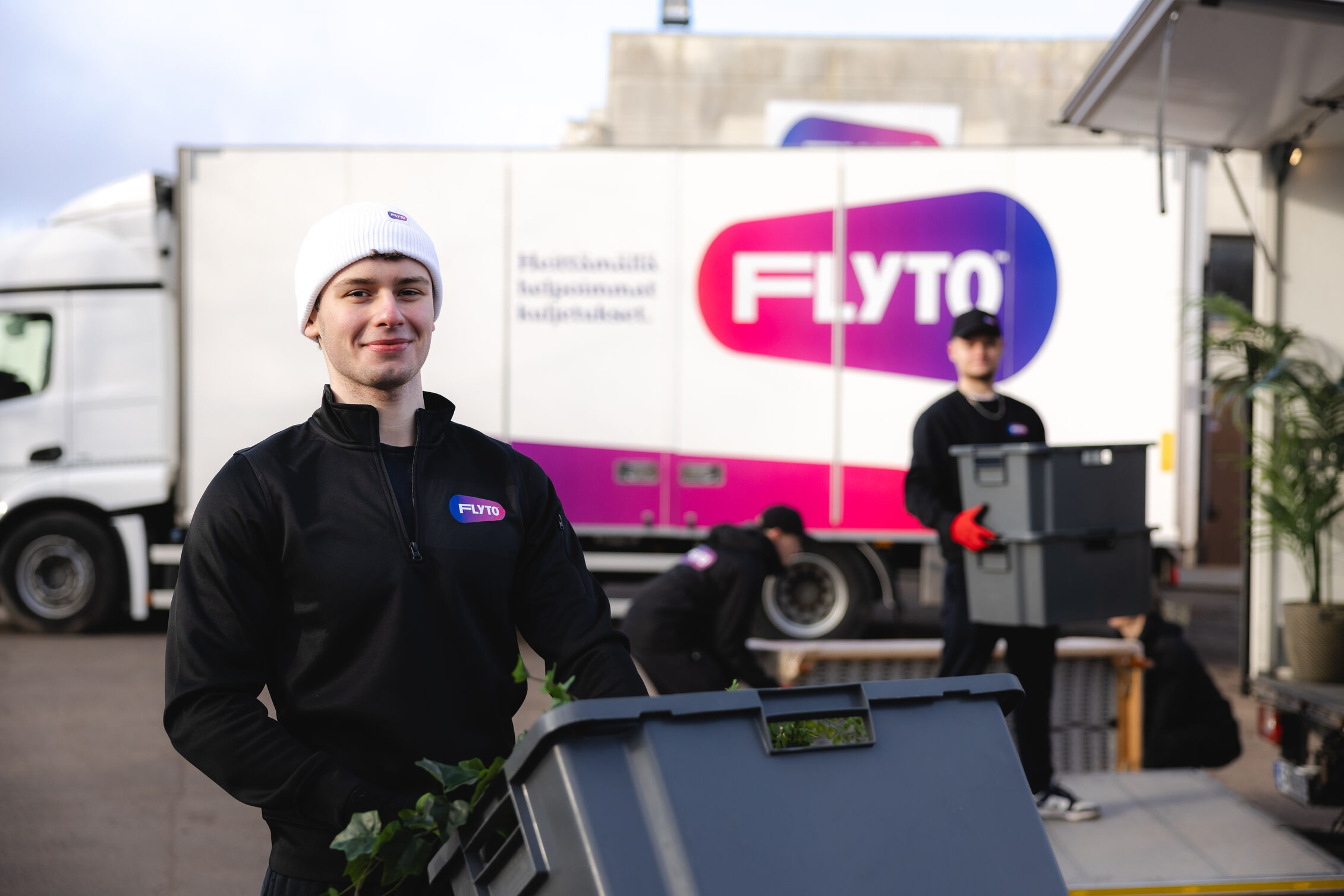
Flyto runs a single door-to-door PLATINUM service for intercontinental moves to Melbourne — one team owning the whole chain: export packing at origin, sea or air freight to the Port of Melbourne, ABF customs and the B534 UPE concession, DAFF biosecurity inspection, and final delivery and unpacking at your Melbourne address. Because Australia is an intercontinental corridor governed by the world’s strictest quarantine rules, it is Platinum-only: fully managed, with your belongings handled once and correctly. Timber-heavy inventories, outdoor gear and biosecurity paperwork are exactly the friction points a single point of contact is built to absorb. Get a free, personalised quote, browse our Australia moving guides, or read the master overview: Moving to & from Australia (2026).
Frequently asked questions
Do I need a job offer to move to Melbourne?
Not for the points-tested skilled visas (189, and the state-nominated 190). You do need an approved sponsor for the employer routes — the Skills in Demand 482 and the permanent 186. Victorian state nomination can add the points that make a 190 achievable without an offer.
How long does sea freight to Melbourne take?
Roughly 4–8 weeks port-to-port from most origins, and realistically 8–14 weeks door-to-door once packing, sailing, customs and biosecurity are included. LCL (shared container) is slower than a sole-use 20ft or 40ft box. (Estimate — depends on origin and schedule.)
Will I pay duty or GST on my household goods?
Generally no, if you have owned and used them for 12 months or more and they qualify under the Unaccompanied Personal Effects concession, declared on form B534 (ABF). Alcohol, tobacco and vehicles are always taxable.
Why is Australian biosecurity such a big deal?
Australia protects unique agriculture and ecosystems. Every household shipment is DAFF-assessed, and soil, timber, food or plant material can trigger inspection, treatment fees or destruction (DAFF). Clean all outdoor gear thoroughly before packing.
Is Melbourne cheaper than Sydney?
On rent, yes — Domain’s March 2026 data put a typical Melbourne house at about A$590/week versus A$800 in Sydney, a saving of roughly A$210 a week (Domain).
Can I get Medicare straight away?
If you are a permanent resident (or have applied for PR, or hold an eligible visa) you can enrol immediately (Services Australia). On a temporary visa, check whether your country has a Reciprocal Health Care Agreement — and take out private cover regardless.
Sources
- Department of Home Affairs — Skilled Independent visa (subclass 189), Skilled Nominated visa (subclass 190), Skilled Work Regional (subclass 491), Skills in Demand visa (subclass 482), Employer Nomination Scheme (subclass 186), SkillSelect, skilled occupation lists.
- Victorian Government / Live in Melbourne — skilled migration visas, 2025–26 nomination program (3,400 places), environment and weather.
- Invest Victoria — Melbourne 3rd in EIU Global Liveability Index 2026.
- Department of Agriculture, Fisheries and Forestry — moving or immigrating to Australia (biosecurity).
- Australian Border Force — Unaccompanied Personal Effects (UPE) and form B534.
- Port of Melbourne — Australia’s busiest container port.
- Services Australia — enrolling in Medicare, Reciprocal Health Care Agreements.
- Australian Taxation Office — tax file number.
- Public Transport Victoria — Myki, trams and the Free Tram Zone.
- Domain — Rental Report, March 2026 quarter.
Hiring an international mover? See our full International removals to Australia service — Flyto’s own European hubs, vetted local partners and one English-speaking coordinator, door to door.