

Moving from Switzerland to Singapore (2026): Complete Guide

The Switzerland-to-Singapore corridor pairs one of Europe’s most orderly bureaucracies with one of Asia’s most efficient customs regimes — and both halves demand paperwork. On the Swiss side you must deregister from your commune, close out your tax residency and clear your removal goods for export through the Federal Office for Customs and Border Security. On the Singapore side, your immigration status determines whether your household shipment enters GST-free, and the pet, cash and vehicle rules are strict and specific. This guide covers both ends of the move — plus a short note on the reverse trip home — for professionals, families and returning residents relocating from Switzerland to Singapore.
Key takeaways
- Your Singapore immigration status drives everything: GST relief on household goods requires proof you are relocating, such as an Employment Pass, Dependant’s Pass or MOM In-Principle Approval letter.
- Switzerland charges no export customs duty on personal removal goods, but you should clarify any bans and permits (weapons, CITES species, cultural assets) before leaving — per the Federal Office for Customs and Border Security (BAZG/FOCBS).
- You must deregister from your Swiss commune of residence and get an "Abmeldebestätigung" — this confirmation is needed for customs and to cancel Swiss health insurance.
- Singapore grants GST relief on used household articles and personal effects only if you have owned and used them for at least 3 months and import them within 6 months of your first arrival.
- Unaccompanied shipments need an online Declaration of Facts (DOF) submitted to Singapore Customs before the goods arrive, followed by a Customs In-Non-Payment (GST Relief) permit via TradeNet.
- Switzerland is a Schedule II country for Singapore pet imports: dogs and cats need a microchip, rabies vaccination, a rabies antibody (RNATT) blood test and an AVS import licence.
- Motor vehicles get no relocation concession — they are dutiable, need a COE, and only right-hand-drive cars can be permanently registered.
- Declare cash if you carry more than S$20,000 in currency or bearer instruments into Singapore.
1. Your Singapore status decides the customs treatment
Before you book a container, settle your immigration status — it dictates whether your household goods enter Singapore free of Goods and Services Tax (GST). Foreigners work under a pass issued by the Ministry of Manpower (MOM), typically an Employment Pass, S Pass, or a Dependant’s Pass for accompanying family; permanent residence and citizenship matters are handled by the Immigration & Checkpoints Authority (ICA).
That status is not just an entry document — it is the evidence Singapore Customs uses to grant relief. To qualify for GST relief on your used household articles and personal effects, you must show you are moving your place of residence to Singapore. Customs accepts an Employment Pass, Dependant’s Pass, Student Pass or the MOM In-Principle Approval letter as proof of relocation. Without a qualifying pass, your shipment is treated as an ordinary import and GST (currently 9%) applies. Sequence matters: line up your pass first, then time your shipment to land within the relief window.
2. The Switzerland export side
The authority. Switzerland’s customs authority is the Federal Office for Customs and Border Security (FOCBS), known by its German initials BAZG (Bundesamt für Zoll und Grenzsicherheit). It handles both the goods leaving the country and the border formalities.
Removal goods and export duty. The good news first: for personal removal goods leaving Switzerland, the BAZG confirms you generally face no specific customs formalities and no export duty is payable. What you must do is clarify any bans, permits and restrictions before departure — the BAZG specifically names animals, CITES-protected species, weapons and cultural assets. For new or high-value items (an expensive camera, for example) you can have them noted or marked by the export customs office to avoid disputes on any future re-entry.
The export declaration. When goods move commercially — as your container will, handled by a freight forwarder — Switzerland requires an electronic export customs declaration. The BAZG now processes these through its Passar goods-traffic system, which replaced the older e-dec Export application at the end of 2025. In practice you delegate this to your mover or customs agent, who must be authorised in writing to act as the declarant on your behalf; the BAZG then issues the electronic assessment decision (eVV). There are no export taxes or duties on such goods leaving Switzerland.
Deregistration. If you are abroad for more than three months, give up your accommodation and do not intend to return soon, you must deregister from your commune of residence (Abmeldung). You can do this up to around 30 days before departure at your Gemeindeverwaltung; you will receive a confirmation of deregistration ("Abmeldebestätigung"), usually for a small fee. Keep it — you need it to cancel Swiss health insurance and for later administrative tasks. Swiss nationals must also register with the Swiss representation (embassy or consulate) responsible for Singapore within 90 days of deregistering.
Tax exit. Deregistering with your commune is also what ends your Swiss tax residency — merely leaving is not enough. You must file a final tax return covering the period from the start of the tax year up to your departure date, so income and wealth tax are settled for that partial year. Contact your cantonal or communal tax office well before you leave; complex cases (property, second-pillar/BVG pension withdrawals, qualified company participations) warrant a Swiss tax adviser. Note that withdrawing pension assets before retirement age triggers Swiss withholding tax at a reduced pension rate.
3. Ports & transit
Switzerland is landlocked, so "sea freight from Switzerland" always means an overland leg to a European seaport. The country’s only cargo port is the Port of Switzerland in Basel on the Rhine (sites at Kleinhüningen, Birsfelden and Muttenz), which sits on the Rotterdam–Basel–Genoa freight corridor and handles roughly 10% of all Swiss imports. Household containers, though, are usually trucked or railed directly to a deep-sea port — most commonly Rotterdam or Antwerp in the north, or Genoa to the south — and loaded there for Singapore. Air freight typically departs from Zurich Airport (ZRH), Switzerland’s largest cargo gateway, or Geneva.
Transit times (freight-industry estimates — not official figures). As a planning guide only:
- Sea freight: roughly 4–7 weeks door-to-port depending on the European load port, sailing schedule and Singapore transhipment, plus the inland leg from Switzerland to the port.
- Air freight: roughly 5–12 days door-to-door including handling and customs.
Treat these as indicative ranges from freight operators, not guaranteed or officially published times. Schedules, vessel availability and customs inspection all move the real date.
4. The Singapore import side
Singapore Customs distinguishes between goods you hand-carry on arrival and goods that arrive unaccompanied (your container or air shipment).
Eligibility for GST relief. You may bring in used household articles and personal effects with GST relief if you: (1) are moving your place of residence to Singapore; (2) own the items; (3) have used and possessed them for at least 3 months; (4) import them within 6 months of your first arrival; and (5) undertake not to sell or dispose of them within 3 months of import. Relief does not extend to liquor, tobacco or motor vehicles.
Unaccompanied shipments — the process. Before your goods enter Singapore, you must submit an online Declaration of Facts (DOF) with supporting documents to Singapore Customs so it can assess your GST-relief eligibility. Supporting documents include proof you are relocating (Employment Pass, Dependant’s Pass, Student Pass or MOM In-Principle Approval) and proof of transfer of residence, plus a detailed inventory. If relief is approved, you (or your appointed freight agent) then apply for a Customs In-Non-Payment (GST Relief) permit through TradeNet — do this within 10 working days of approval. Crucially, the DOF must be filed before the goods arrive: if the shipment lands first, Customs will reject the relief application and GST becomes payable. Where no relief applies, an In-Payment (GST) permit is used instead.
Hand-carried effects. For items you carry in personally on a change of residence, there is a dedicated GST-relief application submitted via SingPass on arrival — useful for the suitcases and boxes that travel with you rather than in the container.
5. Pets
Pets are one of the strictest parts of this move, governed by animal authorities at both ends.
Leaving Switzerland. The Federal Food Safety and Veterinary Office (FSVO / BLV) sets the conditions for taking dogs, cats and ferrets across the Swiss border. Your animal needs a microchip and a valid rabies vaccination; the export health certificate is completed by an official veterinarian. Rabies antibody testing is handled through designated laboratories — Switzerland’s national reference is the Swiss Rabies Centre at the Institute of Virology and Immunology (IVI).
Entering Singapore. Singapore’s Animal & Veterinary Service (AVS, under NParks) classifies Switzerland as a Schedule II country for dogs and cats. The Schedule II pathway requires:
- An ISO-standard microchip (11784/11785).
- A valid rabies vaccination with an approved inactivated or recombinant vaccine.
- A rabies antibody (RNATT) blood test, sampled at least 28 days after vaccination and within a window of at least 90 days and no more than 12 months before export.
- A veterinary health certificate completed 2–7 days before export and endorsed by Switzerland’s official veterinarian.
- An AVS import licence obtained before arrival (S$50 normal / S$100 express service).
Under Schedule II, a minimum 10-day quarantine can apply in defined situations (for example, if the pet arrives more than five days after the owner, or has been in the owner’s direct care for under six months). From 1 April 2026, AVS also requires pet owners to appoint an AVS-recognised pet agent to handle import clearance. Book the arrival inspection through NParks e-services well ahead of the flight. Also note the Singapore Customs personal-pet import rules that run alongside the AVS licence.
6. Vehicles, money and things people forget
Vehicles. Do not assume your Swiss car comes along cheaply. Singapore gives no relocation or personal-effects concession on motor vehicles — every imported vehicle is dutiable, with excise duty of 20% of the customs value (Open Market Value basis) for cars (12% for motorcycles), plus GST. On top of that, the Land Transport Authority requires a Certificate of Entitlement (COE) and registration, and only right-hand-drive vehicles can be permanently registered. For almost all movers, selling the car in Switzerland is the sensible choice.
Money. There is no cap on cash, but you must declare currency and bearer instruments exceeding S$20,000 (or equivalent) on entry to Singapore. Declare electronically via MyICA up to three days (72 hours) before arrival; the report is legally required (Form NP 727 to the Singapore Police Force) and non-declaration carries heavy penalties.
Easy to forget: cancel Swiss health insurance using your Abmeldebestätigung; settle your final Swiss tax bill; check CITES restrictions on items like ivory, exotic leather or antiques before packing; and remember GST relief excludes alcohol and tobacco, which are dutiable in Singapore regardless.
How Flyto handles your Switzerland to Singapore move
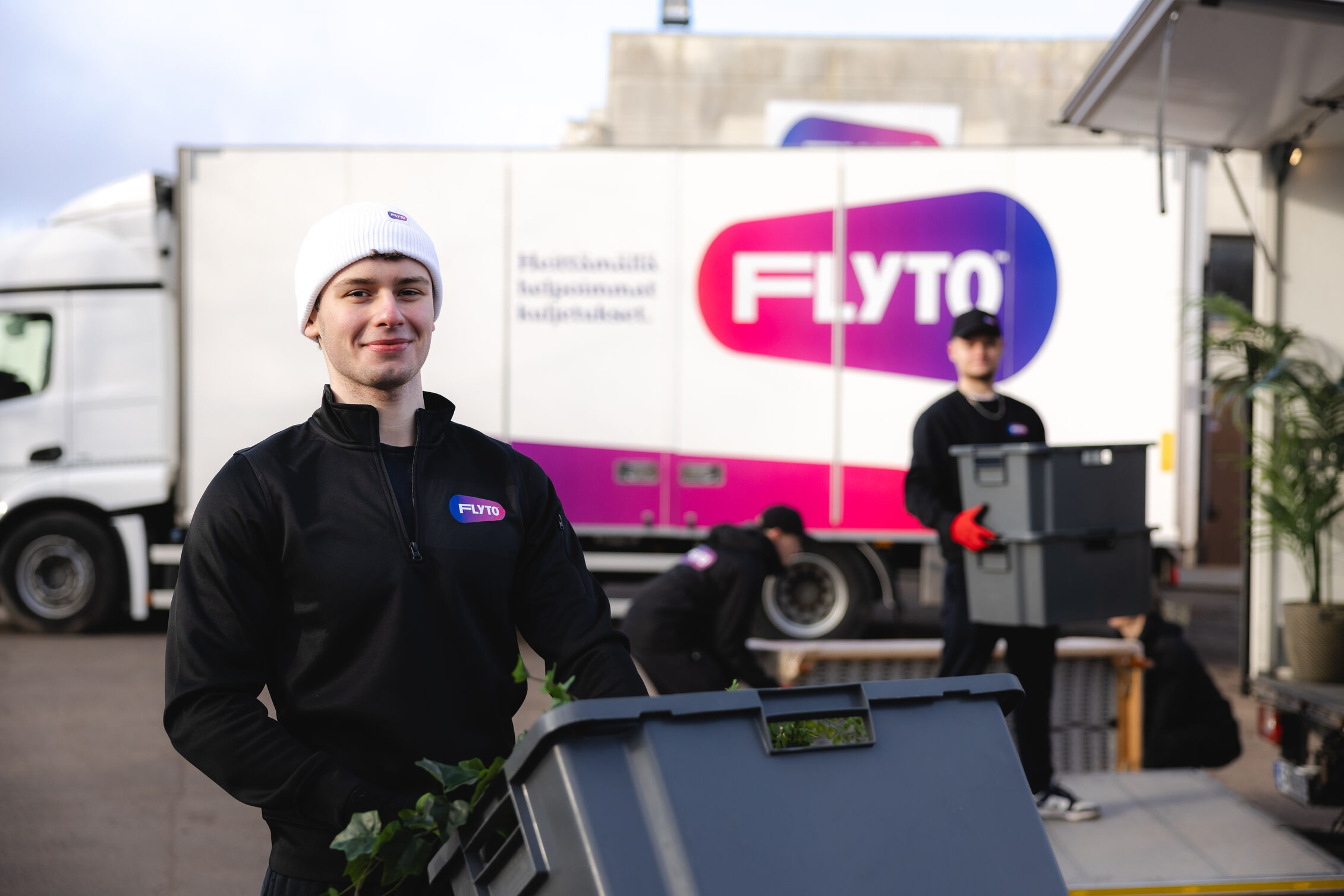
Flyto runs strong in-house European operations — our own offices, warehouses, teams and vehicles across Northern, Central and Southern Europe — so the Swiss collection, packing, export declaration and road leg to the load port stay under our direct control. Where a specialist leg calls for it, we extend that reach through a carefully chosen network of vetted partners and subcontractors rather than stretching our own fleet thin. For the Singapore arrival — DOF filing, GST-relief permits and final delivery — we work with trusted local partners on the ground. You get one coordinated move end to end, without us pretending we drive every mile ourselves.
Frequently asked questions
Will I pay GST on my household goods?
Not if you qualify for relief: you must be relocating to Singapore, own the items, have used them for at least 3 months, import them within 6 months of first arrival, and agree not to dispose of them for 3 months. File the Declaration of Facts before the goods arrive. Miss that step and GST applies.
Do I need to deregister in Switzerland even if I’m not Swiss?
Yes. Anyone leaving for more than three months who gives up their home should deregister from their commune. The confirmation is required for customs and to cancel health insurance, and it is what ends your tax residency.
Is there an export duty on my belongings leaving Switzerland?
No. The BAZG charges no export duty on personal removal goods; the electronic export declaration is handled by your mover as your authorised agent.
Can I bring my dog or cat from Switzerland?
Yes, via the Schedule II pathway: microchip, rabies vaccination, RNATT antibody test, official Swiss health certificate and an AVS import licence, with a possible 10-day quarantine. From 1 April 2026 an AVS-recognised pet agent is required for clearance.
Should I ship my car?
Usually not. Singapore treats imported cars as dutiable with 20% excise duty plus GST, requires a COE and registration, and only registers right-hand-drive vehicles — Switzerland drives left-hand-drive.
What about moving back, Singapore to Switzerland?
The direction reverses: you export from Singapore and import into Switzerland as removal goods. Switzerland lets you import household effects duty- and VAT-free as Übersiedlungsgut if you are transferring your residence, have owned and used the items, and declare them correctly on entry (Form 18.44) — and you re-register with your Swiss commune on arrival.
Sources
- BAZG/FOCBS — Federal Office for Customs and Border Security
- BAZG — Exportation from Switzerland (individuals, removal goods)
- BAZG — Changeover to Passar for exports (replaces e-dec Export)
- BAZG — Taxes and duties on export
- BAZG — FAQ removal goods (import into Switzerland)
- FDFA (eda.admin.ch) — Emigrating: deregistration and rights & duties
- FSVO / BLV — Travelling with dogs, cats and ferrets
- IVI — The Swiss Rabies Centre
- Port of Switzerland — Basel Rhine ports
- Singapore Customs — Bringing in household items overview
- Singapore Customs — Do I qualify for GST relief?
- Singapore Customs — Sending unaccompanied items (DOF)
- Singapore Customs — Importing used household articles and personal effects
- Singapore Customs — Importing of personal pets
- Singapore Customs — Importing dutiable motor vehicles
- Ministry of Manpower — Work passes and permits
- ICA — Entering Singapore
- ICA — Taking cash in and out of Singapore (CBNI)
- Singapore Police Force — Physical Currency and Bearer Negotiable Instruments Report (Form NP 727)
- AVS (NParks) — Importing dogs and cats
- LTA OneMotoring — Import a vehicle