

Moving from Poland to the UK (2026): Complete Guide

Poland and the United Kingdom are only a couple of hours’ flight apart, and hundreds of thousands of Poles already call the UK home. But don’t let the short distance fool you: since the UK left the EU customs union and single market at the end of the Brexit transition period on 31 December 2020, this move is legally treated as a non-EU relocation — even though the freight itself travels a familiar, fast intra-European road-and-ferry route. This guide is for Polish residents relocating to the UK in 2026 and explains, with sources, exactly what free movement of goods and people no longer covers, and what actually replaces it.
Key takeaways
- No more automatic customs-free movement of goods. Your household goods still travel duty- and VAT-free into the UK, but only under Transfer of Residence (ToR1) relief, which requires prior approval and a full customs declaration — it is not the "nothing to declare" experience of a Poland-to-Germany move (gov.uk: Transfer of residence to Great Britain, gov.uk: ToR1 application).
- Free movement of people also ended. Unless you already lived in the UK before 31 December 2020 and hold EU Settlement Scheme status, you need a UK visa (commonly Skilled Worker, family, or another points-based route) — there is no automatic right to move and work (gov.uk: points-based system for EU citizens, gov.uk: EU Settlement Scheme).
- Before leaving, Polish citizens relocating permanently (or for more than 6 months) should report the departure to their gmina, which triggers de-registration (wymeldowanie) from the residence register (gov.pl: zgłoś wyjazd za granicę).
- Polish tax residency isn’t ended by a single form — it follows facts (183-day rule, centre of vital interests) — but you must inform your urząd skarbowy and update your address once you relocate for good (gov.pl / Ministerstwo Finansów: PIT for people living abroad).
- NFZ cover does not follow you automatically: eligible people (e.g. pensioners) should request an S1 form before leaving; everyone else registers with an NHS GP after arrival (NFZ: residence in another EU/EFTA/UK state, NHS: register with a GP).
- Pets need a microchip, rabies vaccination at least 21 days before travel, an EU pet passport or animal health certificate, and (for most dogs) tapeworm treatment 24–120 hours before arrival (gov.uk: bring your pet to Great Britain).
- Social security contribution periods aren’t lost: coordination between Poland and the UK continues post-Brexit, and A1 certificates are still issued for postings (ZUS: Brexit and A1 certificates).
1. What "free movement" actually means on this route now
Inside the EU/EEA customs union, moving your belongings between member states involves no customs duty, no import declaration and no VAT. That regime does not apply to the UK. Since 1 January 2021, goods crossing from the EU into Great Britain are subject to UK customs control. The relief that makes most house-moves duty- and VAT-free is Transfer of Residence (ToR1) relief, not an exemption from customs procedures altogether:
- You must have lived outside the UK for at least 12 consecutive months, import the goods within 12 months of taking up UK residence, and have owned/used the items (normally for 6+ months) before the move (gov.uk: transfer of residence to Great Britain).
- You (or your mover) apply for ToR1 approval before the goods ship, receive a unique reference number, and that number is used on the customs import declaration under procedure code 40 00 C01 (gov.uk: application for ToR1).
- Alcohol and tobacco are always excluded from relief, and brand-new goods bought just ahead of the move generally don’t qualify.
The upside: if you meet the criteria, you pay no import duty or 20% VAT on your used household goods and car. The catch: unlike an EU-EU move, someone still has to file the paperwork, and goods can be held at the border if the ToR1 approval isn’t in place before dispatch.
2. Leaving Poland: what to close out
- Report your departure. Polish citizens relocating abroad permanently, or for longer than 6 months, should submit "zgłoszenie wyjazdu za granicę" to their gmina (online or in person); this results in wymeldowanie from your registered address (gov.pl: zgłoś wyjazd za granicę).
- Tax residency. Poland has no formal "exit form" — residency is assessed on the 183-day rule and where your centre of vital interests lies — but once you relocate permanently you should notify your local urząd skarbowy and update your address; supporting evidence can include a certificate of residency from the UK or your UK tax filings (gov.pl / Ministerstwo Finansów: information for people living abroad).
- Healthcare. NFZ entitlement is generally tied to Polish residence/insurance. If you fall into an eligible category (e.g. drawing a Polish pension while living in the UK), apply for form S1 before you leave so your UK GP practice can register you for NHS-funded care; otherwise your EHIC/NFZ cover simply lapses once you’re no longer insured in Poland, and you register directly with the NHS on arrival (NFZ: residence in another EU/EFTA/UK state).
- Social security continuity. Contribution periods paid into ZUS are not lost — coordination between the Polish and UK systems continues under the Withdrawal Agreement, and A1 certificates (proof you remain covered by Polish social security during a posting) are still issued (ZUS: Brexit and A1 certificates).
- Vehicle export. If you’re taking a car registered in Poland permanently to the UK, deregister it (wyrejestrowanie pojazdu z powodu wywozu za granicę) at the starosta/city/district office where it’s registered, submitting proof of the export (e.g. a sale or gift agreement, or the new foreign registration) alongside the application and a small fee (10 zł); the office processes the deregistration within 30 days, or up to 60 in complex cases (gov.pl: wyrejestruj pojazd).
3. How your belongings actually move (freight-industry estimates)
Household goods almost always travel by road and ferry/Channel Tunnel rather than air, since the corridor is entirely land-and-sea. A typical routing for a mover based near Warsaw, Poznań or Kraków runs through Germany, the Netherlands or Belgium and France, crossing to Great Britain via the Eurotunnel (Calais–Folkestone) or a ferry (Calais–Dover, Dunkirk–Dover, or a longer direct sailing such as Zeebrugge/Rotterdam–Hull for the North of England). These are standard freight-industry routings, not government-mandated ones.
Realistic transit-time estimates (industry rule-of-thumb, not official figures):
- Dedicated/direct truck, Poland to UK door-to-door: roughly 5–8 days, including the Channel crossing and UK customs clearance under your ToR1 reference.
- Groupage/shared-load service (cheaper, more common for smaller moves): 2–4 weeks, since your goods are consolidated with other shipments and the truck only departs once full.
- Add buffer time at the UK border if your ToR1 approval isn’t confirmed before the truck arrives — without the reference number, customs can hold the shipment.
4. Arriving in the UK: registration, healthcare, tax, driving
- Immigration status first. If you already lived in the UK before 31 December 2020, check/confirm your EU Settlement Scheme status (settled or pre-settled); if not, you need a UK visa under the points-based system before you can move and work — there is no "just register on arrival" option any more (gov.uk: EU Settlement Scheme, gov.uk: points-based system for EU citizens).
- National Insurance number. Apply once you’re physically in the UK with an address for correspondence; you can start work before it arrives if you can otherwise prove your right to work, but the number itself can take several weeks (gov.uk: apply for a National Insurance number).
- NHS. Register with a local GP surgery using just your name, date of birth and address — no ID or immigration proof is required to register — and you’ll be issued an NHS number (NHS: register with a GP surgery).
- Tax. If you’ll have self-employment or other untaxed income, register for Self Assessment with HMRC to get a Unique Taxpayer Reference; employees are normally taxed through PAYE once their employer has their details (gov.uk: register for Self Assessment).
- Driving licence. You can drive in Great Britain on your full Polish licence without exchanging it — EU/EEA licences remain valid here — but if you’d rather have a GB one, Poland is among the EU/EEA countries DVLA lets you exchange directly: complete form D1, send your original Polish licence, passport, a photo and proof of UK address to DVLA, Swansea, with the fee (gov.uk: exchange a foreign driving licence).
- Importing your car. Notify HMRC within 14 days of the vehicle’s arrival using the NOVA (Notification of Vehicle Arrivals) service — DVLA will not register the car until this is done — then register it with DVLA, alongside any ToR1 relief claimed on the vehicle itself (gov.uk: importing vehicles into the UK).
5. Moving with pets
Dogs, cats and ferrets can travel from Poland to Great Britain, but the paperwork is stricter than an EU-EU pet move:
- Microchip first, then a rabies vaccination at least 21 full days before travel (counted from the day of the jab, or the final jab of a first course).
- Travel with either an EU pet passport or an animal health certificate, depending on the exact route and documentation you hold.
- Dogs (on most routes) additionally need tapeworm treatment no less than 24 hours and no more than 5 days (120 hours) before arrival in Great Britain.
- A declaration is required if you’re not the pet’s owner or if ownership is being transferred.
Source: gov.uk: bring your pet dog, cat or ferret to Great Britain.
6. Money, banking and things people forget
- Council Tax. Once you have UK accommodation, your local council registers you for Council Tax and issues a bill — this is separate from rent and isn’t automatic (gov.uk: start paying Council Tax).
- Right to Rent. Most private landlords in England must check your right to rent before signing a tenancy; EU citizens with visa or EUSS status generate a digital "share code" (valid 90 days) from the Home Office for the landlord to verify online (gov.uk: prove your right to rent).
- Currency and banking. You’ll be converting PLN to GBP for day-to-day life; opening a UK bank account typically requires proof of address, which is awkward before you’ve signed a tenancy — many movers use an international account or app-based bank as a bridge in the first weeks.
- TV Licence and utilities are UK-specific line items with no Polish equivalent — budget for them separately, and set up electricity/gas/water/broadband as soon as you have a fixed address, since UK providers generally require a UK bank account or card for direct debit.
- Sell or keep your car? Only import it if you’ll actually keep driving on the left; otherwise selling before departure and buying UK-side avoids the NOVA/DVLA import process altogether.
How Flyto handles your Poland to the UK move
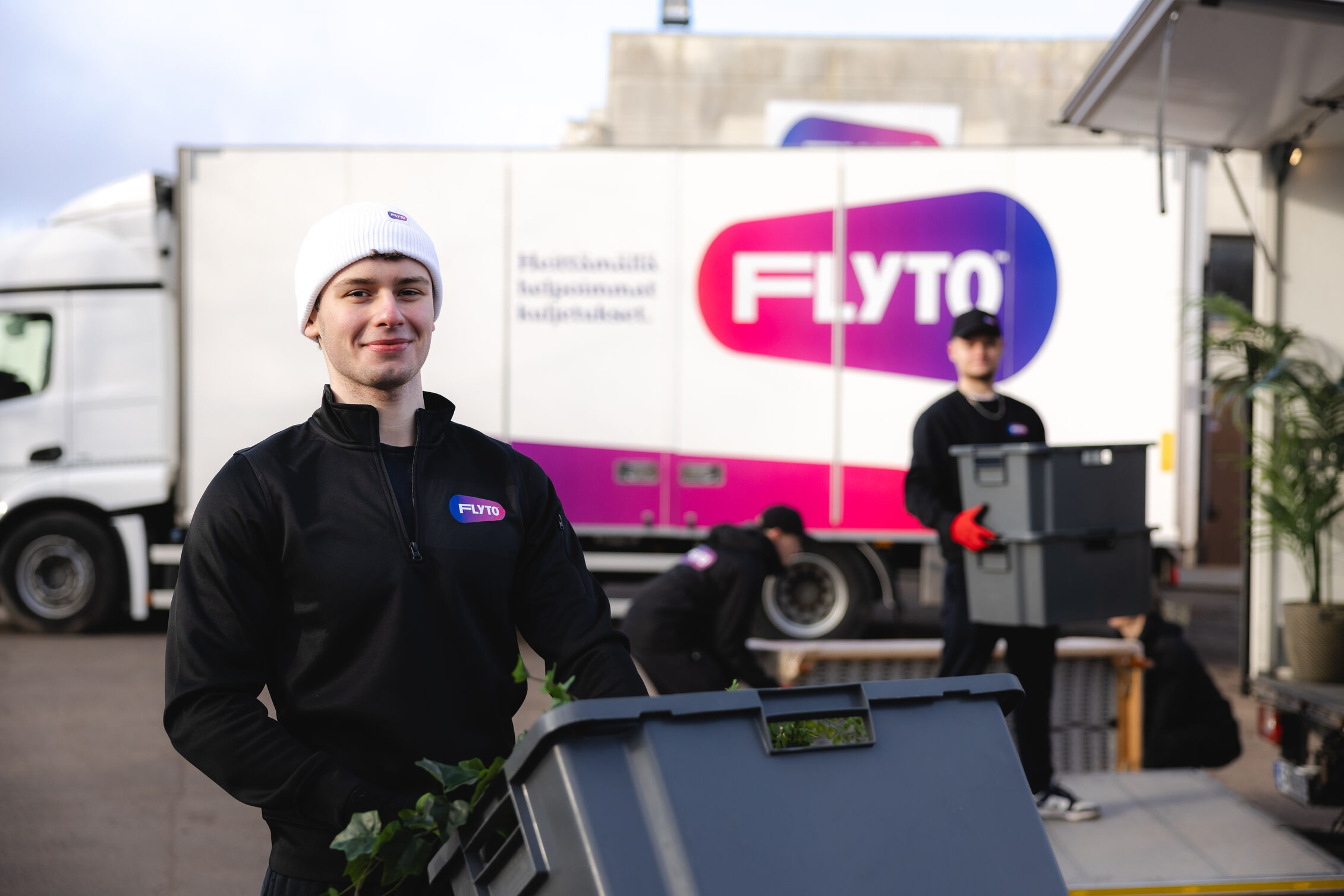
Flyto runs its own offices, warehouses, teams and vehicles across Northern, Central and Southern Europe, so the Polish collection, European road transport and consolidation on this route are typically handled in-house. For the Channel crossing and final UK delivery, we work with a carefully vetted network of partner carriers and customs agents who handle ToR1 declarations daily, so your shipment clears UK customs correctly the first time — combining our own European infrastructure with specialist local expertise where it adds the most value.
Frequently asked questions
Do I need a visa to move from Poland to the UK in 2026?
Only if you already lived in the UK before 31 December 2020 and hold EU Settlement Scheme status can you move without a new visa. Everyone else needs to qualify under a UK visa route (commonly Skilled Worker or family) before relocating (gov.uk).
Will I pay customs duty on my furniture and belongings?
Not if you qualify for and correctly apply for Transfer of Residence (ToR1) relief before shipping — but you do still need to file a customs import declaration, unlike a move within the EU (gov.uk).
Can I keep my Polish driving licence, or do I need to swap it?
You can drive in Great Britain on your full Polish licence without swapping it, since EU/EEA licences stay valid here. If you’d prefer a GB licence, Poland is one of the EU/EEA countries DVLA exchanges directly via form D1, without retesting (gov.uk).
What happens to my NFZ healthcare cover when I leave?
It generally ends once you’re no longer insured in Poland. If you’re entitled to an S1 (e.g. certain pensioners), apply before leaving so UK healthcare costs are still coordinated; otherwise register with an NHS GP after arrival (NFZ, NHS).
How long does the actual house-move take?
As a freight-industry estimate, a dedicated door-to-door truck typically takes 5–8 days including the Channel crossing and customs clearance; a shared groupage load is more often 2–4 weeks.
Do I have to formally de-register in Poland before moving?
If you’re leaving permanently or for more than 6 months, yes — report the departure to your gmina, which results in de-registration from the population register (gov.pl).
Sources
- gov.uk – Transfer of residence to Great Britain
- gov.uk – Application for transfer of residence relief (ToR1)
- gov.uk – The UK’s points-based immigration system: information for EU citizens
- gov.uk – Apply to the EU Settlement Scheme (settled and pre-settled status)
- gov.uk – Bring your pet dog, cat or ferret to Great Britain
- gov.uk – Importing vehicles into the UK
- gov.uk – Exchange a foreign driving licence
- gov.uk – Apply for a National Insurance number
- gov.uk – Register for Self Assessment
- gov.uk – Start paying Council Tax
- gov.uk – Prove your right to rent
- NHS.uk – Register with a GP surgery
- gov.pl – Zgłoś wyjazd za granicę
- gov.pl / Ministerstwo Finansów – Informacja dla osób mieszkających poza granicami Polski dotycząca podatku PIT
- NFZ – Zamieszkanie w innym państwie UE/EFTA/Zjednoczonym Królestwie
- gov.pl – Wyrejestruj pojazd
- ZUS – Brexit a wydawanie zaświadczeń A1