

Moving from Switzerland to the Philippines (2026): Complete Guide

Relocating from Switzerland to the Philippines means closing out one of Europe’s most disciplined administrative systems and entering one built around a completely different logic: exemptions tied to Filipino nationality and OFW status, not residency alone. This guide covers both halves of the corridor — deregistering and exporting your household goods from Switzerland, and clearing them, your pets and your finances into the Philippines — plus a short note on moving back. It is written for a Switzerland-based resident (Swiss or foreign national) relocating permanently to the Philippines, whether for marriage, retirement, work or business.
Key takeaways
- Your Philippine visa/status decides your customs bill. Duty-free household goods privileges under the Customs Modernization and Tariff Act apply to returning Filipino residents, OFWs and balikbayans — a non-Filipino spouse on a 13(a) visa generally does not qualify and should expect normal duties/taxes on shipped goods (Bureau of Customs, Duty and Tax-Free Privileges).
- Switzerland does not tax or restrict your export. Leaving with your personal belongings requires no export customs declaration and no export duty (BAZG — Leaving Switzerland with personal goods).
- Deregister with your commune before you go. The Abmeldung/annonce de départ closes your residency record, is a prerequisite for ending Swiss compulsory health insurance, and issues the certificate you’ll need for duty-free import of household goods (ch.ch — How to emigrate as a Swiss citizen).
- Swiss tax liability ends on your actual departure date, with your Swiss income/wealth for that year taxed on a pro-rata "interim" basis (Canton Bern tax administration — Wohnsitzwechsel).
- Balikbayan boxes are for qualifying Filipinos only, duty-free up to PHP 150,000, three times per calendar year (Bureau of Customs — Balikbayan Box Guidelines).
- Used cars are banned with one narrow exception that includes 13(a) visa holders. Under Executive Order 156 as amended by EO 877-A, importing a used vehicle is prohibited unless you qualify for the No-Dollar Importation Program — which explicitly covers returning residents and 13(a)/13(g) immigrant-visa holders for one personally-owned vehicle, via a Certificate of Authority to Import from DTI (Bureau of Customs — Motor Vehicles, Boats & Yachts; Tariff Commission — EO 877).
- Pets need a Philippine import clearance (SPSIC) from the Bureau of Animal Industry, plus a health certificate from a Swiss/EU-accredited vet (BAI — Pet Import).
- Carrying more than USD 10,000 in cash or monetary instruments into the Philippines requires a written declaration to the Bureau of Customs (BOC — Currency Declaration Rules).
1. Your immigration status determines your customs treatment
This is the single most important thing to get right before booking a shipment. Philippine customs law does not grant duty-free treatment simply because you are relocating permanently — it grants it to specific categories: Returning [Filipino] Residents who have stayed abroad at least six months, Overseas Filipino Workers with DOLE/POEA-certified contracts, and Balikbayans who have been continuously abroad for at least a year. Value ceilings scale with years abroad (up to PHP 350,000 for ten-plus years) (Bureau of Customs — Duty and Tax-Free Privileges).
A non-Filipino relocating on a work visa (9(g)), a spousal 13(a) non-quota immigrant visa, a retirement visa, or as a tourist converting status locally sits outside these categories. In practice this means: budget for the Bureau of Customs to assess duties and VAT on your household goods shipment unless your household includes a qualifying Filipino national whose status the shipment can be filed under. Confirm your specific visa route with the Bureau of Immigration or a Philippine consulate before your goods arrive — the visa determines the paperwork, and the paperwork determines the bill.
2. The Switzerland side: deregistration, export and tax exit
Customs authority. Swiss customs matters are handled by the Federal Office for Customs and Border Security (BAZG) — the agency formed from the former Federal Customs Administration (EZV/FCA) — which sets declaration, duty and export rules at the border (BAZG).
Exporting your goods. For a permanent move out of Switzerland, BAZG is explicit: "you generally do not have to observe any specific customs regulations for your personal goods when leaving Switzerland. No export customs duties are payable." There is no export declaration system or value/weight threshold to clear for household effects leaving the country — the formalities that matter are on the Philippine import side, not here. If you own high-value items, BAZG recommends having them registered by customs before departure to make re-entry easier later (BAZG — Leaving Switzerland with personal goods).
Deregistration (Abmeldung / annonce de départ / notifica di partenza). Before leaving, you must notify your commune of residence that you are moving abroad. The commune’s residents’ registration office closes your residency record as of your departure date, issues the deregistration certificate you’ll need to import household goods duty-free later, and this step is what starts the clock on ending compulsory health insurance and other Switzerland-based obligations; ch.ch‘s official emigration guidance sets out the wider checklist of administrative formalities (customs, health insurance, banking) that come with leaving (ch.ch — How to emigrate as a Swiss citizen). Communes administer deregistration individually — Canton Zug’s own form shows the fields and process a typical commune requires (Canton Zug — Abmeldung/Wegzug ins Ausland form).
Tax residency exit. Unlimited (worldwide) Swiss tax liability ends on the date you genuinely give up your Swiss domicile — commune deregistration is necessary but the cantonal tax administration also looks at whether the move is permanent, whether your Swiss home has actually been vacated, and how much time you continue spending in Switzerland. For the year you leave, only income and assets up to the departure date are taxed by the canton on an interim basis (Canton Bern — Wohnsitzwechsel/tax situations). After departure, limited tax liability can still apply to certain Swiss-source income (property, pensions). Settle this with your commune’s tax office before you leave — retroactive corrections from Manila are slow.
Cash. Switzerland places no limit and requires no mandatory prior declaration on cash, foreign currency or securities you take out of the country. If you are carrying CHF 10,000 or more, however, BAZG can stop and question you, and you must disclose your identity, the source of the funds, their intended use and the beneficial owner; the check is logged in BAZG’s information system (BAZG — Cash, foreign currency, securities).
3. Ports, airports and transit — realistic estimates, not official figures
Switzerland is landlocked, so nothing ships directly by sea from a Swiss port. In practice, relocation shipments are trucked from your Swiss home to a European container port — most commonly Rotterdam or Antwerp, sometimes Genoa/La Spezia in Italy — for consolidation and ocean transport to Manila (Manila International Container Port/South Harbor), the standard gateway for a Philippines move. Air freight and accompanied baggage typically route through Zurich Airport (ZRH) or Geneva Airport (GVA) into Ninoy Aquino International Airport (MNL).
These are freight-industry planning estimates, not published official transit-time guarantees from any authority: a full-container or LCL sea shipment Switzerland→Manila typically runs roughly 6–10 weeks door-to-door, factoring EU port trucking, ocean transit, and Philippine customs clearance; air freight typically runs roughly 1–3 weeks door-to-door. Build buffer into your dates around Philippine public holidays and typhoon season (roughly June–November), which can add port delays.
4. The Philippines side: what actually clears your goods
Every arriving traveler completes the Customs Baggage Declaration Form (CBDF) for hand-carried items at the port of entry (Bureau of Customs — Guidelines on Arriving Travelers). For a full household shipment arriving separately (unaccompanied baggage/sea or air freight), clearance runs through the process set out under Section 800 of the Customs Modernization and Tariff Act (CMTA), as implemented by Customs Administrative Order 06-2016 — this is the framework that grants duty exemption to qualifying returning Filipino residents (abroad 6+ months) and OFWs, and under which everyone else’s shipment is formally assessed for duties and VAT (Bureau of Customs — Duty and Tax-Free Privileges). Qualifying goods must be personal/household effects already used, not in commercial quantities, and not intended for sale, barter or hire, and — under CAO 06-2016 — must travel with the qualifying person or arrive within 60 days of their return. Balikbayan boxes follow their own simpler exemption (up to PHP 150,000, three times a year, Filipino qualified senders only) and are not the correct route for a full household move (BOC — Balikbayan Box Guidelines).
5. Pets — both ends
Leaving Switzerland: dogs, cats and ferrets need a microchip and a valid rabies vaccination (given from 12 weeks of age, valid 21 days after), documented in a Swiss or EU pet passport, or — since the Philippines is a third (non-EU) country — an official veterinary health certificate for the specific trip (BLV — Travelling with dogs, cats and ferrets).
Entering the Philippines: you need a Sanitary and Phytosanitary Import Clearance (SPSIC) issued by the Department of Agriculture–Bureau of Animal Industry (BAI) before the pet travels, applied for online, valid for up to three pets and 60 days. Only dogs and cats 120 days or older at the time of application qualify. Required documents include vaccination and antiparasitic records, proof of an ISO-compatible microchip, a photo of the pet, and an export/international veterinary health certificate issued within 10 calendar days of departure. Vaccinations must be given at least 14 days before the SPSIC application: dogs need rabies (from 84 days old) plus distemper, infectious hepatitis, parvovirus, parainfluenza and leptospirosis; cats need rabies (from 84 days old) plus feline panleukopenia, feline viral rhinotracheitis and feline calicivirus (BAI — Pet Import).
6. Vehicles, money and what people forget
Vehicles. Importing a used vehicle into the Philippines is banned by default under Executive Order 156 (2002), as amended by EO 877-A. There is one relevant exception: the No-Dollar Importation (NDI) Program, which lets a returning resident (Filipino who has lived abroad at least a year) or an immigrant holding a 13(a) or 13(g) visa — which covers a foreign spouse relocating on a marriage visa — import one personally-owned used vehicle, provided you secure a Certificate of Authority to Import (CAI) from the DTI’s Fair Trade Enforcement Bureau before shipping it, and you agree not to resell it for three years (BOC — Motor Vehicles, Boats & Yachts; Tariff Commission — EO 877). The CAI process, duties/VAT on entry and the resale lock-in mean most relocating households still find it cheaper and faster to sell in Switzerland and buy locally — treat the NDI route as an option to evaluate with a customs broker, not a default plan.
Money. Bringing more than USD 10,000 (or equivalent) in cash or bearer monetary instruments into the Philippines requires a prior written declaration to the Bureau of Customs, stating the source of funds (BOC — Currency Declaration Rules). On the Swiss side, there’s no mandatory export declaration but be ready to answer BAZG truthfully if carrying CHF 10,000 or more (see Section 2).
Things people forget: re-registering your address with a Swiss representation abroad after deregistering; carrying original vaccination and microchip records for pets rather than digital copies only; the fact that "balikbayan" privileges do not automatically extend to a foreign spouse or partner even when traveling together; and that household-goods duty exemption is assessed per shipment against your specific immigration paperwork, so incomplete visa documentation at the time of filing can delay clearance and storage fees at the Philippine port.
How Flyto handles your Switzerland to the Philippines move
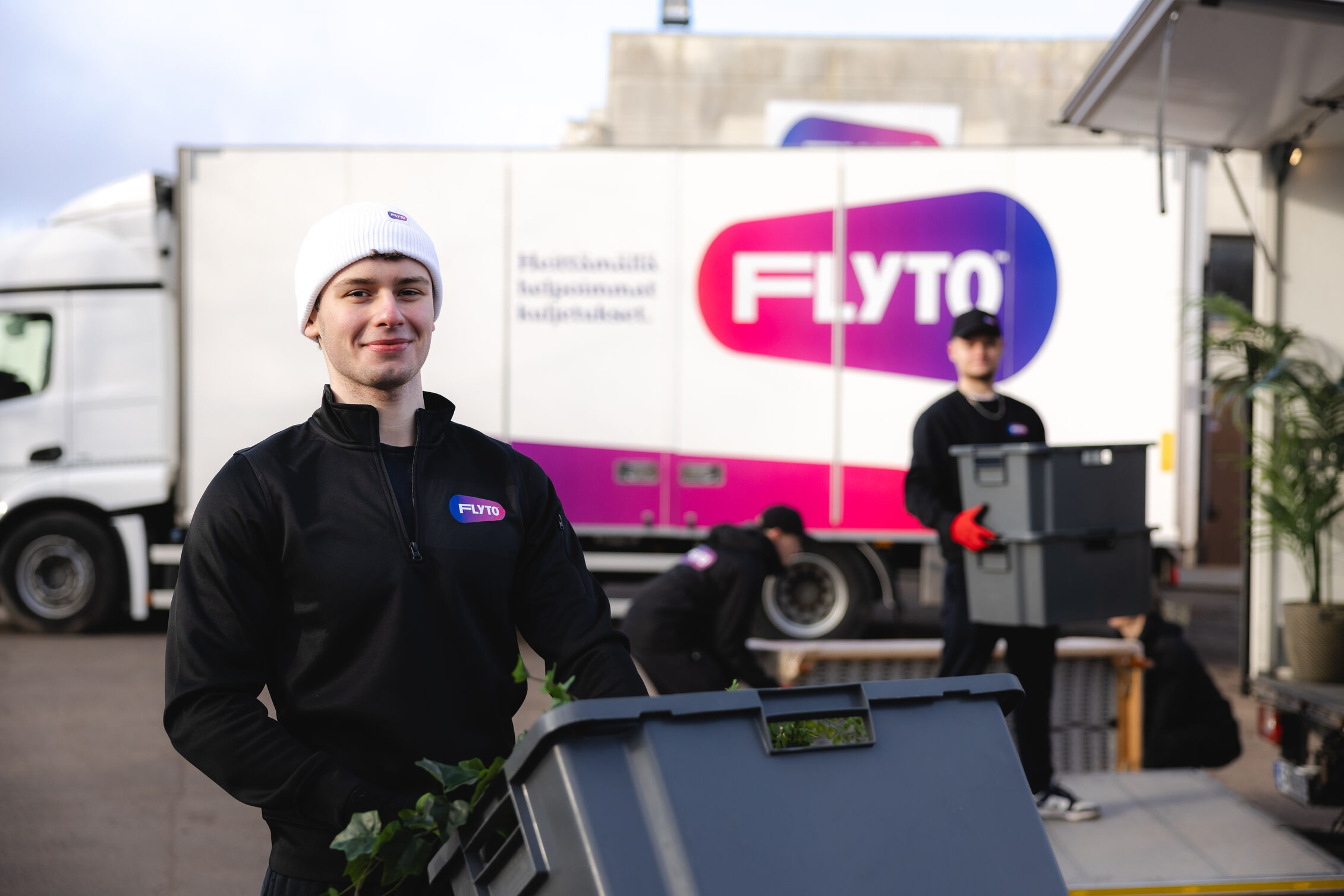
Flyto runs its own offices, warehouses, teams and vehicles across Northern, Central and Southern Europe, so the Swiss collection, packing and consolidation leg of your move is handled in-house end to end. For the ocean or air leg into Manila and the Philippine customs clearance, we work through a carefully vetted network of partner carriers and trusted local partners on the ground in the Philippines, so your shipment is handed off cleanly rather than passed through an anonymous freight chain.
Frequently asked questions
Do I need to be Filipino to get duty-free treatment on my household goods? No, but the main duty-free categories (returning resident, OFW, balikbayan) are defined around Filipino nationality or OFW status. A foreign spouse on a 13(a) visa should expect a formal duty/VAT assessment on shipped goods (BOC — Duty and Tax-Free Privileges).
Can I ship my Swiss car to the Philippines? Only under one narrow exception: if you hold a 13(a)/13(g) visa or qualify as a returning resident, you may import one personally-owned used vehicle under the No-Dollar Importation Program with a DTI Certificate of Authority to Import secured in advance; otherwise used-vehicle imports are banned (Tariff Commission — EO 877; BOC — Motor Vehicles, Boats & Yachts).
Does Switzerland charge anything to export my furniture and belongings? No. There’s no export duty and no specific export declaration required for personal effects leaving Switzerland permanently (BAZG).
When exactly does my Swiss tax liability stop? On the date your domicile is genuinely given up — commune deregistration plus actually vacating your Swiss home and establishing residence abroad; the year of departure is taxed on a pro-rata basis (Canton Bern tax administration).
Can I bring my dog or cat? Yes, with a BAI Sanitary and Phytosanitary Import Clearance obtained before travel and a Swiss/EU veterinary health certificate issued within 10 days of departure (BAI — Pet Import).
How much cash can I carry into the Philippines without declaring it? Up to USD 10,000 (or equivalent); above that you must file a written declaration with the Bureau of Customs (BOC — Currency Declaration Rules).
Moving back: Philippines → Switzerland
If you later return to Switzerland, the process mirrors this guide: importing your used household effects is duty- and VAT-free provided you’re transferring your main residence to Switzerland and the goods have been used by you for at least six months. You’ll need Form 18.44 ("Zollveranlagung von Übersiedlungsgut"), and it’s worth sending your relocation file to the destination Swiss customs office at least two working days before crossing the border so the entry is pre-checked (BAZG — Moving to Switzerland: Procedure).
Sources
- BAZG — Leaving Switzerland with personal goods
- BAZG — Moving to Switzerland: Procedure (Form 18.44)
- BAZG — Cash, foreign currency, securities (export)
- ch.ch — How to emigrate as a Swiss citizen (official Swiss government portal)
- Canton Zug — Abmeldung/Wegzug ins Ausland (deregistration form)
- Canton Bern tax administration — Wohnsitzwechsel
- BLV (Federal Food Safety and Veterinary Office) — Travelling with dogs, cats and ferrets
- Philippine Bureau of Customs — Guidelines on Arriving Travelers
- Philippine Bureau of Customs — Balikbayan Box Guidelines
- Philippine Bureau of Customs — Duty and Tax-Free Privileges
- Philippine Bureau of Customs — Motor Vehicles, Boats & Yachts
- Philippine Bureau of Customs — Currency Declaration Rules
- Tariff Commission of the Philippines — Executive Order 156
- Tariff Commission of the Philippines — Executive Order 877
- Bureau of Immigration Philippines — FAQs
- Bureau of Animal Industry — Pet Import