

Moving from Sweden to the Philippines (2026): Complete Guide

Relocating from Sweden to the Philippines is a two-sided customs and immigration process: Sweden’s export rules and tax exit (Tullverket, Skatteverket) on one side, and the Philippines’ import and residency rules (Bureau of Customs, Bureau of Immigration, Bureau of Animal Industry) on the other. This guide is written for a resident of Sweden — an assignee, retiree, spouse of a Filipino citizen, or remote worker — planning a household move to the Philippines, and closes with a short note on moving back the other way.
Key takeaways
- Your Philippine immigration status (tourist, 13(a) spouse visa, SRRV retiree visa, or work visa) determines which customs duty exemption applies to your shipment — there is no universal "moving goods" exemption for foreigners entering the Philippines (Bureau of Customs).
- If you plan to live abroad for a year or more, you must notify Skatteverket of your move at least one week before departure, either via e-service or form SKV 7665 (Skatteverket).
- Swedish citizens (and foreign nationals who lived in Sweden 10+ years) are presumed to retain "väsentlig anknytning" (substantial connection) to Sweden and stay fully tax-liable for five years after leaving, unless they can show otherwise; after five years the burden of proof shifts to Skatteverket (Skatteverket).
- Household goods leaving Sweden for a non-EU country need an export declaration (commodity code 9905 00 00 for emigrants’ personal property), filed yourself, via a customs office, or through your moving company (Tullverket).
- Foreign nationals importing used vehicles into the Philippines face a general ban under Executive Order 156, as amended by EO 877-A, with narrow exceptions under the No-Dollar Importation Program for returning residents and 13(a)/13(g)/SRRV visa holders (Bureau of Customs).
- Pets need an approved Sanitary and Phytosanitary Import Clearance (SPSIC) from the Philippine Bureau of Animal Industry, obtained online before travel and valid for two months (60 days) (BAI).
- Carrying more than USD 10,000 (or equivalent) into or out of the Philippines must be declared to the Bureau of Customs (BOC).
- Swedish and most EU citizens can enter the Philippines visa-free for 30 days for tourism, but this does not carry import duty privileges for a full household move (evisa.gov.ph).
1. Your immigration status decides your customs treatment
Philippine customs law does not give a blanket "foreign mover" duty exemption. What you owe on your shipment depends heavily on the visa category you hold at arrival:
- Tourist / 30-day visa waiver. Swedish citizens can enter visa-free for tourism (evisa.gov.ph), but a tourist entry does not on its own establish that you are "actually coming to settle," which is a required condition for the personal-effects duty exemption (BOC). Shipments arriving under a tourist entry should be expected to face ordinary dutiable-import treatment unless settlement status is separately established.
- 13(a) non-quota immigrant visa (marriage to a Filipino citizen). Available to a foreign national validly married to a Philippine citizen, this leads to probationary then permanent residency and puts the holder in the settling-immigrant category for the personal-effects privilege, plus eligibility to import one used personal vehicle under the No-Dollar Importation exception (Bureau of Immigration; BOC vehicles).
- SRRV (Special Resident Retiree’s Visa), administered by the Philippine Retirement Authority, requires a time deposit that currently ranges from USD 15,000 (pensioners aged 50 and above) up to USD 50,000 (non-pensioners aged 40–49) under the standard Classic category, with a reduced Courtesy-category deposit (from USD 1,500) reserved for former Filipino citizens and certain other special groups. It grants long-term residency and also lines the holder up for returning-resident-style import privileges — confirm the current fee schedule with the PRA before you commit, as deposit tiers have been revised in recent years (PRA).
- Returning Filipino residents / balikbayans have their own, more generous thresholds, described in Section 4.
Confirm your visa category and its exact grant date before your shipment departs Sweden — the Department of Finance endorsement needed for duty exemption is tied to your entry/visa documents and must generally be secured before departure or within 60 days of arrival (BOC).
2. The Sweden export side: Tullverket, deregistration and tax exit
Customs authority. Sweden’s customs authority is Tullverket. Moving personal belongings to a country outside the EU requires an export declaration, which you can lodge yourself at a customs office or delegate to your moving/forwarding company. On the export form (SAD), use commodity code 9905 00 00 for an emigrant’s personal property and procedure code "1000" for a regular export of personal belongings, and attach an itemized list (household goods, books, linen and clothing can be grouped under collective terms). Goods covered by separate prohibitions or restrictions (weapons, alcohol, tobacco, etc.) must still be declared under their own commodity codes rather than 9905 (Tullverket). Culturally protected items (antiques, art, certain books) may need a separate export licence from the Swedish National Heritage Board before they can leave the country.
Deregistration (folkbokföring). If you intend to live abroad for one year or more, you must report your move to Skatteverket (the Swedish Tax Agency) no later than one week before departure, using the e-service or form SKV 7665. Skatteverket then deregisters you from the Swedish population register (folkbokföring); you keep your citizenship and personnummer (Skatteverket). If you’re abroad for under a year, you stay in the register; if a short stay later extends past a year, you must report it then. Case processing after a move report typically takes a couple of weeks.
Tax residency exit. Deregistering from folkbokföring does not automatically end Swedish tax liability. Swedish citizens — and foreign nationals who lived in Sweden for 10 or more years before leaving — are presumed to retain "väsentlig anknytning" (substantial connection) through property, family, or business ties, and remain fully ("unlimited") tax-liable unless they can show otherwise. This presumption, and the burden of proving otherwise, rests on the person who moved for the first five years after departure; after five years, the burden shifts to Skatteverket to prove that substantial connection still exists (Skatteverket rättslig vägledning). After you cease to be fully tax-liable, only Swedish-source income remains taxable, and specific rules such as SINK (special income tax for non-residents) may apply to Swedish pensions or short-term Swedish work income (Skatteverket).
3. Ports and transit: what to expect (industry estimates, not official figures)
Sweden’s largest port for international freight is the Port of Gothenburg, which handles around 20% of Sweden’s total foreign trade by value and roughly 55% of the country’s container traffic, and is the only Swedish port equipped for the largest ocean container vessels (Port of Gothenburg). Household shipments to the Philippines are typically consolidated through Gothenburg (or, for air freight, Stockholm Arlanda) rather than shipped from smaller regional harbors.
The following transit times are freight-industry estimates, not figures published by any customs or port authority, and vary with carrier schedules, transshipment routing (most Sweden–Philippines sea freight transships through a European or Asian hub port such as Rotterdam, Singapore, or Hong Kong before reaching Manila), and season:
- Sea freight (FCL/LCL), Gothenburg → Manila: approximately 6–9 weeks door-to-port, depending on transshipment routing.
- Air freight, Stockholm/Gothenburg → Manila: approximately 5–10 days including customs processing, for smaller, time-sensitive shipments.
Always confirm current sailing schedules and transit estimates with your freight forwarder rather than relying on generic industry averages.
4. The Philippines import side: customs form, process and thresholds
On arrival, every traveler submits a Customs Baggage Declaration Form (CBDF) to the Bureau of Customs examiner together with checked baggage; goods flagged for review go through physical inspection, duties/taxes (if any) are assessed and paid at the Customs Cashier against an official receipt, and clearance is issued on presentation of that receipt (BOC arrival guidelines). A separate air/sea freight shipment of household effects (as opposed to accompanied baggage) is processed by your customs broker under the same duty-and-tax-free privilege framework, with the required favorable endorsement from the Department of Finance (BOC).
Duty and tax exemption thresholds (FCA/FOB dutiable value), per Section 800 of the Customs Modernization and Tariff Act (CMTA), for returning Filipino residents:
- Stayed abroad 10+ years, and the privilege not availed of within the prior 10 years: up to PHP 350,000
- Stayed abroad 5–10 years, and the privilege not availed of within the prior 5 years: up to PHP 250,000
- Stayed abroad under 5 years, and the privilege not availed of within the prior 6 months: up to PHP 150,000
- Balikbayan box privilege: personal and household effects only, up to PHP 150,000 FCA value per box, up to 3 times per calendar year
Goods must be for personal use only, not for sale/barter, and either accompany the traveler or arrive within a reasonable time of settlement; vehicles, watercraft, aircraft, and animals are excluded from these personal-effects privileges (BOC).
Currency. Amounts over USD 10,000 (or equivalent in other foreign currency) carried into or out of the Philippines must be declared to the Bureau of Customs; Philippine peso cash is capped at PHP 50,000 without prior Bangko Sentral ng Pilipinas authorization (BOC).
5. Pets: rules on both ends
Leaving Sweden. Before exporting a dog, cat or ferret outside the EU, check the destination country’s specific entry requirements yourself — rules vary by destination and Jordbruksverket (the Swedish Board of Agriculture) generally cannot specify them for you. What Jordbruksverket-appointed official veterinarians can provide is the required Swedish-side health certification; the animal also needs a pet passport (where applicable) plus a certificate from an official veterinarian, and this process should be started well in advance (Jordbruksverket).
Entering the Philippines. All dogs and cats need an approved Sanitary and Phytosanitary Import Clearance (SPSIC) from the Department of Agriculture’s Bureau of Animal Industry, applied for online (via InterCommerce Network Services) before travel. Required documentation includes proof of microchip, a photograph of the pet, vaccination and antiparasitic records, and a veterinary health certificate issued within 10 calendar days of departure; pets must be at least 120 days old at the time of SPSIC application, and one clearance covers up to 3 pets. The SPSIC is valid for 60 days (two months) (BAI).
6. Vehicles, money and things people forget
Vehicles. The Philippines bans importation of most used motor vehicles under Executive Order 156, as amended by EO 877-A. The main exception relevant to relocating individuals is the No-Dollar Importation (NDI) Program, open to returning residents/Philippine passport holders with 1+ year abroad, to 13(a)/13(g) immigrant visa holders and dual citizens, to SRRV holders, and to certain Balik-Scientist (47(a)(2)) visa holders — each allowed to import one personally-owned vehicle, with a Certificate of Authority to Import required from the Fair Trade Enforcement Bureau and a 3-year resale restriction (BOC). Selling a Swedish-registered car before departure, rather than shipping it, is usually simpler; if you do export it, it must first be deregistered with the Swedish Transport Agency and declared on your Tullverket export declaration (Tullverket).
Money to remember. Deregister utilities, notify your bank and Försäkringskassan-linked benefits, and time your Skatteverket move notification carefully — filing too early or too late affects your folkbokföring date and, indirectly, your tax-year calculations (Skatteverket).
Reverse direction: Philippines → Sweden. Moving back to Sweden, individuals returning from outside the EU can generally import used personal household effects duty-free under the EU’s transfer-of-residence relief, subject to conditions on time spent outside the EU and prior ownership/use of the goods, declared to Tullverket on arrival (Tullverket); on the Philippine side, exporting goods and closing out Philippine residency status is handled through the Bureau of Immigration and your local barangay/BIR tax closure rather than through Tullverket-equivalent export paperwork.
How Flyto handles your Sweden to the Philippines move
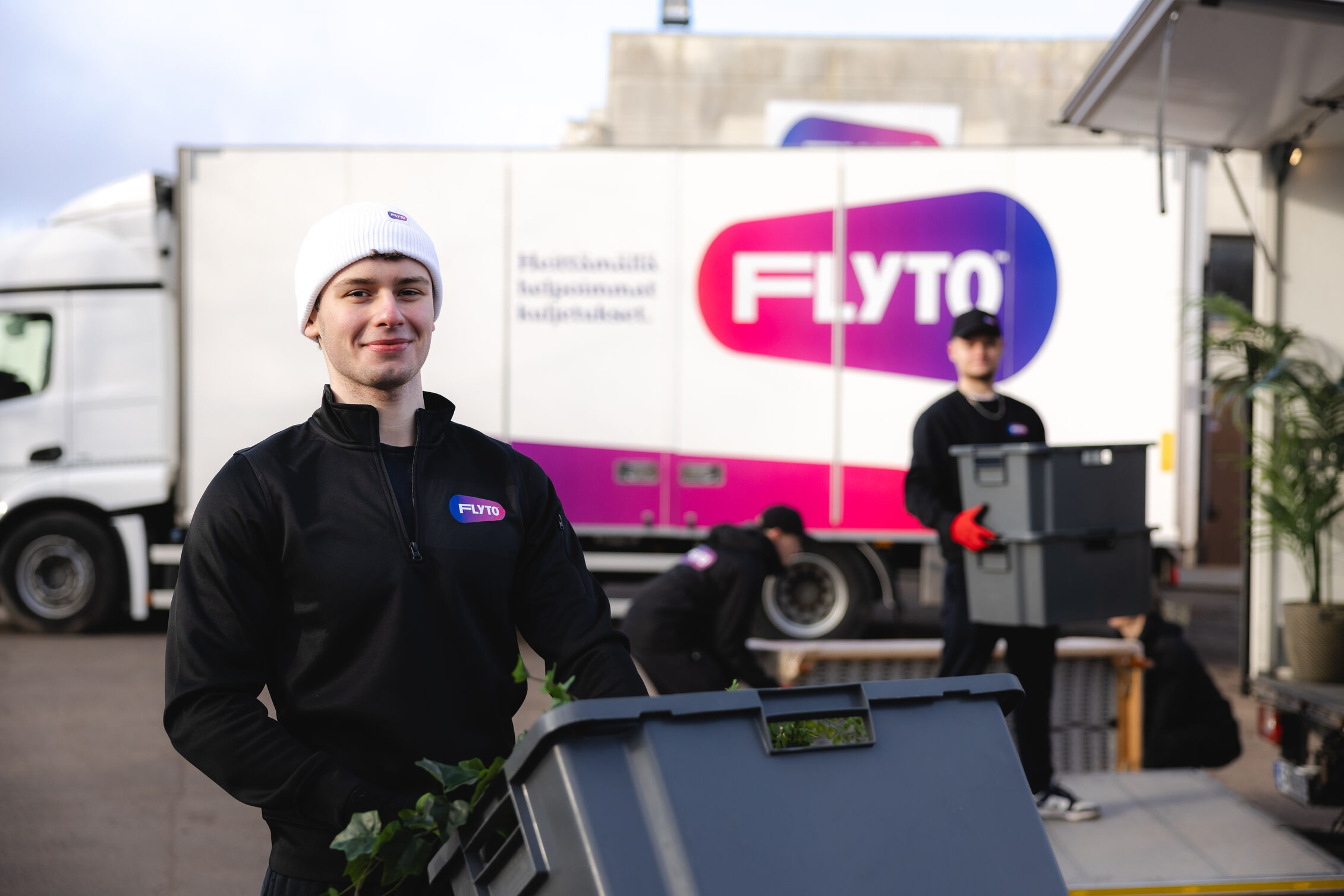
Flyto operates its own offices, warehouses, vehicles and moving teams across Northern, Central and Southern Europe, so your household goods are professionally packed and consolidated to the Port of Gothenburg (or Stockholm Arlanda for air freight) largely in-house. For the ocean or air leg and the final delivery inside the Philippines, we work through a carefully vetted network of subcontracted carriers and trusted local partners on the ground in the Philippines, who handle Bureau of Customs clearance and last-mile delivery with local expertise we don’t try to replicate ourselves.
Frequently asked questions
Do I need a Philippine visa before I can import my household goods duty-free?
In practice, yes — the duty exemption requires proof you are "actually coming to settle," which a 30-day tourist entry does not establish. A 13(a), SRRV, or similar residency-track visa is normally needed, together with a Department of Finance endorsement (BOC).
Can I bring my car from Sweden to the Philippines?
Generally no — used vehicle imports are banned under Executive Order 156, as amended by EO 877-A, with narrow exceptions for certain visa holders under the No-Dollar Importation Program (BOC).
Do I stop paying Swedish tax the day I deregister from folkbokföring?
Not automatically. Swedish citizens (and long-term foreign residents) are presumed to retain "väsentlig anknytning" (substantial connection) to Sweden for up to five years after leaving and must actively demonstrate they no longer do to become limited tax-liable (Skatteverket).
How much cash can I carry into the Philippines without declaring it?
Up to USD 10,000 (or equivalent) in foreign currency needs no declaration; above that, declare it to the Bureau of Customs on arrival (BOC).
What paperwork does my pet need to enter the Philippines?
An approved Sanitary and Phytosanitary Import Clearance (SPSIC) from the Bureau of Animal Industry, obtained online before travel, plus microchip proof, vaccination records, and a vet health certificate issued within 10 days of departure (BAI).
Who handles the Swedish export paperwork if I use a moving company?
Your moving/forwarding company can file the Tullverket export declaration on your behalf, or you can do it yourself at a customs office (Tullverket).
Sources
- Tullverket — Moving from Sweden to a country outside the EU
- Tullverket — Moving to and from Sweden
- Skatteverket — Jag ska flytta utomlands, ska jag ändra min folkbokföring?
- Skatteverket — Har du flyttat från Sverige?
- Skatteverket — Väsentlig anknytning till Sverige (rättslig vägledning)
- Port of Gothenburg — Facts and figures
- Bureau of Customs Philippines — Duty and tax-free privileges
- Bureau of Customs Philippines — Guidelines on arriving travelers
- Bureau of Customs Philippines — Motor vehicles, boats & yachts
- Bureau of Customs Philippines — Currency declaration rules for travelers
- Bureau of Immigration Philippines — Immigrant Visa by Marriage (13A)
- evisa.gov.ph — Visa policy: nationals free to enter the Philippines without a visa
- Philippine Retirement Authority — SRRV
- Bureau of Animal Industry — Pet import requirements
- Jordbruksverket — Bringing dogs, cats and ferrets out of Sweden